Why an ATV Yields to Everything on a Road
It’s a common frustration for ATV and UTV owners in Nebraska: you’ve got a machine that can handle almost anything off-road, but when you venture onto a public road, the rules suddenly become incredibly strict, demanding that you yield to pretty much everything. This isn't just an arbitrary annoyance; it's a fundamental principle embedded in Nebraska's approach to allowing off-highway vehicles (OHVs) onto public roadways. This guide will dive deep into why this rule exists, what it means for you as a rider, and how understanding it can keep you safe and legal.
The Conditional Nature of ATV Road Access in Nebraska
Let's be real: ATVs and UTVs weren't designed for highway speeds or heavy traffic. They're built for fields, trails, and rough terrain. Because of this inherent design, Nebraska's laws treat them very differently from cars, trucks, and motorcycles when it comes to road use. The state recognizes the practical need for ranchers, farmers, and sometimes even recreational riders to use public roads, but it always prioritizes the safety of all road users. This is why the few circumstances where ATVs can legally use public roads come with significant caveats and responsibilities for the ATV operator.
The core of it is that any use of an ATV on a public road in Nebraska is almost always an exception to a general prohibition. It's not like driving a car, where the road is simply your domain. For an ATV, every time you put a tire on pavement or gravel, you're operating under a specific set of permissions and limitations. This fundamental difference means that you, as the ATV operator, are expected to bear the primary burden of ensuring safety and not impeding the flow of traffic or creating a hazard. This underlying philosophy is critical to understanding why the law mandates that an ATV yields to everything else. You might be curious about [Nebraska ATV Road Rules Under 60-6,356], which lays out many of these foundational principles.
Think about it from a legislative perspective: lawmakers had to balance the practical needs of residents, especially in rural areas, with the undeniable safety risks of mixing smaller, slower, and less protective off-road vehicles with faster, larger, and more protective on-road vehicles. The result is a system where the ATV is almost always considered the "outsider" on the road, hence the heightened responsibility placed upon its operator. This isn't to say your machine isn't capable, but the law looks at the bigger picture of public safety.
What "Yield to Everything" Practically Means for an ATV Rider
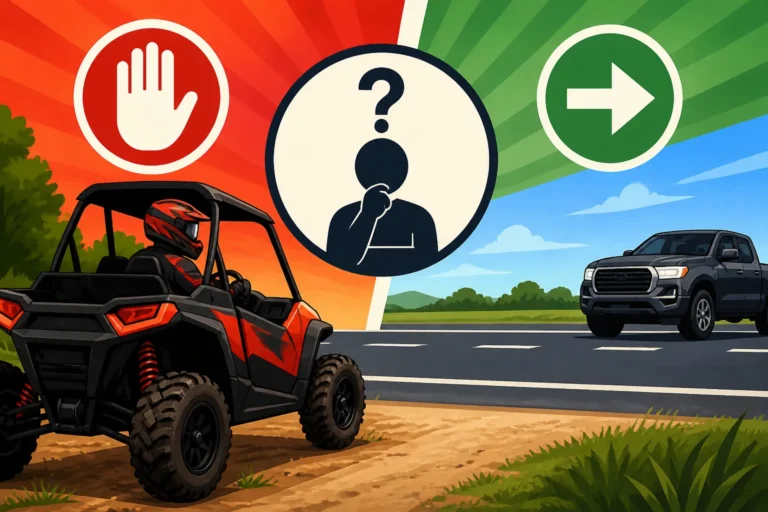
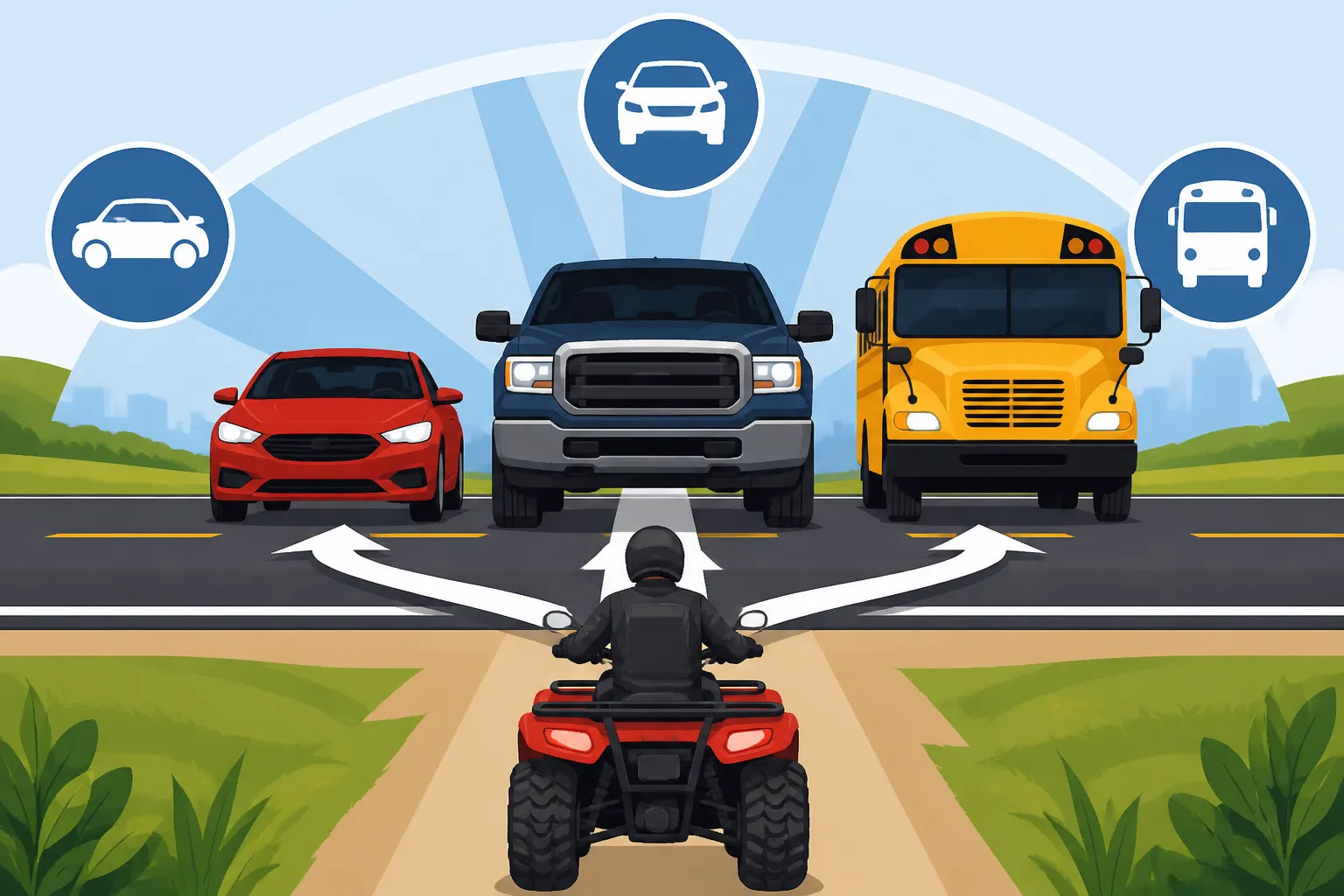
When the law says an ATV must yield to everything on a road, it's not exaggerating. It means exactly what it sounds like: cars, trucks, motorcycles, bicycles, pedestrians, even other ATVs that might have the right-of-way in a different scenario – you name it, and an ATV is expected to yield to it. This isn't just good manners; it's a legal obligation designed to minimize potential conflicts and accidents involving a vehicle that offers minimal protection to its occupants.
Consider a typical scenario: you're making a farm trip on a county road, an allowed use under [When Farm Use Makes an ATV Road Trip Legal]. You approach an intersection, even one where you might normally have the right of way if you were in a car. As an ATV rider, you must assume that no one else sees you, and that you do not automatically have the right of way. This means stopping, looking both ways multiple times, and waiting until the intersection is completely clear of all other traffic before proceeding. It's about being proactively cautious, rather than relying on other drivers to see you or anticipate your movements. This is a significant distinction from how most people are taught to drive traditional road-legal vehicles, where right-of-way rules are more clearly defined and reciprocal.
This yielding mandate extends beyond intersections. If you're on a two-lane gravel road and a faster vehicle approaches from behind, you are expected to slow down, move as far to the right as safely possible, and allow them to pass without impediment. If you're encountering another vehicle at a narrow spot, the expectation is that the ATV will give way. Even when crossing a highway, which is permitted under specific conditions, you are required to come to a complete stop and yield to all traffic on the highway. This is part of [Nebraska Crossing Rules at Ninety Degrees], ensuring your crossing is as safe and quick as possible. This constant vigilance can feel like a lot, but it's crucial for your safety and adherence to the law.
Safety, Visibility, and Legal Responsibilities
The primary reason for this universal yielding requirement boils down to safety and the inherent differences between ATVs and standard road vehicles. ATVs are smaller, often slower (especially given Nebraska's [Nebraska's 30 mph Road Limit] for ATVs on public roads), and their open design offers very little protection in a collision. Furthermore, they are often less visible to other drivers, particularly on dusty gravel roads or at dawn/dusk, even with proper lighting.
To counteract these inherent disadvantages, Nebraska law places the onus on the ATV operator to maximize their visibility and always be prepared to avoid conflict. This is why you'll see rules about equipment like [Why Road-Legal ATVs Need a 5-Foot Safety Flag]. This flag, typically triangular and day-glow orange, is meant to extend above your machine, making you more noticeable over hills or around corners, especially when you might be obscured by larger vehicles or terrain. Additionally, functioning headlights and taillights are not just a good idea; they're often legally required when operating on roads, even during daylight hours in some contexts, to further enhance visibility. Companies like SuperATV offer a wide range of lighting solutions and safety flags that can help meet these requirements and improve your presence on the road.
Beyond equipment, there’s the critical component of operator responsibility. If you're involved in an accident on a public road while riding your ATV, and it's determined you failed to yield, you could face significant legal and financial consequences. This includes potential citations, fines, and being held liable for damages or injuries. It's why [Nebraska Requires Liability Insurance on Roads] if you're going to venture onto public thoroughfares. This insurance helps cover potential costs if an accident does occur, but it doesn't absolve you of the responsibility to ride safely and legally. The overarching message is clear: when an ATV is on a public road in Nebraska, its operator must be acutely aware of their surroundings, constantly anticipate potential hazards, and always prioritize the safety of others by yielding.
Preparing Your Machine and Yourself for Road Use
Knowing you have to yield to everything is one thing, but actually implementing it safely and effectively on the road requires preparation. It's not just about hitting the brakes; it's about making your presence known, being predictable, and having your machine set up to handle the demands of road travel, even for short distances. Many riders invest in aftermarket accessories to enhance their road-going capabilities, and for good reason.
Visibility is paramount. Beyond the required safety flag, consider adding reflective tape to your machine, especially if you anticipate operating near dawn or dusk, even if snow removal makes [Nebraska Snow Removal Night Exception] an option. Brighter, more robust LED headlights and taillights can make a huge difference in how quickly other drivers perceive you. SuperATV offers various light bars, cube lights, and LED whips that can significantly boost your visibility. Also, proper mirrors are often overlooked but are essential for keeping track of traffic behind you, allowing you to anticipate passes or turns safely.
Your personal preparation is just as important. Always wear appropriate safety gear, including a helmet, eye protection, gloves, and sturdy boots. While Nebraska’s helmet statute [Nebraska's Helmet Statute Covers Motorcycles, Not ATVs] doesn't explicitly require helmets for ATVs, it's just plain smart to wear one for the same safety reasons you’d wear one on a motorcycle. Be familiar with the specific routes you plan to take, especially if they involve busy intersections or high-speed roads. Plan your stops and turns well in advance, using hand signals in conjunction with your machine's turn signals (if equipped) to clearly communicate your intentions to other drivers. Remember, the goal is to be as predictable as possible, reducing any ambiguity about your actions on the road.
Furthermore, ensure your tires are properly inflated for road use (which might be different from trail pressure) and that your brakes are in excellent working order. A sudden need to yield means you need to be able to stop quickly and safely. Regular maintenance checks become even more critical when you're going to be sharing the road with other vehicles. Staying informed about local regulations, such as [Nebraska City Ordinances That Open Streets], is also vital, as these can add layers of complexity to state rules.
Here’s a quick overview of how ATVs compare to standard vehicles on Nebraska roads:
| Feature/Action | Standard Road Vehicle (Car/Truck) | ATV/UTV on Nebraska Road (Under Exception) |
|---|---|---|
| Right-of-Way | Determined by traffic laws, signs, and signals; generally reciprocal | Must Yield to Everything; always assume no right-of-way |
| Visibility | Designed to be highly visible, standard lighting, larger profile | Smaller, less visible; requires extra measures (flag, enhanced lights) |
| Protection | Enclosed cabin, seatbelts, airbags, crumple zones | Open design, minimal protection; operator highly exposed |
| Speed Limit | Varies by road type (e.g., 55 mph rural, 75 mph highway) | Generally 30 mph maximum for legal road use |
| Insurance | Mandatory liability insurance for all road use | Mandatory liability insurance only if used on roads |
| Signaling | Standard turn signals, brake lights, horn | Turn signals (if equipped), hand signals, brake lights, horn required |
| Road Design | Designed for sustained road travel, stable at high speeds | Designed for off-road; road use is typically short-distance and conditional |
This table clearly illustrates the stark differences and helps underscore why the yielding rule is so critical. It’s not about your machine's capabilities in the dirt, but its limitations and vulnerabilities in a mixed-traffic environment. By embracing this mindset and taking the necessary precautions, you can navigate Nebraska's roads safely and legally on your ATV or UTV.
Disclaimer
This article is for general informational purposes only and does not constitute professional advice. Laws, prices and regulations vary by location and change over time. Consult a qualified professional for guidance on your specific situation.