What a Ninety-Degree Crossing Looks Like in Practice
It can feel like you need a law degree just to figure out where and how you can ride your ATV or UTV in Nebraska, especially when it comes to those seemingly simple tasks like crossing a public road. Riders often find themselves scratching their heads over terms like "ninety-degree crossing," wondering what on earth that even means in practice and how to do it without breaking a rule or, worse, causing a dangerous situation. This guide is here to untangle that specific puzzle, explaining exactly what a ninety-degree crossing looks like on Nebraska roads and how you can execute it safely and legally.
Understanding Nebraska's Ninety-Degree Crossing Rule
Let's be honest, the idea of driving your ATV or UTV on a paved road can be daunting. Nebraska law is very clear that these machines are primarily for off-road use, but there are specific, limited circumstances where you might find yourself needing to cross a road. When that time comes, the "ninety-degree crossing" isn't just a suggestion; it's a critical safety and legal requirement. It's one of those rules designed to keep everyone on the road, including you on your machine, as safe as possible.
The core idea behind this rule is to minimize the time your off-road machine is exposed to the dangers of a public roadway. You're trying to get from one side to the other in the most direct and predictable way possible for other drivers. Think about it from the perspective of someone in a car or truck: they expect certain types of vehicles to be on the road, moving in certain ways. An ATV or UTV, by its nature, handles differently and might not be as immediately visible, especially if it's lingering or moving unpredictably on the pavement.
This rule is a foundational element of [Nebraska Crossing Rules at Ninety Degrees], emphasizing a quick, perpendicular traverse. It's not about being quick and reckless, but quick and controlled. Your ATV or UTV, with its often higher center of gravity and knobby tires, isn't designed to behave like a street legal vehicle on asphalt, so the less time you spend operating it in a way it wasn't intended, the better for everyone involved.
Why the Ninety-Degree Angle?
The safety rationale behind requiring a ninety-degree angle for road crossings is actually quite straightforward, even if the execution can feel a bit unnatural at first. When you approach a public road on your ATV or UTV, you're entering a dynamic environment where other vehicles are moving at potentially much higher speeds. Your machine, while powerful off-road, is less visible and less agile on pavement compared to cars or trucks. A direct, perpendicular crossing drastically reduces the time your machine is in the traffic lane, minimizing the chance of a collision.
Imagine trying to cross a busy highway at a sharp angle; you'd be moving with the flow of traffic for a longer period, making yourself a harder-to-predict obstacle for oncoming or passing vehicles. This extended exposure increases the risk of being rear-ended or broadsided. By going straight across, you're presenting the smallest possible profile to traffic, making your path of travel clear and concise. It's about predictability: other drivers can quickly assess your intention to cross directly and adjust their speed accordingly, rather than having to guess if you're trying to turn onto the road or are just lingering.
Furthermore, a ninety-degree crossing helps with the rider's own visibility. It forces you to look left and right directly down the road for oncoming traffic, giving you the best possible view of the roadway before you commit to crossing. Trying to angle across might tempt you to focus more on the turn than on a full scan of both directions, potentially missing a fast-approaching vehicle. This rule is a cornerstone for preventing unnecessary accidents and ensuring that when you do use your machine on a road, it's done with the utmost caution and adherence to safety.
Where This Rule Applies
It's easy to assume that a rule as specific as the ninety-degree crossing only applies to major highways or busy intersections, but in Nebraska, its reach is broader than you might initially think. This rule isn't exclusive to those high-speed, multi-lane roads. It applies any time your ATV or UTV needs to traverse any public road, whether it's a bustling state highway, a quiet paved county road, or even a local blacktop within an unincorporated village that has opened its streets to ATVs. The key here is "public road" and the necessity of getting from one side to the other.
For many riders in Nebraska, especially those using their machines for agricultural purposes, this means crossing county roads regularly. You might be moving from one field to another, or from your barn to a pasture across the road. Even if it's a seldom-used gravel road, if it's a designated public thoroughfare, the ninety-degree crossing rule is in effect. It's important not to get complacent on quieter roads, as the unexpected appearance of an ATV can still surprise other drivers, even if they're not traveling at highway speeds.
Understanding where you are legally allowed to even make these crossings is crucial. While the ninety-degree rule is fairly universal for actual crossing maneuvers, the ability to operate your ATV on a road to begin with often hinges on specific exemptions, like those for farm use, or on local ordinances. Whether you're making a farm trip outside city limits or navigating a town with [Nebraska City Ordinances That Open Streets], the crossing itself must still be done at a right angle. This ensures consistency in safety expectations, regardless of the road's type or traffic volume.
Visualizing the Ninety-Degree Maneuver
Okay, so we know why we have to cross at ninety degrees. Now, let's get down to the nitty-gritty of how it actually looks and feels when you're doing it. For some, it might seem counter-intuitive, especially if you're used to the flow of traffic in a car. With an ATV or UTV, you're aiming for a deliberate, almost surgical approach to road crossing, rather than blending in with the general traffic patterns. It's about being visible, predictable, and getting off the main road surface as quickly and safely as possible.
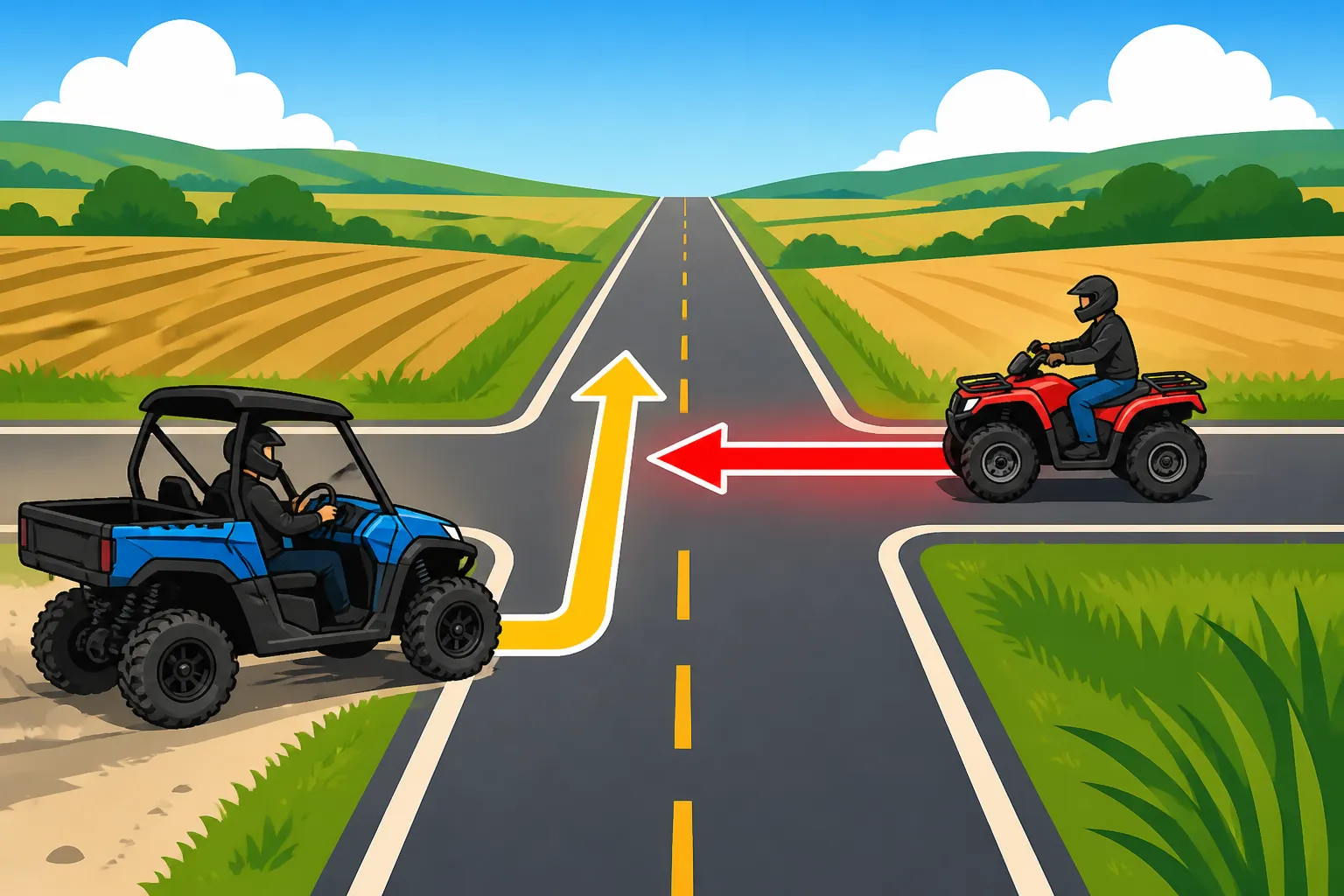
Think of it like this: you're not making a turn onto the road and then immediately off it. You're literally traversing it, like walking across a hallway. This mental image can help solidify the perpendicular nature of the movement. Your path of travel should form a capital "T" with the road you're crossing, not an "X" or a curved path. This direct line minimizes your time in the danger zone and clearly communicates your intent to any approaching traffic.
It's a moment that requires full attention and a clear understanding of your machine's capabilities on pavement. Unlike dirt or gravel, asphalt offers different traction, and sudden movements can be less forgiving. So, while you need to be decisive, you also need to be smooth and controlled, ensuring your machine responds predictably as you cross. Mastering this maneuver is key to safe and legal road use for Nebraska ATV and UTV riders.
The Ideal Scenario: A Straight Shot
The ideal ninety-degree crossing is all about precision and a clear, unwavering path. Imagine you're riding along a field edge, and your next destination is a pasture directly across a paved county road. As you approach the road, you'll want to slow down significantly, well before reaching the edge of the pavement. Bring your machine to a complete stop, just at the shoulder, facing the road. This isn't a "California roll" stop; it's a full, deliberate halt where your tires are not yet on the asphalt.
From this stopped position, you'll perform a thorough visual check. Look left, then right, then left again, scanning for any approaching vehicles. Don't just glance; actively search the horizon for headlights or dust plumes. If the road is clear, or if there's a generous, safe gap in traffic, you'll then proceed directly forward, aiming for the opposite shoulder or ditch line. Your steering wheel or handlebars should remain as straight as possible, guiding your ATV or UTV in a perfectly perpendicular line across the road.
This "straight shot" should be executed with enough momentum to get across efficiently but not so fast that you lose control. Once your tires are fully off the pavement and onto the opposite shoulder or off-road area, you can then resume your original direction of travel. This whole process might only take a few seconds, but those seconds are critical for your safety and adherence to the law. It's a textbook example of [Nebraska Complete Stops Before Crossing] and ensures you're visible and predictable for any other drivers on the road.
Common Mistakes to Avoid
Even with the best intentions, it's easy to fall into common traps when attempting a ninety-degree crossing. One of the most frequent mistakes riders make is attempting to turn slightly down the road before or after crossing. For example, you might try to cross and then immediately merge into a travel lane for a short distance before turning off again. This is a big no-no. The rule is strictly about crossing from one side to the other, not about using the road as a temporary travel lane. Lingering on the pavement or trying to drive parallel to the flow of traffic, even for a few yards, defeats the safety purpose of the ninety-degree rule and can put you in a very dangerous position.
Another error is cutting corners, literally. Instead of making a crisp, perpendicular line, riders might inadvertently drift into a diagonal path, especially if they're trying to speed up or feel rushed. This angled approach significantly increases the time your machine spends in the traffic lane and makes your intentions less clear to other motorists. It also means you're not presenting the smallest profile possible to potential oncoming traffic, increasing the risk of a collision.
Furthermore, failing to come to a complete stop before crossing is a major pitfall. A rolling stop, even a slow one, doesn't give you the same opportunity to thoroughly scan for traffic as a full stop does. It also means you might not have the optimal starting position for a straight-line acceleration across the road. Remember, [Nebraska Yielding at Every Crossing] means you must give way to all other traffic, and that sometimes requires patience. Rushing the crossing, taking an improper angle, or using the road as a brief thoroughfare are all actions that undermine the ninety-degree rule and can lead to dangerous encounters or unwanted citations.
Practical Application and Safety Tips for Crossings
Executing a ninety-degree crossing isn't just about understanding the rule; it's about making it a habit every single time you need to traverse a public road with your ATV or UTV. This means developing a routine, almost like a pre-flight checklist, that you follow without fail. Safety on the road isn't a game of chance; it's a game of preparation, awareness, and precise execution. When you're dealing with vehicles that can be less visible and are less protected than a typical car, these steps become even more critical.
The practical application of the ninety-degree rule extends beyond just the moment you're on the asphalt. It encompasses everything from how you approach the road to how you exit it. Your goal is to be seen, to be predictable, and to minimize risk. This means using common sense, even in situations where the law might seem overly strict. Remember, the law is designed for the lowest common denominator of safety, and in many rural Nebraska settings, you'll encounter a variety of drivers with varying levels of attention and expectations.
By integrating these practical tips into your riding habits, you'll not only stay on the right side of the law but, more importantly, you'll significantly enhance your personal safety and the safety of those around you. Being a responsible rider means always prioritizing caution and preparedness, especially when interacting with public roadways.
Before You Cross: Pre-Crossing Checklist
Before your wheels even touch the edge of a public road, a quick mental (or even verbal) checklist can dramatically improve your safety. First and foremost, slow down well in advance. Don't come roaring up to the road and slam on the brakes. Give yourself plenty of time to assess the situation, adjust your speed, and come to a smooth, controlled stop. This also signals to any distant traffic that you are preparing to stop and perhaps cross.
Once you're stopped at the very edge of the road, or just off it, perform a thorough check for traffic from both directions. And don't just glance! Really turn your head, look down the road as far as you can see, then check the other direction. Do this multiple times. Remember that ATVs and UTVs might be harder to see, especially against certain backgrounds or in changing light conditions, so you need to be extra vigilant. Look for signs of traffic, like dust clouds or glints of sunlight off windshields, even if you don't immediately see a vehicle.
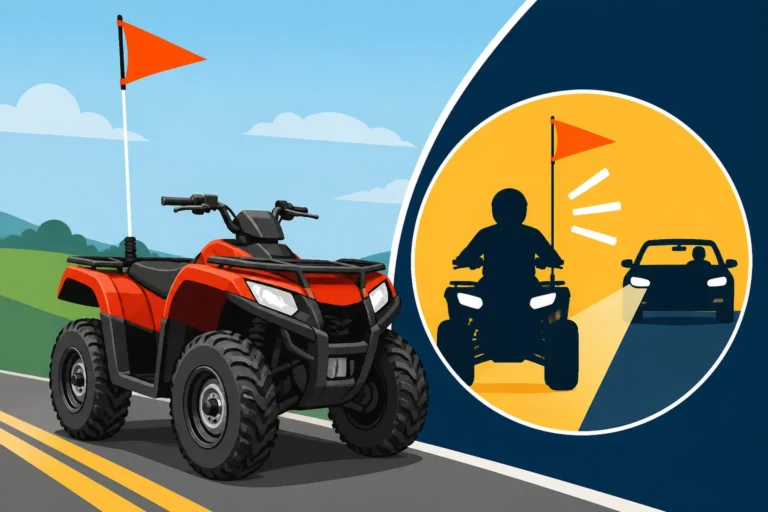
Beyond traffic, quickly check your own machine. Are your headlights and taillights on, even if it's daylight? [Nebraska Requires Head and Tail Lights] for any road use, and they greatly enhance your visibility. Is your [Nebraska Safety Flag Dimensions] flag properly displayed and standing tall, ideally at least [Nebraska's 5-Foot Safety Flag Rule] above the ground? Visibility is your best friend. Consider adding reflective tape to your machine, especially if you ride in areas where traffic might be sparse but fast. Companies like SuperATV offer a variety of lighting and flag options that can significantly improve your presence on or near roads, making you harder to miss.
During the Crossing: Eyes, Ears, and Momentum
The moment you decide the path is clear and you begin your ninety-degree crossing, it's a commitment. This isn't the time for hesitation or second-guessing. You need to be decisive, but also smooth and controlled. Keep your eyes up, scanning both directions continually, even as you move. Don't fixate on just one spot; your awareness needs to be all-encompassing. Your ears can also be a valuable tool; listen for the sound of approaching vehicles that you might not yet see.
Apply enough throttle to get your machine moving quickly and efficiently across the pavement, but avoid excessive speed that could cause a loss of traction or control. Remember, off-road tires behave differently on asphalt, especially if it's wet or sandy. Maintain your precise ninety-degree trajectory, aiming for a straight line to the opposite shoulder or ditch. Avoid any sudden steering inputs that could alter your path or throw you off balance. The goal is a quick, clean transit directly across the lanes of travel.
If, against all odds, traffic suddenly appears mid-crossing, your priority is to complete the crossing safely and quickly if you are already committed. However, if you're only just beginning and have a chance to stop, that's the safer option. This highlights why that initial, thorough scan is so critical. For more complex crossings, such as [Nebraska Divided Highway Crossings], extra caution is paramount. These crossings often involve multiple lanes and sometimes a median, requiring even greater patience and awareness to ensure you have a clear path through all segments of the roadway.
After the Crossing: Back to Off-Road Protocol
You've made it across! Congratulations. But your duty to safety and legal compliance isn't quite over yet. The instant your ATV or UTV's tires are fully off the paved surface and onto the opposite shoulder, ditch, or field access, your focus immediately shifts back to off-road protocol. This means you should not, under any circumstances, begin to travel along the shoulder or onto the road parallel to traffic, even for a very short distance.
The whole point of the ninety-degree rule is to get you off the road as quickly as possible. Once you're safely across, you should adjust your machine's direction and speed to continue your journey on the intended off-road path. If you need to make a turn to proceed, do so only after you are completely clear of the public road surface. This strict adherence reinforces the understanding that ATVs and UTVs are not regular road vehicles in Nebraska and are only permitted on roads under very specific, temporary, and limited conditions.
This immediate return to off-road travel helps reinforce your role as an off-highway vehicle user. It signals to any lingering traffic that you have completed your necessary crossing and are no longer interacting with the flow of road traffic. It also keeps you out of situations where you might inadvertently violate other road use laws for ATVs, which are generally very restrictive in Nebraska. By following this "get on, get off" mentality, you complete the full circle of safe and legal road interaction.
Local Ordinances and Agricultural Exceptions
It's one thing to understand how to make a ninety-degree crossing, but it's an entirely different beast to know when and where you're even allowed to be on a public road in Nebraska to make such a crossing. This is where things can get a bit more nuanced, as state law provides a baseline, but local ordinances and specific use cases, particularly for agriculture, introduce layers of complexity that riders absolutely need to be aware of. Getting this wrong can lead to serious fines or even impoundment of your machine.
Riders in Nebraska often express frustration with the patchwork of rules, where what's permissible in one county or town might be strictly forbidden just a few miles down the road. This isn't just an inconvenience; it's a critical safety concern, as riders might unknowingly violate local laws simply by crossing an invisible boundary. That's why due diligence is key. Never assume that just because you've crossed a road safely in one area, you'll be allowed to do the same elsewhere without checking local regulations.
Ultimately, your ability to legally perform a ninety-degree crossing depends on first having the legal right to be on that road at all, even momentarily. The ninety-degree rule is about the manner of crossing, not the permission to cross. Always confirm the latter before attempting the former.
How Local Rules Might Affect Crossings
While the state of Nebraska mandates the ninety-degree crossing when an ATV or UTV is on a public road, the very act of being on that road often depends on local regulations. This is where the landscape of ATV/UTV road access gets tricky. Many cities and counties have the authority to create their own ordinances regarding off-road vehicle use within their boundaries. So, what might be a legal crossing of a county road in a rural township might be an illegal act if that same road runs through a municipality that hasn't specifically opened its streets to ATVs.
It's not uncommon for towns to implement [Nebraska City Ordinances That Open Streets] to ATVs, usually with their own set of rules regarding permits, hours of operation, and sometimes even specific routes. Similarly, [Nebraska County Board Resolutions for Villages] can grant permission for ATVs in unincorporated areas. If you're riding through an area with such an ordinance, and you need to cross a designated street, the ninety-degree rule still applies. However, if the city or county hasn't adopted such an ordinance, then any recreational use of an ATV on their public roads is generally prohibited, making any crossing, even a ninety-degree one, illegal.
This means before you even plan your route, you need to investigate the local rules for every community you might traverse. A simple call to City Hall or the County Clerk's office can save you a lot of headaches, fines, and potentially dangerous encounters with law enforcement. Don't rely on hearsay or what a friend told you; ordinances can change, and interpretations can vary. Always get the most current information for your specific riding area.
Agricultural Use: A Key Exception
For many Nebraska residents, the primary reason an ATV or UTV is on a public road is related to agriculture. Nebraska law provides a significant exception for these machines when they are being used for legitimate farming or ranching purposes. This means if you're using your quad or side-by-side to tend to crops, move livestock, transport equipment between fields, or perform other tasks directly related to the operation of a farm or ranch, you can legally operate it on public roads. This is covered under [Nebraska's Agricultural Road Exception].
However, "agricultural purposes" isn't a blanket term that covers any activity you might do on a farm. It specifically refers to the work being done. Driving your ATV from your farm to a nearby fishing spot, for instance, would generally not be considered an agricultural purpose, even if the fishing spot is on your own land or adjacent to it. It has to be directly tied to the active business of agriculture. This distinction is crucial, and law enforcement can and does issue citations if they determine your road use falls outside this exception. The article [When Farm Use Makes an ATV Road Trip Legal] provides further details on this.
Even when operating under the agricultural exception, the ninety-degree crossing rule is still paramount for safety. While you might be allowed to travel short distances on the shoulder or along the edge of the roadway for agricultural tasks, any time you need to cross the actual traffic lanes, you must do so at a right angle, following all the safety precautions previously discussed. The agricultural exception grants you permission to be there, but it doesn't exempt you from the fundamental safety rules that protect both you and other motorists.
| Feature | Correct 90-Degree Crossing | Incorrect Angled Crossing |
|---|---|---|
| Approach | Slow, controlled stop at road edge | Fast, rolling approach |
| Angle of Entry | Perpendicular (90 degrees to road) | Acute or obtuse angle |
| Time on Pavement | Minimal, straight line across | Extended, potentially drifting with traffic |
| Visibility | Predictable path for other drivers | Unpredictable, harder to judge for drivers |
| Risk Factor | Reduced risk of collision | Increased risk of collision, especially rear-end |
| Legal Status | Compliant with Nebraska law | Potential for citation, safety hazard |
| Rider Control | Optimized for safe traction and steering | Compromised, less stable on asphalt |
Disclaimer
This article is for general informational purposes only and does not constitute professional advice. Laws, prices and regulations vary by location and change over time. Consult a qualified professional for guidance on your specific situation.