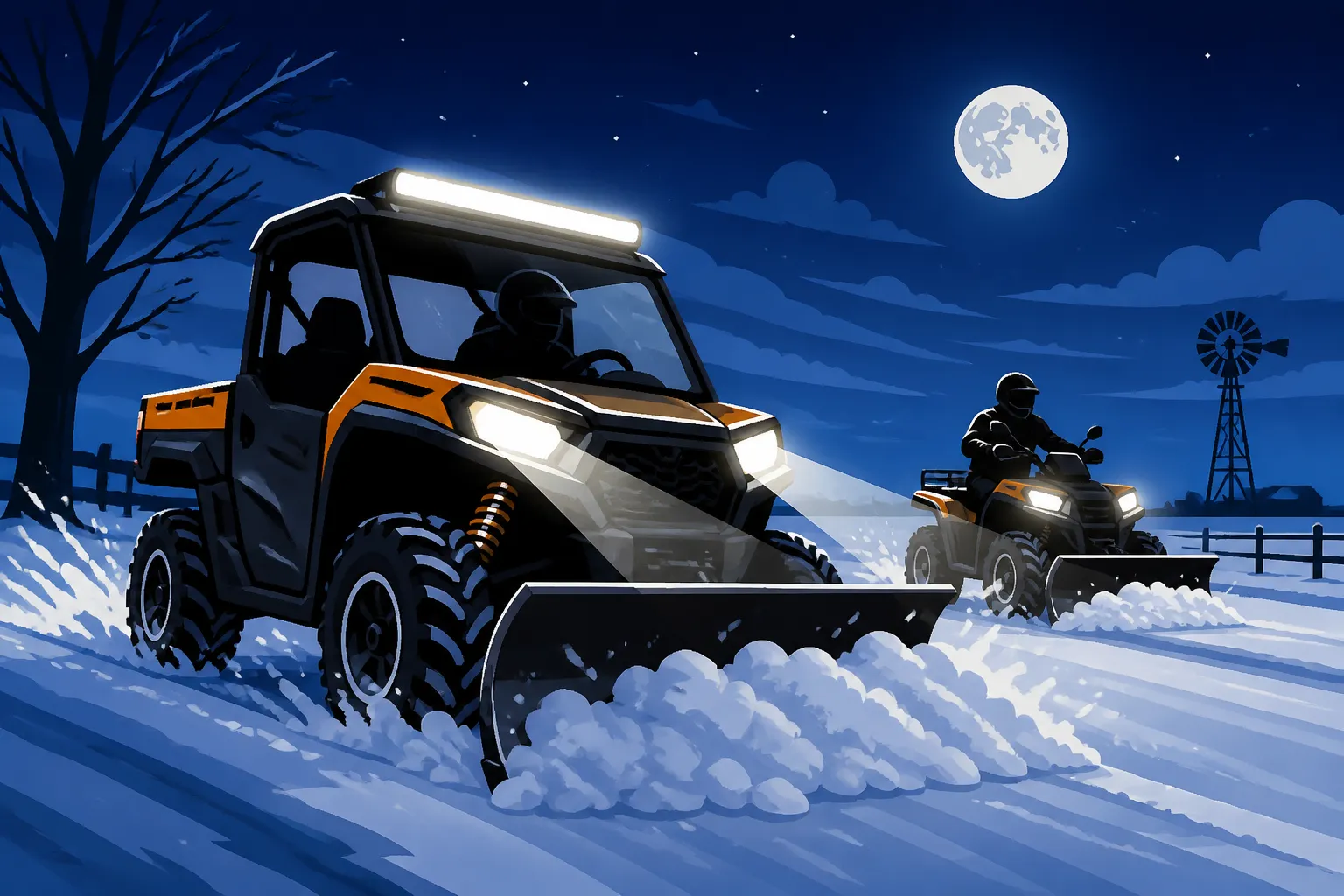
Clearing Snow After Dark
The biting Nebraska winter often throws a curveball when it comes to snow removal: it rarely snows conveniently during daylight hours. Instead, you might wake up to a fresh blanket, or worse, get hit with a late-night storm that demands immediate attention. For many of us who rely on our ATVs and UTVs to tackle the drifts, clearing snow after dark isn't just an inconvenience; it's a cold, often urgent reality. This guide will walk you through everything you need to know to safely and effectively clear snow with your off-road machine when the sun has long since set, making sure you're prepared for whatever winter throws your way.
The Unique Challenges of Nighttime Snow Removal in Nebraska
Clearing snow with your ATV or UTV is a powerful solution for those long driveways, farm lanes, or even small business parking lots here in Nebraska. But when that snow falls, and needs clearing, after the sun has dipped below the horizon, you're facing a whole new set of challenges that go beyond just the cold.
Limited Visibility and Depth Perception
First and foremost, the biggest hurdle is visibility. Even under a full moon, the world looks different in the dark. Shadows can play tricks on your eyes, making it incredibly difficult to judge snow depth, spot hidden obstacles, or discern the edges of your plowing path. A small mound of snow could be a harmless drift, or it could be concealing a landscape timber, a forgotten garden hose, or even a child's toy. Your peripheral vision is severely hampered, increasing the risk of veering off course or hitting something you didn't see. When you're running a plow or snowblower attachment, this lack of clear vision isn't just frustrating; it's a significant safety hazard. You're trying to move forward, focus on the plow, and still keep an eye on your surroundings, all while battling the darkness.
Increased Fatigue and Cold Exposure Risks
Secondly, dealing with snow at night often means you've already put in a full day of work. Pushing snow, even with the aid of an ATV or UTV, can be physically demanding. The combination of cold temperatures, the mental strain of reduced visibility, and general fatigue from your day can quickly wear you down. When your body is working harder to stay warm and your eyes are straining to see, your reaction times slow, and your judgment can become impaired. This isn't just about feeling tired; it's about making a crucial mistake that could lead to an accident or damage to your machine or property. Keeping yourself warm with proper gear, taking breaks, and staying hydrated become even more critical when you're working against the clock and the cold.
Navigating Nebraska's Road Rules After Dark
Another major challenge, especially if you need to access a different part of your property, your neighbor's property, or a small municipal street, involves Nebraska's specific rules for operating ATVs and UTVs on public roads. While the law generally restricts ATVs and UTVs from road use, there's a vital exception for snow removal. [Nebraska Snow Removal Night Exception] specifically allows for ATV or UTV operation after dark when plowing or removing snow. However, this exception comes with strict requirements, particularly concerning lighting. You can't just throw a plow on and hit the gravel road; you need to ensure your machine is properly equipped and you understand the local nuances. This isn't just about avoiding a ticket; it's about ensuring you're seen by any passing vehicles, even in the middle of a blizzard.
Equipping Your ATV/UTV for Safe After-Dark Plowing
Getting your ATV or UTV ready for nighttime snow removal means more than just attaching a plow. It's about enhancing visibility, staying comfortable, and ensuring your machine can handle the demands of working in the dark.
Essential Lighting Upgrades
The standard headlights on most ATVs and UTVs are fine for general riding, but for serious snow plowing after dark, they often fall short. You need to illuminate not just the path directly in front of you, but also the edges of your plow, the area immediately around your tires, and a wider swath of your work zone.
Consider adding auxiliary LED light bars or spot/flood lights. These can be mounted on your front rack, bumper, or even your roll cage (for UTVs) to cast a much broader and brighter beam. Look for lights with a combination of flood and spot patterns to give you both wide area illumination and deeper reach. Some plows even have integrated LED lights, which are incredibly useful for seeing precisely where the blade is cutting into the snow. Remember, the goal isn't just to see where you're going, but to see where the snow is going, where the edge of the driveway is, and any potential obstacles lurking under the white blanket. Good lighting is an investment in your safety and efficiency. Brands like SuperATV offer a wide range of robust and weather-resistant LED light bars that are perfect for cutting through the darkest Nebraska nights.
Beyond forward-facing lights, think about rear-facing lights. If you have to back up frequently or maneuver in tight spaces, a bright LED work light mounted on the rear of your machine can be a game-changer. It helps you see what's behind you and also makes you more visible to anyone else in the vicinity. Visibility isn't just about seeing; it's about being seen.
Heated Accessories for Comfort and Safety
Working in the freezing Nebraska night quickly saps your body heat. Maintaining a comfortable core temperature isn't just about staying cozy; it directly impacts your focus, dexterity, and endurance. Heated grips are a blessing, keeping your hands warm and flexible, which is crucial for operating controls and steering. Heated seats, especially on UTVs, make a surprising difference in overall comfort, combating the chill that rises from the seat itself.
For UTV owners, a full cab enclosure provides the ultimate protection from wind, snow, and extreme cold. Add a cab heater, and you've got a truly comfortable, productive workstation, allowing you to plow for longer stretches without succumbing to the cold. Even simple wind deflectors or a full windshield can dramatically reduce wind chill and keep snow from blowing directly into your face. Staying warm helps you stay alert, which is paramount when working in challenging, low-light conditions.
Plow and Attachment Considerations
The plow itself needs to be ready for dark operations. Ensure your plow lights, if equipped, are working perfectly. For manual angle plows, consider adding reflective tape to the edges of the blade, especially if you anticipate being near roads or other traffic. This small addition can significantly increase your visibility.
If you're using a winch to lift your plow, make sure it's in top working order and that the controls are easy to locate and operate by feel in the dark. Regular maintenance checks, like ensuring all connections are tight and the cable isn't frayed, are even more critical when you're relying on that equipment in adverse conditions. The last thing you want is a winch failure when your plow is stuck in a deep drift and you're miles from warmth.
Understanding Nebraska's Rules for Snow Removal on Roads After Dark
While your ATV or UTV is an invaluable tool for snow removal on private property, navigating public roads, even briefly, requires a clear understanding of Nebraska's specific statutes, especially when the sun isn't out.
The "Snow Removal Night Exception" Explained
Nebraska Revised Statute 60-6,356 outlines when ATVs and UTVs can legally be operated on public roads. While the general rule is quite restrictive, there's a specific and incredibly helpful exception: "[Nebraska Snow Removal Night Exception]" permits the operation of an ATV or UTV on a public road or highway during hours of darkness solely for the purpose of plowing or otherwise removing snow. This is a crucial distinction for many rural landowners, farmers, and even small communities who rely on these machines to keep paths clear.
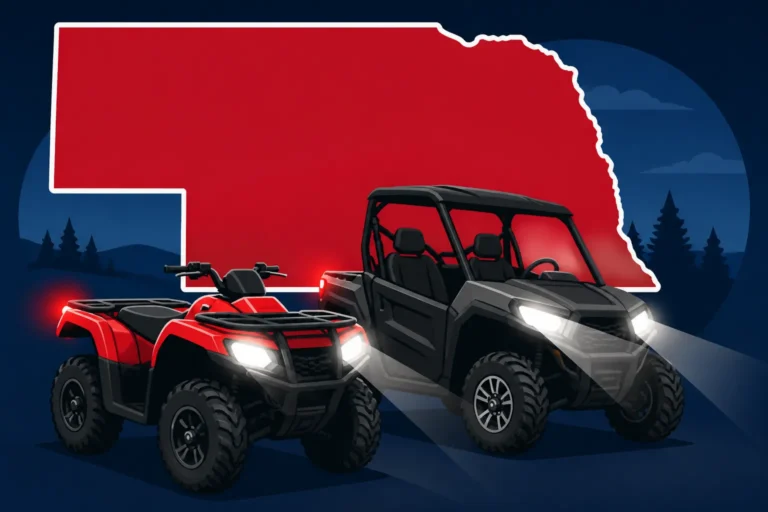
However, this isn't a free pass. The statute goes on to mandate specific lighting requirements for such operation. Your machine must be equipped with at least one headlight (though two are highly recommended for better visibility) and one taillight. These lights must be illuminated. Furthermore, the statute [Nebraska Lighting Statute 60-6,357] specifies that an ATV or UTV operated on public roads during darkness for snow removal must display a flashing amber light or strobe light, visible from both front and rear. This amber light serves as a critical warning to other motorists, signaling that a slow-moving, wide vehicle is ahead. Without these specific lighting elements, even if you're plowing snow, you could be cited for illegal road use.
Local Ordinances and Agricultural Use
While the state statute provides a framework, it's also important to remember that local jurisdictions can have their own rules. Some Nebraska cities or counties might have ordinances that further define or restrict ATV/UTV use, even for snow removal. Before operating on any municipal streets, it's always wise to [What to Ask City Hall Before Riding Streets] to see if there are any specific local permits or requirements you need to meet.
For those in agricultural areas, the distinction of "farm use" is also important. While the snow removal exception covers road use for plowing, if your primary operation of the ATV or UTV on a road is related to a farming or ranching activity, you might fall under the agricultural road exception, which has its own set of rules, including driver licensing and insurance. However, for the specific act of moving snow, the dedicated "snow removal night exception" is the most direct legal pathway for after-dark road use. [Nebraska's Agricultural Road Exception] outlines these specific situations.
It's also imperative to carry proof of ownership and insurance, especially if you're operating on public roads. While [Nebraska Requires Liability Insurance on Roads] for ATVs, it's a good idea to have it for any road operation. A copy of your ATV's title or registration paperwork, and proof of insurance, should always be with you or easily accessible.
| Feature | Standard ATV/UTV Lighting | Recommended for Night Plowing | Statutory Requirement (Night Snow Removal) |
|---|---|---|---|
| Headlights | 1-2 (often halogen) | 2+ LED (spot/flood combo) | At least 1 (2 recommended) |
| Taillights | 1 (red) | 1 (bright red) | At least 1 (red) |
| Auxiliary Lights | Optional | Essential (front & rear work lights) | Not explicitly required |
| Flashing Amber | Not standard | Highly recommended | YES, visible front & rear |
| Reflectors/Tape | Minimal | Additional reflective tape/markings | Not explicitly required |
Note: Always consult the latest Nebraska statutes and local ordinances for precise requirements. The information above is for general guidance.
Practical Tips for Effective and Safe Night Plowing
Once your machine is properly equipped and you understand the legal landscape, you can focus on the practicalities of making your after-dark snow removal as efficient and safe as possible.
Pre-Plow Reconnaissance and Route Planning
Even if you know your property like the back of your hand during the day, it's a completely different story at night. Before the snow even starts to fly, or as soon as it's light enough to see but before the serious clearing begins, take a moment to survey your plowing area. Identify any potential hazards: low-lying landscaping, rock borders, uneven concrete, sprinkler heads, or anything else that could be obscured by snow. If possible, mark these potential trouble spots with tall, brightly colored stakes or flags that will be visible above the snow. These visual cues are invaluable when your visibility is limited.
When it's time to plow in the dark, have a clear plan for your routes. Know where you're going to push the snow, where you're going to stack it, and where your turnarounds will be. Sticking to a consistent pattern minimizes unexpected maneuvers and reduces the chance of getting disoriented. Consider your starting point and ending point carefully, ensuring you won't trap yourself or have to make difficult, vision-limited reverse movements. If you're tackling a particularly large area, breaking it down into smaller, manageable sections can also help maintain focus and prevent fatigue.
Operating Techniques for Low Light Conditions
Slow and steady wins the race when plowing after dark. Resist the urge to rush, even if you're tired and want to get inside. Operating at a reduced speed gives you more time to react to unexpected obstacles and allows your lights to better illuminate the path ahead. Keep a constant lookout for changes in snow depth, which might indicate uneven ground or hidden objects. If you hit a particularly deep or heavy patch, don't try to power through it; instead, lift the plow slightly, back up, and take a smaller bite.
Maintain a clear line of sight. Keep your windshield (if you have one) clean and free of ice or condensation. If you're on an open ATV, wear eye protection that's clear or yellow-tinted to help with contrast, but avoid dark lenses. Be mindful of snow blowing back onto your lights, which can quickly diminish their effectiveness. Pull over periodically to wipe your lights clean if needed.
Consider how your plow interacts with the terrain. If you're using a skid shoe, ensure it's set correctly for the surface you're plowing. This prevents the plow from digging in too deeply and potentially catching on an unseen obstruction. For example, SuperATV offers adjustable plow systems that allow for precise skid shoe settings, which can be a lifesaver when working in varied conditions at night.
Prioritizing Personal Safety
Your personal safety is paramount. Layer up with warm, waterproof clothing. Think about a good pair of insulated gloves or mittens, and a warm hat or balaclava to protect your face from the biting Nebraska winds. Even with heated grips, your extremities are the first to get cold. Wear sturdy, waterproof boots with good traction, as you may need to get off your machine in slippery conditions. [Nebraska Riding in Winter Wind] can be brutal, so proper gear is non-negotiable.
Inform someone of your plans, especially if you're plowing a remote area or will be out for an extended period. Let them know where you'll be working and roughly how long you expect to be. Carry a fully charged cell phone, and if you're in an area with spotty service, consider a satellite messenger or two-way radio for emergencies. A basic first-aid kit in your machine is also a wise addition. If you're working alone, it's always better to be overly cautious. Take short, frequent breaks to warm up, stretch, and give your eyes a rest from the darkness and glare. Stay hydrated, even in cold weather, as dehydration can contribute to fatigue.
Working in the dark can also exacerbate existing medical conditions or make you more susceptible to injury. If you feel unwell, lightheaded, or overly fatigued, stop immediately. No amount of plowed snow is worth risking your health or safety. Remember, the snow will still be there in the morning, even if it has to wait a few more hours.
Table of Night Plowing Safety Checks
| Category | Check Point | Why It's Important |
|---|---|---|
| Machine | All forward & reverse lights functional | Essential for seeing & being seen in the dark |
| Flashing amber light working | Required by Nebraska law for road use, warns others | |
| Auxiliary lights (LED bar, work lights) | Broader, brighter illumination for better visibility | |
| Plow attachment secure & functional | Prevents unexpected detachment or malfunction | |
| Winch (if applicable) working smoothly | Crucial for plow lift, especially in heavy snow | |
| Fuel tank full | Avoid running out of fuel in the cold dark | |
| Tires properly inflated | Optimal traction and handling in snowy conditions | |
| Personal Gear | Layered, warm, waterproof clothing | Prevents hypothermia and maintains comfort |
| Insulated gloves/mittens | Protects dexterity, prevents frostbite | |
| Warm hat/balaclava | Prevents significant heat loss from the head | |
| Waterproof, insulated boots | Keeps feet warm and dry, good traction | |
| Clear eye protection | Protects eyes from snow, debris, and wind | |
| Preparation | Potential hazards marked (stakes/flags) | Prevents hitting unseen obstacles |
| Plowing route planned | Reduces unexpected turns, improves efficiency | |
| Charged cell phone | Communication in case of emergency | |
| Someone informed of your location/duration | Ensures help can be dispatched if you don't return | |
| First-aid kit accessible | Ready for minor injuries or emergencies |
Clearing snow after dark with your Nebraska ATV or UTV can be a necessary and efficient task when winter storms strike. By properly equipping your machine with enhanced lighting and comfort features, understanding the specific road laws regarding snow removal, and adopting smart, safe operating practices, you can confidently tackle even the deepest drifts long after the sun has set. Stay warm, stay visible, and plow smart.
Disclaimer
This article is for general informational purposes only and does not constitute professional advice. Laws, prices and regulations vary by location and change over time. Consult a qualified professional for guidance on your specific situation.