Being Seen After Dark on a County Road
Riding your ATV or UTV after dark on Nebraska's county roads can be a nerve-wracking experience, fraught with unseen dangers and the constant worry of not being spotted by other drivers. It's a very real concern for riders, especially since the law generally limits road use to daylight hours. This guide will delve into the specific challenges of low-light riding, explain the limited legal exceptions for nighttime ATV/UTV use in Nebraska, and outline the essential gear and riding strategies you need to maximize your visibility and stay safe.
The Unique Challenges of Night Riding on Nebraska County Roads
When the sun dips below the horizon, the world changes, and so does the dynamic of riding your off-road machine on a public thoroughfare. It’s not just about turning on your headlights; it’s about contending with a myriad of factors that conspire against your safety and the perception of other motorists. The frustrations of trying to navigate a familiar gravel road that suddenly feels alien in the dark are something many riders can relate to.
Limited Visibility and Unexpected Hazards
The most immediate challenge of night riding is the drastic reduction in visibility. Your machine’s headlights, no matter how bright, create a tunnel of light that only illuminates a small portion of what's ahead. This can lead to a severe loss of depth perception, making it incredibly difficult to judge distances and the true nature of the terrain. A small puddle in daylight can become a surprising, axle-deep crater at night. You're essentially riding with blinders on, and every bump, dip, or turn becomes a guessing game.
Imagine cresting a small hill on a county road you've ridden a hundred times. In the daylight, you'd see the gentle curve ahead and the ditch line clearly. At night, that crest might feel like a sudden drop-off into darkness, and by the time your headlights fully illuminate the bend, you might be closer to the ditch than you'd like. Beyond the road itself, wildlife is a massive concern. Deer, raccoons, and other animals are far more active after dark and can dart out with little to no warning. Hitting a deer on an ATV or UTV, especially at speed, can be catastrophic. Then there are the less natural hazards: farm implements left partially on the shoulder, unlit mailboxes, or even debris from a previous accident, all of which are virtually invisible until you're right upon them.
Motorist Perception and Safety
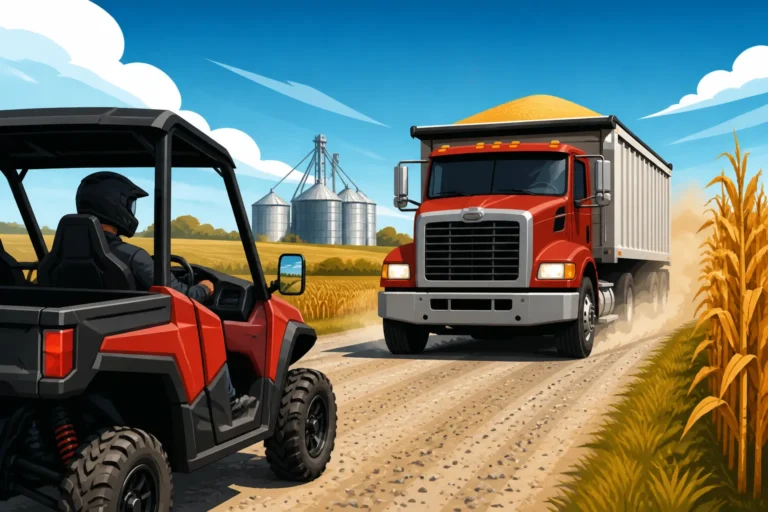
Even if you feel your machine is well-lit, there's a significant difference between seeing and being seen, especially from the perspective of another driver in a full-sized vehicle. Most motorists on Nebraska's county roads, particularly after dark, are simply not expecting to encounter an ATV or UTV. Their brains are wired to look for the higher, wider profile of a car or truck, not the smaller, lower set of lights on your off-road machine. This cognitive bias means they might not register your presence until it's too late.
Think about the height difference: a truck's headlights are often several feet off the ground, while your ATV's might be just a foot or two up. Your single headlight or pair of headlights can easily be mistaken for a distant house light, a motorcycle, or even a far-off reflector until the last moment. This is compounded by the fact that many county roads lack streetlights, making the contrast between your machine and the absolute blackness even more pronounced. A distracted driver, even for a split second, can easily miss your machine. The sudden appearance of an ATV's lights on a dark road can also startle a driver, leading to unpredictable reactions. It's not just about being visible; it's about being unequivocally recognizable as a moving vehicle.
Nebraska's Rules for Night Riding on Public Roads (and Exceptions)
Navigating Nebraska's ATV and UTV laws can feel like threading a needle, especially when it comes to riding on public roads after dark. The general rule of thumb is quite restrictive, but there are specific circumstances where it's allowed, primarily tied to agricultural operations or certain municipal ordinances. Understanding these distinctions is crucial, as ignorance of the law is no excuse and can lead to hefty fines or worse. It’s a common frustration for riders who use their machines for practical purposes to feel overly constrained by what seems like a patchwork of rules.
The General Daylight Rule
For the vast majority of ATV and UTV use on Nebraska's public roads, the law clearly states that operation is restricted to "sunrise to sunset only." This fundamental rule is in place for safety reasons, directly addressing the visibility challenges we just discussed. The idea is to limit the exposure of these smaller, less road-visible machines during the periods of lowest natural light, thereby reducing the risk of collisions with larger, faster-moving vehicles.
This means that if you're out for a recreational ride, a casual trip to a friend's house, or running an errand that isn't specifically exempted by law, you are expected to be off county roads as soon as the sun dips below the horizon. The rationale behind [Sunrise to Sunset Only] is straightforward: daylight provides the best possible natural illumination, making it easier for all road users to see and react to each other. Without this natural light, the inherent challenges of spotting an ATV or UTV become exponentially greater, increasing the potential for accidents. Adhering to this rule helps to keep you, and everyone else on the road, safer.
The Snow Removal Exception
One significant and very practical exception to the "sunrise to sunset" rule is for snow removal. Nebraska law acknowledges that ATVs and UTVs are often invaluable tools for clearing snow from driveways, private roads, and even county roads in some local jurisdictions. Because snow removal often needs to happen early in the morning, late at night, or even continuously during a snowfall, a blanket daylight-only restriction would severely hamper these necessary activities.
Therefore, the law makes a specific allowance for [Clearing Snow After Dark]. This exception permits the operation of ATVs and UTVs on public roads outside of daylight hours while engaged in snow removal operations. However, this isn't a free pass for a joyride in the snow after dark. Your machine must be properly equipped with the required lighting to make it highly visible. This exception highlights the state's recognition of the utility of these machines for agricultural and practical purposes, balancing safety concerns with the realities of life in a snowy climate. Always ensure your lights are in perfect working order if you're out plowing snow after dark.
Lighting Requirements
Regardless of whether you're riding during the day or, more specifically, if you're taking advantage of the snow removal exception after dark, your ATV or UTV must meet specific lighting requirements. Nebraska law is quite clear about what constitutes adequate lighting for any motorized vehicle on public roads, and ATVs/UTVs are no exception. These rules are in place not just for your visibility, but for others to clearly identify you as a moving vehicle.
According to [Nebraska Lighting Statute 60-6,357], your machine must be equipped with at least one headlight (though two are common and preferable) that emits a white light visible from a minimum of 500 feet to the front. You must also have at least one taillight that emits a red light visible from at least 500 feet to the rear. Additionally, if your machine is equipped with turn signals and brake lights, they must be functional. Even during the day, if you're legally operating on a county road, your headlights must be on. At night, this becomes paramount. These lighting requirements are the bare minimum. While many stock machines meet these, the inherent visibility challenges of ATVs and UTVs after dark often warrant significant upgrades beyond the factory standard.
Essential Lighting and Visibility Gear for Night Rides
When it comes to being seen after dark on a county road, relying solely on factory-installed lights can be a risky gamble. While they meet the minimum legal requirements, "minimum" often isn't "optimal" when your safety is on the line. Smart riders understand that making conscious choices about their lighting and visibility gear can dramatically reduce risks. It's about being proactive and giving yourself every possible advantage in low-light conditions.
Upgrading Your Machine's Lights
The first and most impactful step you can take is to improve the actual light output of your ATV or UTV. Stock headlights, particularly on older models, can sometimes feel like glorified flashlights. Upgrading to brighter LED bulbs is a fantastic starting point. LEDs offer superior brightness, a crisper white light, and draw less power from your machine's electrical system compared to traditional halogen bulbs. This means more light where you need it, without straining your battery.
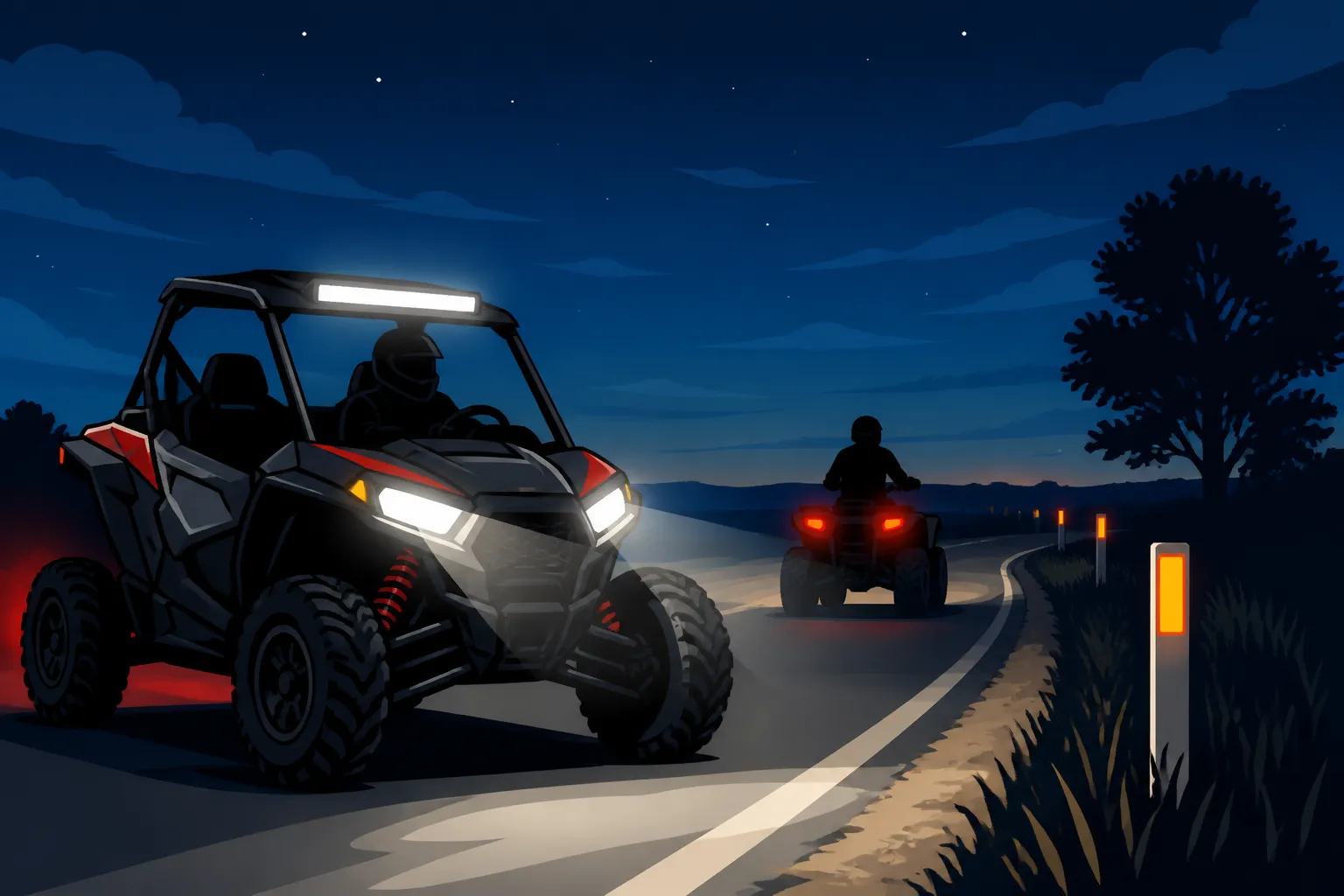
Beyond simply replacing bulbs, consider adding auxiliary lighting. LED light bars, like those offered by SuperATV, can transform your machine's forward illumination. A good quality light bar can cast a wide, powerful beam that dramatically expands your field of vision, helping you spot hazards much further down the road or trail. When selecting a light bar, consider both spot and flood patterns to get a good balance of distance and peripheral visibility. Don't forget the rear of your machine! Brighter LED taillights, and even additional amber or red marker lights, can significantly increase your visibility to vehicles approaching from behind. If your machine doesn't have factory brake lights and turn signals, investing in an aftermarket kit is a wise decision for road use. The clearer you communicate your intentions, the safer you'll be.
Reflective Markings and Safety Flags
Lights are crucial for active illumination, but reflective markings provide passive visibility, which can be just as important, especially if your lights fail or if you're seen from an unexpected angle. Think of reflective tape as a secondary line of defense that works by bouncing back light from other vehicles' headlights.
Applying [Adding Reflective Tape to an ATV for Road Use] strategically on your machine can make a world of difference. Focus on areas that face forward, backward, and to the sides. The front fenders, rear bumper, and the sides of your cargo rack or bed are prime locations. Use high-visibility, automotive-grade reflective tape in bright colors like white, yellow, or red. This tape illuminates dramatically when hit by headlights, creating a larger, more discernible silhouette of your machine. Furthermore, while generally considered a daytime safety item, the [Nebraska Safety Flag Dimensions] (a minimum 5-foot flag) can also be enhanced for night use. Many safety flags come with reflective strips or are made from highly reflective material, ensuring that even if your machine's lights aren't directly seen, the flag catches and reflects light, adding another layer of visibility high above your machine. A flag can often be seen over dips in the road or low-lying vegetation where your machine's main lights might be obscured.
Rider Visibility Gear
Your machine can be lit up like a Christmas tree, but if you, the rider, blend into the darkness, you're still creating a potential hazard. Making yourself visible is just as important as making your ATV or UTV visible. Other drivers need to see not just the machine, but also the person operating it.
The simplest and most effective piece of rider visibility gear is a high-visibility, reflective vest. These vests are typically bright fluorescent yellow or orange and feature wide bands of reflective material that light up brilliantly when illuminated by headlights. Wearing one over your riding jacket instantly makes your upper body, and therefore your presence, much more noticeable. Beyond vests, consider helmets that incorporate reflective decals or have bright, contrasting colors. Many modern helmets come with reflective elements built into their design. For your clothing, lean towards lighter colors and materials that reflect light well. While dark gear might look sleek, it disappears completely at night. Look for gloves, boots, or even your riding pants that have reflective piping or panels. Every bit of reflective surface on your person adds to your overall conspicuity and reduces the chance of another driver misjudging your location or speed.
Best Practices for Safe Night Riding on County Roads
Even with the best lighting and reflective gear, riding an ATV or UTV on a Nebraska county road after dark demands an elevated level of caution and preparation. It's not just about what you equip your machine with; it's about how you approach the ride itself. A thoughtful strategy can mean the difference between a safe trip and a harrowing experience. It's about being a defensive rider and anticipating the unexpected, which, let's be honest, is already a challenge on an ATV even in broad daylight.
Pre-Ride Checks and Route Planning
Before you even think about firing up your machine for a night ride, a thorough pre-ride check is non-negotiable. This isn't just a quick glance; it's a systematic inspection to ensure every critical component is ready for the darkness. Top of the list should be your lights: check all headlights, taillights, brake lights, and any auxiliary lighting or turn signals. Ensure they are clean, functional, and properly aimed. A dirty lens can drastically reduce light output. Also, check your battery; night riding places a greater demand on your electrical system, and you don't want to be stranded in the dark with dead lights.
Beyond the machine, meticulous route planning is key. Stick to familiar routes that you know like the back of your hand. Avoid venturing onto new or unknown roads after dark, as you won't be able to anticipate potential hazards like washouts, open gates, or sharp turns. It's also a smart habit to inform someone of your planned route and your estimated return time. This way, if you don't show up when expected, someone knows where to start looking. Knowing your route and having someone else aware of your whereabouts provides an extra layer of safety and peace of mind for everyone involved.
Riding Strategy and Awareness
Your riding strategy needs to shift significantly when operating after dark. The mantra here is "slow and steady wins the race." Lower your speeds considerably, even on roads you know well. The reduced visibility means your reaction time needs to be maximized. Constantly scan the road ahead, not just where your headlights point, but also the peripheries for any subtle changes, reflections, or movement that might indicate a hazard. If your machine has high beams, use them responsibly, dipping them for oncoming traffic to avoid blinding other drivers.
Be extra vigilant for wildlife, particularly deer, which are notorious for sudden movements. Look for glowing eyes in the ditch or movements in the shadows. Pay close attention to the texture of the road; changes in color or reflections can indicate ice, water, or mud. Drive slowly through dips and over crests, as these are common spots for hidden hazards or for losing sight of the road beyond. Remember, you're not just trying to see; you're trying to process information that is far more limited than in daylight. Assume other drivers don't see you and be prepared to take evasive action. This heightened state of awareness is exhausting but essential for a safe night ride.
Communication and Contingency
Despite your best efforts, things can go wrong. Having a solid communication plan and contingency measures in place is vital for night riding safety. First and foremost, always carry a fully charged cell phone. Even in areas with spotty service, you might find a signal at higher elevations or in specific spots. Consider a satellite messenger device if you frequently ride in very remote areas where cell service is non-existent.
Beyond communication, have an emergency kit on board. A powerful, handheld flashlight is indispensable if your machine's lights fail or if you need to inspect something off-road. A basic first-aid kit, some essential tools for minor repairs, a small tow strap, and even some reflective markers or flares can be incredibly helpful. If possible, avoid riding alone at night. Riding with a buddy or in a small group not only increases your overall visibility (more lights are better!), but it also means you have immediate assistance if someone breaks down, gets stuck, or needs help in an emergency. [What to Bring to the County Treasurer's Window] is a good reminder for initial setup, but for every ride, the emphasis shifts to safety gear.
Here's a quick overview of Nebraska's key rules for ATV/UTV visibility on county roads:
| Requirement | Daylight Hours | Nighttime (Snow Removal Exception) |
|---|---|---|
| Headlights | Required to be on | Required (white, visible 500 ft) |
| Taillights | Required | Required (red, visible 500 ft) |
| Brake Lights | Required if equipped | Required if equipped |
| Turn Signals | Required if equipped | Required if equipped |
| Safety Flag | 5-foot, day-glow orange/red triangular flag required | Not explicitly required for night, but reflective flag highly recommended for added visibility |
| Reflective Tape | Not explicitly required, but recommended | Highly recommended for all-around visibility |
| Rider Visibility Gear | Recommended (bright clothing) | Highly recommended (reflective vest, bright helmet) |
| Operating Hours | Sunrise to Sunset Only | Permitted only for snow removal operations |
Remember, while the law allows for certain uses, your personal safety should always be your top priority. Investing in better lighting, reflective gear, and adopting a cautious riding strategy will significantly enhance your visibility and safety when you find yourself on a Nebraska county road after dark. If you're ever in doubt about the legality or safety of a particular ride, it's always best to err on the side of caution. [Nebraska ATV Road Rules Under 60-6,356] clearly outlines what is permitted, and knowing this helps you stay out of trouble. For those considering an out-of-state visit, knowing [Nebraska Rules for a Visiting Iowa Rider] or [Nebraska Rules for a Visiting Kansas Rider] might also involve understanding similar visibility challenges. Planning [One Trip to the Treasurer's Counter] for titling is important, but planning every trip on the road for safety is even more critical. Ultimately, being seen after dark isn't just about avoiding a ticket; it's about getting home safely.
Disclaimer
This article is for general informational purposes only and does not constitute professional advice. Laws, prices and regulations vary by location and change over time. Consult a qualified professional for guidance on your specific situation.