How to Contest an ATV Ticket in County Court
It can be incredibly frustrating to be out enjoying your ATV or UTV in the wide-open spaces of Nebraska, only to suddenly find yourself facing a ticket. Whether you were riding on what you thought was a permissible road, crossing a field, or simply misunderstood a local ordinance, getting that citation can feel unfair and confusing. This guide is here to walk you through the process of understanding your rights and options if you're considering contesting an ATV ticket in a Nebraska county court, helping you navigate the system with a clear head.
Understanding Your Nebraska ATV Ticket and the Basics of Contesting It
Getting an ATV or UTV ticket in Nebraska often comes as a surprise, especially since the rules for where and how you can ride can feel like a patchwork quilt across the state. It's not always as simple as "yes" or "no" to road use, and that complexity can lead to honest mistakes. When you're handed a citation, it's natural to feel a mix of annoyance and uncertainty about what to do next.
Why You Might Receive an ATV Ticket in Nebraska
Nebraska's ATV and UTV laws, particularly concerning road use, are quite specific and often misunderstood. Unlike passenger vehicles, ATVs and UTVs are generally not permitted on state highways or controlled-access highways. However, there are crucial exceptions, particularly for agricultural purposes, snow removal, or if a local city or county has passed an ordinance allowing limited street access. You might receive a ticket for seemingly simple infractions like riding on a county road that hasn't been specifically opened, failing to display a safety flag, riding after dark without proper lighting, or even having an underage passenger. A deputy might pull you over if you're exceeding the 30 mph speed limit often imposed where ATVs are allowed, or if you don't have the required liability insurance for road use. It's easy to accidentally veer off a designated path onto prohibited pavement, especially if you're unfamiliar with the exact boundaries of where you're permitted to ride.
For instance, if you're riding a gravel county road from your farm field to another pasture, that might be permissible agricultural use. But if you take a detour through the nearest small town that hasn't specifically opened its streets to ATVs, you could easily find yourself with a ticket for operating an unregistered vehicle on a public roadway. These situations can feel particularly unfair when you believe you were acting within the spirit of the law, even if you technically crossed a boundary you shouldn't have. Understanding these nuances is crucial, and often, the reason for the ticket stems from a specific section of the [Nebraska ATV Road Rules Under 60-6,356].
The Initial Steps After Getting a Ticket
Once you have that ticket in hand, take a deep breath. First, carefully read the citation. It should detail the specific violation, the statute or ordinance you're accused of breaking, the date, time, and location of the alleged offense, and the officer's information. Don't sign anything if you're asked to admit guilt on the spot, but do accept the ticket. Note any details you remember from the stop immediately, such as the weather, traffic conditions, road signs (or lack thereof), and anything the officer said. If you have a camera on your phone, discreetly take photos of the area, including road signs, the condition of the road, and even the placement of your ATV. This immediate documentation can be invaluable later.
Next, you'll need to decide how to respond to the ticket. Generally, you have a few options: plead guilty and pay the fine, or plead not guilty and request a court date. The ticket will usually provide instructions on how to do this, often involving mailing in a form or appearing at a specific county court within a set timeframe. Missing these deadlines can lead to additional penalties or even a warrant for your arrest, so mark your calendar. You'll want to investigate what kind of [Nebraska Penalties for Illegal Road Riding] you might be facing, as well as the [Nebraska Court Costs for a Citation] that could be added on top of any fine.
Deciding If You Should Contest the Ticket
Deciding whether to contest an ATV ticket is a personal choice, but it often boils down to a few factors: the severity of the alleged offense, the potential penalties (fines, points on a driving record if applicable, insurance implications), and the strength of your case. If the ticket is for a minor infraction with a small fine and no impact on your driving record (many ATV violations are not tied to your driver's license), it might be simpler to just pay it and move on. However, if the fine is substantial, if there are multiple violations, or if you genuinely believe you were unjustly accused or misunderstood the law, contesting it could be worthwhile.
Consider the time and effort involved. Going to court means taking time off work, preparing your defense, and potentially facing legal fees if you hire an attorney. However, successfully contesting a ticket can save you money and prevent future headaches. Think about what you were doing: were you performing legitimate agricultural work on a [Nebraska Rules for Riding a County Road]? Or were you innocently riding down a [Nebraska Rules for Riding a City Street] because you saw others doing it, unaware of a specific ordinance? If you believe there's a misunderstanding or a factual error, exploring your options in court might be the right path.
Navigating the Nebraska County Court System
Stepping into a courtroom can feel intimidating, but understanding the process can significantly reduce anxiety. County courts in Nebraska handle most traffic and misdemeanor offenses, including ATV tickets. It's important to remember that you have rights, and the court's role is to ensure justice is served, even for ATV-related matters.
Your First Court Appearance: Arraignment
Your first required appearance in county court will typically be an arraignment. This is where you formally enter your plea – either "guilty," "not guilty," or "no contest." If you plead guilty, the judge will usually impose the fine and any associated court costs right then and there. If you plead "no contest," it means you're not admitting guilt but you're not fighting the charge either, and the court will likely treat it similarly to a guilty plea regarding penalties, but it can sometimes prevent the admission of guilt in a separate civil case.
If you intend to contest the ticket, you will plead "not guilty." At this point, the court will typically set a future date for a pre-trial conference or a bench trial. A pre-trial conference might involve meeting with the prosecutor to discuss the case, explore plea bargains (like reducing the charge to a non-moving violation or a lower fine), or discuss other resolutions before a full trial. This is often a good opportunity to present your side informally and see if a compromise can be reached. Remember that the court process can be quite formal, so dress respectfully and be prepared to speak clearly and politely to the judge and any court personnel.
Gathering Evidence and Preparing Your Defense
Once you've pleaded not guilty, the real work of preparing your defense begins. This is where those immediate notes and photos you took at the scene come into play. You'll want to gather any and all evidence that supports your claim. This might include:
- Photographs: Pictures of the road, signs (or lack thereof), your ATV's equipment (like a safety flag or lights from SuperATV), and the surrounding area.
- Witness statements: If anyone saw what happened, get their contact information and a written statement.
- Documentation: Proof of insurance, your title, or any permits you might have had. If your ATV was used for specific agricultural work, gather any relevant farm records or documentation.
- Research: Look up the exact statute or ordinance you're accused of violating. Sometimes, the officer might have cited the wrong code, or there could be a specific exception you fall under. Review [Nebraska Ordinance Lookups Before You Ride] for your specific area.
Think about your argument: Is it a factual dispute (e.g., "I did have a safety flag; the officer simply didn't see it")? Is it a legal dispute (e.g., "The road I was on is part of a county resolution allowing ATV use")? Or is it a case of mistaken identity or circumstance? Having a clear, concise argument backed by evidence will significantly strengthen your position.
Understanding Nebraska's ATV Road Rules and Their Nuances
A significant part of your defense, especially for road-related tickets, will hinge on Nebraska's specific ATV laws. The rules are not always straightforward. For instance, while state highways are generally off-limits, county boards can pass resolutions to open specific unincorporated village streets or county roads to ATV traffic [Nebraska County Board Resolutions for Villages]. Similarly, cities can enact their own ordinances to allow ATVs on certain streets [Nebraska Cities That Adopt ATV Ordinances]. Knowing if such an ordinance exists for the location where you received your ticket is critical.
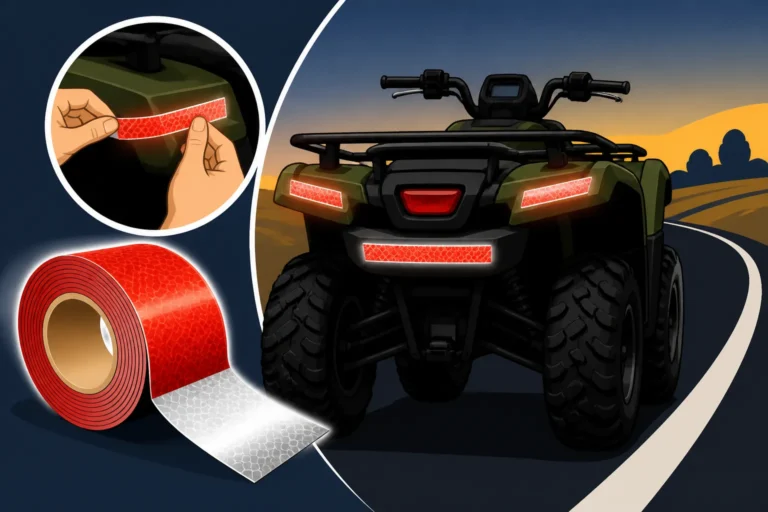
Also, many of the exceptions revolve around agricultural use. If you were legitimately "checking cattle" or "moving equipment" on a farm, that could be a valid defense against a general road-use violation. However, simply going for a joyride on a county road, even if it leads to farmland, may not qualify. You'll need to show you were actively engaged in a permitted activity. Equipment requirements are another common source of tickets; for example, if you were cited for not having a safety flag, you'll need to know the [Nebraska Safety Flag Requirements] and demonstrate your machine complied, perhaps with a high-visibility flag pole or mount from a brand like SuperATV. Likewise, understanding [Nebraska Lighting Requirements on a Machine] for dusk or nighttime riding is essential. A thorough understanding of these laws can help you identify legal loopholes or legitimate defenses that might not be obvious at first glance.
What to Expect During Your Day in Court
The day of your trial, whether it's a bench trial (heard by a judge only) or a jury trial (rare for minor ATV tickets), can be nerve-wracking. However, approaching it with preparation and a clear understanding of the process will serve you well. Remember, the burden of proof is on the prosecution, meaning they must prove beyond a reasonable doubt that you committed the infraction.
Presenting Your Case to the Judge
When your case is called, you'll approach the bench. The prosecutor (or sometimes the citing officer, if there isn't a dedicated prosecutor for minor infractions) will present their evidence, which usually consists of the officer's testimony and the ticket itself. They might describe what they observed and why they issued the citation. You will then have the opportunity to cross-examine the officer, asking questions to clarify their testimony or point out inconsistencies. Be polite and respectful, even if you disagree with their statements.
After the prosecution presents its case, it's your turn. You can testify on your own behalf, explaining your actions and why you believe you are not guilty. This is where you'll introduce your evidence: photos, witness statements, and any legal research you've done on the specific statutes or ordinances. For instance, if you were cited for an equipment violation, you could present receipts for your SuperATV LED lights or photos of your properly mounted safety flag to counter the officer's claim. Speak clearly, stick to the facts, and avoid emotional outbursts. The judge might ask you questions, too. Your goal is to present a credible and compelling narrative that creates doubt about your guilt or demonstrates that you fall under an exception to the rule.
Potential Outcomes and What They Mean
After hearing both sides, the judge will make a decision. Here are the common outcomes:
- Not Guilty: This is the best outcome! The judge finds that the prosecution did not prove you committed the violation. The ticket is dismissed, and you typically won't owe any fines or court costs related to that specific ticket.
- Guilty: The judge finds that the prosecution proved their case. You will be ordered to pay the fine, court costs, and potentially other fees. The penalties for illegal road riding in Nebraska can vary significantly based on the specific violation and whether it's a first offense.
- Reduced Charge or Plea Bargain: This might happen if you worked out an agreement with the prosecutor during a pre-trial conference. The original charge might be reduced to a lesser offense, or the fine might be lowered.
- Diversion Program: In some cases, especially for first-time offenders or minor infractions, the court might offer a diversion program. This typically involves paying administrative fees, perhaps attending a class, and staying out of trouble for a certain period. If you complete the program, the ticket is often dismissed.
Understanding the implications of each outcome is important. For instance, a guilty verdict could mean paying the fine, but it typically doesn't impact your standard driver's license points unless the specific ATV violation is tied to motor vehicle records, which is uncommon for most off-road infractions.
Considering an Appeal or Other Options
If you are found guilty and believe there was a legal error in the trial, you generally have the right to appeal the decision to a higher court. An appeal isn't a new trial; it's a review of the original trial to see if legal mistakes were made (e.g., incorrect application of the law, improper admission of evidence). The process for appeals can be complex and usually involves strict deadlines and specific legal arguments. It's often advisable to consult with an attorney if you're considering an appeal.
Before or after a trial, you might also explore community service options if offered, especially if you're unable to pay a hefty fine. Some courts allow you to convert fines into community service hours. While navigating the legal system can be a daunting task, knowing your options every step of the way can empower you to make the best decisions for your situation. Sometimes, simply presenting a well-researched defense can even lead to a dismissal, as prosecutors and judges often appreciate when citizens take the time to understand the law.
Practical Tips for a Stronger Defense and Avoiding Future Tickets
Winning in court, or even getting a favorable plea bargain, often comes down to preparation and a good understanding of the specific rules. While a ticket can feel like a setback, it's also an opportunity to double-check your knowledge and practices to ensure smoother rides in the future.
Documentation and Witness Statements
Beyond the immediate photos you take after getting a ticket, make a habit of documenting your machine and its use. Keep all your paperwork organized: your ATV title, proof of insurance (especially if you're riding on roads where [Nebraska Insurance Proof for Road Use] is required), and any receipts for aftermarket safety equipment like those robust skid plates or enhanced lighting systems you got from SuperATV. If you're using your ATV for farm work, keep a simple log or calendar that outlines your daily tasks. This kind of ongoing documentation can be incredibly powerful evidence in court, demonstrating not just that you comply with regulations but also the legitimate purpose of your riding.
For witness statements, timeliness is key. People's memories fade, so if someone saw the incident, ask them if they'd be willing to write down what they observed as soon as possible. Their account could corroborate your story, especially regarding factual disputes like whether your lights were on or if you stopped at an intersection. Remember, every piece of objective evidence helps build a stronger case.
Know the Local Ordinances
One of the biggest pitfalls for Nebraska ATV and UTV riders is the varied landscape of local ordinances. What's perfectly legal in one county or town might be strictly prohibited just a few miles down the road. Before you venture out, especially if you're riding in a new area, make it a point to check the local city ordinances or county resolutions. Many towns have their ordinances available online, or you can simply call city hall or the county clerk's office. This proactive step can prevent a lot of headaches.
A specific example might be a local ordinance in a small village that permits ATV riding on its streets, but only if the ATV operator is 18 years or older and possesses a valid driver's license. If you're a 16-year-old operating under a farm permit, you might still be in violation despite the general ordinance allowing ATVs. It’s not enough to know there might be an ordinance; you need to understand its specific conditions. These rules often define exactly [What Paperwork a Deputy Can Ask to See] and whether your specific machine is covered.
Equip Your Machine Smartly and Stay Informed
Having the right equipment on your ATV or UTV is not just about performance and fun; it's also about compliance and safety. For instance, if you're planning any road use, even agricultural crossings, ensure your machine meets all necessary [Nebraska Lighting Requirements on a Machine] and [Nebraska Safety Flag Requirements]. Installing bright LED lights from a trusted brand like SuperATV can make you more visible and reduce the chances of a "lights not on" ticket. Similarly, a properly mounted, high-visibility flag ensures you meet the height and visibility standards.
Beyond physical equipment, staying informed about legislative changes is vital. Laws evolve, and what was legal last year might not be this year. Keep an eye on news about [How an ATV Bill Moves Through the Legislature] to understand potential shifts in Nebraska's ATV laws. Engaging with local riding clubs or organizations can also keep you in the loop, as they often monitor legislative developments and share important updates on rules and regulations. Being proactive and knowledgeable is truly your best defense against getting future tickets.
| Step in Contesting an ATV Ticket | Description |
|---|---|
| 1. Review the Ticket | Carefully read the citation, noting the alleged violation, statute, date, time, and location. Document your immediate surroundings and recall any details from the stop. |
| 2. Research the Law | Look up the specific statute or ordinance cited. Check for local city or county resolutions that might permit ATV use in the area where you were ticketed. Understand all applicable Nebraska ATV road rules and exceptions. |
| 3. Decide Your Plea | Determine if you will plead "guilty" (pay the fine), "no contest" (accept penalties without admitting guilt), or "not guilty" (contest the ticket in court). |
| 4. Respond to the Court | Follow the instructions on your ticket to formally enter your plea by the deadline. If pleading not guilty, the court will schedule an arraignment or trial date. |
| 5. Gather Evidence | Collect all supporting evidence: photos of the scene, your ATV's equipment, road signs; witness statements; proof of insurance or ownership; and documentation of your activities (e.g., farm logs). |
| 6. Prepare Your Defense | Formulate a clear, concise argument based on facts, legal interpretation, or mitigating circumstances. Practice explaining your case politely and logically. |
| 7. Attend Court | Dress respectfully and arrive on time. Present your case to the judge, cross-examine the officer if applicable, and introduce your evidence. Be prepared to answer questions. |
| 8. Understand the Outcome | Be ready for potential outcomes: not guilty, guilty (with fines/costs), reduced charge, or a diversion program. Know your options for appeal if you are found guilty and believe there was a legal error. |
Disclaimer
This article is for general informational purposes only and does not constitute professional advice. Laws, prices and regulations vary by location and change over time. Consult a qualified professional for guidance on your specific situation.