Nebraska Yielding at Every Crossing
It can feel incredibly frustrating to want to use your ATV or UTV for practical purposes, like moving from one field to another or navigating a small town, only to be met with confusing, often contradictory, information about what's actually allowed on Nebraska roads. Many riders grapple with the core question of how to safely and legally cross public roadways without breaking the law or endangering themselves. This guide will meticulously break down Nebraska's specific rules for ATVs and UTVs when encountering public roads, focusing on the critical requirement of yielding at every crossing and providing clear, actionable advice to keep you safe and legal.
The Foundations of Nebraska ATV/UTV Road Access
Before we dive into the nitty-gritty of yielding, it’s crucial to understand the baseline rules for ATVs and UTVs on Nebraska’s public roads. Most people assume these machines are strictly off-road vehicles, and while that's generally true, Nebraska law carves out very specific exceptions. Navigating these rules correctly is the first step toward safe and legal operation.
Why Most Roads Are Off-Limits to ATVs and UTVs
For the vast majority of highways and roads across Nebraska, ATVs and UTVs are simply not street-legal. The state legislature, when crafting traffic laws, primarily envisioned vehicles designed for on-road use – cars, trucks, motorcycles. Off-highway vehicles (OHVs), which include ATVs and UTVs, are generally not equipped with the same safety features, nor are they typically registered or insured in the same way as street-legal vehicles. This fundamental distinction is why you won't see these machines cruising down main thoroughfares or highways without a specific legal reason. It's about safety, public expectation, and the design intent of the vehicle itself. The law, specifically [Nebraska ATV Road Rules Under 60-6,356], lays out these general prohibitions quite clearly.
The Agricultural and Local Ordinances Exceptions
Now, here's where things get interesting, and where the nuances of Nebraska law really come into play. While a blanket ban exists, two significant exceptions allow ATVs and UTVs onto certain public roads. The first, and perhaps most prevalent in our agricultural state, is for bona fide agricultural purposes. This means if you're using your ATV or UTV for farm or ranch work – think moving between fields, checking livestock, or transporting tools – you often have a legal pathway to use county roads for short distances. We’re talking about legitimate farm operations, not just taking the scenic route. [Nebraska's Agricultural Road Exception] is a huge relief for many producers.
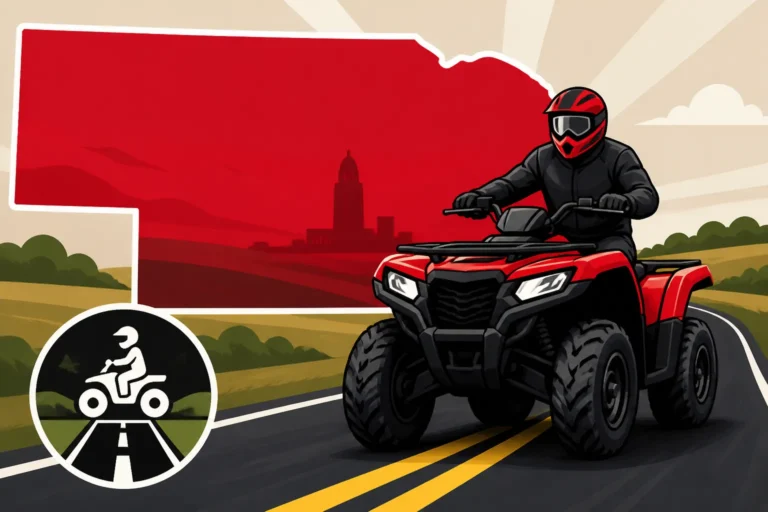
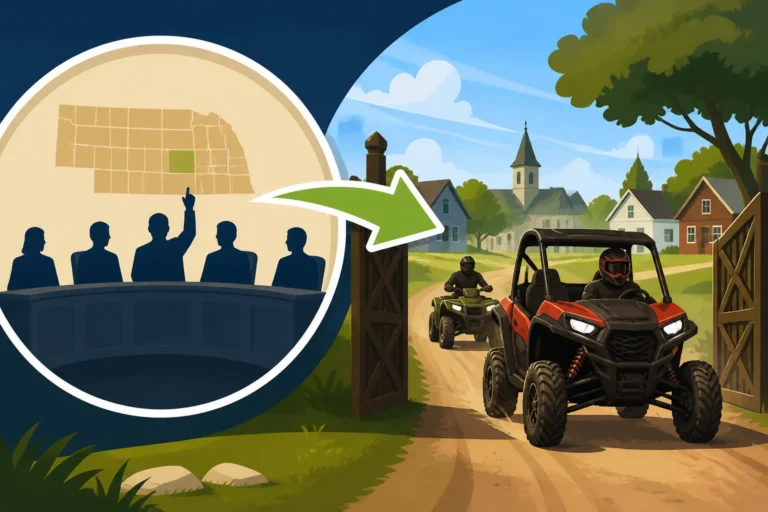
The second exception allows cities and even county boards for unincorporated villages to pass local ordinances permitting ATV and UTV use on their specific streets. This isn't a statewide free-for-all; it's a patchwork of local rules. A city like Yutan might have an ordinance allowing UTVs on its streets, while a neighboring town might not. [Nebraska Cities That Adopt ATV Ordinances] is a great example of this. These local rules often come with their own set of requirements, such as specific hours of operation, age limits for drivers, or even local registration fees. It's vital to check with the specific local jurisdiction before you assume you can ride on their streets.
Understanding Yielding Rules at Intersections and Crossings
When you do find yourself operating an ATV or UTV legally on a public road in Nebraska, especially when crossing, the rules of the road are paramount. And when it comes to intersections and crossings, there's one golden rule that stands above all: you always yield. This isn't just good etiquette; it's a legal requirement designed to prevent accidents and protect everyone on the road.
Always Yield to Oncoming Traffic
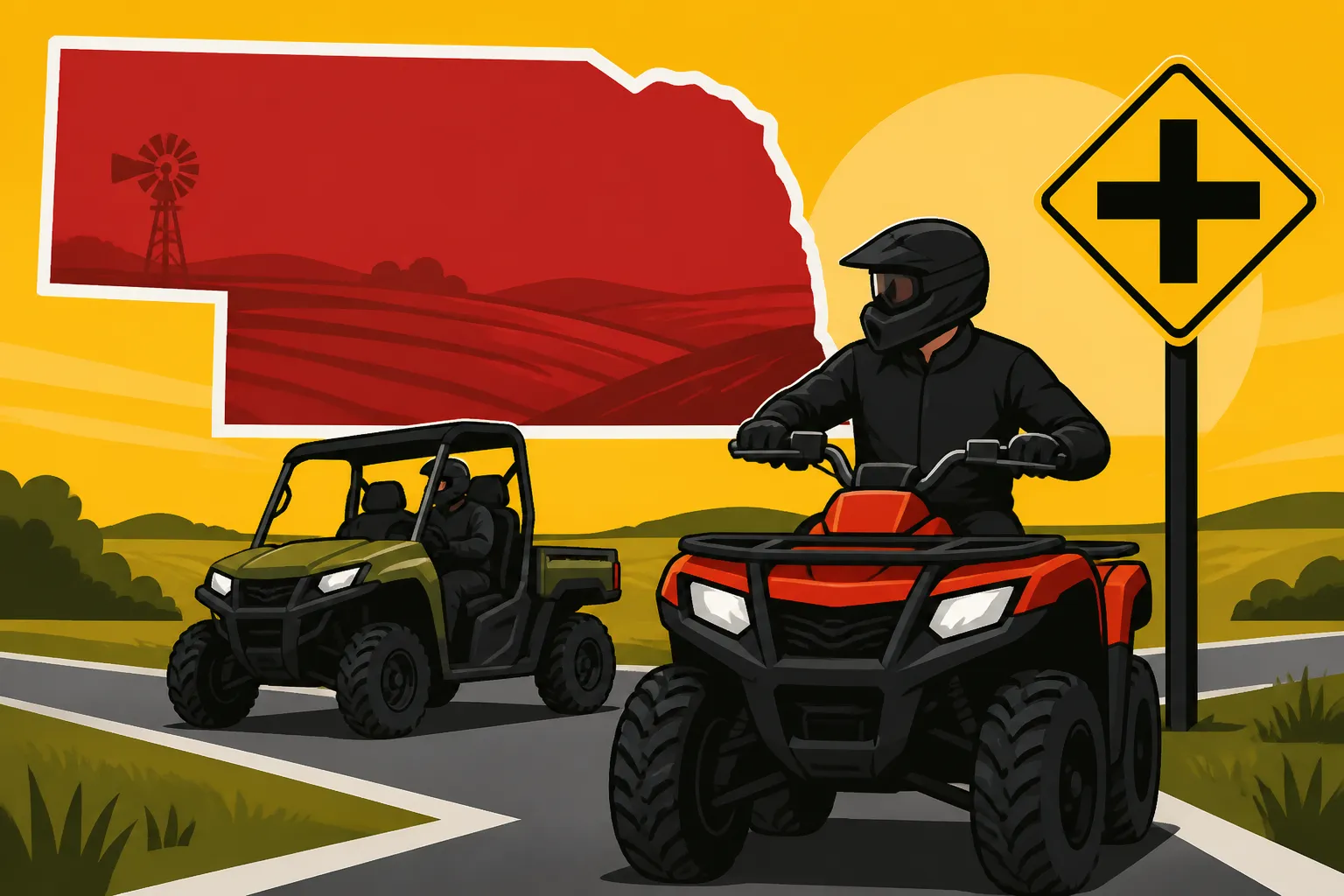
Let's be crystal clear: if you are operating an ATV or UTV and you are about to enter or cross a public road, you must yield the right-of-way to all other vehicles already on that road. This applies whether you're coming from a private driveway, a field access point, or a side road. Drivers of cars, trucks, and motorcycles on the public road have the expectation that their path will be clear. As the operator of an off-highway vehicle, you are considered the yielding party in virtually every interaction with on-road traffic. This means coming to a complete stop, assessing the traffic flow in both directions, and waiting until you have a wide, safe window to proceed without causing other drivers to slow down, swerve, or take any evasive action. It's about giving them priority, every single time. [Why an ATV Yields to Everything on a Road] isn't just a suggestion; it's a core principle of road safety for OHV operators.
The Ninety-Degree Crossing Requirement
Nebraska law also specifies how you must cross a public road when operating an ATV or UTV. You can't just meander across diagonally or drive parallel for a bit before turning off. The law dictates that any crossing must be made at a ninety-degree angle to the roadway. Imagine drawing a perfect perpendicular line from one side of the road to the other – that's your path. This requirement isn't arbitrary; it's about minimizing the time your machine is exposed to the flow of traffic on the main road and making your intention clear to other drivers. A quick, straight crossing reduces the opportunity for a collision. This, of course, must still be done only after you have properly yielded to all other traffic. [Nebraska Crossing Rules at Ninety Degrees] outlines this specific maneuver, and understanding [What a Ninety-Degree Crossing Looks Like in Practice] is essential for compliance. It's a precise move that demands full attention and excellent judgment of traffic speed and distance.
Specific Scenarios for Yielding: Farm Work, Village Streets, and Highways
Understanding the general principles is one thing, but applying them in various real-world scenarios is another. Nebraska's rules account for different types of roads and different reasons for ATV/UTV use, and the yielding requirement is a constant across them all.
Yielding on County Roads for Agricultural Purposes
If you're a farmer or rancher using your ATV or UTV to get from one section of land to another, or to access a pasture, you'll frequently encounter county roads. These are often gravel, less traveled, and might feel more "open," but the yielding rules are just as strict. Even on these quiet stretches, you must yield to any cars, trucks, or other farm equipment already on the road. This means pulling to a complete stop at the edge of the county road, looking both ways, and waiting until traffic is clear. You might be accustomed to the rhythm of rural roads, but never assume an approaching vehicle will slow down or yield to you. Your ATV or UTV, even if it's a heavy-duty model with accessories from a brand like SuperATV, is still the yielding party. [Nebraska Rules for Riding a County Road] provides broader context for these situations, but the yielding aspect is non-negotiable.
Navigating and Yielding in Opened City/Village Streets
For those towns or unincorporated villages that have passed ordinances to open their streets to ATVs and UTVs, riders gain more access, but also more responsibility. When riding within these areas, you are generally subject to the same traffic laws as other vehicles, with a few notable exceptions (like the maximum speed limit, which is typically 30 mph for ATVs/UTVs). This means obeying stop signs, traffic lights, and, yes, yielding at intersections. If you're coming to a four-way stop, the standard right-of-way rules apply, but if you're entering a street from a driveway or a parking lot, you must yield to traffic already on the street. It’s crucial to treat these "open" streets with the same respect and caution as you would any public thoroughfare. Always assume the larger vehicle has the right-of-way, and be prepared to yield.
Crossing State and Controlled-Access Highways
This is where the rules become exceptionally stringent. Nebraska generally [Nebraska Bans ATVs on State Highways] and controlled-access highways. This means you cannot simply drive your ATV or UTV on the shoulder or travel parallel to these high-speed roads. The only way an ATV or UTV can interact with a controlled-access highway is by crossing it, and even then, this is usually limited to specific circumstances, like a designated intersection where a county road crosses. When crossing such a highway, the requirement to yield becomes even more critical due to the higher speeds of traffic. You must come to a complete stop, [Do You Have to Stop Before Crossing a Highway?], and wait for an absolutely clear path. There is no margin for error when dealing with traffic traveling at 65 or 75 miles per hour. The ninety-degree crossing rule is particularly important here to minimize exposure time.
Equipment and Safety Considerations for Road Crossings
While yielding is primarily a behavioral act, certain equipment and operational habits play a huge role in making those yielding moments safer and more effective. Being seen and being able to react appropriately are critical components of safe road crossings.
Visibility is Key: Lights and Safety Flags
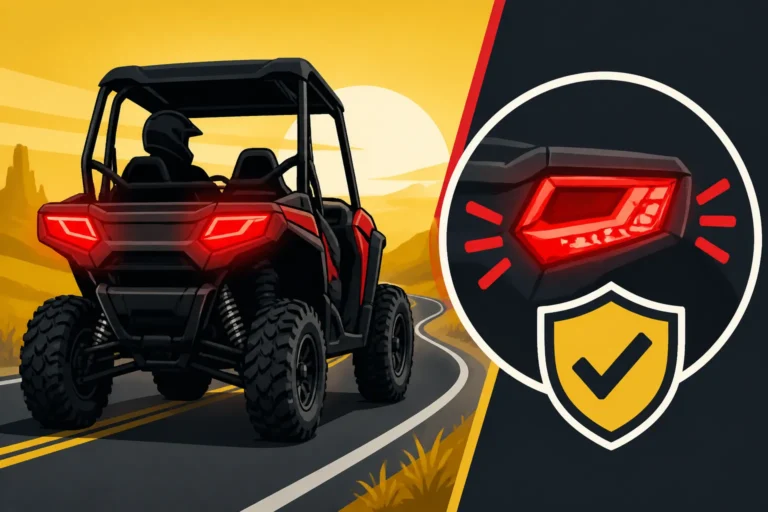
When you are making a crossing, especially on a county road or at an intersection, visibility is your best friend. Nebraska law [Nebraska Requires Head and Tail Lights] for any ATV or UTV operating on public roads, even for just a crossing. Your headlights and taillights must be on, even during daylight hours, to make your presence known to approaching traffic. Beyond lights, a safety flag is also often required. These flags, typically day-glow orange and at least 30 square inches in size, must be mounted at least five feet above the ground. While a standard flag is fine, enhanced visibility products like LED-lit flags from a company such as SuperATV can further increase your visibility, especially at dawn, dusk, or in dusty conditions. [Nebraska Safety Flag Dimensions] gives you the exact specifications. The clearer you are to other drivers, the more likely they are to see you and react predictably, giving you the confidence to execute your yield safely.
Maintaining a Safe Speed
Nebraska law imposes a strict [Nebraska's 30 mph Road Limit] for ATVs and UTVs when they are legally allowed on public roads. This speed limit is not just for general cruising; it's especially critical when approaching any crossing or intersection where you will need to yield. Traveling at or below 30 mph gives you ample time to react to approaching traffic, judge their speed and distance, and come to a complete, controlled stop if necessary. Trying to zip across a road at higher speeds dramatically reduces your reaction time and the time available for other drivers to perceive your presence and intention. A slower, controlled approach demonstrates your intent to yield and significantly enhances safety for everyone involved.
Common Mistakes and How to Avoid Them
Even with a clear understanding of the rules, it's easy to fall into common traps when navigating ATVs and UTVs on public roads. Recognizing these pitfalls can help you avoid costly tickets or, worse, serious accidents.
Assuming Others See You
One of the most dangerous mistakes an ATV or UTV rider can make is assuming that other drivers on the road see them. These machines are smaller than cars and trucks, can be less visible in certain lighting or weather conditions, and often blend into agricultural or rural landscapes. Drivers of larger vehicles may not be actively looking for an ATV or UTV at the edge of a field or approaching a gravel road. This is why the "always yield" rule is so crucial. Even if you think you have plenty of time, or that the other driver should see you, your responsibility is to ensure the road is clear. Never pull out in front of approaching traffic with the expectation they will slow down for you. Always stop, always look, and always wait until you are absolutely certain it's safe to proceed.
Misinterpreting Local Ordinances
The patchwork nature of local ATV/UTV road use ordinances in Nebraska can lead to confusion. A rider might be legal to use streets in one small town but cross into an adjacent town or county where no such ordinance exists, instantly making their operation illegal. Another common mistake is misinterpreting the specific conditions of an ordinance – for example, assuming it allows night riding when it only permits daylight hours, or assuming it applies to all streets when it only designates certain routes. Always research the specific ordinance for the city or village you plan to ride in. A quick call to the city clerk or county treasurer's office can save you a lot of grief. Don't rely on hearsay or what a friend "thinks" is allowed. Each jurisdiction's rules can be unique.
Forgetting Your Role as the Yielding Party
Ultimately, when an ATV or UTV is on or crossing a public road in Nebraska, its operator is almost always the one who must yield. This fundamental principle is often forgotten in the moment, especially if a rider feels they have an "exception" for farm use or because a city has opened its streets. Regardless of the reason you are legally on the road, you are operating a machine that is generally considered secondary to standard on-road traffic. This means that if there's any doubt, any question, or any potential conflict, you yield. This mindset isn't about giving up your right; it's about prioritizing safety and adhering to the legal framework that permits your limited road access in the first place. Whether you're crossing a major highway intersection or just a quiet gravel lane, the yielding responsibility rests firmly on your shoulders as the ATV/UTV operator.
| Scenario | Requirement to Yield | Specific Action for ATV/UTV Rider |
|---|---|---|
| Entering a public road from field/driveway | ALWAYS | Come to a complete stop, look both ways, wait for a clear path without affecting other vehicles. |
| Crossing a county road (Ag Use) | ALWAYS | Stop, assess traffic, perform a 90-degree crossing, ensure lights and flag are visible. |
| Intersection in an "open" village | ALWAYS | Obey traffic signs/signals, yield to vehicles with right-of-way, proceed cautiously. |
| Crossing a state highway | ALWAYS | Complete stop, strict observation of fast-moving traffic, execute precise 90-degree crossing. |
| Approaching another vehicle head-on on a narrow road | Generally | Reduce speed, move to the right shoulder if safe, allow the oncoming vehicle maximum space. |
| Turning onto a paved road from gravel | ALWAYS | Yield to all traffic on the paved road, signal if equipped, ensure safe gap for entry. |
Disclaimer
This article is for general informational purposes only and does not constitute professional advice. Laws, prices and regulations vary by location and change over time. Consult a qualified professional for guidance on your specific situation.