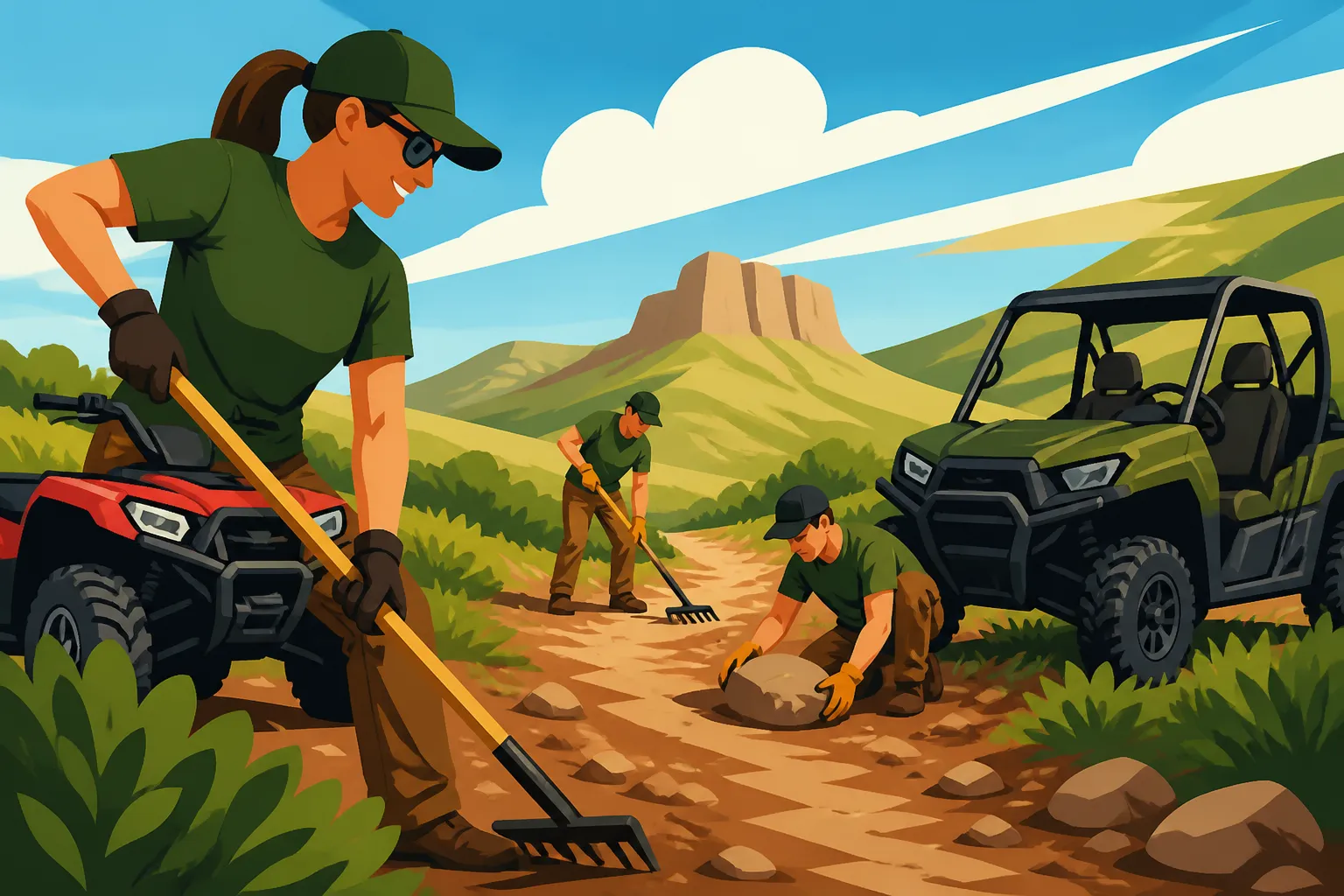
Nebraska Trail Volunteer Days
A volunteer trail day can sound simple until you’re unsure where to meet, what tools to bring, or whether the route will even be open afterward. In Nebraska, trail work varies by site and organizer, so a little planning matters. This guide explains how to find legitimate opportunities, prepare for the day, and help without damaging trails or disrupting other riders.
What to Expect at a Nebraska ATV Trail Volunteer Day
Trail work is more than picking up litter
Volunteer work may include collecting trash, clearing small branches, trimming vegetation, or helping maintain signs and staging areas. The specific job depends on the site, recent weather, and what the organizer is authorized to do. A task that sounds minor—like moving a branch—can affect drainage, sightlines, or trail width, so follow the day’s instructions rather than improvising.
Some maintenance is better left to trained crews. Work involving chainsaws, heavy equipment, unstable trees, deep water, or damaged structures may require special skills or permission. Don’t bring power tools or start cutting just because you have them in the truck. The organizer should explain which work is approved, who is responsible for it, and what safety equipment is required.
You might also be asked to help away from the riding surface. A clean staging area, clear signs, and litter-free access point make a real difference to everyone using the site. If the crew’s assignment is limited to the trailhead, don’t wander off to “fix” a nearby section without checking first.
The workday may not include riding
A volunteer day is not automatically a group ride or a chance to test a trail. Work may take place on foot, in a designated work area, or during a closure. Even when riding is allowed elsewhere, the active work zone may be off-limits while people are clearing or hauling materials.
Ask whether you should bring your ATV or UTV at all. Some tasks may call for a machine to carry tools or remove debris, but that should be coordinated by the organizer. Driving an unapproved route, widening a trail to get around a crew, or entering a closed section can undo the work volunteers are there to protect.
It helps to read the site’s riding information before signing up. The broad overview at [Nebraska ATV Trails: Where to Ride] can help you understand the different kinds of riding areas, while [Nebraska Trail Etiquette Locals Expect] is useful background for sharing public trails responsibly. Treat the volunteer assignment as the main event; riding is a separate activity governed by the site’s current rules.
How to Find and Confirm Volunteer Opportunities
Start with the trail or land manager
Nebraska riding areas have different managers and operating arrangements. Bessey OHV Trails near Halsey, Cedar Run ATV Trail, and Flat Rock Riders OHV Park are distinct places, not one statewide trail system with a single volunteer calendar. Begin with the official information for the specific site and look for a current event notice, volunteer contact, or instructions from the organization responsible for the land.
A past social post or an old event listing can be misleading. A trail day may have been postponed, relocated, or canceled after rain, high wind, or a change in staffing. Before driving a long distance, confirm the date, meeting point, start time, expected duration, and whether registration is required. Ask who to contact if you arrive and cannot find the group.
For site-specific orientation, check [Bessey OHV Trails at Halsey in Nebraska], [Cedar Run ATV Trail in Nebraska], or [Flat Rock Riders OHV Park in Nebraska]. These pages can help you distinguish one riding area from another, but event details should come from the current organizer or land manager.
Ask practical questions before you commit
“Is there a volunteer day?” is a good start, but a few details will help you decide whether the work fits your experience and schedule. Ask what tasks are planned, whether tools are provided, what clothing and protective gear are expected, and whether minors can participate. If you have mobility limitations or need a specific accommodation, mention it before the event so the organizer can explain the terrain and available options.
Also ask what happens if the weather changes. Rain can make some trails vulnerable to damage, and a workday may be canceled even when the sky looks manageable at home. Check [Nebraska Trail Closures After Rain] and [Nebraska Trail Conditions Before You Tow] for helpful context on why conditions matter, then follow the event organizer’s decision about access and work.
| Question to confirm | Why it matters |
|---|---|
| Where is the exact meeting point? | A trailhead, campground, and nearby road junction can be easy to confuse. |
| Is registration required? | Organizers may need to plan tools, assignments, or safety briefings. |
| What work is planned? | The task determines clothing, footwear, and whether specialized skills are needed. |
| Are tools and safety gear supplied? | Avoid assuming a tool is needed or approved before bringing it. |
| Is the event suitable for younger volunteers? | Age rules, supervision, and task hazards vary. |
| What is the weather or cancellation plan? | Conditions can change both trail access and the safety of the work. |
| Is riding allowed during or after the work? | Volunteer access does not automatically mean the trail is open to ride. |
Preparing for the Workday
Bring useful basics, not an unapproved tool kit
Wear sturdy closed-toe shoes or boots, weather-appropriate layers, and work gloves if the organizer recommends them. Long sleeves and long pants can help protect against brush and insects, while eye protection may be useful for certain tasks—but follow the safety briefing about required equipment. If the event involves tools, ask whether they’ll be provided and whether volunteers should bring anything specific.
Pack drinking water, snacks, sunscreen, and any personal medication you may need. Nebraska conditions can shift from cool and breezy to hot and exposed, particularly in open areas. [What to Pack for a Hot Dry Riding Day] offers useful ideas for preparing for heat, even if you’ll be working rather than riding.
Bring a charged phone, but don’t count on reliable reception at every trailhead or along every route. [Planning for No Cell Service on a Forest Ride] explains why an offline plan can be useful in remote riding areas. If you use onX Offroad to review maps, download what you need before leaving service and remember that a map app is a planning aid—not permission to enter land or a substitute for the manager’s instructions.
Plan your arrival and leave the site tidy
Confirm the meeting point rather than relying on a general search result or a pin someone shared months ago. Allow time to find the trailhead, park without blocking access, and check in before starting work. If you’re hauling a machine, trailer, or equipment, follow the staging directions and leave room for emergency vehicles and other visitors. [How to Unload and Stage Without Blocking Anyone] can help you think through a crowded trailhead.
Pack out your own food wrappers, bottles, and other belongings. If the task includes collecting litter, follow the organizer’s directions about where it goes and how to handle sharp or hazardous items. Don’t pick up needles, chemicals, fuel containers, or anything that could expose you to injury unless the organizer has specifically explained a safe procedure.
If you use onX Offroad for route planning, use it alongside current site information. Boundaries, access points, and permitted routes need to be confirmed through the land manager; a line on a screen isn’t authorization to cross a gate or enter a closed area. This is especially important near mixed-use land, where a nearby road or open-looking path may not be part of the riding area.
Working Safely and Respectfully on the Trail
Follow the crew lead and stay within the assigned area
Start with the safety briefing, even if you have volunteered elsewhere. Each location can have different hazards, procedures, and boundaries. Pay attention to where tools are being used, how people should communicate, and what to do if someone is hurt or a hazard is discovered. If instructions are unclear, pause and ask rather than guessing.
Stay with your assigned task and let the crew lead know if you spot a problem outside your work area. Trail maintenance can involve choices about water flow, vegetation, and route alignment that are not obvious to a visitor. Moving soil or cutting plants without authorization can create erosion or damage habitat, even when the intention is to make riding easier.
Be considerate of visitors who are not part of the work crew. If riders or hikers approach, follow the organizer’s process for pausing work or guiding them through safely. Never assume that a volunteer event gives you authority to direct traffic, close public access, or enforce rules unless the land manager has assigned that role.
Leave the trail better without leaving a mess behind
At the end of the shift, return borrowed tools, dispose of collected debris as directed, and check the work area for personal items. If you notice unfinished work, document it for the organizer rather than trying to squeeze in a quick repair after the group has left. A well-intentioned final fix can be unsafe without the right people, equipment, or approval.
If you rode to or from the site, keep the volunteer work separate from recreational riding. Respect posted closures, stay on designated routes, and yield carefully when encountering other users. [Who Yields on a Narrow Two-Way Trail] is a useful refresher for shared trail situations. For litter or debris at the staging area, [Hauling Out Trash From a Forest Trailhead] offers practical guidance on leaving a site cleaner than you found it.
A volunteer day is also a chance to learn how a particular trail is maintained and whom to contact when you see a problem later. Ask how to report erosion, damaged signs, fallen trees, or illegal dumping. If you enjoyed the experience, ask whether the organizer shares future work dates or needs help with non-trail tasks. That way, you can stay involved without assuming every site uses the same schedule or volunteer process.
Disclaimer
This article is for general informational purposes only and does not constitute professional advice. Laws, prices and regulations vary by location and change over time. Consult a qualified professional for guidance on your specific situation.