Staging With a Picnic Shelter in Nebraska
Staging With a Picnic Shelter in Nebraska
A ride can start to feel hectic before anyone reaches the trail: trailers arrive at different times, helmets are buried under coolers, and riders are trying to find a place to unload without blocking others. A picnic shelter can make staging at a Nebraska riding area more comfortable, but it is not a substitute for checking access, trail rules, parking, and weather plans.
What a Picnic Shelter Adds to a Riding Day
A comfortable place to get organized
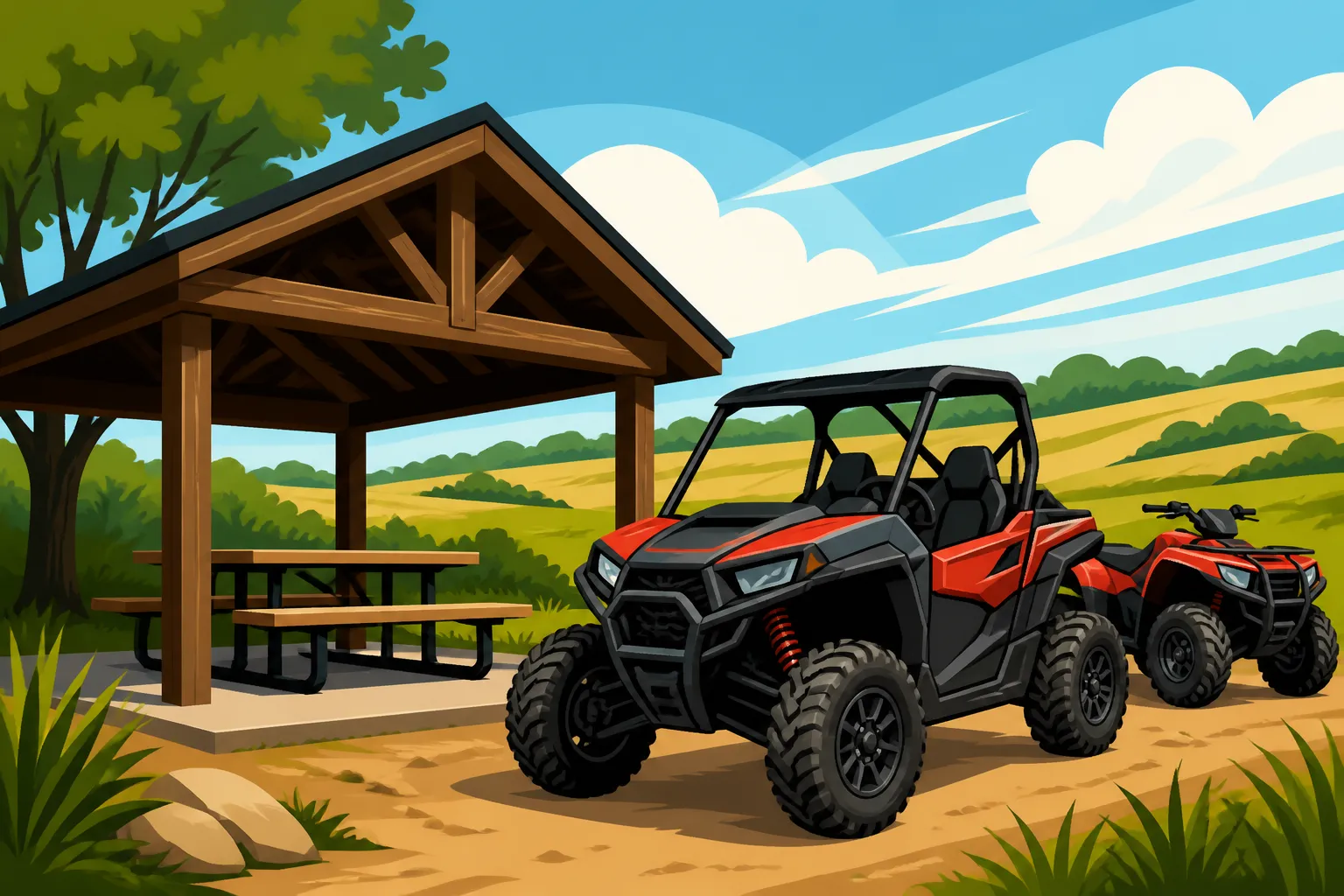
At a riding area such as Cedar Run ATV Trail, a picnic shelter can give your group a useful home base before and after riding. It offers a place to sit, sort out helmets and gloves, check a map, and gather everyone before machines head onto the trail. That can matter more than it sounds when a group includes children, new riders, or people arriving in separate vehicles.
The shelter is also a practical spot for small tasks that are awkward beside a trailer. You can arrange snacks, fill water bottles, review who is riding which machine, and make sure everyone knows where to meet if the group gets separated. If someone needs a quiet break or a minute out of the sun, a sheltered place to sit can help keep the day from becoming an endurance test.
Still, plan around the shelter as an amenity—not as a guaranteed private base camp. Other visitors may want to use it, and the space may not be reserved for your group. Keep gear compact, leave room for other families, and avoid treating tables or shelter space as storage for helmets, fuel cans, toolboxes, and bags all at once.
A gathering point, not a place to unload
A picnic shelter and a staging area serve different purposes. The shelter is for gathering and taking a break; the designated parking and unloading areas are where tow vehicles and trailers belong. Do not assume that a machine can be driven under or beside the shelter, or that a trailer can be parked nearby just because it would be convenient.
Before unloading, look for posted signs and marked parking spaces. Keep trailer ramps, tie-down straps, and machines out of travel lanes. A group that spreads out across the access area can make it difficult for another rider to park or turn around, especially when several trailers arrive together.
If you are coordinating a larger outing, decide in advance how the group will unload. One person can guide trailers into the appropriate spaces while another keeps children and riders away from moving vehicles. Once the machines are off the trailers, move the tow vehicles and trailers as directed by signs or staff. The details of the site layout can change, so check local information before your trip and follow what you find on arrival.
The shelter does not settle access or permit questions
A shelter at a public recreation site does not automatically mean every nearby surface or road is open to ATV and UTV riding. The trail entrance, parking area, picnic space, and surrounding land may have different rules. Stay on designated routes and pay attention to signs rather than using an open-looking patch of ground as an unofficial shortcut.
Nebraska also distinguishes between riding areas and other public lands. Rules at a riding trail do not necessarily apply at a state park, wildlife management area, or private riding park. For a broader overview of where machines may ride, read [Nebraska ATV Trails: Where to Ride]. If your trip includes areas beyond a developed trail, review [Nebraska Public Land Rules Compared to Private] before assuming access is allowed.
Planning the Trip Around Cedar Run
Confirm the route and site details before towing
Cedar Run is a useful example of why it helps to plan the riding area and the staging area together. The trail is associated with Harlan County Lake, and its staging facilities include a picnic shelter. Before setting out, confirm the route to the trailhead, the location where you are expected to park, and whether any site or access information has changed.
A mapping app can help you plan the drive, but it should not be your only source for the final approach. A route that looks direct on a screen may lead to a road unsuitable for a long trailer, a closed gate, or a place where turning around is difficult. Compare your route with official site information and posted directions. If you use onX Offroad to review maps, treat it as a planning aid and still obey signs and closures on the ground.
Also make sure everyone in the convoy has the same destination and a clear meeting plan. If one vehicle gets separated, decide whether the group should wait at the trailhead, a nearby public meeting point, or another agreed location. Cell coverage can vary, so do not make the whole plan depend on a last-minute phone call.
Check whether the shelter suits your group
A picnic shelter may be just right for a small family group, while a large club outing may need a more deliberate plan. Ask yourself how many people will be there at once, how much space they need to eat or rest, and whether anyone needs a quiet break away from engine noise. A shelter is more comfortable when the group brings only what it needs and leaves shared space available to other visitors.
Do not assume that the shelter can be reserved, that it has a particular number of tables, or that it includes every convenience your group expects. Check local site information for details such as facilities, access, and any posted use instructions. If those details are unclear, contact the responsible office before organizing a large gathering.
It is sensible to bring a backup plan for lunch and breaks. If the shelter is occupied, you should still have a way to keep food secure, stay hydrated, and rest without blocking access. A folding chair and a small shade option can help, but set them up only where they do not interfere with other visitors or the trailhead’s normal use.
Match the outing to the terrain and riders
A shelter makes the start and finish more comfortable, but it does not determine whether the trail is a good fit for your machines or your group. Check the trail’s current conditions, allowed machine types, and any posted restrictions before towing. A route suitable for a compact quad may not be comfortable for a wider side-by-side, and a new rider may need a shorter or less demanding outing than an experienced group expects.
Discuss the plan before anyone starts the engine. Agree on the route, pace, regrouping points, and what to do if a machine develops a problem. For families, identify which adults are responsible for which young riders and agree on simple rules for staying together. For a mixed-experience group, let the least experienced rider influence the pace rather than asking them to chase the fastest machine.
Useful planning references include [Cedar Run ATV Trail in Nebraska], [Cedar Run's Staging Area, Picnic Shelter and Grill], and [Nebraska Trail Conditions Before You Tow]. They can help you think through the facility, trail, and travel parts of the day as separate questions rather than assuming that one detail answers them all.
A Practical Staging Routine
Before leaving home
A smoother staging experience often begins with a short checklist the night before. Confirm that each machine is ready, the trailer is properly loaded, and the group has the address or route information it needs. Check that helmets, eye protection, gloves, water, first-aid supplies, and basic tools are packed where they can be reached without unloading the entire trailer.
Make a simple list of who is bringing shared items. One person might bring a first-aid kit, another water, and another basic recovery gear. That prevents the familiar problem of discovering that everyone assumed someone else packed the essentials. Keep food and personal items separate from fuel and oily equipment, and secure loose items so they do not shift during the drive.
You can use onX Offroad or another mapping tool to review the general route and mark a meeting point, but save important directions in a way that remains useful if cell service drops. A downloaded map, written directions, or a pinned location can be helpful. Share the plan with every driver, not just the person leading the convoy.
On arrival and during unloading
Arrive with enough time to park without rushing. A late arrival can pressure the group into unloading in a hurry, and that is when people are most likely to leave a ramp unsecured, put gear in a vehicle lane, or overlook a child moving near a trailer. Take a moment to read the signs and identify the designated parking and unloading areas before backing in.
A careful unloading sequence can be simple: park where directed, secure the tow vehicle, lower the ramp, keep bystanders clear, and unload one machine at a time. Put tie-downs and ramps away promptly instead of leaving them across a walkway. Once everyone is off the trailer, move the tow vehicle and trailer to the appropriate parking location if the site layout calls for it.
Use the picnic shelter for the things it is suited to: regrouping, checking equipment, eating, and resting. Keep shared surfaces tidy, avoid leaving valuables unattended, and do not block access for other visitors. If you have a cookout or use a grill where allowed, follow posted instructions and leave the area clean. A shelter is a shared facility, so a considerate group makes the experience better for the next riders too.
Agree on a return routine
Before the group rides away from the trailhead, decide how you will reunite if someone returns early or a machine has a mechanical issue. A clear meeting point—such as the staging area—helps prevent riders from searching around the site. For a group ride, agree on a check-in routine that does not require everyone to have reliable phone service.
When you return, make room for people who are still unloading or preparing to leave. Keep machines out of the way of moving vehicles, and inspect them before loading. Look for loose straps, debris caught near moving parts, leaks, or damage that may have gone unnoticed on the trail. Secure fuel and equipment according to the relevant safety instructions, and keep the shelter area free of tools and dirty gear.
A final head count is especially helpful when children or multiple families are involved. Confirm that every rider is accounted for, collect trash, and check that nothing was left on the tables or beside the trailer. If you made notes about trail conditions or a mechanical issue, record them before you forget; they can make the next outing easier to plan.
What to Bring for a Shelter-Based Trail Day
Pack for comfort without taking over the space
A picnic shelter can make breaks easier, but packing too much turns a simple outing into a clutter problem. Bring water for the full group, snacks or lunch, and a small bag for personal items. A compact first-aid kit, sunscreen, insect repellent, and a light layer for changing weather are often more useful than a stack of extra equipment that stays in the truck.
Think about how the items will be used. Keep drinking water easy to reach, and place food in closed containers so it stays protected from dust and insects. Store dirty gloves, wet clothing, and tools separately from food. If the shelter is busy, a small, organized setup is easier to share than a spread of coolers and bags covering every table.
A checklist can help match supplies to the group:
| Need | Useful items | Planning note |
|---|---|---|
| Rider safety | Helmets, eye protection, gloves, first-aid kit | Check that each rider has properly fitting gear |
| Hydration and food | Water, refillable bottles, snacks, lunch | Bring enough for the full outing and the drive home |
| Weather comfort | Sunscreen, insect repellent, rain layer, warm layer | Nebraska weather can shift during a day outdoors |
| Machine support | Basic tools, tire equipment, recovery gear | Carry only gear appropriate for your machines and skills |
| Staging and cleanup | Trash bags, wipes, paper towels | Leave the picnic area clean for other visitors |
| Navigation | Offline map or saved directions, phone charger | Do not rely entirely on cell coverage |
Prepare for weather and changing conditions
A shelter offers some relief from sun or light weather, but it should not be treated as protection from every condition. Strong wind, lightning, heavy rain, heat, and cold can affect both the ride and the drive home. Check the forecast before leaving and be willing to shorten or cancel a ride if conditions make travel or trail use unsafe.
Dust can be uncomfortable at an open staging area, especially when vehicles are moving in and out. Keep food covered, protect eye and breathing comfort with appropriate gear, and avoid setting personal items where passing vehicles can cover them in dust. After rain, trail surfaces may become slick or vulnerable to damage. Check local conditions and respect closures rather than trying to work around them.
For a longer outing, make a plan for water and shade even if the shelter is part of the destination. Riders may spend hours away from the staging area, and the shelter cannot solve a hydration problem on the trail. Consider reading [What to Pack for a Hot Dry Riding Day] and [How Much Water to Carry on a Summer Ride] when planning a warm-weather trip.
Keep the group comfortable without overcomplicating it
A good staging setup is one that helps riders get ready without creating extra work. For a family, that may mean keeping children’s gear together and agreeing on a shaded waiting spot. For a group of friends, it might mean assigning one person to check machines while another organizes lunch. For a club outing, a simple arrival and parking plan can reduce confusion before it starts.
Set expectations about food, cleanup, and shared equipment before the group leaves home. If people bring their own lunches, label coolers and bags. If someone brings a grill, check that its use is permitted and follow all site instructions. Do not assume that a facility will provide fuel, utensils, water, or waste disposal.
Also think about the riders who may need more frequent breaks. A new rider who is trying to keep up, a child in warm weather, or someone returning from an injury may need a slower pace and a dependable regrouping routine. A picnic shelter can make those breaks more comfortable, but the group’s attitude matters just as much as the amenity.
Rules, Courtesy, and Backup Plans
Know what rules apply at the riding area
A picnic shelter does not grant permission to ride on nearby roads, lawns, beaches, or other areas. Follow designated trail routes and posted directions, and do not use a vehicle path or open space as an unofficial extension of the trail. If a sign closes an area, respect it even if the route appears passable.
Nebraska has no general state OHV sticker for ordinary trail use in the way some riders may expect, but that does not mean every site is free of requirements. Parking, public-land access, local rules, and private-park conditions can differ. Read [Nebraska Has No OHV Permit or Sticker] for the distinction between a state OHV sticker and other site-related requirements, and check the applicable rules for the place you are visiting.
If you ride at more than one location on the same trip, do not carry assumptions from one site to another. A trailhead shelter, a recreation area, and a private riding park may each have separate instructions. When in doubt, ask the responsible site office or follow the posted rules before unloading.
Share the space considerately
A shelter and staging area may be shared by riders, hikers, families, anglers, or other visitors. Keep the volume reasonable, avoid taking more space than your group needs, and do not leave machines idling near people who are eating or resting. Keep pets under control and away from other visitors unless they are welcome and safely managed.
A little coordination helps prevent friction. If another group arrives while your machines are spread out, pause and make room. Do not reserve tables with unattended gear for a long period, and do not leave a trailer or vehicle in a place that blocks access. If the shelter is occupied, use another permitted place to take a break rather than confronting other visitors or assuming they should move.
Good trail etiquette continues after staging. Stay on marked routes, yield appropriately, and avoid creating unnecessary noise near campgrounds or other quiet-use areas. For a broader look at shared-trail expectations, see [Nebraska Trail Etiquette Locals Expect]. If you are visiting a specific riding area, use its rules rather than relying on a general idea of what is acceptable elsewhere.
Make a backup plan for a full shelter or a disrupted ride
The shelter may be unavailable when your group arrives, or weather may make it uncomfortable to use. Build flexibility into the day: bring water and food that do not depend on a table, identify another permitted place to rest, and decide how the group will communicate if plans change. A backup plan should not involve parking in an unauthorized spot or moving into a closed area.
If trail conditions are poor, be prepared to change the length of the ride or postpone it. A long tow does not obligate you to ride when the route is unsafe, muddy, or unsuitable for your machines. This can be disappointing, particularly when everyone has taken time off or driven a long distance, but avoiding damage and risk is usually the better choice.
Keep your directions and site contact information accessible before you leave. onX Offroad can help you review a route and save useful map information, while official notices and signs remain essential for access and closures. Combine those sources with a practical meeting plan, enough supplies, and a willingness to adjust. That is what turns a picnic shelter from a hoped-for convenience into one useful part of a well-planned Nebraska riding day.
Disclaimer
This article is for general informational purposes only and does not constitute professional advice. Laws, prices and regulations vary by location and change over time. Consult a qualified professional for guidance on your specific situation.