Nebraska Trail Riding After Heavy Rain
Heavy rain can turn a Nebraska trail from firm and predictable to slick, rutted, and difficult to ride in a matter of hours. That can mean more than muddy tires: waterlogged ground is easier to damage, and a familiar route may become unsafe or closed. This guide explains how to check conditions, decide whether to ride, and protect the trail when the weather turns.
Why heavy rain changes Nebraska trails
Mud is a safety issue and a trail-damage issue
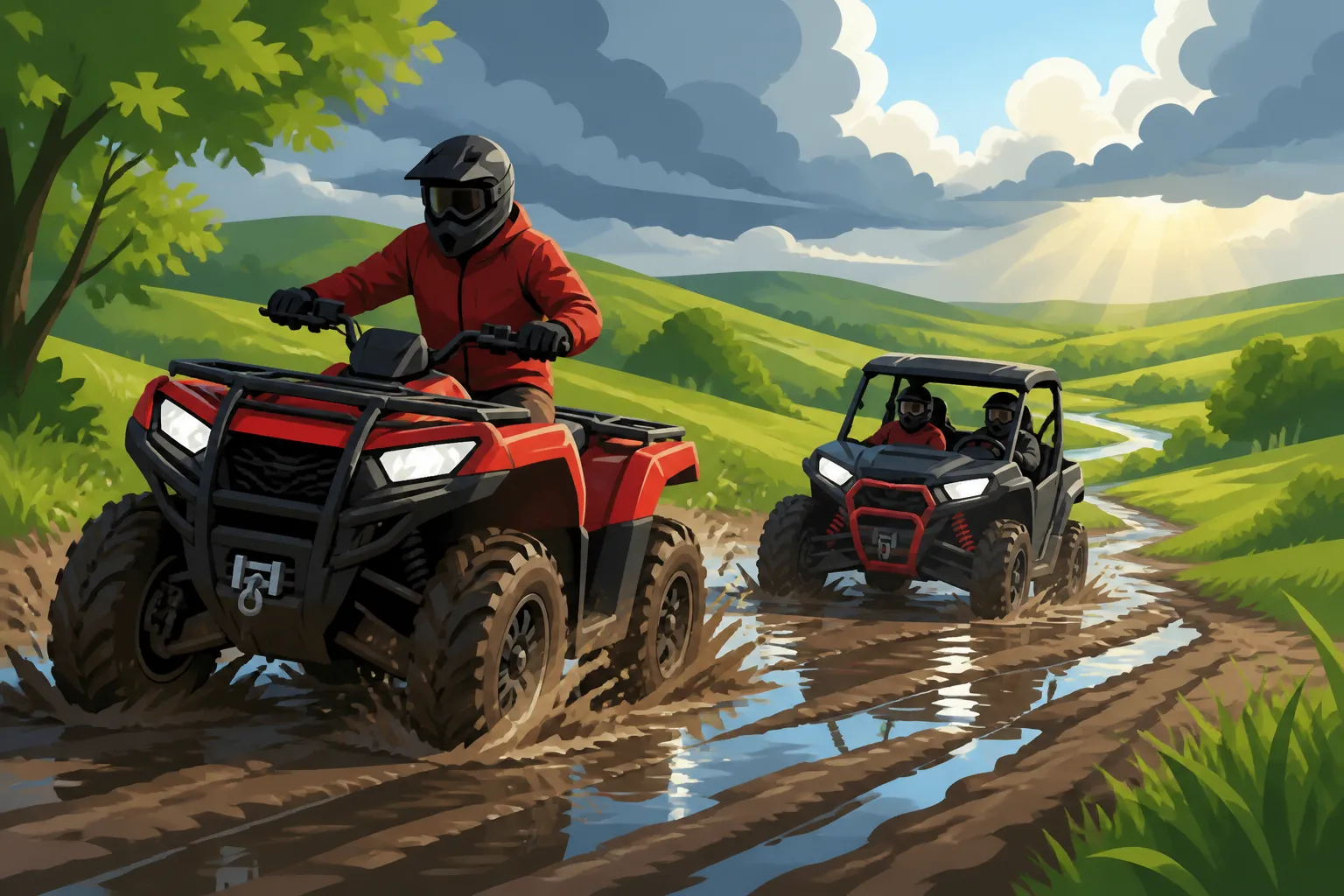
When soil is saturated, tires can lose traction with little warning. A quad may slide sideways on a slope, while a side-by-side can struggle to stop or turn on a slick surface. Mud can also hide ruts, rocks, washed-out edges, and standing water deep enough to stall a machine. A trail that felt easy in dry weather may require slower speeds and more space after rain.
The damage risk matters, too. Spinning tires can dig into soft ground, widen a narrow track, and push soil into drainage areas. Once a rut forms, later rain can channel into it and deepen the erosion. Riders sometimes make this worse by going around a muddy section through grass or brush, creating a second track that can widen over time.
Nebraska trails vary by location and terrain. Sandy areas may drain differently from wooded trails, lakeside routes, or low spots that collect runoff. Even a trail that looks dry at the entrance may have soft sections farther along. If the route has steep grades, exposed roots, or narrow turns, wet conditions can make recovery harder and increase the chance of getting stuck.
Not every trail responds to rain the same way
A brief shower does not necessarily affect every riding area equally. The amount of rainfall, soil type, shade, slope, drainage, and recent weather all play a role. A sunny, breezy afternoon can dry exposed ground faster than a shaded section beneath trees, while a low-lying trail can stay wet after the surrounding area appears firm.
That is why a single report from a nearby town is not enough to judge a trail. Conditions around Halsey, for example, may differ from those near a lakeside riding area or a route farther east. Before making a long drive, check the specific riding area and its official updates. The guide to [Nebraska Trail Conditions Before You Tow] can help you build that check into your trip planning.
Do not treat a map as proof that a trail is open or passable. Apps such as onX Offroad can help you review routes and orient yourself, but mapped lines do not necessarily show current surface conditions or a temporary closure. Use mapping tools alongside information from the land manager or trail operator, and follow posted signs when you arrive.
How to decide whether to ride
Check official updates before leaving home
Start with the agency or operator responsible for the riding area. Look for notices about closures, storm damage, flooding, maintenance, or restricted access. If an update is unclear, contact the responsible office or operator rather than assuming that silence means the trail is open. For public-land routes, confirm which trails are designated for motorized use; rain does not change the underlying access rules.
For a trip to the Nebraska National Forest near Halsey, review the information for the relevant riding area and trailhead before towing out. The overview of [Bessey OHV Trails at Halsey in Nebraska] is a useful starting point for planning, but a general trail description cannot tell you whether a particular segment is muddy today. The same principle applies to [Cedar Run ATV Trail in Nebraska]: check for current guidance rather than relying on an old trip report.
If you use onX Offroad to plan a route, check the app before departure and download any maps you may need for offline navigation. Then compare your route with official trail information. A map can help you see where you are; it cannot guarantee that a route is open, dry, or safe to ride.
Use a practical go-or-no-go check
There is no single waiting period that works for every trail after rain. Instead, consider the ground, the forecast, the terrain, and what you can safely handle. If the trail manager has closed the area, the decision is straightforward: do not enter. If the route is open but conditions are uncertain, call ahead or choose a different activity rather than treating the trip as a test run.
| What you find | What it may mean | Safer choice |
|---|---|---|
| Standing water across a low section | Water depth and ground conditions may be hidden | Turn around rather than crossing blindly |
| Tires spin or leave deep impressions | The ground is too soft for responsible riding | Stop and leave the area using the route you came in on |
| A posted closure or barricade | The route is not open to riders | Do not go around or move the barrier |
| A firm surface with no deep tire marks | Conditions may be improving, but can still change | Ride slowly and reassess each section |
| Heavy rain in the forecast | Conditions could deteriorate during the ride | Postpone or choose a safer plan |
Use your own observation at the trailhead, too. If the access road is already slick, the parking area is soft, or the first stretch is visibly rutted, the rest of the ride may be worse. Do not feel pressured to continue because you made the drive. Turning around early is often the least costly choice.
If you do ride, have a realistic exit plan. Know where you can safely turn around, tell someone where you are going, and avoid pushing farther into a route just because the machine is still moving. For remote riding, prepare for limited service with the advice in [Planning for No Cell Service on a Forest Ride].
What to do if you encounter mud or a closure
Stop before a soft patch becomes a recovery problem
Approach uncertain ground slowly enough to stop safely. Look for a firm line through the section without leaving the designated trail. If you cannot see the bottom of standing water, do not assume it is shallow. Water can conceal holes, debris, or a soft shoulder that gives way under the machine.
If a section looks unsafe or deeply churned, turn around where there is room and a stable surface. Avoid making a new bypass through vegetation. If another rider is already stuck, do not rush in with a second machine unless you can assess the footing and recovery risks. A poorly chosen tow point or sudden pull can damage equipment or injure someone; use the machine’s recovery instructions and proper gear.
A winch can help with some recoveries, but it is not permission to enter ground that is too soft or hazardous. Carry suitable recovery equipment, know how to use it, and keep bystanders clear. If the machine is sinking, water is moving, or the ground is unstable, getting people to safety is more important than saving the ride or avoiding a tow.
If you find a closure sign, gate, or barricade, respect it. Do not ride around the barrier, even if the track beyond looks dry. Closures may be in place because of damage, maintenance, flooding, or other concerns that are not visible from the trail entrance. The article [Nebraska Trail Closures After Rain] offers more context on why a route may be restricted after wet weather.
Leave the trail as you found it, or better
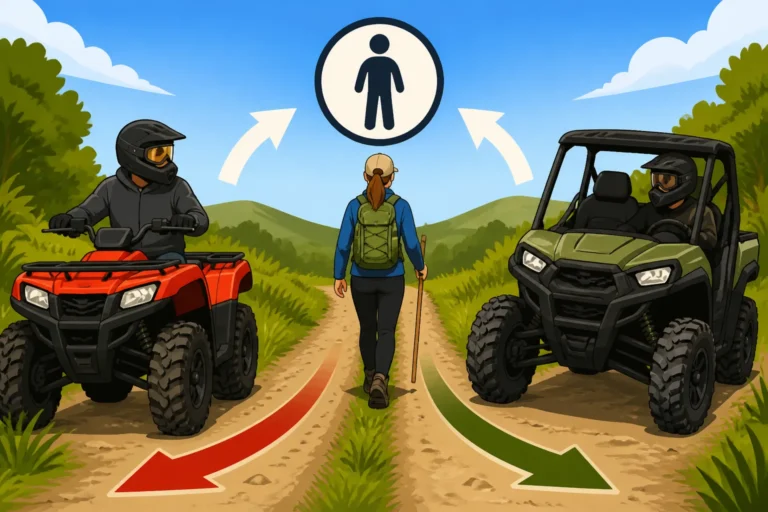
Stay on the designated route, keep speeds low, and avoid aggressive throttle that spins the tires. Give other riders plenty of room, especially on hills, narrow sections, and blind corners. If a trail is already soft, repeated passes can turn a small disturbed area into a deeper rut. Following [Nebraska Trail Etiquette Locals Expect] is especially important when weather has made the surface fragile.
At the staging area, park on firm ground and avoid blocking access for other vehicles or emergency responders. Unload in an orderly way and do not drive through soft grass to find a more convenient spot. [How to Unload and Stage Without Blocking Anyone] covers the small choices that can make a busy trailhead safer for everyone.
After the ride, clean mud from the machine before it dries, paying attention to the radiator area, underbody, and moving components. Check tires, brakes, and the underside for debris or damage. If you noticed a washout, a damaged sign, or a closure that seems unclear, report it to the land manager or trail operator. A concise location description and a clear explanation are more useful than riding around the problem or posting an unverified claim that the entire area is closed.
Plan a rain-resilient Nebraska ride
Build flexibility into the trip
A long tow makes it tempting to ride no matter what, but that can turn a fun day into a damaged trail, a stuck machine, or a difficult recovery. Before leaving, pick a backup plan: another permitted riding area, a non-riding stop, or a willingness to postpone. If conditions near Halsey are poor, for example, do not assume that a distant location is automatically better; check that area’s rules and conditions separately.
Pack for a slower, less predictable day. Bring water, basic first aid, a charged phone, suitable clothing, and recovery gear appropriate for your machine and route. Let someone know where you plan to ride and when you expect to check in. If coverage may be limited, an offline map in onX Offroad can help with orientation, but it should not replace a paper map or a clear understanding of the route and exit points.
Keep your expectations flexible once you arrive. A trail may be open but still unsuitable for your machine, skill level, or group. A youth rider, an inexperienced driver, or a passenger may need a more conservative decision than a skilled adult riding alone. It is fine to choose a shorter loop, stay on firmer ground, or call the day early.
Make the next ride easier to judge
After a wet-weather trip, note what you saw: where water stood, which areas remained firm, and how the trail changed as the day went on. Record observations for your own planning, but treat them as a snapshot, not a promise about the next visit. Rainfall and trail work can change conditions quickly.
When sharing information with riding partners, be specific and careful. “The entrance looked firm, but the shaded low section was soft” is more useful than “the trail is fine.” Mention the date of your observation and encourage others to verify current access with the responsible operator. onX Offroad may help you mark a location for your own reference, but official notices and signs should guide access decisions.
The best rule after heavy rain is simple: ride only where access is confirmed, the surface can support your machine without damage, and you can turn back safely. If those conditions are not met, postponing is a responsible choice—not a wasted trip.
Disclaimer
This article is for general informational purposes only and does not constitute professional advice. Laws, prices and regulations vary by location and change over time. Consult a qualified professional for guidance on your specific situation.