Who Yields on a Narrow Two-Way Trail
A narrow two-way trail can turn a relaxed Nebraska ride into an awkward standoff when two machines meet with nowhere obvious to pass. The safest approach is simple: slow early, communicate clearly, and give the rider with fewer safe options room to move. This guide explains how to handle common encounters without damaging the trail or putting anyone at risk.
Who should yield on a narrow two-way trail
Give the uphill rider room when you meet on a slope
When two riders meet on a narrow incline, a useful courtesy is for the downhill rider to yield to the rider climbing. The uphill rider may have a harder time stopping and restarting on loose ground, especially on sand, gravel, or a rutted slope. Losing momentum can leave them struggling to regain traction or balance.
That does not mean the downhill rider should blindly back up or pull toward an exposed edge. First, both riders should slow to a stop while they still have control. The downhill rider can look for a broad, stable spot to move aside, then let the uphill rider continue at a controlled pace. If there is no safe pullout, talk or signal before either machine moves.
On a Nebraska trail with sandy climbs or uneven ground, even a short stop can change how a machine handles. Avoid spinning the tires to get moving again; wheelspin can dig a rut and make the climb harder for the next rider. If you want a better sense of what the route involves before setting out, check Nebraska Trail Difficulty Ratings and review the trail’s current conditions.
The rider with the safer place to stop may need to yield
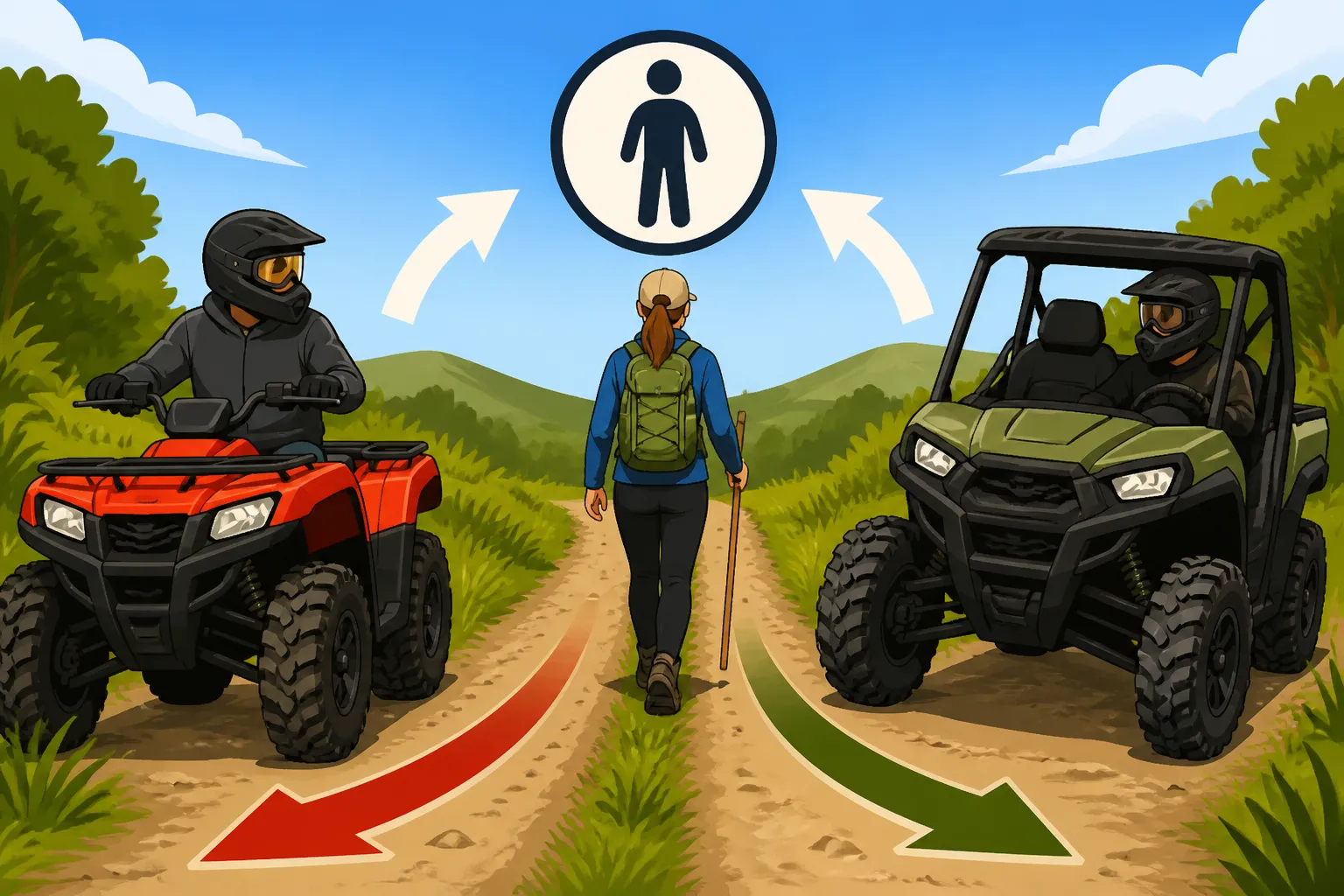
“Uphill rider has priority” is a helpful etiquette rule, not permission to ignore the situation in front of you. The safest choice depends on the trail’s shape, footing, sightlines, and available space. A rider beside a wide turnout may be able to pull over easily, while the other rider may be next to a steep bank, soft sand, or a drop-off.
When you meet on level ground, neither rider automatically has a clear advantage. Both should stop, assess the space, and agree who will move. Often, the rider closest to a safe, established pullout can make room with less risk. If one machine is wider or less maneuverable, account for that too.
Avoid making a quick decision based on who arrived first or who thinks the other rider should reverse. Backing up on a slope or around a blind corner can be dangerous, and forcing a pass can damage vegetation or the trail edge. The goal is not to win the right-of-way; it is to get both riders past each other safely.
How to handle the encounter safely
Slow down before the trail gets tight
The best yielding decision is often made before anyone has to make one. Reduce speed as you approach a blind bend, crest, narrow bridge, or stretch where brush limits visibility. Keep enough distance from the rider ahead that you can stop without swerving if they brake suddenly.
Use a controlled speed that suits the surface. Loose sand, washboard, mud, and gravel can all make stopping distances unpredictable. Keep your machine on the established trail rather than cutting a new line through grass or brush to create more room. If the trail is too narrow for a safe pass, wait for a designated or durable pullout.
If you are riding with a group, leave enough space between machines for each rider to respond to a stop. A lead rider who sees an oncoming machine should signal the group early, not wait until the last second. For more on coordinating riders and spacing, see Nebraska Group Ride Planning and Nebraska Trail Etiquette Locals Expect.
Make your intentions obvious
A calm, visible signal can prevent two riders from moving toward the same gap. Stop well before the pinch point, make eye contact if possible, and use a clear hand signal or brief verbal exchange to indicate who will pull over. If you cannot tell what the other rider intends, stay stopped and ask rather than guessing.
Keep your body position balanced while you signal. Do not lean out over a steep edge or release control of the machine on unstable ground. A passenger should not jump off or step into the trail without checking for other riders. At night or in low visibility, make sure your lights are on and avoid relying on a gesture that the other rider may not see.
A practical sequence is:
- Reduce speed as soon as you notice an oncoming rider.
- Stop at a spot where your machine is stable and visible.
- Identify the safest turnout or widest section nearby.
- Agree who will move, using a clear signal or a few words.
- Pass slowly, leaving room between machines.
- Continue only when both riders are clear and balanced.
Trail conditions and Nebraska riding situations
Match your decision to the surface and surroundings
A trail that looks wide in dry weather can become difficult after rain. Mud, soft shoulders, and standing water can make the edge unsafe, while a narrow rut may leave little room to maneuver. Do not assume the other rider can safely pull off just because the trail appears firm from your position.
On sandy sections, a machine may sink or drift if it leaves the packed track. In wooded areas, roots and loose debris can make an apparent turnout slippery. Near a steep slope, water, or an eroded edge, stopping on the trail may be safer than trying to squeeze past. If conditions are poor, wait for a more suitable passing spot instead of creating a new one.
Check for closures and surface changes before hauling out. Recent rain can affect access and trail conditions, so review Nebraska Trail Closures After Rain and Nebraska Trail Conditions Before You Tow. If you are using a navigation app such as onX Offroad, treat its route information as a planning aid, not a guarantee that a trail is open, passable, or wide enough for two machines. Confirm local signs and posted restrictions when you arrive.
Expect different trail layouts around the state
Nebraska riding areas vary. A route through wooded terrain may have blind corners and limited sightlines; a more open area may offer better visibility but still have loose sand or soft shoulders. Do not assume every trail is designed for two-way traffic or that a wide-looking track has a safe place to pass.
At Bessey Recreation Complex near Halsey, riders may encounter forest trails and open riding areas with different surfaces and visibility. Before heading out, review Bessey OHV Trails at Halsey in Nebraska and Bessey’s 36 Miles of Forest Trail at Halsey for area-specific planning. Pay attention to local signs and any direction-of-travel rules posted at the trailhead or along the route. Posted controls take priority over general etiquette.
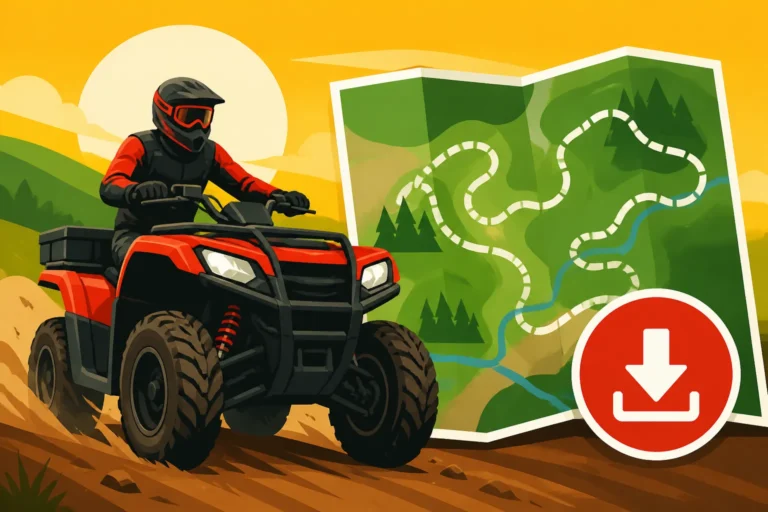
A map can help you understand where a route appears to go, especially when planning a trip to an unfamiliar area. onX Offroad may help you prepare a route and orient yourself, but it cannot show every temporary obstacle or tell you whether a particular passing spot is safe in the moment. Download or save what you need before leaving areas with weak service, and carry a backup plan. Planning for No Cell Service on a Forest Ride covers the practical side of navigating when a phone signal disappears.
| Trail situation | A sensible courtesy | Avoid |
|---|---|---|
| Meeting on a hill | Let the downhill rider look for a safe place to yield when practical | Requiring the uphill rider to stop and restart on loose ground |
| Meeting on level ground | Agree on who can reach a safe turnout most easily | Assuming the rider who arrived first automatically has priority |
| Blind corner or crest | Slow early and stop where you can be seen | Rushing into a pass before you know what is ahead |
| Soft shoulder or steep edge | Wait for a wider, stable section | Driving off-trail or toward an unstable edge |
| Group approaching another machine | Signal the whole group and pass one at a time | Letting several riders crowd the pinch point together |
Common mistakes and a simple riding plan
Do not treat courtesy as an absolute rule
Riders sometimes hear “downhill yields” and apply it mechanically. That can lead to a poor choice when the downhill rider is on an unstable slope or has nowhere safe to move. Use the guideline to start the conversation, then make the decision based on the actual terrain.
Another common mistake is backing up too far to avoid an awkward wait. Reversing can be especially tricky on a side-by-side with limited visibility behind, or on a quad where the surface slopes away. If you need to reverse, move slowly, check behind you, and use a spotter if one is available. Stop if you are unsure whether the ground can support the machine.
Finally, do not pass by driving around trail markers, through vegetation, or across a fragile shoulder. A few seconds of patience is better than widening the trail, damaging the terrain, or putting someone in a position where they could tip. If a safe pass is not available, wait until it is.
Prepare before you ride
Before setting out, learn the route’s general difficulty, check for closures, and make sure your group understands how you will signal a stop. Agree that everyone will slow down at blind corners and wait for the lead rider’s instructions when an oncoming machine appears. A short conversation at the trailhead can prevent confusion later.
If you are new to a riding area, plan conservatively. Use available maps to understand the route, but follow signs on the ground and turn around if conditions are beyond your group’s comfort level. In an unfamiliar forest area, Nebraska Riding Near Halsey can help with broader trip planning, while Nebraska Trail Etiquette Locals Expect is a useful reminder that considerate riding matters as much as knowing the route.
Most narrow-trail encounters are manageable when riders stay patient. Slow down, stop before the pinch point, choose the safest place to yield, and communicate before moving. That approach works better than insisting on a rigid rule, and it helps keep Nebraska’s trails safer and in better condition for everyone.
Disclaimer
This article is for general informational purposes only and does not constitute professional advice. Laws, prices and regulations vary by location and change over time. Consult a qualified professional for guidance on your specific situation.