Nebraska Group Ride Planning
A Nebraska group ride can go sideways before anyone reaches the trail: one machine may not fit the route, a trailer may block the staging area, or riders may lose cell service and split up. This guide helps you choose an appropriate riding area, coordinate people and equipment, and build a practical plan that keeps the day enjoyable and manageable.
Choose a riding area that fits the whole group
Match the destination to your machines and experience
Start with the least experienced rider and the least capable machine in the group, not the most confident rider or biggest side-by-side. A route that feels easy to someone who rides every weekend can be stressful for a beginner, a young rider, or someone operating an unfamiliar machine. Before choosing a destination, compare the area’s permitted vehicle types, route difficulty, terrain, and available amenities.
Nebraska options vary. Bessey Recreation Complex near Halsey offers forest trails and open riding areas, while Cedar Run ATV Trail near Harlan County Lake is another designated place to investigate. Flat Rock Riders OHV Park is a smaller riding option. Don’t assume that every public area welcomes ATVs: Nebraska state parks generally prohibit them, and wildlife management areas have their own access limits. Start with [Nebraska ATV Trails: Where to Ride] and check the specific area’s rules before inviting people.
For a mixed-skill group, choose a place with options to adjust the day. Riders who want a slower outing can take a suitable route while more experienced riders explore another permitted section, then meet again at a prearranged location. That plan only works if the routes, meeting point, and timing are clear—and if the area allows the planned riding. If everyone needs to stay together, prioritize the most cautious rider’s comfort. [Best Nebraska ATV Trails for Beginners] can help narrow the search.
Check vehicle access and route suitability
A trail that accepts ATVs may not necessarily accommodate every side-by-side. Width restrictions, turning space, trail surface, and posted rules can affect whether a wider machine is appropriate. Check the specific destination’s vehicle rules rather than relying on another rider’s memory or an old social-media post. For a starting point, review [Nebraska Trails That Allow Side-by-Sides], then confirm access with the land manager or riding area.
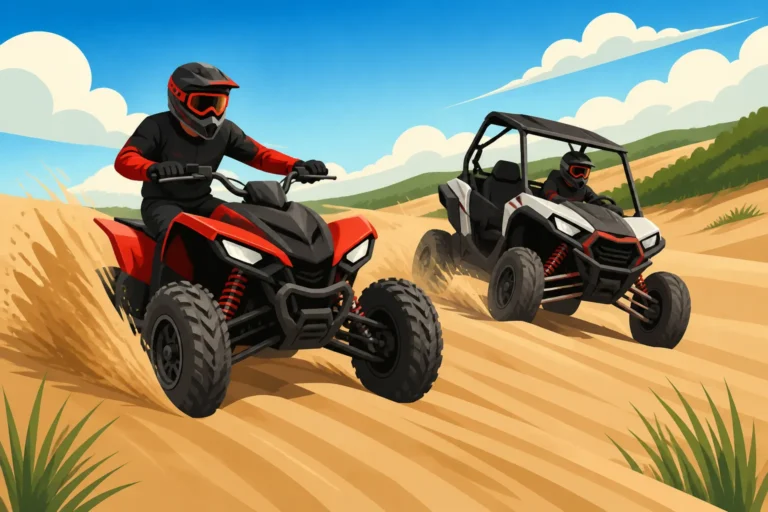
Also check the route’s difficulty honestly. A sandy open section, a tight wooded trail, and a rough or hilly stretch place different demands on a machine and rider. If the group includes new riders, ask what they have actually ridden before. “I’ve driven a quad before” could mean a quiet yard, not a narrow trail with other machines approaching from the opposite direction. Use [Nebraska Trail Difficulty Ratings] as one planning reference, and don’t treat a rating as a guarantee that every rider will feel comfortable.
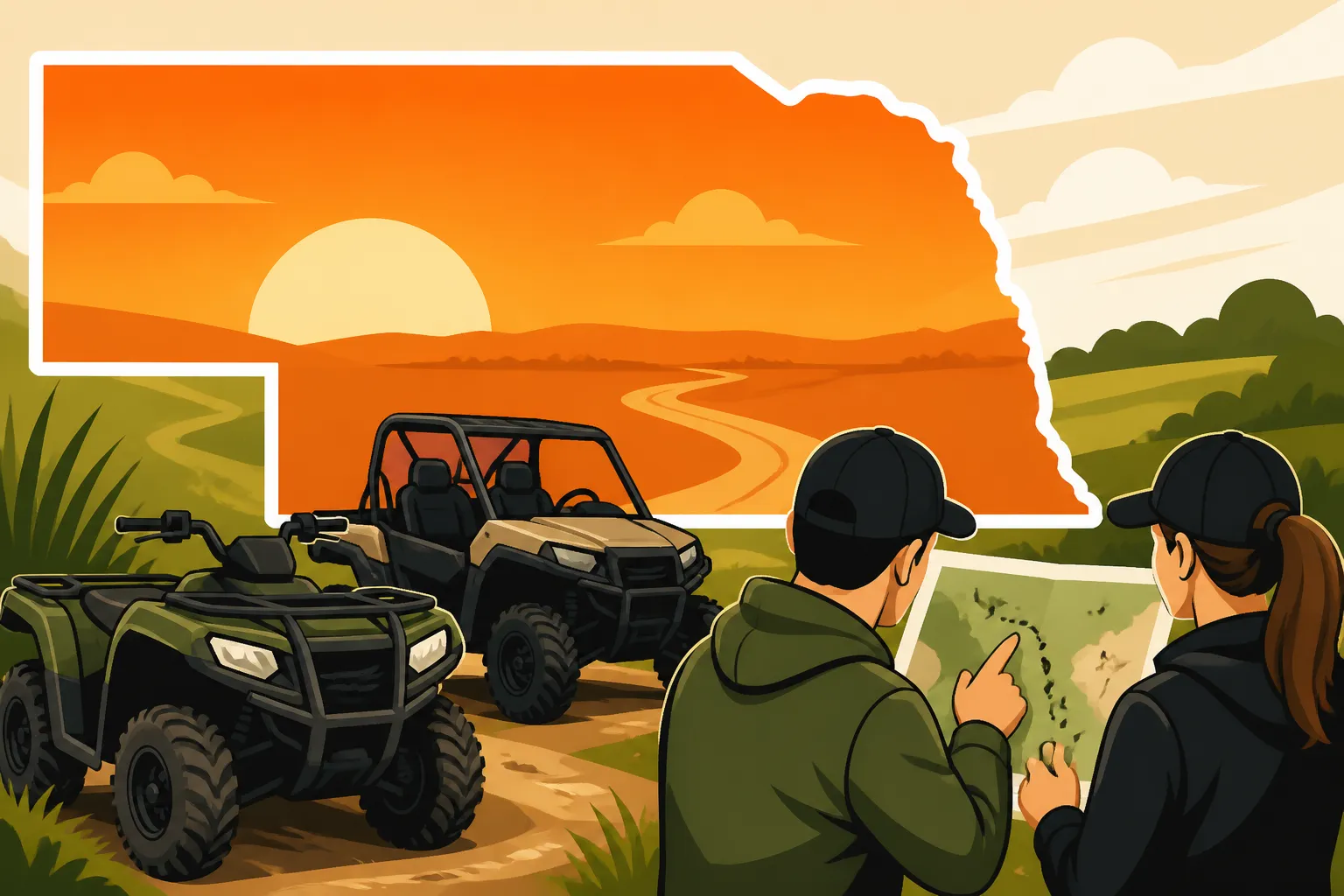
A map app such as onX Offroad can help the group discuss route ideas and keep a shared picture of the planned area. Use it as a planning aid, not as proof that a route is open or legally rideable. Confirm the route with current signs and the managing agency. Before the trip, make sure everyone knows the intended route and has a backup plan if a section is closed or unsuitable.
Build a plan people can follow
Set a meeting point, route, and regrouping plan
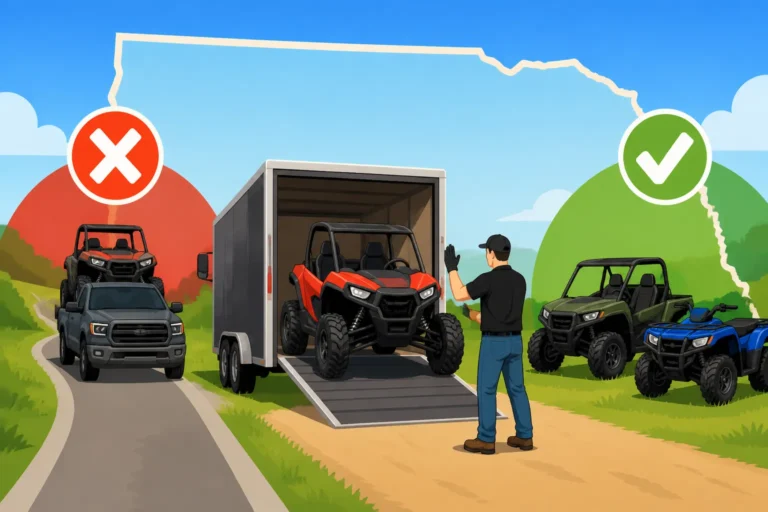
Choose a meeting point that is easy to find with trailers and large enough for people to gather without obstructing others. Tell the group exactly where to meet, when to arrive, and what to do if someone is late. “We’ll see you near the trail” is not a useful plan when several trailheads or entrances are involved.
Before unloading, agree on a simple route plan. Identify the intended starting point, the general direction of travel, planned stops, and a clear regrouping location. If a rider falls behind, the group should know whether everyone stops at the next safe place or whether a designated sweep rider stays with them. Avoid splitting into smaller groups without deciding where and when they will reconnect.
Cell service can be unreliable in remote riding areas, so don’t make a phone call the only way to find a separated rider. Share the route in advance, carry an offline map or paper map, and agree on a procedure for missed check-ins. [Planning for No Cell Service on a Forest Ride] covers this problem in more detail. onX Offroad may help people review and share a planned route, but everyone should know what to do if a phone battery dies, a device loses signal, or the map doesn’t match posted conditions.
| Planning item | Agree on before leaving | Why it helps |
|---|---|---|
| Meeting point | Exact entrance or staging location | Prevents confusion among trailheads |
| Route | Intended loop or turnaround point | Gives the group a shared plan |
| Regrouping | Where to stop if riders spread out | Reduces the chance of a split group |
| Sweep rider | Who rides last and checks behind | Helps keep slower riders accounted for |
| Backup plan | What to do if a route is closed | Avoids rushed decisions at the trailhead |
| Emergency contact | Who is not riding and has the itinerary | Gives someone outside the group useful information |
Keep the group size manageable
A larger group can mean more waiting, more dust, and more difficulty keeping everyone together. It can also create congestion at a narrow trail entrance or staging area. Ask the riding area whether it has group-size rules, event requirements, or reservation procedures. Do this early if you are organizing a club ride, charity event, or outing with many machines; a casual group ride and an organized event may not be treated the same way.
For a sizable group, consider splitting riders into smaller riding groups, each with a named lead and sweep rider. Set departures a little apart rather than sending everyone into a bottleneck at once. Keep the groups small enough that riders can see or communicate with one another, and set a firm regrouping location. Do not assume that splitting the group removes the need to check local rules.
Before the ride, share a short itinerary with someone who is staying home. Include the destination, expected riding window, vehicle descriptions, and a time when you will check in. That person does not need to manage the trip; the point is to make sure somebody knows where the group planned to be if plans change unexpectedly.
Coordinate trailers, supplies, and rider readiness
Plan arrival and staging before the drive
A smooth ride often depends on what happens before the machines reach the trail. Check the destination’s parking and staging arrangements, especially if several trucks and trailers are coming. [Nebraska Trailheads With Trailer Parking] is a useful place to begin, but confirm details for the specific location. A trailhead that works for one pickup and trailer may become crowded when a dozen rigs arrive together.
Agree on a parking approach before the group pulls in. Leave enough room for other visitors to maneuver, keep access lanes clear, and avoid unloading where people need to pass. If the area is unfamiliar, decide who will arrive first and help direct the group to appropriate spaces. [How to Unload and Stage Without Blocking Anyone] offers practical staging guidance. Don’t block gates, roads, emergency access, or another visitor’s trailer just to keep the group close together.
For a long drive to Halsey or another destination, coordinate fuel, food, and rest stops before departure. Share the route and arrival estimate with the group so no one is left waiting without knowing whether the convoy is delayed. [Planning a Long Trailer Haul to the Bessey Trails] can help you think through a longer trip. Bring basic tie-down and trailer equipment, and make sure each driver knows who is towing which machines and where the group will meet if vehicles become separated on the road.
Do a rider and machine check before unloading
Ask each rider to arrive with a machine in working order and appropriate protective gear. The group should not discover at the trailhead that someone has a loose strap, a low tire, an empty fuel tank, or a machine problem that makes the planned route unrealistic. A quick check can include tires, brakes, lights, throttle and controls, fuel, visible leaks, and secure cargo. Riders should also know how to shut down their machines and what to do if one develops trouble.
Pack for the conditions, not just the forecast at home. Nebraska rides can involve open sun, wind, dust, changing temperatures, and long stretches away from services. Bring water, food, basic first aid supplies, a charged phone, and any medication riders may need. For remote areas, include a paper map or offline navigation option and a power bank. Keep tools and supplies distributed sensibly rather than assuming one person will carry everything.
Be candid about experience and comfort. A new rider may be reluctant to say they are nervous when everyone else is eager to head out. Make it easy for someone to ask for a slower pace or a break without feeling that they are spoiling the day. A group ride is safer and more enjoyable when the plan can change to match the riders who actually showed up.
Ride with consideration and adapt to conditions
Agree on trail etiquette before the first mile
A group should discuss basic trail behavior before engines start. Ride at a pace that allows people to react, leave room between machines, and avoid crowding the rider ahead in dust. On a narrow two-way trail, slow down and follow local passing expectations rather than trying to squeeze past. If livestock, wildlife, hikers, or other trail users are present, reduce speed and give them room.
Keep noise and stopping behavior in mind around campgrounds, homes, and shared-use areas. Don’t spin tires, cut across vegetation, or leave litter behind. Close gates as you found them when permitted to pass, and respect signs, barriers, and private-property boundaries. [Nebraska Trail Etiquette Locals Expect] is a helpful companion for discussing these habits with the group beforehand.
A lead rider can set a good example by slowing down early, signaling stops clearly, and checking that the group is together before entering a more demanding section. The sweep rider can watch for riders who need a break or have a mechanical concern. These roles are not about policing friends; they make it easier to keep everyone informed without shouting over engines or relying on guesswork.
Recheck conditions and rules on the day
Trail access and conditions can change. Heavy rain may leave some routes muddy or vulnerable to damage, and a trail that looked suitable during planning may be closed, slick, or difficult when you arrive. Check for closures before departure and again at the trailhead. If signs or staff instructions conflict with an app, follow the posted direction and ask the land manager for clarification. [Nebraska Trail Closures After Rain] explains why a wet-weather check matters.
For a forest ride, confirm current access information with the appropriate ranger district. The [Bessey Ranger District Office Hours and Phone] page can help you plan how to ask questions about the Bessey area. Ask specifically about the route you expect to use, the machines in your group, parking, and any temporary restrictions. Avoid relying on a general statement such as “the forest is open” when access may vary by trail or area.
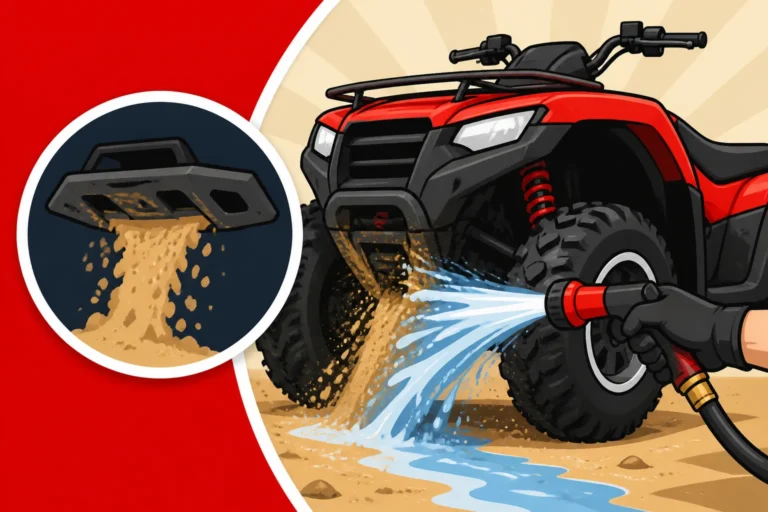
At the end of the ride, make sure every rider and machine is accounted for before leaving. Look over the staging area for forgotten gear, trash, or a leaking machine, and let your off-site contact know the group has finished. If conditions forced a change of plan, note what worked and what did not while it is still fresh. That small bit of follow-up makes the next Nebraska group ride easier to organize.
Disclaimer
This article is for general informational purposes only and does not constitute professional advice. Laws, prices and regulations vary by location and change over time. Consult a qualified professional for guidance on your specific situation.