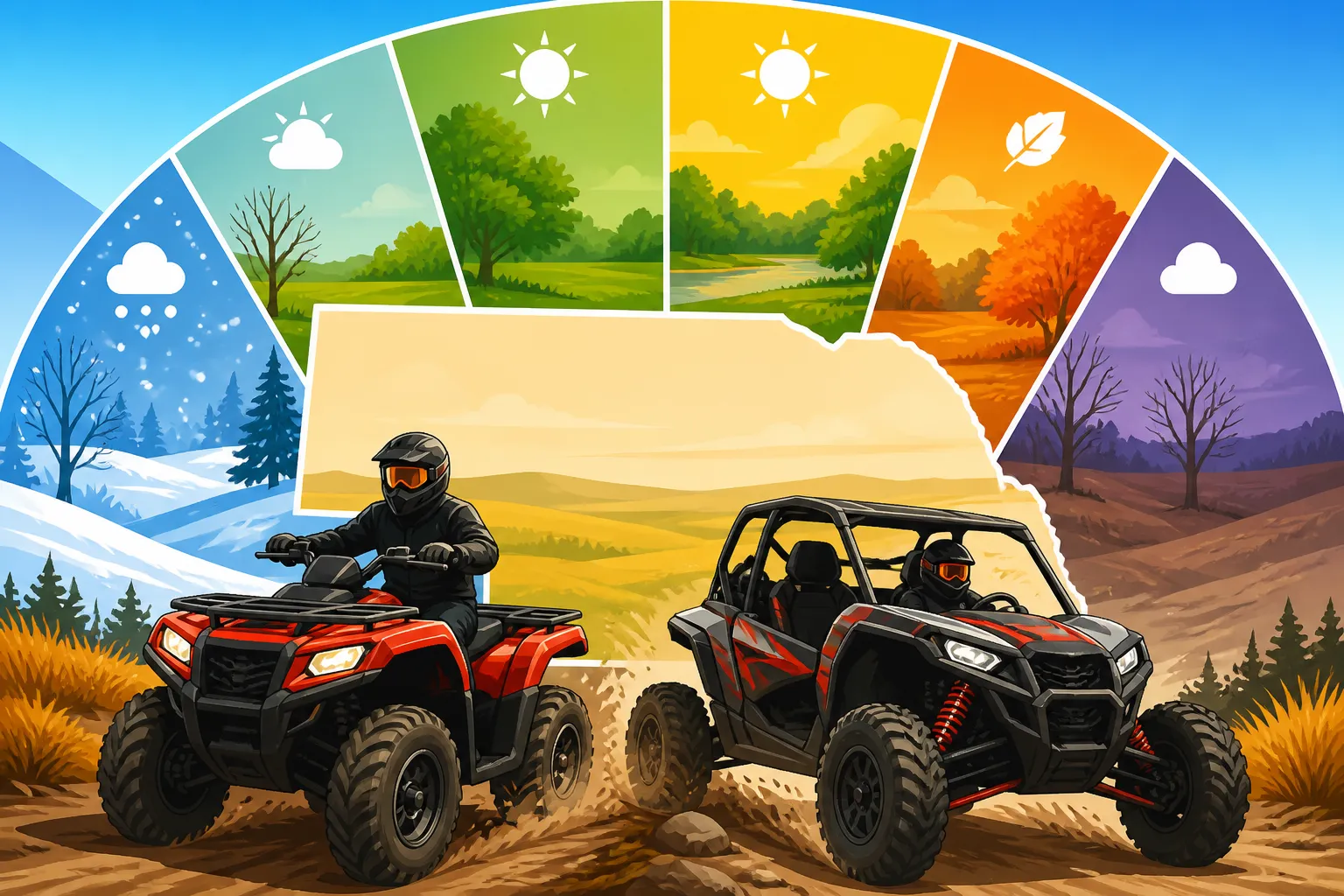
Nebraska Riding Season Month by Month
Nebraska riding conditions can change from frozen ground to deep spring mud, summer heat, and sharp fall winds in a matter of weeks. Planning by month helps you choose a realistic destination, pack for the weather, and avoid towing to a trail that is wet, closed, or unsuitable for your machine. Use this guide as a seasonal planning tool, then confirm access before you leave.
January Through March
January
January riding in Nebraska is often shaped more by wind, ice, and daylight than by trail mileage. A sunny afternoon can still feel bitterly cold once you are moving, and wind chill becomes especially noticeable on open ground. Dress in layers, protect your hands and face, and take more water than the cold weather might suggest you need.
Frozen water may look like an inviting riding surface, but ice is never something to assume is safe. Conditions can vary across a lake, and snow can hide thin spots, open water, or hazards near shore. Wildlife management areas have their own rules, and a frozen-water exception does not mean every lake or every part of a management area is open. Check local signs and guidance before unloading.
If you do ride, choose a place where access and winter conditions are clear, and make a conservative plan for daylight. Nebraska State Parks generally are not ATV riding areas, so do not treat a park road or trail as an off-road route. Review [Nebraska State Parks Ban ATVs] and [Nebraska Frozen Lake Riding Rules] before making a winter outing part of your plans.
February
February can feel like a continuation of winter, but the ground may start changing quickly during warmer spells. A trail that was firm during a cold snap can turn soft after a thaw, especially in shaded areas, low spots, and near water. If the route is muddy, turning around is better than widening ruts or damaging the surface.
Before heading out, check the destination’s current access information rather than relying on a past visit or a map pin alone. Online mapping tools such as onX Offroad can help you organize a route and identify nearby roads or land boundaries, but they do not replace a land manager’s closure notice or permission to ride. For more background, see [Nebraska Trail Conditions Before You Tow].
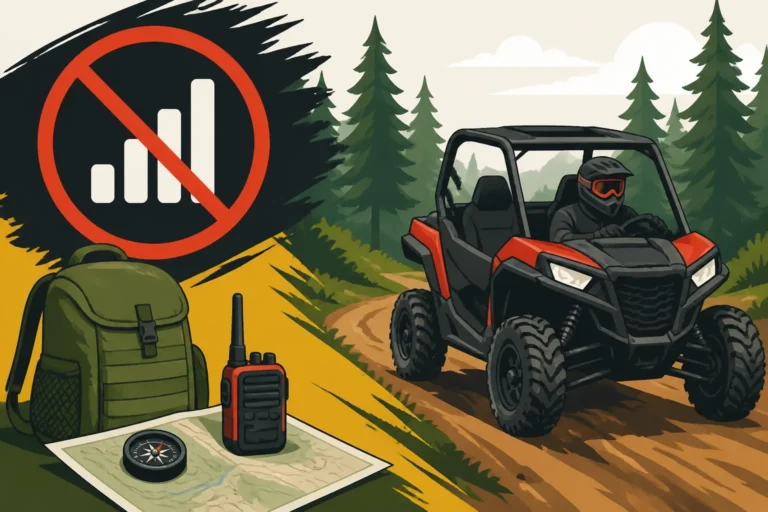
Winter also makes small equipment problems more consequential. Check the battery, tire pressure, lights, and winch operation before loading. Carry warm spare gloves, a basic repair kit, and a way to contact someone if your phone loses service. A short ride close to the staging area is often a better February plan than a long loop far from help.
March
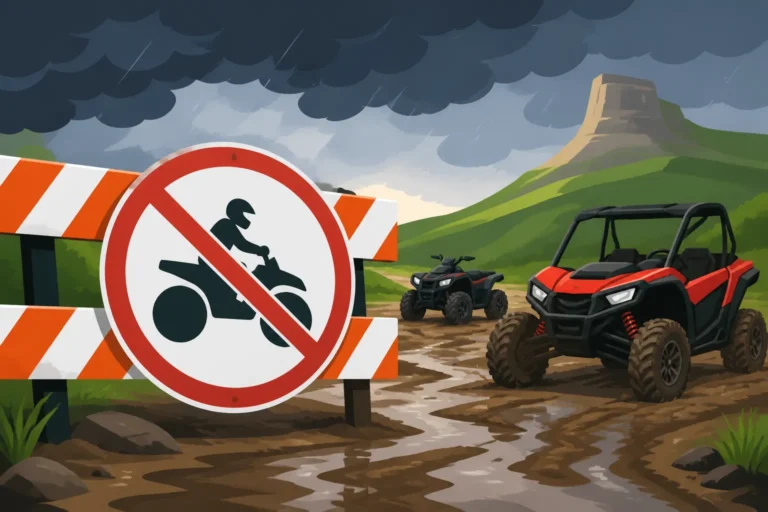
March is a transition month, not a reliable signal that riding season has fully arrived. A few dry, mild days may be followed by rain, snow, or a hard freeze. Dirt roads and trail approaches can become slick, and low-lying sections may stay wet after higher ground has dried.
This is a good month to prepare rather than force a ride. Inspect your trailer lights and tie-downs, check the machine after winter storage, and confirm the site’s rules for your vehicle type. If the destination has had recent rain, contact the operator or land manager before towing. A route-planning app can be useful for keeping notes on access points, but confirm that the route is legal and open.
If you do go, plan for a shorter outing and leave room to change course. Avoid riding around muddy patches: that can enlarge the damaged area and create a new track. Review [Nebraska Trail Closures After Rain] for why wet conditions can affect access and trail surfaces.
April Through June
April
April can bring the first appealing riding weekends, along with some of the year’s most changeable trail conditions. Rain, snowmelt, and fluctuating temperatures can leave trails soft even when the parking area looks dry. A firm-looking entrance does not guarantee that the rest of a route is ready.
Call ahead or check the site’s official updates before hauling. Ask whether trails are open, whether particular areas are closed because of wet ground, and whether your ATV or side-by-side is allowed. This matters at destinations with multiple riding areas or different route types. [Nebraska ATV Trails: Where to Ride] can help you identify places to investigate, but access details should still be checked with the specific site.
Pack for a wide temperature range: a light rain layer, warm clothing, and a change of socks can make an early-season ride much more comfortable. If conditions are questionable, choose a destination with a short route back to the staging area. Do not assume that an open road or parking lot means every trail is open.
May
May often brings more comfortable riding weather, but rain can still interrupt plans. The ground may dry unevenly, with exposed slopes firming up before wooded or shaded sections. At lakeside and river-adjacent riding areas, damp ground and standing water can linger after a storm.
It is also a useful month for a first longer outing. Test your machine and gear on a manageable ride before committing to a full day. Pay attention to cooling, tires, brakes, and any unusual noises. A route app such as onX Offroad can help you keep a planned route organized, but use posted signs and the riding area’s own map as your authority on where vehicles may travel.
If you are considering a destination near Halsey, research the site and its riding areas before you go. The [Bessey OHV Trails at Halsey in Nebraska] page is a starting point for understanding that destination. For a longer haul, build in extra time for stops, secure the load carefully, and confirm that the trailhead you intend to use is open.
June
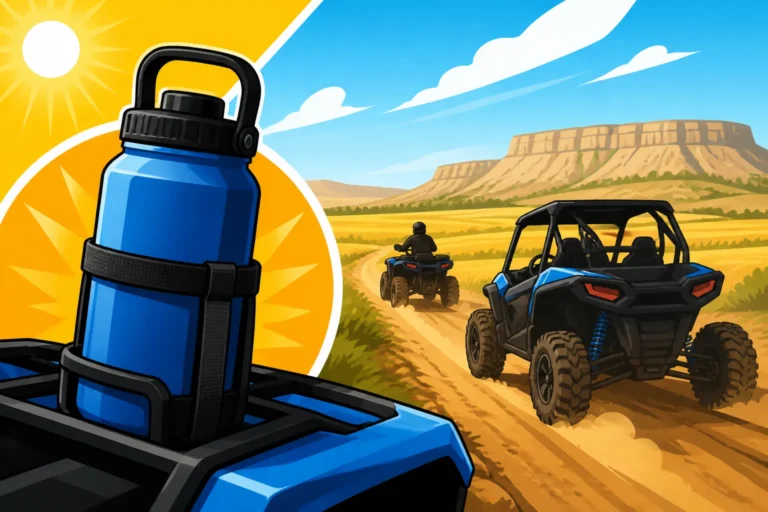
June can offer long daylight hours and warm riding weather, but heat and sun exposure become more important as the month progresses. Open sand and treeless routes can feel hotter than shaded ground, while dust may reduce visibility when several machines are traveling together. Bring enough water for the whole group and take regular breaks rather than waiting until someone feels unwell.
Check tire condition, cooling components, and air filtration before a dusty ride. Fine dust can build up quickly, especially when riding behind other vehicles. Keep a safe following distance, slow down when visibility drops, and avoid stopping in a place where another rider cannot see you in time.
For a June trip, confirm that your destination allows your machine type and that the riding area is open. Some places have distinct routes or areas for different vehicles. [Nebraska Trails That Allow Side-by-Sides] can help you narrow down options, while [Cedar Run ATV Trail in Nebraska] and [Flat Rock Riders OHV Park in Nebraska] are examples of destinations to research directly.
| Month | Common planning concern | Practical approach |
|---|---|---|
| January | Cold, wind, and uncertain ice | Dress for wind chill, verify access, and avoid assuming ice is safe |
| February | Thawing ground and short daylight | Check trail conditions and keep the route conservative |
| March | Freeze-thaw cycles and mud | Call ahead and turn around rather than rutting wet ground |
| April | Rain and lingering soft spots | Confirm closures before towing |
| May | Variable conditions and first longer rides | Test equipment and check the destination’s vehicle rules |
| June | Heat, sun, and dust | Carry water, protect against sun, and maintain visibility |
| July | High heat and busy weekends | Ride early when practical and plan frequent breaks |
| August | Heat, dust, and afternoon storms | Watch the forecast and have a sheltered backup plan |
| September | Cooler weather and changing access | Check land-use rules and seasonal notices |
| October | Wind, falling temperatures, and shorter days | Pack layers and plan to finish before dark |
| November | Cold snaps and possible snow | Check traction, lighting, and site access |
| December | Winter exposure and limited daylight | Keep trips short and confirm conditions before leaving |
July Through September
July
July is often a comfortable month for a long daylight outing, but heat can turn a fun ride into an exhausting one. Direct sun, warm air from the machine, and repeated stops in open terrain can add up. Start with water, keep it accessible, and make breaks part of the plan rather than an afterthought.
Dust is another common summer nuisance. It can irritate eyes and lungs, coat air filters, and make it hard to see the rider ahead. Wear eye protection, leave space between machines, and slow down when dust hangs over the route. If you are riding with a group, agree on a regrouping point before setting out so no one feels pressured to keep pace.
Busy weekends can also mean fuller parking areas and more people sharing the same routes. Secure your trailer and gear, unload without blocking others, and follow posted directions. If the area is crowded, patience and lower speeds help prevent a minor inconvenience from becoming a collision.
August
August can bring persistent heat, dry conditions, and sudden storms. The forecast may look manageable at home but differ at the riding area, so check conditions close to departure and again before starting the ride. If thunder or heavy rain develops, move to a safe place and follow the site’s instructions.
Dry, dusty conditions are hard on both riders and machines. Inspect the air filter more often after dusty outings, and clean the machine before fine grit works into moving parts. Take extra care around other vehicles and pedestrians near trailheads, where dust clouds and limited sightlines can make it difficult to judge speed or distance.
Use a map or app to prepare a route, but do not rely on it as proof that a road or trail is open. onX Offroad may help you keep route notes and locate features, while local signs and land managers determine what access is permitted. Check trail restrictions before you ride, and remember that a path visible on a map may cross land where riding is not allowed.
September
September can bring a welcome break from summer heat, making it a good time to plan a longer day outdoors. Cooler mornings can still give way to warm afternoons, so layers are useful. Conditions can vary by region, and a route that feels comfortable near Lincoln may not match the wind or temperature farther west.
As fall approaches, be attentive to hunting seasons and land access. A hunting license does not grant permission to ride across private property, and public-land vehicle rules still apply. Confirm that the area is open to motorized use, stay on designated routes, and respect temporary closures or posted signs.
If you are choosing among destinations, use a map to compare driving routes and staging areas, then verify details with the riding site. Look for current information about parking, vehicle limits, and any changes to access. Keep in mind that Nebraska State Parks are not a substitute for designated OHV riding areas; review [Nebraska WMA Vehicle Rules] if you are considering a wildlife management area.
October Through December
October
October often rewards riders who are ready for changing temperatures. Mornings can be chilly, while midday sun may still feel warm. A windproof outer layer and a dry spare layer are useful, especially if your group plans to stop for lunch or ride in open country.
Shorter daylight becomes more important as the month goes on. Set a turnaround time before the ride begins, and do not let a slow start push the group into an unplanned after-dark trip. Check headlights and taillights, even if you expect to finish well before sunset. A small delay from a stuck machine, flat tire, or wrong turn can quickly eat into daylight.
This can be a pleasant time to visit a forest or lakeside route, but confirm seasonal access before loading. Trail conditions and operating rules are set by the site, not by the calendar. For Halsey-area planning, [Planning a Long Trailer Haul to the Bessey Trails] can help you think through the travel side of the outing.
November
November weather can change quickly, and wind can make an otherwise manageable ride uncomfortable. Pack gloves that still work with your controls, a warm hat or face covering, and an outer layer that blocks wind. Keep a dry change of clothing in the vehicle in case of rain, mud, or an unexpected stop.
Before riding, check the battery and charging system, tire pressure, and cold-weather starting. A machine that starts easily in the garage may be harder to restart after sitting outdoors. Give yourself time for a careful warm-up and a basic pre-ride inspection rather than rushing to beat the daylight.
At this point in the season, some people begin putting machines away, but a calendar date alone does not determine whether a trail is open. Contact the site for seasonal notices and check the weather near the destination. If you want to keep riding, choose a location with clear access information and a short, realistic route.
December
December riding is best approached as a short, carefully planned outing rather than a guaranteed full-day adventure. Snow, frozen ground, wind, and limited daylight can all affect comfort and traction. Conditions can change within the same day, so check the forecast and site guidance before leaving home.
Avoid assuming that snow makes an area suitable for motorized riding. Public land may restrict machines to designated roads, and signs can close areas that otherwise appear accessible. On private land, get the owner’s permission and follow any conditions they set. Read [Nebraska Riding in Winter Wind] for more cold-season planning considerations.
If the machine will spend the rest of winter in storage, clean it, follow the manufacturer’s storage guidance, and address maintenance before putting it away. If you do ride, tell someone where you are going, carry a charged phone and basic recovery supplies, and finish with enough daylight to load safely. Checking access, weather, and trail conditions is worthwhile in every season, but it matters especially when winter leaves less room for a wrong turn.
Disclaimer
This article is for general informational purposes only and does not constitute professional advice. Laws, prices and regulations vary by location and change over time. Consult a qualified professional for guidance on your specific situation.