How to Ride Past a Campground Without Waking It
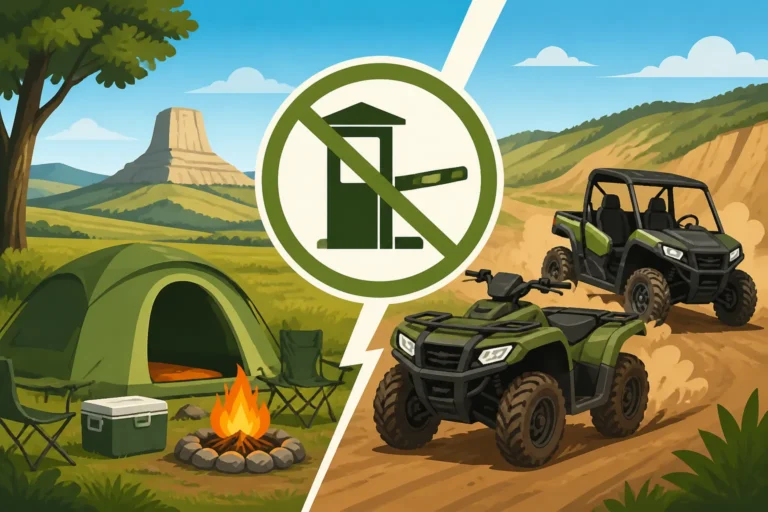
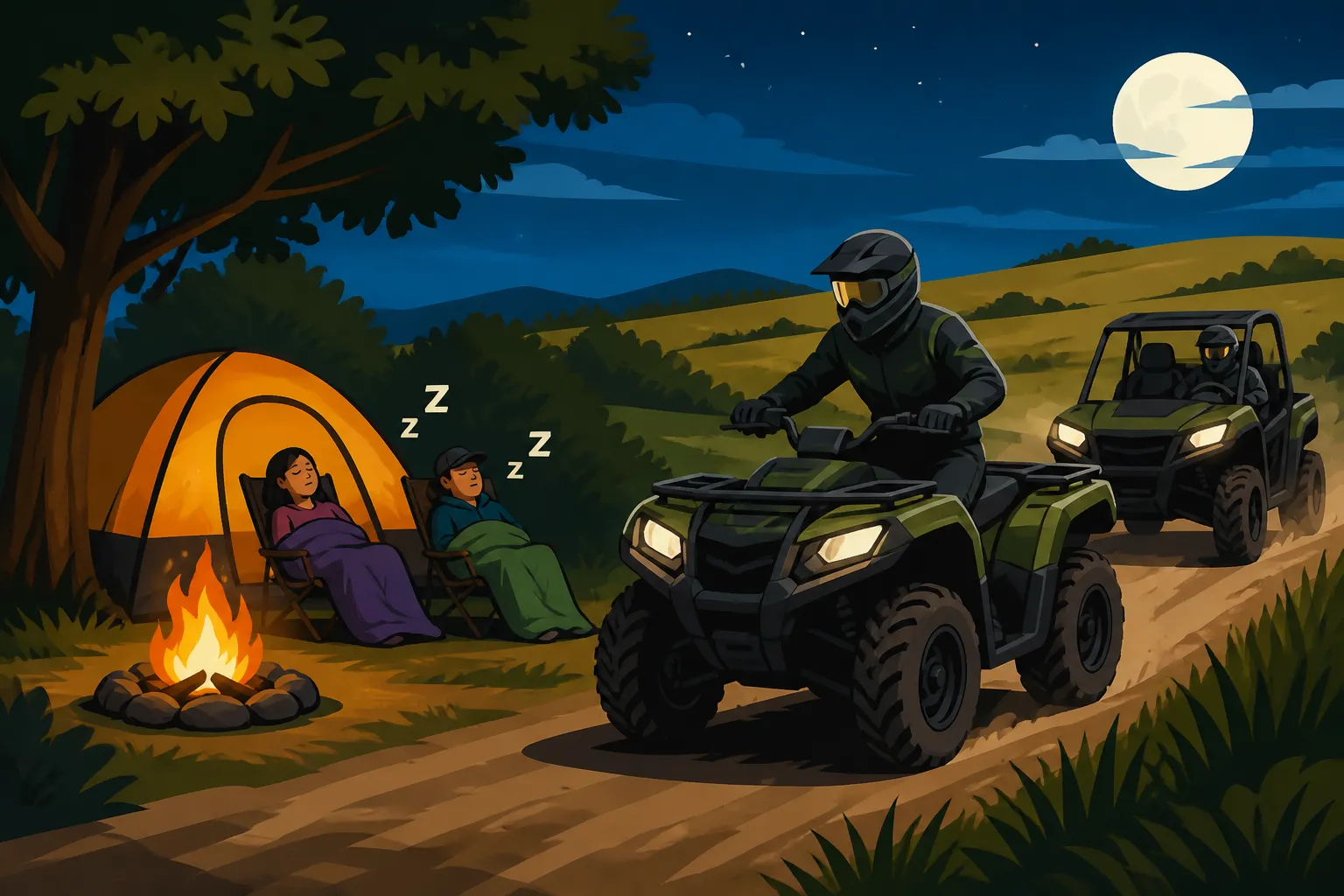
A quiet campground can make even a short ride feel awkward: one twist of the throttle, one burst of exhaust, and a row of tents is wide awake. In Nebraska, the considerate choice is to slow down well before you reach campsites, follow posted routes, and avoid unnecessary noise. This guide explains how to pass through or near a campground without disturbing people who are sleeping.
Check the route before you ride
Confirm the trail actually goes past the campground
A line on a phone map can look like a trail even when it follows a campground road, a closed route, or a path that is not open to motorized use. Before unloading, check the riding area’s official map, signs at the trailhead, and any posted campground rules. If a route is marked for a particular type of vehicle, make sure your machine is allowed there.
This matters at places with several kinds of recreation packed into one area. At Bessey Recreation Complex near Halsey, for example, riders may share the broader area with campers and other visitors. Review Bessey OHV Trails at Halsey in Nebraska and Nebraska National Forest Riding before planning a route, then follow the signs where you arrive. A trail map helps you plan; it does not override a closure or a posted restriction.
If you use onX Offroad to scout a route, treat it as a planning aid rather than permission to ride every line it displays. Compare the route with official maps and signs, especially near a campground, road, or trail junction. A little checking at home can prevent an uncomfortable surprise when you reach a quiet campsite and discover the route takes you straight through it.
Find out what the campground expects
Rules can vary between public campgrounds, private riding areas, and campgrounds attached to a trail system. Some places may designate a route for vehicle access; others may ask riders to stay out of camping loops altogether. Look for signs about speed, quiet hours, vehicle access, and where to park or stage. If the rule is unclear, ask the campground host or land manager rather than guessing.
Be especially cautious if you are riding near a campground at Bessey or at a lakeside area such as Cedar Run. The layout and rules may differ, even if both places have trails nearby. Checking Cedar Run ATV Trail in Nebraska and Cedar Run’s Staging Area, Picnic Shelter and Grill can help you understand the setting before you go. On the ground, posted directions and staff instructions should guide your choices.
Pass campsites slowly and predictably
Reduce noise before you reach the first campsite
The easiest way to avoid waking campers is to change your riding before you arrive, not once you are beside a tent. Ease off the throttle well in advance, keep your speed low, and avoid sudden acceleration. A machine that is already moving gently is less likely to make a sharp, startling burst of noise than one that brakes hard and then accelerates away.
Use the route’s designated surface and avoid revving, spinning tires, or making unnecessary passes. If the trail is narrow, approach slowly enough to stop safely when people, pets, or children appear. Give campers room, and do not cut across a site to save a few seconds. If the route goes directly through an occupied area and you are unsure whether that access is allowed, stop in a safe place and check the signs or ask staff.
A useful rule of thumb is simple: if you can see tents, picnic tables, or people relaxing at a campsite, ride as though they can hear you clearly. In a still morning or evening, sound can carry farther than expected. That is true even if the campground seems quiet or empty from the trail.
Choose a calm time and a considerate line
If your route gives you a choice, pass the campground when there is less chance of disturbing people. Avoid riding close to occupied sites during posted quiet hours, and don’t assume that daytime means everyone is awake or out of camp. Families may have young children napping, and some campers turn in early after a long day outdoors.
Stay on the route instead of weaving around campsites or taking a shortcut behind them. A predictable line helps campers know where you are going, and it reduces the risk of crossing into someone’s space. If another rider is approaching, slow down and leave room rather than trying to squeeze past people or parked vehicles.
The following comparison can help you make a quick decision when a route approaches a camping area:
| Situation | Considerate choice | Avoid |
|---|---|---|
| You see occupied campsites ahead | Ease off early and follow the signed route | Accelerating to get through quickly |
| A campground road appears to be the only way forward | Stop safely and check signs or ask staff | Assuming the road is open to ATVs |
| Campers are walking near the trail | Slow down, give them space, and wait if needed | Passing close or startling them with a rev |
| Posted quiet hours are in effect | Choose another route or wait if practical | Treating quiet hours as applying only to music |
| Dust is blowing toward sites | Reduce speed and avoid kicking up more dust | Following close behind another machine |
For more general riding habits, Nebraska Trail Etiquette Locals Expect offers useful context, while How to Unload and Stage Without Blocking Anyone can help you keep the campground entrance and trail access clear.
Keep sound, dust, and group behavior under control
Ride as a group without creating a noise burst
A group can disturb a campground even when every rider is trying to be considerate. The sound may build as each machine accelerates, and riders who are following closely may be tempted to speed up to catch the person in front. Before the group reaches a campground, agree on a slow pace and leave enough space between machines that nobody needs to rush.
A simple plan helps: the lead rider slows early, the rest of the group follows at a controlled pace, and nobody accelerates until the group is well clear of campsites. If someone falls behind, don’t rev or circle near the campground while waiting. Move to a safe place away from tents and walkways, then regroup there.
For a larger outing, consider whether the route makes sense for the group at all. A crowded weekend, a narrow campground loop, and a long line of machines can be a poor combination. Nebraska Group Ride Planning can help you think through spacing and logistics, and Where to Stage a Big Group at Bessey is relevant when planning a larger gathering near that riding area.
Think about dust as well as engine noise
Quiet riding is not only about sound. A fast pass on a dry surface can send dust into tents, open windows, food, and shared picnic areas. Slow down on dusty approaches, keep a generous distance from the machine ahead, and avoid spinning tires. If the route is dry and visibility is poor, pause somewhere safe until the dust settles rather than pushing through a campground cloud.
After rain, the opposite problem can arise: a route may be muddy, soft, or closed to protect the surface. Don’t detour around a closure through a campground or across an unmarked area. Check Nebraska Trail Closures After Rain and follow on-site notices. A navigation app such as onX Offroad can help you orient yourself, but use official closure information and signs to decide where riding is permitted.
If you are riding near a lake or shared recreation area, be alert to people walking between campsites and the water. At Cedar Run, the staging area and picnic facilities are part of a shared outdoor setting, so keep your pace low and be prepared to yield. How to Ride Past a Campground Without Waking It is the basic idea in practice: stay on the proper route, pass calmly, and leave people’s campsite space undisturbed.
What to do when the route is unclear
Stop and ask instead of guessing
If you reach a gate, sign, campground loop, or junction that leaves you uncertain, stop somewhere safe without blocking traffic. Read the posted information and check your map. If it is still unclear whether your machine can pass, ask a campground host, ranger, or site staff member. A short question is better than riding into a restricted area and having to turn around beside occupied campsites.
Do not use another rider’s choice as proof that a route is open. They may have permission, may be heading to a designated parking area, or may simply be making a mistake. Likewise, a route shown in a navigation app is not necessarily an approved ATV trail. onX Offroad can help you see your position and plan alternatives, but use it alongside local signs and official maps rather than as a substitute for them.
If the only apparent route goes through an occupied campground and there is no clear indication that motorized access is permitted, choose a different route or wait for guidance. Avoid riding through someone’s campsite, even if it looks like the shortest connection.
Handle a mistake calmly
If you realize you have entered a campground area by mistake, don’t panic or race out. Slow down, avoid sudden throttle, and leave by the safest route you can identify. If campers are nearby, give them space and acknowledge the mistake politely if appropriate. Don’t stop in a narrow lane to argue or hold up other users.
Afterward, review how the route was marked and adjust your plan before riding again. Save a clear alternate route, note where the confusing junction was, and check whether staff or the land manager can clarify access. For trips around Halsey, Bessey’s 36 Miles of Forest Trail at Halsey may help with route planning, while Nebraska Trail Conditions Before You Tow can help you prepare before making the drive.
The best campground pass is often the one campers barely notice: a legal route, a slow and steady pace, no unnecessary revving, and enough room for people to enjoy their site. Those habits make the ride more comfortable for everyone and help preserve access for the next visit.
Disclaimer
This article is for general informational purposes only and does not constitute professional advice. Laws, prices and regulations vary by location and change over time. Consult a qualified professional for guidance on your specific situation.