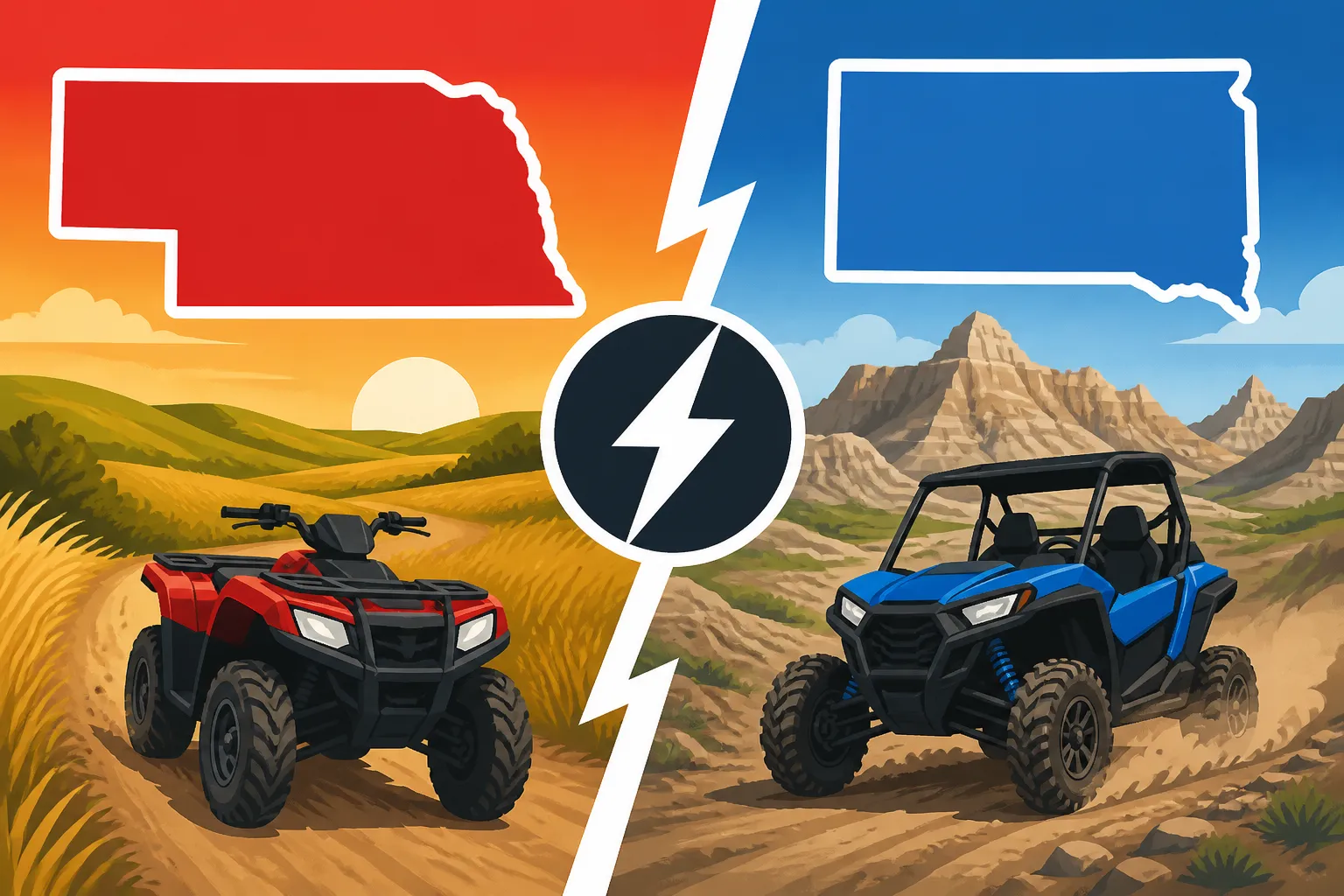
Nebraska Riding Compared to South Dakota
Nebraska and South Dakota offer very different ATV and UTV trips, so choosing between them can mean deciding whether you want open Sandhills scenery, a smaller number of riding destinations, or the longer trail networks and rugged terrain of the Black Hills. This guide compares the riding experience, access rules, planning needs, and practical tradeoffs to help you choose a trip that fits your machine and group.
The main difference between riding in Nebraska and South Dakota
Nebraska riding is built around specific destinations
Nebraska can be a rewarding place to ride, but the options are concentrated in particular riding areas rather than spread across a huge network of public routes. Bessey OHV Trails near Halsey, Cedar Run near Republican City, and private riding venues give riders places to plan around. That makes Nebraska a good fit for a focused weekend, especially if you are willing to trailer to a designated area.
The landscape also shapes the ride. At Bessey, riders head into the Nebraska National Forest near Halsey, where wooded trails and open riding areas offer a change from the state’s broad farm country. Cedar Run offers a different setting near Harlan County Lake. These destinations are useful starting points if you are narrowing down where to ride in the state; [Nebraska ATV Trails: Where to Ride] gives a broader look at the choices.
The tradeoff is that a Nebraska trip usually needs more advance checking. A place that looks like a promising public-land destination on a map may not allow motorized riding, and nearby state recreation areas are not automatically open to ATVs. For example, Nebraska state parks do not generally provide ATV trail access, so verify the rules for the particular area rather than assuming a public property welcomes machines. See [Nebraska State Parks Ban ATVs] before building a route around a park.
South Dakota offers a larger trail-riding region in the Black Hills
For many riders, South Dakota’s strongest comparison point is the Black Hills region. The Black Hills National Forest and nearby riding destinations provide a more extensive off-highway riding landscape than Nebraska’s relatively concentrated set of designated areas. Riders may find more opportunities to connect a trip with forest terrain, hills, and longer outings, depending on the routes open to their machine and the current land-management rules.
That bigger riding region is not the same as unrestricted access. Motorized travel is limited to designated routes and areas, and route suitability can vary by vehicle type, season, and local restrictions. A trail that suits a narrower ATV may not be appropriate for a wider side-by-side. Always check the official motor-vehicle-use information and current closures before setting out.
The practical difference is scale. In Nebraska, you may plan your day around a named trail system or riding area. In the Black Hills, you may spend more time building a route from designated roads and trails, then confirming that each segment is legal for your machine. More terrain can mean more choices, but it also means more navigation and rule-checking.
| Riding consideration | Nebraska | South Dakota, especially the Black Hills |
|---|---|---|
| General feel | A trip focused on a specific riding area | A broader forest and hill-country riding region |
| Terrain | Sandhills, wooded areas, lakeside settings, and private parks | More rugged hills and forest terrain in the Black Hills |
| Route planning | Start with the rules for the destination you plan to visit | Check designated routes, vehicle limits, and closures across the route |
| Best fit | A targeted weekend or a visit to a particular trail area | A longer trip with more route options and varied terrain |
| Main planning caution | Public land does not automatically mean ATV access | A mapped road or trail does not automatically allow your vehicle |
What the terrain and ride feel like
Nebraska has more variety than its flat-state reputation suggests
Nebraska is often pictured as flat farmland, but that does not describe every riding destination. The Sandhills bring rolling, open country, while the Halsey area has forested terrain and established OHV riding. Lakeside riding areas add yet another kind of setting. A trip can feel quite different depending on which part of the state you choose and what the designated area permits.
Sand can be enjoyable, but it asks more of both rider and machine. Loose surfaces can make steering feel less predictable, and long stretches of sand can increase fatigue. Tire pressure, tire condition, speed, and visibility all matter. If sand is the point of your trip, read [Nebraska Riding Areas With Sand] and think through your machine setup before towing out.
Nebraska’s open spaces can also mean exposure to wind and sun. A ride that seems easy on a map can feel tiring when the trail is exposed, the day is hot, or dust hangs in the air. Bring enough water, plan breaks, and avoid assuming that every trailhead will have fuel, cell service, or supplies close by.
The Black Hills generally call for more attention to hills and route conditions
The Black Hills experience can feel more technical than a typical ride on open prairie or rolling sand. Elevation changes, uneven surfaces, rocks, and tighter turns may require slower, more deliberate riding. For a newer rider, a short route on familiar terrain can be a better choice than trying to cover as much distance as possible.
A UTV owner should pay particular attention to route width and vehicle eligibility. Some routes may be appropriate for an ATV but unsuitable or closed to a wider side-by-side. Do not rely on another rider’s recollection alone; check the applicable route information for the vehicle you plan to bring. [Nebraska Trails That Allow Side-by-Sides] is useful for comparing Nebraska destinations, and the same careful vehicle-specific approach matters when planning in South Dakota.
The scenery can be a major part of the appeal in either state, but it changes the practical demands of the ride. In Nebraska, wind, loose sand, and open exposure may define the day. In the Black Hills, elevation, rocks, and changing trail conditions may take more attention. Choose based on the kind of riding your group actually enjoys, not just the number of miles shown on a map.
Access, rules, and navigation
Confirm that the riding area is open to your machine
The most frustrating trip is the one where you arrive with a loaded trailer and discover that the area is closed, the route does not allow your vehicle, or the access point is not where you expected. Before leaving home, confirm the riding area’s current rules, any seasonal or weather-related closures, vehicle restrictions, parking arrangements, and whether a fee or permit applies.
Nebraska has designated riding areas, but it does not have a general statewide OHV trail sticker that grants access everywhere. A title, a state park entry permit, and permission to ride a particular trail are different things. For background on the state-level distinction, see [Nebraska Has No OHV Permit or Sticker]. Then check the rules of the specific destination, since a private park, forest area, or local riding facility may have its own requirements.
For Bessey, begin with the area’s official riding information and confirm which trailheads or riding sections are open to your machine. [Bessey OHV Trails at Halsey in Nebraska] is a useful place to start. For a trip near Harlan County Lake, check [Cedar Run ATV Trail in Nebraska] and verify access details before you head out. If forest riding is your goal, [Nebraska National Forest Riding] can help frame what to check for that setting.
Use maps as planning tools, not as permission to ride
A digital map can help you identify trailheads, estimate travel time, and keep your group oriented. Tools such as onX Offroad can be useful for comparing possible routes and preparing an offline plan, particularly when you expect limited service. But a line shown on a map is not proof that a road or trail is open to your machine. Land-manager maps and posted signs should guide the final decision.
Before a ride, download or save the information you will need. Mark your parking area, the route you intend to follow, and a reasonable turnaround point. If your group splits up, agree on a meeting location and a time to regroup. Carrying a paper map is a sensible backup, especially for forest areas where service may drop out.
Use onX Offroad alongside official route information rather than in place of it. That approach helps you plan efficiently while avoiding a common mistake: treating a digital route as authorization. For trail and access updates, [Nebraska Trail Conditions Before You Tow] is a useful reminder to confirm the situation close to departure.
Choosing a trip and preparing for it
Pick the state based on your group and available time
Nebraska may be the better choice if you want a defined riding destination, are curious about the Sandhills or Halsey forest setting, or are putting together a shorter trip around one trail area. It can also work well for a group that prefers a manageable plan: drive to a designated area, ride the permitted routes, and return to a nearby campground or lodging option.
South Dakota may be the better fit if your group wants to spend more time exploring the Black Hills and is comfortable planning around a larger network of designated routes. It can suit riders who enjoy more varied elevations and are prepared to check route eligibility carefully. That does not mean every Black Hills trail is open to every machine, or that the region will automatically be easier to navigate. It means the trip may offer a wider range of route choices if you do the homework.
Think about the least experienced rider in your group. A long, challenging route that sounds exciting to one person can become stressful for someone who is new to steep terrain, sand, or extended riding days. Choose a route with a comfortable exit plan, and do not treat mileage as the only measure of a successful trip.
Make the trailer trip part of the plan
Before loading, inspect tires, brakes, lights, tie-downs, and the trailer’s condition. Secure machines so they cannot shift during highway travel, and leave room for essential gear such as helmets, tools, water, first aid supplies, and recovery equipment. If you are heading to Halsey or another destination far from home, plan fuel and food stops instead of assuming services will be right beside the trailhead. [Planning a Long Trailer Haul to the Bessey Trails] can help you think through that part of a Nebraska trip.
Check the riding area’s parking and staging instructions. Arriving with a trailer takes space, and unloading in the wrong location can block other visitors or create a safety problem. Have your gear organized before you reach the trailhead so you are not sorting loose equipment while other riders are trying to pass.
A final check of weather, trail status, and machine condition can save a trip. After heavy rain, sand or dirt routes may be affected, while dry conditions can increase dust and fire concerns. Inspect the machine after the ride, too: clean out sand and debris, check for loose fasteners, and look over tires and underbody protection before the next day. OnX Offroad can help you keep your planned route organized, but conditions and posted restrictions should determine where you actually ride.
A simple decision checklist
Use these questions to make the comparison practical:
- What kind of terrain does the group want? Choose Nebraska for a destination-based outing that may include Sandhills, forest, or lakeside settings. Consider the Black Hills for a larger regional riding trip with more elevation and varied terrain.
- What does your machine fit? Confirm width, vehicle class, and route eligibility before selecting trails, especially if bringing a side-by-side.
- How much planning are you willing to do? Nebraska requires careful destination checks; a Black Hills route may involve checking multiple designated segments and closures.
- How far are you willing to tow? Include the drive, fuel stops, and parking logistics in your decision—not just the riding time.
- What are the current conditions? Check official information shortly before departure, and have a backup plan if weather or closures change your route.
- Does the plan suit the least experienced rider? Build in shorter options, rest stops, and a clear way back to the staging area.
Neither state is an automatic winner for every rider. Nebraska can deliver a satisfying, well-planned outing when you choose a legal riding area that matches your machine. South Dakota can offer a broader Black Hills experience, but it still rewards careful route research. Decide what kind of ride you want, confirm access before you tow, and let the conditions—not assumptions—shape the day.
Disclaimer
This article is for general informational purposes only and does not constitute professional advice. Laws, prices and regulations vary by location and change over time. Consult a qualified professional for guidance on your specific situation.