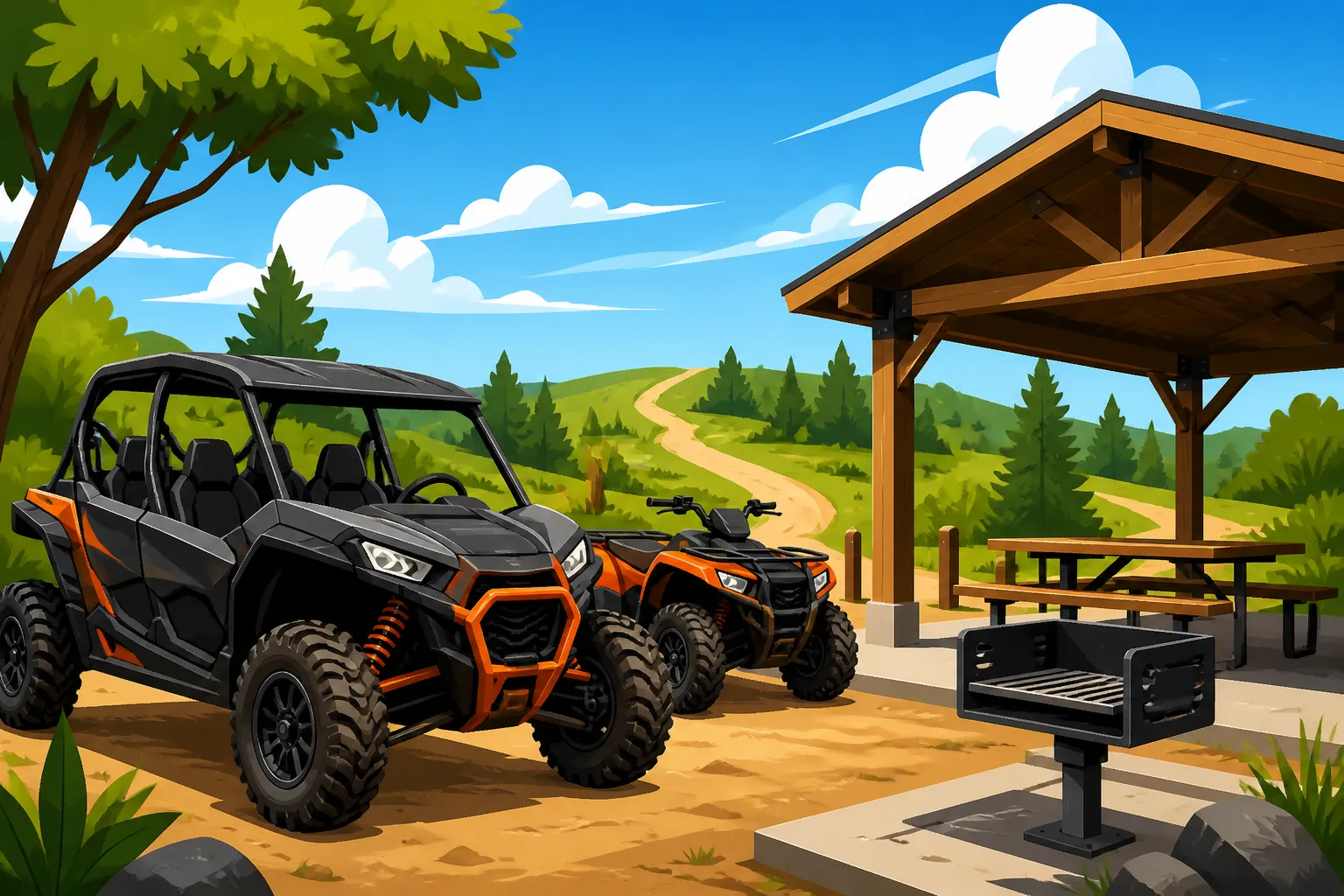
Cedar Run’s Staging Area, Picnic Shelter and Grill
Cedar Run’s staging area is more than a place to park: it can shape how smoothly your riding day begins, where your group regathers, and whether lunch becomes a welcome break or a logistical scramble. This guide explains how to plan around the staging area, picnic shelter, and grill near Harlan County Lake, including what to confirm before towing out.
What to Expect at Cedar Run’s Staging Area
Treat the staging area as your ride-day base
Cedar Run’s staging area is the natural starting point for unloading, organizing gear, and getting your group ready before heading onto the trail. That first stop matters, especially if several machines arrive on trailers or riders have different levels of experience. A little preparation before you reach the site can prevent the familiar pileup of tie-downs, helmets, water bottles, and people trying to decide where everything goes.
Before leaving home, agree on who is responsible for unloading each machine and where the group will meet once everyone is ready. Keep helmets, gloves, goggles, and other frequently used items together rather than buried under coolers or spare gear. If you are riding with children or first-time guests, give them a clear meeting point and explain that they should stay with an adult around vehicles and trailers.
Do not assume that every staging area has the same layout or services. The presence of a staging area does not by itself tell you how many trailers it can accommodate, whether there is a designated unloading lane, or what facilities are available. Check current site information before setting out, and plan to arrive with enough time to unload without rushing. For broader trip planning, [Nebraska Trailheads With Trailer Parking] can help you think through the practical questions to ask about parking and access.
Make your trailer plan before you arrive
A trailer can take up considerably more room than a single vehicle, and a group with several trucks and trailers needs a parking plan that works for everyone. Confirm that the site can accommodate your setup and check for any posted parking instructions or restrictions. If you are meeting friends who are arriving separately, decide beforehand whether you will wait at the staging area or meet at another agreed location.
Keep the unloading process tidy and safe. Park only where permitted, leave enough space for other visitors to move through the area, and avoid blocking access routes while you remove tie-downs. If your group is large, unload in an orderly sequence rather than gathering every machine and person in one tight spot. Put loose straps and equipment away as soon as you remove them; a strap left on the ground can become a tripping hazard or get caught under a tire.
A map app such as onX Offroad can be useful during the planning stage for reviewing the general route and coordinating where your group expects to meet. Use it as a planning aid, not as permission to ride on a road or piece of land. Confirm access and site rules through the relevant land manager or posted notices, and save essential directions before leaving areas where cell reception may be unreliable.
Using the Picnic Shelter and Grill
Plan lunch as a group, not as an assumption
The picnic shelter and grill give riders a practical option for taking a break together, but it is still wise to plan the meal around what you know rather than what you hope will be available. Bring the food, cooking supplies, utensils, and drinking water your group needs. Do not count on finding fuel, food, ice, or other supplies at the riding area unless you have confirmed that they are available.
Decide in advance whether you are bringing food that needs refrigeration, cooking a meal, or packing ready-to-eat items. For example, a family with young riders may prefer a simple lunch that can be served quickly, while a larger group may want to assign one person to manage the grill and another to keep food and drinks organized. Either approach works better when people know the plan before the machines are unloaded.
The shelter can also serve as a useful regrouping point. Tell riders where and when to meet if the group separates, and make sure everyone knows what to do if someone is delayed or has a mechanical problem. A shared meeting place reduces confusion, particularly for visitors who are unfamiliar with the area. For nearby trip ideas, [Nebraska Riding Near Republican City] provides useful context when planning a visit around this part of the state.
Use the grill safely and leave the site ready for others
Before using the grill, check its condition and follow any posted instructions. Bring the cooking tools and supplies you need, and keep children and pets at a safe distance while it is in use. Avoid leaving food unattended, and make sure the cooking area stays clear of riding gear, fuel containers, and other items that should not be near a heat source.
Pack out your food waste and disposable items, and leave the picnic shelter and grill area clean for the next group. Do not assume that a trash can, cleaning supplies, or spare charcoal will be available. If you bring items that could blow away, such as napkins or packaging, secure them as you set up rather than waiting until the end of lunch. A breezy day near open water can scatter lightweight trash quickly.
A shared shelter works best when groups are considerate about how much room they use and how long they occupy the space. Keep equipment together, avoid spreading supplies across more tables or surfaces than necessary, and make room for other visitors when the area is busy. These small courtesies are part of the local [Nebraska Trail Etiquette Locals Expect] and help keep the recreation area pleasant for riders and non-riders alike.
Plan the Ride Around Your Group
Match the trail day to rider experience and machine type
Cedar Run is associated with a 470-acre riding area and about nine miles of trail. Those figures can help you picture the scale of a visit, but they do not tell you whether every route will suit every rider or machine. Check the latest trail information before towing, and make sure the permitted vehicle types and trail conditions work for your group. You can read more in [Cedar Run's 470 Acres in Nebraska] and [Cedar Run's 9 Miles in Nebraska].
Before anyone starts riding, talk through the basics: who is leading, who is riding at the back, where you will regroup, and what the group should do if someone needs to stop. A new rider may be more comfortable with a short, easy outing than with a long loop at the pace of experienced riders. Children and less experienced adults often need extra breaks, and building those breaks into the plan is better than trying to catch up after someone becomes tired or overwhelmed.
Check whether the route accommodates the machines in your group, especially if you are bringing a side-by-side or a mix of vehicle types. Do not assume that a trail suitable for one ATV is automatically wide enough for every UTV. Review posted rules and current trail guidance, and turn around rather than forcing a machine onto a route that is too narrow, difficult, or otherwise unsuitable. [Nebraska Trails That Allow Side-by-Sides] is a useful related topic when choosing a ride for a mixed group.
Check conditions and access before you tow
A beautiful forecast at home does not guarantee that trail conditions will be suitable when you arrive. Rain, wind, and recent use can change the riding experience, while closures or access notices can affect where you may go. Check available updates before loading the trailer and again before starting your ride. If conditions look poor, adjust the plan rather than treating the drive as a reason to ride regardless.
Use onX Offroad or another mapping tool to help organize your route and keep track of your intended destination, but compare that information with current site rules. A mapped line is not always an authorized trail, and an app should not override a closure sign or land-manager instruction. Saving a map for offline use can be helpful in areas with limited reception, but carry enough information to find your way back even if your phone battery runs low.
When you are uncertain about access, parking, trail status, or facilities, ask the appropriate site contact before departure. [Nebraska Trail Conditions Before You Tow] offers a broader checklist for that step. Build flexibility into the day: if a trail is closed or unsuitable, your group should know whether you will choose a different permitted route, stay at the staging area, or call the outing early.
A Practical Checklist for a Cedar Run Visit
Prepare for the staging area and lunch
Use the table below as a planning checklist. The details that matter most can vary by trip, group size, and current site rules, so confirm anything that affects access or safety before you leave.
| Planning item | What to prepare | Why it helps |
|---|---|---|
| Trailer and parking plan | Confirm access and parking arrangements for your vehicle and trailer | Avoids arriving without a workable place to unload |
| Rider gear | Organize helmets, gloves, eye protection, and other required gear before departure | Keeps the unloading area calmer and reduces forgotten items |
| Food and water | Bring the supplies your group will need for lunch and hydration | Avoids relying on services that may not be available |
| Grill supplies | Pack appropriate cooking tools and check site instructions | Makes lunch easier and helps you use the grill safely |
| Group meeting point | Agree that the shelter or another permitted location is your regrouping point | Helps reunite riders if the group gets separated |
| Maps and directions | Save directions and review the route before leaving | Makes navigation easier if reception is limited |
| Trail information | Check current rules, conditions, and any closures | Helps prevent a wasted trip or an unsafe route choice |
| Cleanup supplies | Bring a bag for rubbish and a way to collect loose items | Leaves the shelter and staging area ready for the next group |
For groups that plan to camp as well as ride, do not assume that the staging area itself provides a campsite or that nearby camping is open to every kind of vehicle. Confirm the location, rules, and reservation or permit requirements separately. [Nebraska OHV Camping With Trail Access] can help you think through the difference between a riding stop and a place to stay overnight.
Keep the day comfortable and flexible
A well-planned riding day does not have to be complicated. The most useful preparation is often simple: arrive with time to unload, keep your group’s gear together, bring food and water, and agree on a meeting point. If the picnic shelter and grill fit your plans, treat them as convenient shared amenities rather than a substitute for packing what your group needs.
Be prepared to adapt. A rider may tire sooner than expected, a machine may need attention, or conditions may change the route you had planned to ride. Leave enough daylight and time in your schedule to return to the staging area without rushing. Before heading home, check that everyone is accounted for, equipment is secured, and the shelter and parking area are clean.
If you are using onX Offroad to help coordinate your route, share the plan with the group before the ride begins and make sure riders understand that posted signs and site instructions take priority. The tool can help people stay oriented, but a clear plan, sensible riding pace, and respect for local rules are what make the outing work.
Disclaimer
This article is for general informational purposes only and does not constitute professional advice. Laws, prices and regulations vary by location and change over time. Consult a qualified professional for guidance on your specific situation.