Nebraska Parks Closed to ATVs
Nebraska’s state parks are not places to take an ATV or UTV for a recreational trail ride, even if your truck has a valid park entry permit. The confusing part is that “park access,” “vehicle access” and permission to ride an off-highway machine are different things. This guide explains the distinction, the narrow frozen-water exception, and where to check before unloading.
What Nebraska’s park closure means for ATV and UTV riders
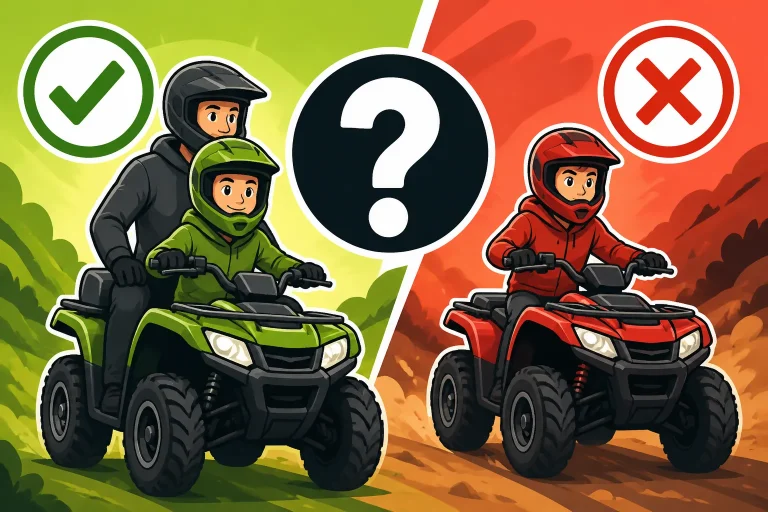
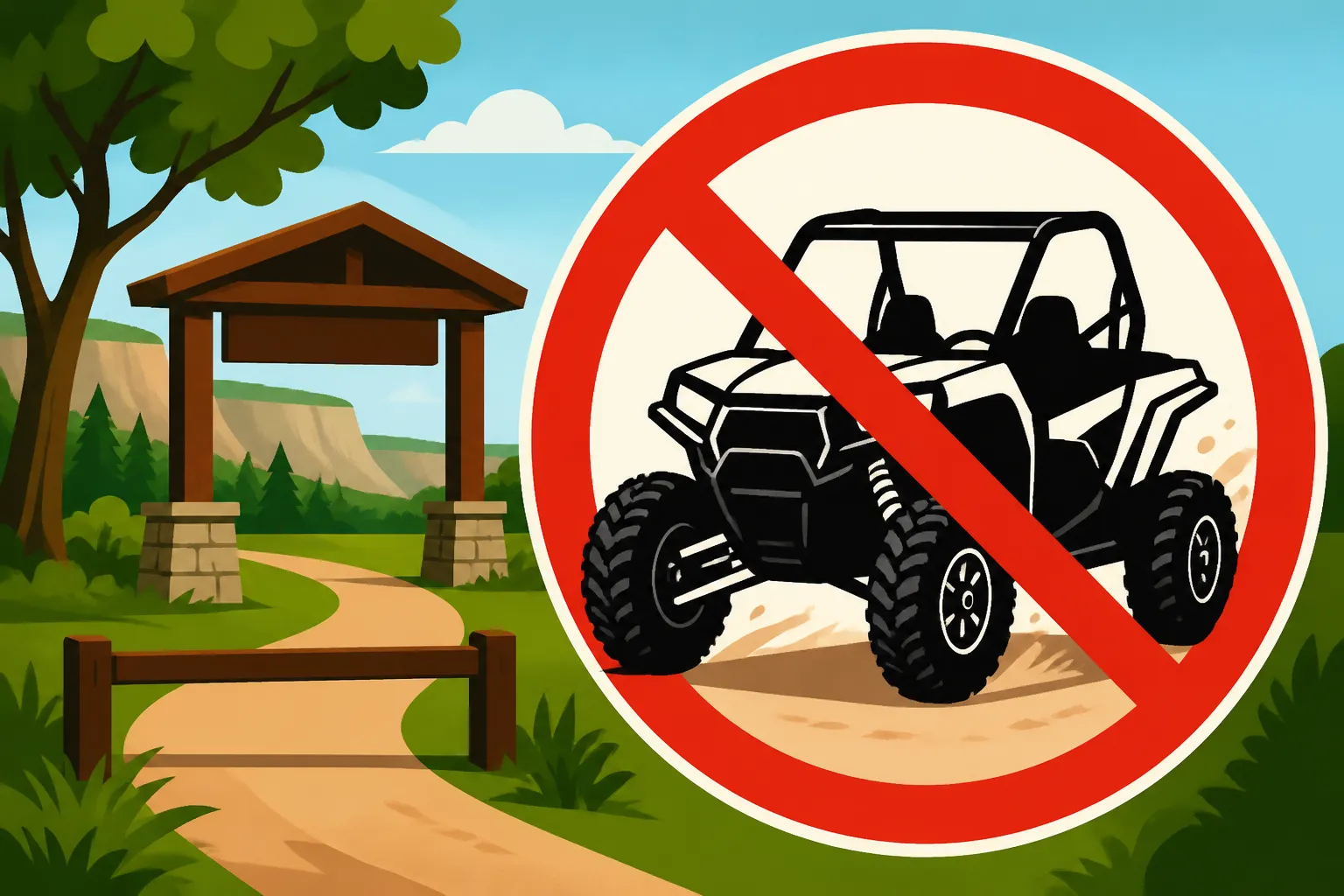
Nebraska state parks are closed to recreational ATV and UTV riding. A park entry permit does not make the trails, roads or open areas available to off-highway machines. You can bring a truck or other permitted highway vehicle into a park where allowed, but that is separate from taking an ATV off the trailer and riding it.
The same basic caution applies to state recreation areas: do not assume that a place is open to ATVs just because it has public roads, camping, water access or large areas of undeveloped land. Check the rules for the specific property, and follow posted signs and closures. For a fuller overview, see Nebraska Park Rules for ATVs and [Nebraska Recreation Area Rules for ATVs].
A useful way to think about the rule is:
| What you have or want to do | What it means |
|---|---|
| A state park entry permit for your truck | Permission to enter the park in an eligible vehicle; it is not ATV trail authorization |
| An ATV title or proof of ownership | Evidence about the machine; it does not open park land to riding |
| A registration or sticker from another state | Not automatic permission to ride in a Nebraska park |
| A trail or road shown on a map | Not necessarily open to ATVs; confirm the property’s current rules and signs |
| A frozen lake or other frozen water | May fall under a narrow exception where use is allowed; confirm that the specific location is open |
The practical consequence is straightforward: a park permit and an ATV riding permit are not interchangeable. A vehicle permit may be required to enter a park in your truck, while ATV riding may remain prohibited there. A valid title, insurance policy or out-of-state registration does not override a land manager’s closure.
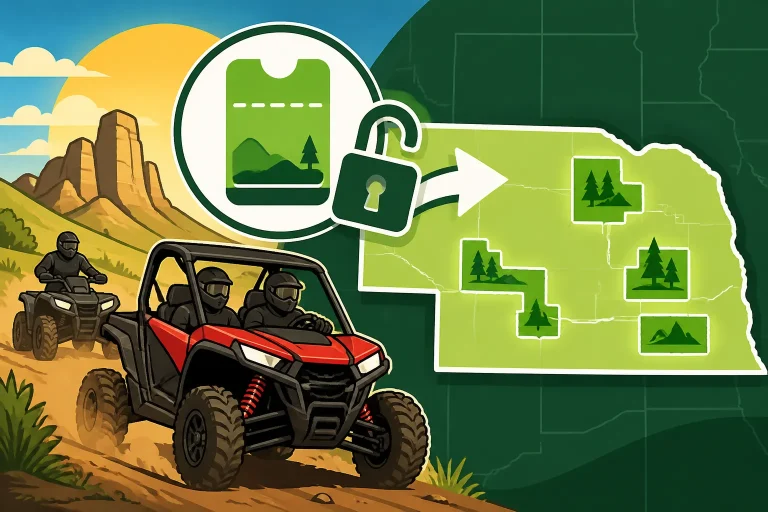
This distinction matters especially for visitors who are used to states where a single OHV sticker or registration helps establish trail access. Nebraska does not have a general state OHV permit or sticker that grants access to park trails. See Nebraska Has No OHV Permit or Sticker for how that affects riders bringing machines from elsewhere.
The closure also does not mean every public place in Nebraska is closed to ATVs. It means that you must identify land where motorized riding is specifically allowed, rather than treating public ownership as permission. Certain designated trails, private riding areas and other approved locations may provide riding opportunities under their own rules.
Why a park entry permit does not authorize ATV riding
Park entry permits are about entering designated park areas with a vehicle. They do not turn a closed trail into an ATV route, authorize riding across grass or lake shore, or substitute for permission from the land manager. If you are hauling a machine, the permit question may apply to the truck or trailer entering the property; the machine’s use is a separate question.
This is easy to get wrong when planning a weekend. A rider sees a campground or boat launch on a map, buys the required vehicle permit, and assumes the ATV can be unloaded and ridden nearby. But a park’s roads and facilities may be intended for ordinary vehicle access, not recreational riding. Never infer ATV permission from a road being physically wide enough for a side-by-side.
If you are sorting out the permit for your tow vehicle, Nebraska State Park Entry Permits covers that separate issue. For the ATV itself, ask whether the specific property allows the machine, which routes are open, and whether any separate conditions apply. A permit to enter is not proof that the ATV can be used once you arrive.
Registration and reciprocity do not change the land rules
Out-of-state visitors sometimes ask whether a home-state registration, decal or riding permit is accepted in Nebraska. Even where a document helps identify a machine or satisfies a requirement elsewhere, it does not grant access to Nebraska state parks. Land access is controlled by the rules of the property, not simply by the paperwork attached to the ATV.
Nebraska has no general state OHV sticker that visitors can buy to unlock state park riding. Likewise, the absence of a Nebraska sticker requirement is not a signal that riding is allowed everywhere. The key questions are still: Who manages the land? Is the route designated for motorized use? Is the area open today? Are there machine-size, seasonal or other limits?
When a permit page, a trail map and a sign appear to conflict, do not settle the question by choosing the most permissive interpretation. Contact the park or land manager before unloading. Ask for the rule that applies to the exact trailhead or parcel, not just a general answer about “the park.”
Don’t confuse access roads with riding routes
A road that leads into a park may be open to highway vehicles without being an ATV trail. Similarly, a route shown for hiking, biking, maintenance or emergency use is not automatically a motorized route. A side-by-side’s ability to fit down a path is irrelevant if that path is not designated for it.
The distinction can matter even within one property. A site may have an entrance road, parking lot, campground loop and boat access, but that does not mean riders may travel between them on an ATV. If a property has a special exception or designated route, confirm exactly where it begins and ends.
Before your trip, look for the property’s current map and rules, then compare them with posted signs once you arrive. If the information is unclear, call the managing office. Do not rely solely on a general-purpose map app, a social media post or an old ride report; those may show a route without establishing that ATV use is authorized.
The frozen-water exception is narrow
Nebraska has a limited exception involving ATVs on frozen water, but it should not be treated as a general winter opening of state parks. It does not mean every frozen lake is available to machines, that every park permits ice riding, or that an ATV can use shorelines and adjoining trails. The exact location, posted restrictions and current conditions matter.
Before riding on frozen water, verify that the specific area is open to ATV use. Look for signs or official notices, and contact the land manager if the rule is uncertain. A lake may be closed to machines, may have designated areas, or may be subject to temporary restrictions. Ice conditions can change quickly, so legal access and physical safety are separate checks: an area being open does not mean the ice is safe.
The most common mistake is turning a specific exception into a broad assumption: “ATVs are allowed on frozen lakes in Nebraska, so I can ride on this one.” That conclusion is not safe. A frozen surface inside a park or recreation area may still be closed, and an open water surface does not necessarily authorize riding along the bank or through the rest of the property.
For a more detailed look at the exception and the questions to ask before heading out, see Nebraska Frozen Lake Riding Rules. That article can help you distinguish the frozen-water issue from ordinary park trail access.
Check conditions as well as permission
Cold weather can create a false sense of certainty. A lake may look solid from the access point while currents, springs, changing water levels or other conditions make parts of it unsafe. Avoid assuming that a route used last winter is still suitable this time. Follow closures and local advisories, and do not ride onto ice simply because other tracks are visible.
A practical pre-trip check should cover both access and safety:
- Confirm the name and manager of the water or property.
- Check whether ATV use is allowed at that exact location.
- Look for temporary closures, posted limits and designated areas.
- Confirm that the route to the frozen surface is also legal for an ATV.
- Assess ice conditions independently and stay off questionable ice.
- Tell someone where you plan to ride and when you expect to return.
If the property’s information is unclear, choose a confirmed riding area instead. A long tow is frustrating, but it is better than arriving at a closed access point or putting a machine and rider at risk.
Where to ride instead
The best alternative to a closed park is not an unmarked road or an informal shortcut. It is a place where ATV use is expressly allowed. Nebraska has designated riding opportunities, private parks and forest or other public-land areas with specific motorized-use rules. Each has its own limits, so check trail openings, permitted machine types, seasonal conditions and fees before towing.
Designated riding locations can differ significantly. One may have trails suitable for a particular machine type, while another may restrict vehicle width or access to certain areas. A place that allows ATVs might not allow every UTV, and a route that is open to a dirt bike may not fit a side-by-side. Start with Nebraska Trails That Allow Side-by-Sides if you are planning around a UTV.
National forest land is also not a blanket exception to the need for research. Riding is typically limited to routes and areas designated for motorized use. A forest road, parking area or nearby campsite does not automatically mean every adjacent trail is open. Check the current map and instructions from the responsible ranger district, and watch for temporary closures.
Wildlife management areas have their own rules as well. The presence of a roadway does not necessarily mean it is open to ATVs. Some areas limit motorized travel to designated routes or parking access, and use may vary by property. For a starting point, see Nebraska WMA Access for a Quad.
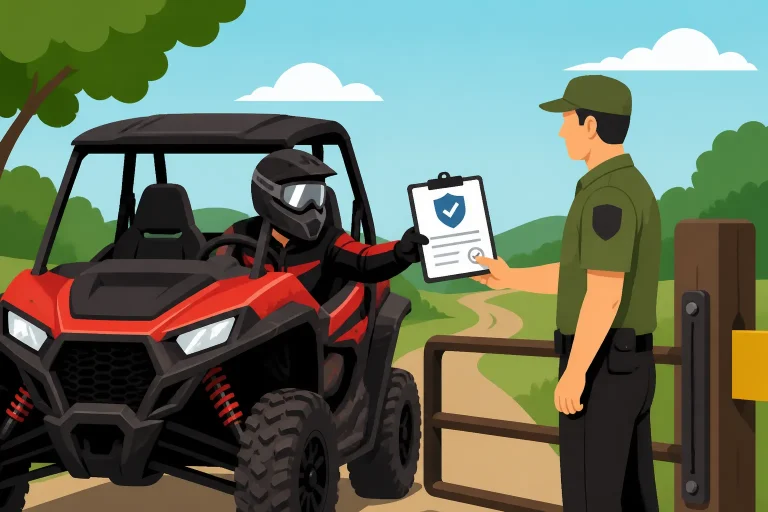
Private riding parks can be a useful option when you want a clearly defined place to ride, but they are not all alike. Confirm that the facility is open, that your machine type is permitted, and whether it requires reservations, a waiver, insurance proof or other paperwork. Ask about youth rider rules, passenger limits and trail conditions before making the drive.
Compare the right details before you leave
Use a quick comparison to narrow your options, then confirm the details with the land manager or operator:
| Riding option | What to verify |
|---|---|
| State park or state recreation area | Whether ATV use is prohibited and whether a narrow exception applies |
| National forest riding area | Which routes are designated open to your machine type |
| Wildlife management area | Whether motorized travel is allowed on that property and where |
| Private riding park | Machine dimensions, age rules, waivers, operating hours and current conditions |
| Frozen-water area | Specific authorization, posted limits, access route and ice safety |
Do not plan from a list of “places to ride” alone. A location may have been open when a page was written but closed for maintenance, weather, fire danger, resource protection or another reason. Start with current official information, then call if a key detail is missing.
Trail condition checks are particularly important after rain, heavy snow or seasonal thaw. A legal trail may be temporarily closed to prevent damage. Before towing, review Nebraska Trail Conditions Before You Tow and confirm the day’s status with the site. Respecting a closure helps preserve access for everyone.
A simple pre-trip check for riders and visitors
A little verification before loading can prevent a wasted drive, a ticket or an unsafe ride. Use this process whether you live in Nebraska or are visiting from another state.
- Identify the land manager. Determine whether the destination is a state park, recreation area, national forest, wildlife management area, private facility or another type of property. Similar names on maps can refer to different parcels or agencies.
- Ask the specific ATV question. Do not ask only whether the property is “open.” Ask whether ATVs or UTVs may be ridden, and where. If the answer depends on the vehicle type, provide your machine’s dimensions or model details.
- Separate travel from riding. Confirm whether your truck and trailer can enter, where you can park, and whether unloading is allowed. None of those permissions automatically authorizes riding.
- Check for current restrictions. Look for closures, seasonal rules, weather-related limits, fire restrictions and posted signs. Recheck close to departure, especially if the trip is weather-sensitive.
- Confirm paperwork and site requirements. A private facility may have its own forms or conditions. Public land may require a separate permit for your highway vehicle or parking, even where ATV riding is allowed.
- Plan the route home and the backup. Have another confirmed riding location in mind if the first option is closed. Do not assume you can simply move to a nearby state park or ride an access road instead.
For planning the vehicle permit side of the trip, Nebraska Park Permit Questions Riders Ask can help clarify what a park entry permit does and does not cover. Keep the final distinction in mind: a permit can answer one access question without answering whether an ATV can be ridden on the property.
If you need equipment for a permitted trail ride, buy only what solves a real need. For example, a weather-resistant map sleeve can keep a printed route legible, whether you find one locally or on Amazon. A secure phone mount or navigation setup can also help on unfamiliar routes, but it should not replace a paper map where reception is limited. Amazon listings can make it easy to compare mounts and sleeves, but verify that a mount fits your machine and remains secure on rough terrain. The route itself still needs to be legal and open.
When preparing a trailer, use properly rated tie-downs and check their condition before every haul. If you shop on Amazon for replacement straps or storage bags, compare the stated load rating and construction with your actual needs rather than choosing by appearance alone. Gear can help you reach and ride an authorized trail more safely; it cannot convert a closed park into an approved riding area.
If you arrive and find a closure sign, treat it as the answer even if another source suggested the route was open. Do not ride around a barrier, follow another rider’s tracks or assume that a quiet entrance is unmonitored. Turn back, contact the manager if you need clarification, and use your backup destination.
Common misunderstandings to avoid
The closure is easiest to follow when you recognize the assumptions that lead riders astray.
- “I bought a park permit, so my ATV is covered.” The permit may cover entry for your highway vehicle. It does not grant ATV riding access.
- “My machine is titled, so I can ride it on public land.” A title is not landowner permission or a trail authorization.
- “My home state registers ATVs, so Nebraska must accept that for trail access.” Reciprocity does not override a Nebraska property’s rules.
- “There are tire tracks, so the route is open.” Tracks show that someone rode there, not that the use was legal or remains allowed.
- “The trail is on a map.” Maps can be outdated or may show routes intended for other users. Confirm the current motorized-use designation.
- “The lake is frozen, so the exception applies.” The exception is not a blanket opening. Check the exact location and its rules.
- “The park is public, so riding must be allowed.” Public ownership does not mean every activity is allowed.
If you are unsure, ask the property manager a precise question: “Can I ride this ATV or UTV on this specific route today, and where may I unload?” That is more useful than asking whether the property is generally open to vehicles.
Nebraska’s park closure can be disappointing if you expected a state park to double as a trail system. But once you separate park entry from ATV access, the planning becomes much clearer. Choose a designated location, verify the rules for your machine, and check conditions before you tow. For the park-specific overview, see Why a Park Permit Does Nothing for Your ATV.
Disclaimer
This article is for general informational purposes only and does not constitute professional advice. Laws, prices and regulations vary by location and change over time. Consult a qualified professional for guidance on your specific situation.