Nebraska Title for a Second Machine
So, you've decided to expand your off-road fleet? That's fantastic! Many folks start with one ATV or UTV and quickly realize how much fun it is, or how much more convenient it can be to have a second machine for a spouse, a child, or simply for different types of work or play. But when it comes to getting that second machine titled in Nebraska, it's natural to wonder if the process is exactly the same as the first time around, or if there are any shortcuts or new hurdles. This guide will walk you through everything you need to know about titling a second ATV or UTV, making sure your new ride is legally squared away without unnecessary headaches.
The Foundation: Titling Basics for Every Machine in Nebraska
Let's be clear from the start: whether it's your first machine or your fifth, Nebraska treats each ATV and UTV as an individual entity when it comes to titling. This means that having already titled one doesn't exempt your new acquisition from the standard process. You're still going to need to gather the right paperwork, visit your local county treasurer's office, and pay the necessary fees. This can sometimes feel like a bit of a grind, especially if you're already familiar with the process, but consistency is key to keeping everything above board.
Why Every Machine Needs Its Own Title
Nebraska's titling laws are designed to track ownership and sales tax for each individual machine, regardless of how many you own. Think of it like buying a second car; you don't just add it to your existing car title. Each vehicle, including ATVs and UTVs, has a unique Vehicle Identification Number (VIN) or serial number that corresponds to its own specific title document. This system helps prevent theft, ensures proper sales tax collection, and provides a clear chain of ownership for every off-road vehicle in the state. So, while you might feel like a seasoned pro after titling your first quad, each additional machine will require the same meticulous attention to detail.
This individual titling also means that if you sell one of your machines down the road, the transfer of ownership is clean and uncomplicated because it has its own distinct title. There's no mixing and matching of paperwork or confusion about which machine is tied to which document. It's a straightforward system, even if it means repeating some steps you already know.
The Role of Your County Treasurer's Office
Just like with your first ATV or UTV, your local county treasurer's office is the hub for all titling activities in Nebraska. It’s not the Department of Motor Vehicles (DMV) that handles these, which sometimes catches people off guard. This is where you'll submit your forms, present your proof of ownership, and pay your taxes and fees. When you're ready to tackle the paperwork for your second machine, make sure you know the operating hours and any specific requirements of your county office. Some offices might prefer appointments, while others operate on a first-come, first-served basis. A quick call ahead can save you a lot of time and frustration. You can find more details on [Nebraska County Treasurers Handle ATV Titles].
Remember that the staff at the treasurer's office are there to help, but they can only work with the information and documents you provide. Having everything in order before you go will make the process smooth and quick, allowing you to get your second machine legally titled and ready for adventure.
Paperwork Essentials for Your Next ATV or UTV
The paperwork required for your second machine will mirror what you needed for your first. The exact documents depend on whether the machine is new or used, and where you purchased it. The crucial thing is to have all your ducks in a row before you head to the county treasurer's office. Missing even one signature or piece of information can send you right back home, wasting valuable time.
Buying a New Machine From a Dealer
If you're buying your second ATV or UTV brand new from a dealership, the process is usually the most streamlined. The dealer will typically provide you with a Manufacturer's Statement of Origin (MSO), which is essentially the birth certificate for your machine. This document is critical, as it proves the machine has never been titled before. Along with the MSO, you'll need the dealer's bill of sale, which clearly shows the purchase price and any trade-in credits you might have received.
Many reputable dealerships will even assist you in filling out the initial paperwork, sometimes even sending it to the county treasurer's office on your behalf. This is a huge convenience, especially when you're excited about your new ride and want to get it home. Always double-check all the information before you leave the dealership, ensuring your name and the machine's VIN are correct. You can learn more about this by reading [Nebraska Dealer Paperwork at Delivery].
Purchasing a Used Machine Through a Private Sale
Private sales are incredibly common for ATVs and UTVs, and often where you'll find great deals on a second machine. However, they also place more responsibility on you, the buyer, to ensure all the paperwork is correct. The most important document here is the existing title, signed over to you by the previous owner. Make absolutely sure the seller's name on the title matches their identification, and that the VIN on the title matches the machine itself. Any discrepancies can lead to significant headaches down the road.
You'll also need a bill of sale for a private transaction. While not always strictly required by the state for titling, a bill of sale protects both you and the seller by clearly stating the purchase price, date of sale, and the specifics of the machine. This is particularly important for calculating sales tax. If the seller doesn't have one ready, you can easily create one using resources like LawDepot, which provides templates that cover all the necessary details. Having a professional-looking bill of sale can prevent disputes and clearly define the terms of your purchase. For more insights on this, check out [Nebraska Titles After a Private Sale].
Essential Forms for Every Titling Transaction
Regardless of whether your second machine is new or used, there are a couple of forms you'll encounter at the county treasurer's office. The most prominent is the Nebraska Application for Certificate of Title, which you'll fill out with your personal information and the details of the machine. You'll also complete a Nebraska Sales and Use Tax Return for Motor Vehicles, Form 6ATV. This form is crucial for calculating and collecting the sales tax on your purchase. Even if you've done this before, it's vital to fill it out accurately for your new acquisition.
Make sure you bring your current Nebraska driver's license or state ID, as well as proof of your Nebraska address. These are standard requirements to verify your identity and residency. Don't forget any documents related to trade-ins or rebates, as these can affect the amount of sales tax you pay.
Navigating Sales Tax and Fees for Your New Acquisition
Just as with your first ATV or UTV, sales tax and various fees are part and parcel of titling your second machine in Nebraska. This can sometimes feel like a surprise expense if you haven't budgeted for it, but understanding how it works helps you plan. Remember, the county treasurer's office is responsible for collecting these taxes and fees on behalf of the state and local governments.
Understanding Nebraska's Sales Tax
Nebraska charges a state sales tax on the purchase of ATVs and UTVs. On top of that, many cities and counties impose their own local sales tax, which will be added to the state rate. The total percentage you pay depends on where you reside. This tax is calculated on the purchase price of the machine, after any applicable trade-in credits or manufacturer rebates have been deducted. It's an important point, as people sometimes forget to account for the total sales tax when planning their budget for a second machine. You'll fill out the [Nebraska Form 6ATV Explained] to declare the purchase price and calculate the sales tax.
For example, if you trade in an older quad towards your new UTV, the tax will only be applied to the difference between the new UTV's price and your trade-in value. If you receive a manufacturer rebate, that amount is also typically deducted before sales tax is calculated. Always bring documentation for these deductions to the treasurer's office.
Other Fees to Expect
Beyond sales tax, you'll pay a title fee, which is usually a relatively small, flat charge. This fee covers the administrative cost of processing your title application and issuing the official document. If you purchased your machine from a dealer, you might also see a "documentary fee" or "doc fee" on your sales agreement. This isn't a state fee but rather a charge from the dealership for handling the paperwork, preparing the sale, and sometimes even filing the title application for you. While these fees are generally unregulated, they are a common part of the dealer transaction.
Additionally, if you purchased your second machine with a loan, the lender will likely want their lien recorded on the title. There will be a small fee to process this lien notation, which secures their interest in the machine until the loan is paid off. Always clarify all fees with your seller (if private) or dealer (if new) before finalizing the purchase to avoid any surprises at the treasurer's counter.
Here's a quick look at the typical costs involved:
| Fee Type | Description | Collected By | Varies By |
|---|---|---|---|
| State Sales Tax | Percentage of purchase price | County Treasurer | State rate is consistent; local rates vary by city/county |
| Local Sales Tax | Additional percentage of purchase price | County Treasurer | Your specific city/county of residence |
| Title Fee | Flat fee for processing title application | County Treasurer | Standard state fee |
| Lien Notation Fee | Flat fee to record a lien on the title | County Treasurer | Standard state fee (if applicable) |
| Dealer Doc Fee | Fee for dealership paperwork/services | Dealer | Individual dealership policy |
Specific Scenarios for Titling a Second Machine
While the general process remains the same for every machine, certain situations can introduce unique considerations. Knowing these ahead of time can make your experience much smoother, especially when you’re already familiar with the basic titling steps.
What if You're Moving to Nebraska with a Second Machine?
If you've recently moved to Nebraska and are bringing your second ATV or UTV from another state, you'll need to title it here. The process is similar to titling any out-of-state machine. You'll present your out-of-state title (or equivalent proof of ownership if your previous state didn't title ATVs) to your county treasurer's office. They'll verify the VIN and ensure all the paperwork is in order before issuing you a Nebraska title. You might not pay sales tax again if you can prove you already paid it in your previous state, but a small use tax might apply if the original purchase was recent and your previous state's tax rate was lower than Nebraska's. Read more about [Nebraska Title for a New Resident].
Always be prepared to provide documentation of your previous state's registration or titling, along with the date of purchase. This helps the treasurer's office determine any applicable taxes. It’s also a good idea to have your new Nebraska driver's license and proof of residency ready.
When Your Second Machine Is an "Assembled" or "Salvage" Build
Sometimes, your second machine might not be a straightforward purchase. Perhaps you've built it from parts, or bought a "salvage" machine and rebuilt it yourself. These scenarios have specific titling procedures. For an "assembled" machine, you'll need to provide documentation for the major components used, like the engine and frame. This can include bills of sale for parts, or even a sworn affidavit if you've used salvaged components without formal titles. The county treasurer's office will review this documentation and likely require a VIN inspection to assign a new or verify an existing serial number. For more help, see [Nebraska Assembled Machine Paperwork].
For a "salvage" machine, you'll first acquire a salvage title, which indicates the machine was deemed a total loss by an insurance company. After you've rebuilt it and it's roadworthy (if applicable, though ATVs aren't generally road-legal), you'll go through an inspection process to confirm it's safe and compliant, then apply for a "rebuilt" title. This confirms the machine is now operational despite its salvage history. These processes require extra attention to detail and patience, but they are certainly doable. You can find more information about this at [Nebraska Salvage Title Paperwork].
Titling a Machine for Business, Farm, or Rental Use
If your second machine isn't just for recreation but is intended for business operations, farm work, or as part of a rental fleet, the titling process remains fundamentally the same. The key difference might be how you list the owner on the title – it could be your business name rather than your personal name. This affects how the machine is accounted for in your business records and potentially how sales tax is handled if your business has specific exemptions.
For farm machines, even if they are primarily used on private land, they still require a title if they fit the definition of an ATV or UTV under Nebraska law and were bought new after 2004. This is important for establishing ownership and protecting your investment, especially if you ever need to sell it or claim it on insurance. For more on farm machines, refer to [Nebraska Titles for a Farm Machine]. Discussing this with your county treasurer's office or even a business accountant can help ensure you handle the ownership details correctly for tax and legal purposes.
Making the Titling Process as Smooth as Possible
Even though it’s your second time around, there are always ways to ensure the titling process for your new ATV or UTV is as efficient and stress-free as possible. A little preparation goes a long way.
Planning One Trip to the Treasurer's Office
The number one frustration for many people is having to make multiple trips to the county treasurer's office due to missing paperwork or incorrect information. Before you even think about leaving the house, create a checklist of all the documents you need: the signed-over title or MSO, bill of sale (consider using a LawDepot template for private sales if needed), your ID, proof of address, and any trade-in or rebate forms. Double-check all signatures, VINs, and purchase prices.
Call your county treasurer's office ahead of time to confirm their hours, what forms you’ll need, and if they have any specific COVID-19 related procedures or appointment systems. This single step can save you hours of driving and waiting. You can get more planning tips from [Planning One Trip to the Treasurer's Counter].
Understanding the 30-Day Deadline
Nebraska law requires you to title your ATV or UTV within 30 days of purchase. Missing this deadline can result in a late fee, which adds an unnecessary cost to your new machine. Even if you're busy with other things, prioritize getting that title application submitted. It's easy to let things slide, especially when you're already familiar with the process, but those deadlines are firm. Keep your purchase date in mind and mark your calendar so you don't incur extra charges. For a deeper dive into the deadline, check out [Nebraska's 30-Day Titling Deadline].
What to Do If You Encounter Problems
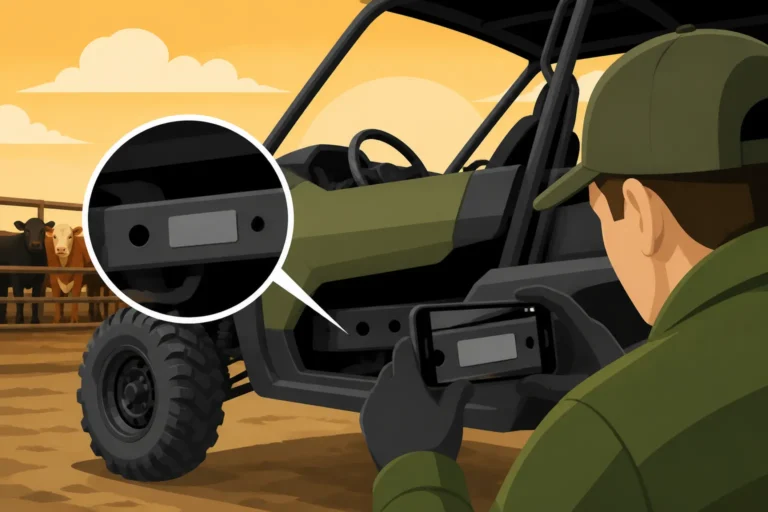
Sometimes, despite all your best efforts, you might hit a snag. Maybe the seller accidentally misspelled their name on the title, or the VIN on the paperwork doesn't quite match the machine. Don't panic. The county treasurer's staff deal with these kinds of issues regularly. Be prepared to provide additional documentation, such as a sworn affidavit from the seller confirming the error, or photographs of the VIN. If there's a serious discrepancy, you might need to contact the previous owner or even a local law enforcement agency to verify the machine's identity.
In extreme cases, if a used machine lacks any paperwork, you might be looking at a bonded title process, which is more complex and involves obtaining a surety bond. However, these situations are less common, and usually, a good bill of sale (like one generated through LawDepot) and a properly signed title are all you need to resolve minor issues. The key is clear communication and patience.
Disclaimer
This article is for general informational purposes only and does not constitute professional advice. Laws, prices and regulations vary by location and change over time. Consult a qualified professional for guidance on your specific situation.