Nebraska Trails With Hills
Nebraska riders looking for hills can run into a confusing mix of sandy climbs, rolling forest roads, and trails that are more open than rugged. This guide explains where to start, what kind of terrain to expect, and how to check whether a route suits your machine and experience before loading up for the ride.
Where to Find Hilly ATV Riding in Nebraska
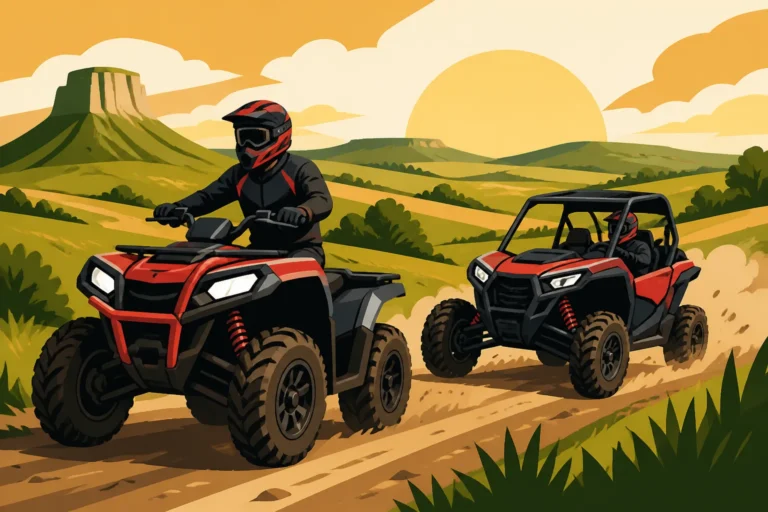
Nebraska’s hillier riding is not concentrated in one huge mountain-style trail system. Instead, terrain changes by region and riding area. Expect rolling ground, sandy slopes, wooded rises, or designated open areas rather than long alpine climbs. That makes it especially important to check the specific route before you travel.
Bessey OHV trails near Halsey
Bessey Recreation Complex, near Halsey in the Nebraska National Forest, is a natural place to begin researching hillier riding. Its riding areas include trails and open areas, so the experience can vary from a winding ride through forest to more exposed terrain. The designated hill-climb area is a particularly relevant option for riders specifically seeking elevation changes, but it is not a promise that every trail at Bessey will feel steep or technical.
It helps to separate “hilly” from “difficult.” A route can climb and descend without being a demanding technical ride, while loose sand, ruts, sharp turns, or changing traction can make a modest slope challenging. If you are new to the area, look closely at the area’s rules and trail descriptions before treating a hill-climb space like an ordinary trail. Start with terrain that matches your ability, and leave room to turn around rather than committing to a slope you are unsure about.
For a fuller look at the riding complex, see [Bessey OHV Trails at Halsey in Nebraska]. For the specific area with hill-climb terrain, read [Bessey's Hill Climb Area in Nebraska]. Riders comparing different sections can also review [Bessey's Dismal Area in Nebraska], then confirm which areas are open and appropriate for their machine before setting out.
Pine Ridge and other varied terrain
Nebraska’s Pine Ridge region has a more broken, rugged landscape than the broad, open image many people associate with the state. That does not mean every nearby public road or trail is open to ATVs. Access depends on the land manager’s rules and the route’s designation, so do not assume that scenic hills automatically mean legal motorized riding.
Use the landscape as a reason to investigate, not as permission to ride. Check the public-land rules, designated routes, vehicle restrictions, and current conditions for the exact place you plan to visit. [Nebraska Riding in the Pine Ridge] is a useful place to begin exploring the region, while [Nebraska ATV Trails: Where to Ride] can help you compare established riding options elsewhere in the state.
| Riding area or region | What makes it worth checking | What to confirm before you go |
|---|---|---|
| Bessey Recreation Complex near Halsey | Includes a designated hill-climb area and varied riding areas | Which routes or areas are open, machine restrictions, parking, and fees |
| Pine Ridge region | More rugged, rolling landscape than much of the state | Legal motorized access and designated routes for the specific location |
| Cedar Run near Republican City | A developed riding option worth comparing when planning a trip | Whether the terrain meets your expectations for hills and your machine’s limits |
| Flat Rock Riders OHV Park | A compact riding venue to investigate for local or practice riding | Current operating details, terrain, access rules, and suitability for your group |
A place can have hills without offering a long, continuous trail network through them. If your priority is a full day of sustained elevation changes, compare the trail layout and riding-area size rather than relying on a photo or a general description of the region.
Choosing a Trail That Fits Your Riding Style
The phrase “trails with hills” can mean very different things to different riders. One person may want a scenic route with gentle ups and downs; another may be looking for loose climbs that require careful throttle control. Defining what you want before you travel can help prevent a disappointing ride—or an avoidable recovery situation.
Decide what kind of hill riding you want
For a relaxed ride, look for routes described as rolling or moderate, and prioritize room to ride at a comfortable pace. Gentle climbs still require attention: loose soil can reduce traction, and downhill sections can become uncomfortable if you approach them too quickly. A route that feels easy when dry may behave differently after rain or heavy use.
For a more challenging outing, consider the full combination of terrain, not just the steepness of a hill. A slope with firm ground and a clear line may be manageable, while a shorter climb with soft sand, deep ruts, or limited visibility can be much harder. On a side-by-side, width and turning room matter too. A narrow or sharply winding section may be a bigger concern than the elevation itself.
Trail difficulty labels can help you compare options, but they are not a substitute for checking the route details. Look at [Nebraska Trail Difficulty Ratings] and compare the description with your actual experience level, passenger needs, and machine. If your group includes newer riders, agree in advance that anyone can call for a pause or turn back without pressure.
Match the terrain to your machine and group
A sport quad, utility ATV, and side-by-side may handle the same slope differently. Tires, ground clearance, wheelbase, load, and rider experience all affect how a climb or descent feels. Carrying a passenger or equipment can also change how the machine behaves, especially when traction is inconsistent.
Before committing to a route, check whether the riding area permits your vehicle type and whether the trail width suits it. A wide side-by-side may not be appropriate for every narrow route, and a machine set up for ranch work may feel different from a lighter sport quad on loose ground. Avoid attempting a climb simply because another rider made it look easy; their vehicle, tires, line, and experience may not match yours.
If you are riding with children or a mixed-experience group, plan a route with options to stop and regroup. Keep the group together where practical, give riders space on climbs, and avoid crowding someone who is working through a difficult section. [Nebraska Trail Etiquette Locals Expect] offers helpful context for sharing riding areas responsibly.
Planning a Hill-Riding Trip
A little preparation makes hill riding more enjoyable, particularly when the ride involves a long tow, unfamiliar trails, or changing Nebraska weather. It is frustrating to arrive after hours on the road and discover that the route is closed, too challenging for your group, or not open to your machine. A few checks before departure can save a lot of trouble.
Check maps, access, and conditions
Start with the riding area’s own rules and route information. Confirm where you are allowed to ride, which trails or open areas are available, whether your machine is permitted, and where you can park or stage. Do not treat a trail visible on a map as proof that it is open for motorized use.
A navigation app such as onX Offroad can help you review routes and orient yourself, but it should be one part of your planning rather than the final authority on access. Check the land manager’s information for restrictions and closures, and carry a backup navigation plan. Before you leave home, save the route information you may need in case you lose cell service; onX Offroad can be useful for preparing your route and keeping map information available while riding, depending on the app’s available features and your setup.
Conditions matter as much as access. Recent rain, loose sand, wind, and trail traffic can change how a slope feels. Review [Nebraska Trail Conditions Before You Tow] before heading out, and contact the responsible office or riding-area operator when a detail is unclear. The extra check is worthwhile if the trip requires a long drive from Omaha, Lincoln, or another part of the state.
Prepare the machine and ride conservatively
Before unloading, look over tires, brakes, steering, lights, and basic recovery equipment. Check that cargo is secured and that anything mounted to the machine will not shift on uneven ground. A mechanical problem on a short flat loop is inconvenient; on a hillside or remote trail, it can become a much larger issue.
When approaching a climb, slow down enough to assess the surface, the route, and what lies beyond the top. Avoid stopping in a place where you could block other riders or lose control. On descents, maintain a controlled pace and avoid abrupt inputs. If the route looks beyond your comfort level, take the safer alternative or turn around where it is safe to do so.
Keep your group’s plan simple: identify a meeting point, agree on spacing, and make sure every rider knows how to signal a stop. Pack water, basic first aid supplies, and the tools or recovery gear appropriate for your machines and route. For remote riding, tell someone where you are going and when you expect to return.
Making the Most of Nebraska’s Hillier Riding
Compare nearby options before choosing one
If Bessey is your main target, compare its individual riding areas rather than assuming the entire complex offers the same kind of hill riding. The designated hill-climb area may suit riders who want that feature, while a different section may be better for a more varied or less demanding outing. Verify access and rules for the specific area you intend to use.
Cedar Run ATV Trail near Republican City is another option to research when comparing Nebraska riding areas. It may suit a different kind of trip than Bessey, so check its layout and terrain rather than assuming it offers the same hill experience. See [Cedar Run ATV Trail in Nebraska] for an overview, and use the riding-area details to decide whether it fits your group’s goals.
You can use onX Offroad to help compare locations and plan a route, but cross-check any route information with the relevant land manager or riding-area operator. A route line alone cannot tell you whether a specific trail is open, what its current condition is, or whether your machine is permitted.
Set realistic expectations for the ride
Nebraska hill riding is often about variety rather than dramatic, continuous elevation. You might find a designated climb, a rolling stretch through wooded terrain, or a short rise that feels challenging because of the surface. Planning around the kind of experience you actually want helps you choose a better destination and avoid expecting every trail to be a steep technical route.
If this is your first visit, begin with a conservative route, learn how the surface behaves, and increase the challenge only when the group is comfortable. Riders who want a more demanding experience should still treat each climb as a fresh decision: check the approach, traction, visibility, and exit before proceeding. The best hill ride is not the one that pushes every rider past their limits. It is the one everyone can finish safely, enjoy, and look forward to repeating.
Disclaimer
This article is for general informational purposes only and does not constitute professional advice. Laws, prices and regulations vary by location and change over time. Consult a qualified professional for guidance on your specific situation.