Nebraska Park Permit for a Second Vehicle
A Nebraska park permit can be easy to confuse with an ATV registration or trail pass, especially when you own more than one vehicle. The key question is which motor vehicle is entering the park. Here’s how to think about a second vehicle, when it needs its own permit, and what to check before you head out.
What a Nebraska park permit covers
Nebraska’s park entry permit is for the motor vehicle entering a state park or recreation area. It is not an ATV or UTV registration, and it does not give an off-highway machine permission to ride on trails or roads that are closed to it.
That distinction matters when you haul an ATV or UTV. The vehicle you drive into the park, such as a pickup or SUV, may need a park entry permit. The trailer you tow is not a substitute for that permit, and a permit for your tow vehicle does not make an ATV legal to ride inside the park.
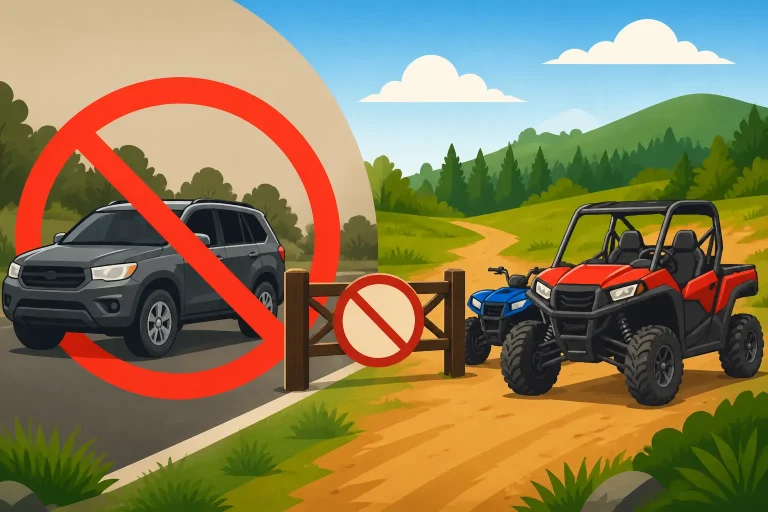
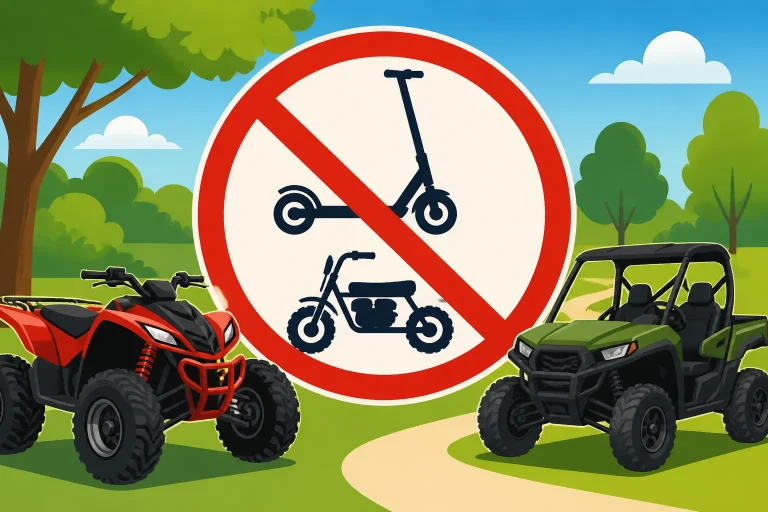
Nebraska state parks and recreation areas generally do not allow ATVs. Check the rules for the specific property before unloading, even if the vehicle that brought you there has a valid park permit. For more detail, see Nebraska State Parks Ban ATVs and [Nebraska Recreation Area Rules for ATVs].
A park permit is also different from an off-highway vehicle sticker. Nebraska does not have a statewide OHV permit or sticker that authorizes ATV riding across public land. Access depends on the land manager, the particular site, and its rules. Nebraska Has No OHV Permit or Sticker explains that distinction, while Which Public Land a Visitor Can Ride in Nebraska can help you sort out where riding may be allowed.
In short, buying a park permit for a second vehicle answers a vehicle-entry question. It does not create riding access for the ATV or UTV you plan to haul.
When a second vehicle needs its own permit
If two vehicles will independently enter a Nebraska state park or recreation area, plan on meeting the entry-permit requirement for each vehicle. An annual permit associated with one vehicle should not be treated as a shared pass for every car, truck, or SUV in your household.
For example, suppose one household vehicle has an annual permit and you want to take a different truck to a campground. The permit on the first vehicle does not automatically cover the second truck. The second truck needs an appropriate permit for its visit.
The same issue comes up when friends or family travel separately. If each vehicle drives through the park entrance, each may need its own entry permit, even if the group is staying at the same campsite or meeting at the same trailhead. A permit is not a group pass simply because everyone is part of one trip.
| Situation | What to plan for |
|---|---|
| One permitted vehicle makes the trip | Keep the permit valid and properly displayed as directed |
| A second household vehicle enters separately | Check the permit options for that vehicle; do not assume the first permit covers it |
| Two vehicles travel together to a park | Check whether each vehicle needs its own entry permit |
| A truck hauls an ATV on a trailer | Check the truck’s entry requirement and the site’s rules for the ATV |
| The ATV is unloaded at a state park | Do not assume the park permit authorizes ATV riding |
A second vehicle may need an additional annual permit if it will visit parks throughout the year. If it is making only an occasional visit, a daily permit may be a better fit. The right choice depends on how often that particular vehicle will enter permit-required properties, not just how many vehicles you own.
Do not count a trailer as the “second vehicle” without checking the specific instructions. The entry permit question usually concerns the powered vehicle entering the property. A trailer may have its own legal requirements on public roads, but that is separate from the park entry permit. If you are also towing a utility trailer, see Does a Utility Trailer Need Its Own Plate?.
Choosing an annual or daily permit for the second vehicle
The practical choice is usually between arranging an annual permit for the second vehicle and paying for a daily permit when that vehicle visits. A second annual permit can make sense if the vehicle will enter parks repeatedly. A daily permit can be more convenient when the second vehicle is used for only one trip or a small number of visits.
| Permit approach | Often suits | What to check |
|---|---|---|
| Annual permit for the second vehicle | A vehicle that will make repeated park visits | Which vehicle the permit is assigned to, where it must be displayed, and when it expires |
| Daily permit | A vehicle making an occasional visit | How to buy it, which date it covers, and whether it must be displayed or kept as proof |
| Permit already on another vehicle | Only when that same vehicle is entering | Whether the permit is vehicle-specific and whether transfer is allowed |
Do not assume a permit can be moved from one windshield to another or used for a different vehicle. Display and transfer instructions can depend on the permit type, and the rules may change. Check the current Nebraska park permit instructions before relying on a permit purchased for another vehicle. Nebraska Daily vs Annual Park Permits gives more context on choosing between permit types, and How to Buy a Nebraska Park Permit covers ways to arrange one.
Cost is another factor, but there is no need to buy an annual permit for every vehicle just because you own several. Estimate how often each one will actually enter parks, then compare the current annual and daily options. Confirm current charges and purchase procedures with the official park permit provider; do not rely on an old receipt, a friend’s recollection, or a past season’s figures. For a broader cost overview, see Nebraska Park Permit Cost.
Before purchasing, check these details:
- Identify the vehicle entering the park. The permit should match the vehicle that will make the trip, not merely the ATV being hauled.
- Choose the permit period. Consider how often that vehicle will visit permit-required areas.
- Confirm the permit’s terms. Check whether it is tied to a particular vehicle, how it must be displayed, and whether it can be transferred.
- Check the destination’s rules. A park permit does not override restrictions on ATVs, UTVs, trailers, or other vehicle types.
- Keep proof accessible. Follow the instructions for displaying or carrying the permit, and retain purchase confirmation if applicable.
These steps are especially useful when vehicles are shared between household members. A permit on the family SUV may not help if one person takes a different pickup to the park. Decide which vehicle will enter before leaving, rather than trying to resolve a permit issue at the gate.
Check the destination before hauling an ATV or UTV
A park entry permit does not guarantee that the destination allows off-highway riding. Nebraska has different kinds of public land, and each land manager can set different access rules. State parks, recreation areas, wildlife management areas, and national forest sites are not interchangeable.
If your plan is to ride, identify the actual riding area first. Confirm that ATVs or UTVs are permitted there, which routes are open to your machine, and whether there are separate parking charges or site-specific conditions. Some locations may allow parking while prohibiting riding; others may have designated routes or limited access. A park permit alone does not answer those questions.
For an ATV trip, think of the paperwork and permissions as separate checks:
- Entry: Does the truck or other motor vehicle entering the property need a park permit?
- Riding access: Is the ATV or UTV permitted at that specific site?
- Route: Which designated trails, roads, or areas may it use?
- Parking: Are there additional parking fees or instructions?
- Machine documents: Are there ownership or other documents you should carry?
Do not assume an out-of-state registration or a permit from another Nebraska property grants access everywhere. Nebraska’s park entry permit system is not an ATV reciprocity system. If your trip involves public land, compare the park rules with the rules of the land manager. For example, Nebraska WMA Access for a Quad covers a different setting from state park access, while Nebraska Trail Fees Worth Checking addresses possible costs at riding areas.
If you are unsure whether a particular vehicle needs its own permit, ask the park office or the official permit provider before traveling. Be ready to give the vehicle type, the property you plan to visit, and whether you are asking about entry, parking, or riding. Those details help avoid a common mix-up: asking whether the ATV needs a park permit when the real question is whether the truck needs an entry permit and whether the ATV may ride at that location.
Disclaimer
This article is for general informational purposes only and does not constitute professional advice. Laws, prices and regulations vary by location and change over time. Consult a qualified professional for guidance on your specific situation.