Nebraska Rules for a Ten-Year-Old Rider
A ten-year-old may be ready to learn on an ATV, but age alone does not answer whether a particular ride is allowed or safe. In Nebraska, the rules can depend on where the child rides, what machine they use and whether they are operating or riding as a passenger. Here’s how to sort out those questions before heading out.
What Nebraska’s age rules mean for a ten-year-old
Nebraska does not set one blanket minimum age that applies to every off-road ATV ride. That does not mean every machine or riding area is automatically suitable for a ten-year-old. A land manager, private park, event organizer or machine owner may set stricter rules, and an ATV’s size and controls can make it unsafe for a child even when no general state age ban applies.
The practical distinction is between riding off-road and operating on a public road. An age that is acceptable at a private riding area does not make a child eligible to drive on a public road. Nebraska’s road rules include operator requirements, and a ten-year-old should not be assumed to qualify to operate an ATV or UTV on a road. Check Do You Need a License for an ATV in Nebraska? and the current requirements before considering any road use.
| Situation | What to check before the ride |
|---|---|
| Riding on private land | Get the landowner’s permission and follow any age, supervision and equipment rules they set |
| Riding at a private park | Check the park’s minimum age, supervision, passenger, helmet and machine-size rules |
| Riding on public land | Confirm that motorized riding is allowed in that exact area and check its rules for young riders |
| Riding on a public road | Do not assume off-road permission applies; verify operator eligibility and all road-use requirements |
| Riding as a passenger | Confirm the machine is designed for passengers and that the venue allows a child passenger |
The key question is not simply “Can a ten-year-old ride in Nebraska?” It is “Can this child ride this machine, in this place, under these rules, with this level of supervision?” For a broader overview of the state’s age-related questions, see Nebraska ATV Age Requirements. Rules can also differ between an ATV and a side-by-side, so check Nebraska Title for a Side-by-Side for ownership paperwork context, while remembering that title rules do not determine whether a child may ride.
A safety course can help a child and supervising adult build skills and understand trail etiquette, but it does not replace permission or local rules. Nebraska does not have a mandatory statewide ATV safety course requirement, yet voluntary training is still worth considering. Nebraska Safety Course Options covers ways to find instruction.
Match the machine to the child, not the other way around
A ten-year-old’s readiness depends on more than age. Consider the child’s reach, strength, attention, judgment and ability to respond calmly when the machine behaves unexpectedly. A child should be able to reach and use the controls comfortably, understand how to stop, and follow directions without being distracted by the group or terrain.
Machine size should not be judged by appearance alone. Check the manufacturer’s guidance for the rider’s age, size and experience. An adult-size quad or UTV can be difficult for a child to steer, brake or control, especially on slopes, loose ground or uneven trails. A smaller machine is not automatically safe either: it still needs working brakes, appropriate tires and controls the child can operate.
Before the first ride, have the child practice in a flat, open area away from traffic, water, steep slopes and other riders. Start with stopping, turning and changing speed at a walking pace. Do not move to more challenging terrain until the child can control the machine consistently and understands that they must stop when asked.
A useful pre-ride check includes:
- Fit: The child can sit securely, reach the controls and keep a stable riding position.
- Controls: They can demonstrate how to start, stop and shut off the machine, and can use the brakes reliably.
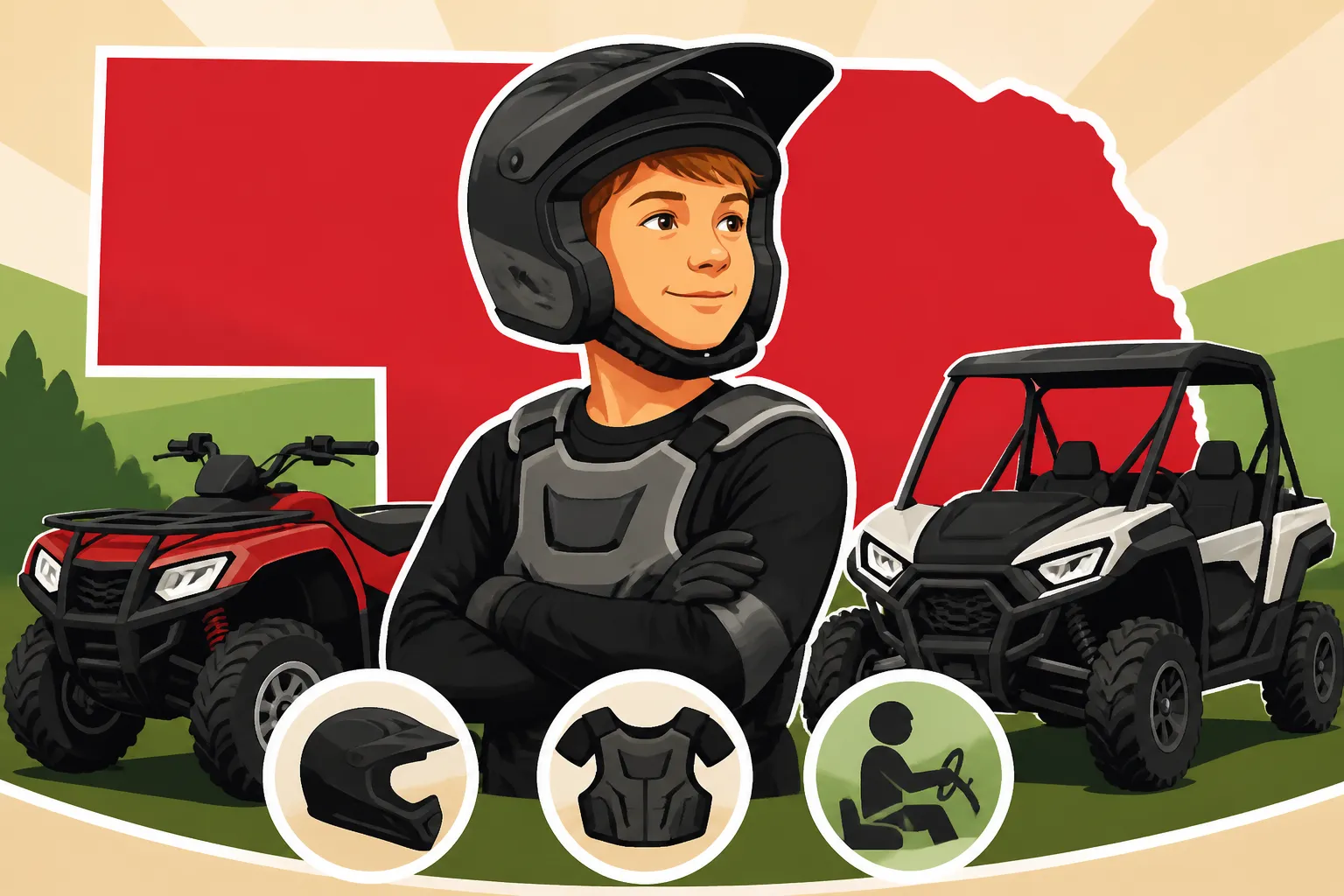
- Protective gear: Use a properly fitting helmet and appropriate eye protection, gloves, long sleeves, long pants and sturdy footwear. A helmet is a sensible safety measure even where a particular riding area does not require one.
- Machine condition: Check brakes, throttle return, tires, steering, lights where needed and any required safety equipment.
- Readiness: The child is alert, sober, willing to follow rules and not pressured to ride beyond their comfort level.
Fit matters especially for helmets. If shopping online through Amazon, follow the helmet maker’s sizing instructions and check that the helmet fits securely; a product listing cannot confirm fit on the child. A loose, uncomfortable or poorly fastened helmet may not provide the protection intended.
Set simple rules before the machine starts: ride only where the adult has approved, keep a manageable distance, do not race, stop when signaled and never follow another rider into an area the adult has not checked. These rules are easier to enforce when the group agrees on them before leaving the staging area.
Supervision, passengers and where a child can ride
A responsible adult should stay close enough to supervise, communicate and respond if the child has trouble. The right distance depends on the terrain and the child’s experience. A new rider on a small, flat practice area needs close, direct observation. More experienced riders may have more room on a familiar route, but supervision should remain active rather than relying on occasional check-ins.
Before riding on public land, confirm that the specific location is open to ATVs or UTVs. Nebraska does not allow motorized riding everywhere that people can walk, camp or hunt. For example, Nebraska National Forest Riding and Nebraska WMA Access for a Quad address different land settings and rules. A map or trailhead sign should be checked before unloading, and closures or designated-route requirements should be respected. Do not treat a park permit, title or permission to hunt as permission to ride.
Private riding parks have their own operating rules. Some may set an age minimum, require an adult to ride with a minor, require helmets, limit machine types, or require a parent or guardian to sign paperwork. Check the park’s current rules directly before making the trip. [Nebraska Private Park Minimum Ages] explains why a park’s own age policy matters even when there is no single statewide minimum for all off-road riding.
A child riding as a passenger is a different situation from a child operating a machine. Do not carry a passenger on a single-rider ATV. A passenger should ride only on a machine designed to carry passengers, in the designated seat, with suitable handholds and footrests. The adult should also check the manufacturer’s passenger guidance and the riding area’s rules. For more on this distinction, see Nebraska Rules for a Child Passenger.
For a UTV, confirm that the child can sit properly in the passenger seat and use the seat belt as designed. Keep the vehicle’s doors or nets, restraints and other safety equipment in place if fitted. A child should not ride in a cargo bed, on an improvised seat or in any position the manufacturer does not designate for passengers.
Be cautious about mixing children and adult riders on a fast or difficult route. A young rider may feel pushed to keep pace, even when tired or uncertain. Plan a route that matches the least experienced rider, choose a clear stopping point, and turn back if the child is losing focus or struggling to control the machine.
Road use is not the same as trail riding
Permission to ride off-road does not authorize a ten-year-old to use streets or roads. Nebraska’s limited ATV road-use rules have separate conditions, including operator and equipment requirements. A child who is allowed to ride on private ground or at a park should not be taken onto a public road on that basis alone.
This distinction also applies when the route between a home, field or trailhead includes a road. Do not let a child ride along a road or cross one unless the route is lawful and the operator meets the applicable requirements. Check the current rules for the specific road and location, and contact the relevant local authority if the situation is unclear. Can You Drive an ATV on the Road in Nebraska? and Nebraska Rules for Crossing a Highway explain road-use issues in more detail.
Even where an adult can lawfully use a road under a limited rule or local ordinance, that does not automatically extend to a child. The child’s age, license or permit eligibility, road type, equipment and local requirements all matter. If any part of the route is uncertain, transport the machine instead of having the child ride it there.
A ten-year-old’s readiness can change from one day to the next. Fatigue, heat, cold, dust, unfamiliar terrain and pressure from other riders can all affect judgment. Keep the first outings short, take breaks and stop if the child is uncomfortable or no longer following instructions. The safest plan is the one that leaves room to turn around before a minor problem becomes a serious one.
Frequently Asked Questions
Can a ten-year-old ride an ATV on private property in Nebraska?
There is no single statewide minimum age that governs every off-road ride, but the landowner can set conditions. Use a machine appropriate for the child and supervise closely.
Can a ten-year-old ride at a Nebraska ATV park?
It depends on that park’s current rules. Check its age limits, supervision requirements, helmet policy, passenger rules and machine restrictions before you go.
Can a ten-year-old ride on a public road?
Do not assume so. Road use has separate operator and equipment requirements, and off-road permission does not grant road privileges. Confirm current eligibility and local rules before any road use.
Does a ten-year-old need a safety course?
Nebraska does not require a statewide ATV safety course for every rider, but training can help a child learn basic control and safe riding habits. A course does not replace adult supervision or the rules of the riding area.
Disclaimer
This article is for general informational purposes only and does not constitute professional advice. Laws, prices and regulations vary by location and change over time. Consult a qualified professional for guidance on your specific situation.