Bringing a Dog Along to a Riding Park
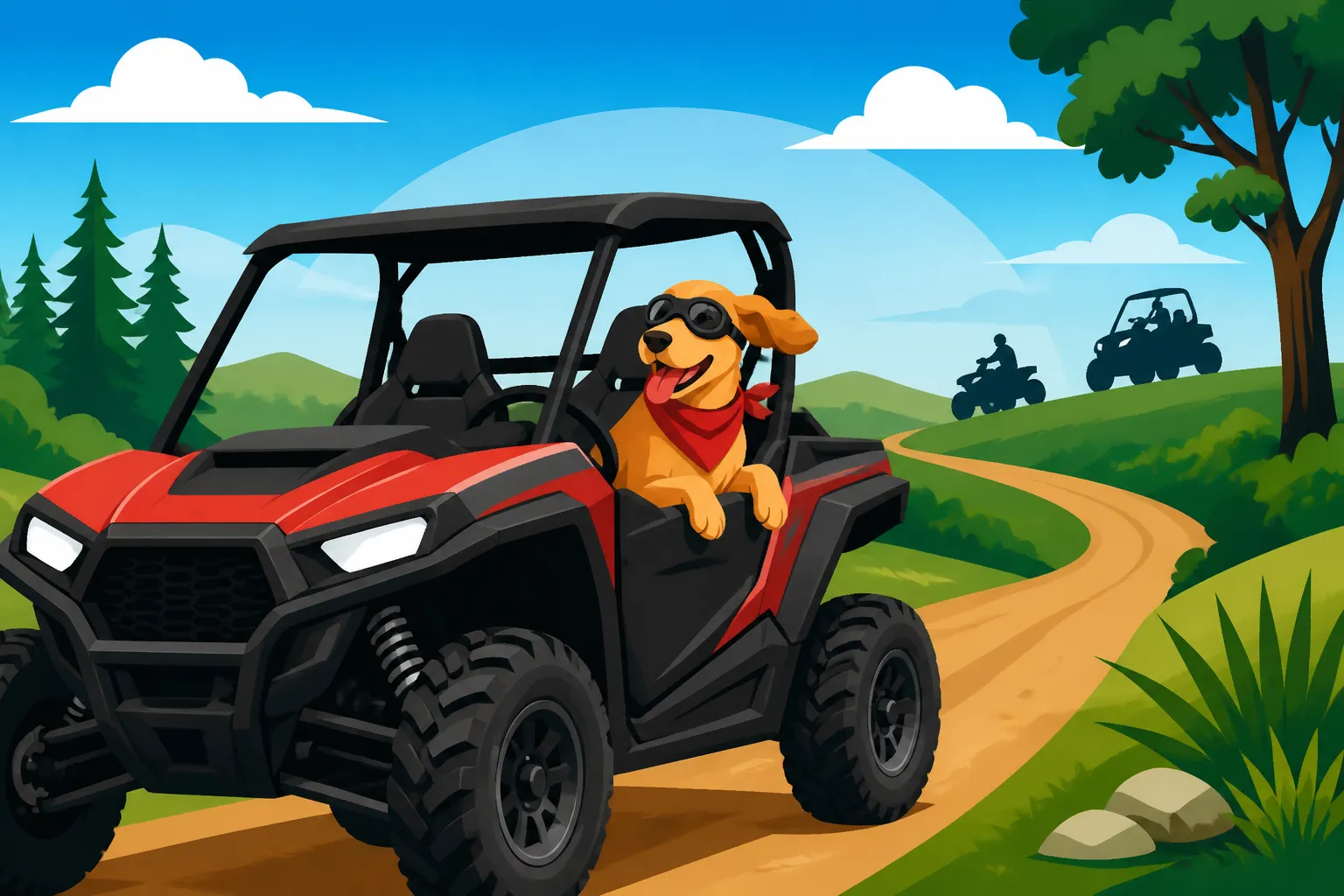
Bringing a dog to an ATV or UTV riding park can work, but the park’s pet policy is only the first question. Heat, noise, loose machines and crowded trails can make a ride stressful or unsafe for a dog. Check the rules before you haul out, then plan where your dog will stay while you ride.
Check the riding park’s pet rules before you go
Nebraska does not have one rule that settles whether a dog can accompany you at every riding park. A private park can set its own pet policies, and the answer may differ for a trail, campground, parking area, cabin or event. Confirm the policy with the specific property before leaving home; do not assume that a dog allowed at the campsite can also go onto the trails.
Ask about more than whether pets are allowed. Useful questions include:
- Are dogs permitted on trails, or only in designated areas?
- Must dogs be leashed, and are there leash-length or control requirements?
- Are dogs allowed in the staging area, spectator areas, cabins or campground?
- Can a dog remain in a parked vehicle while its owner rides?
- Are there restrictions during events or busy weekends?
- Are there designated areas for dog exercise and waste disposal?
- Does the park require vaccination records or other documentation?
- What happens if a dog barks, runs loose or reacts to another animal?
Get the answer directly from park staff, preferably in a form you can refer back to, such as a current policy page or written message. Policies can vary between properties and may change for particular events or operating conditions. If the rule is unclear, ask rather than relying on a social media comment or an old review.
A private riding park’s rules are separate from general state permit questions. Nebraska has no statewide ATV permit or sticker, but that does not mean a private facility has no entry conditions. A park may require a waiver, fee, reservation, proof of ownership or compliance with its own operating rules. Read Nebraska Private Park Waivers and Rules and confirm what applies to your visit. Dogs may be addressed in a separate policy; Nebraska Private Park Pet Rules is a useful related topic when comparing park requirements.
| Where you want to take the dog | What to confirm with the park | Practical concern |
|---|---|---|
| Trails | Whether dogs are permitted at all, leash rules and any restricted routes | Moving machines, dust, noise and encounters with riders |
| Staging area | Whether dogs can be near unload and loading zones | Trailers and machines moving in tight spaces |
| Campground | Leash, quiet-hour, waste and unattended-pet rules | Nearby campers, wildlife and barking |
| Vehicle or trailer | Whether leaving a dog there is permitted and what conditions apply | Temperature, ventilation, shade and supervision |
| Event or group ride | Whether special pet rules apply that day | Crowds, noise, unfamiliar dogs and limited space |
If staff say dogs are allowed only in the campground, treat that as a real boundary rather than looking for a quiet trail entrance. A dog that is calm at home may behave differently around engine noise, dust, unfamiliar people and other animals. Likewise, the fact that a dog is small enough to carry does not establish that it is permitted in a riding area.
Service animals raise a distinct access question from pets. If you rely on a trained service animal, contact the park in advance to discuss access and any activity-specific safety limits. Do not assume that a pet policy alone answers a service-animal question. If the park cannot explain its policy, ask for the appropriate manager or written guidance before the trip.
Decide whether the dog should come on the ride
Permission is not the same as suitability. Even when a park allows dogs, the riding environment may be a poor fit for a particular animal. Consider your dog’s health, temperament, training and response to loud or unfamiliar situations before deciding.
A dog that reliably stays close, responds to cues and remains calm around vehicles is easier to manage than one that bolts, chases or becomes distressed by noise. But obedience does not eliminate the risk of a dog being injured by a moving machine or startled into the path of traffic. Riders may not see a dog in dust, around a blind corner or behind a parked trailer.
Think through the whole day, not just the time spent on the trail. The dog may have to tolerate unloading, engine starts, riding gear, waiting, other dogs and long stretches without shade. If those conditions are likely to overwhelm your dog, leaving it with a trusted caregiver is often the safer choice.
Avoid carrying a dog on a moving ATV or UTV
A dog on a machine can be exposed to vibration, wind, dust, heat and sudden movement. A startled or shifting dog can distract the driver or interfere with controls, balance or passenger space. A leash tied to a vehicle can create a serious entanglement or dragging hazard. A dog held in someone’s arms is not secured, and a conventional pet carrier may not be designed for off-road impacts or ejection risks.
Do not treat a passenger seat as an animal restraint, and do not assume that a dog’s willingness to ride means it is safe. If the park has a specific policy about animals on machines, follow it; if the policy is silent, ask staff and choose the conservative option. The same principle applies to a dog riding in an open trailer behind a machine: ask the park and consider whether the setup provides secure restraint, protection and ventilation for the entire trip.
If your plan depends on taking the dog along the trail, make sure you know whether that is allowed and how the dog can be kept safely away from moving equipment. A dog walking beside a machine may still be exposed to dust, noise, rocks and unpredictable encounters. Do not let a dog roam at a trailhead or follow a group of riders.
Consider heat, noise and terrain
Riding parks can expose dogs to conditions that are harder on them than a neighborhood walk. Open ground may offer little shade. A dog can overheat while waiting even if the air feels manageable to a person. Dust can irritate eyes and airways, and loud engines may cause fear or stress. Uneven ground, sharp debris and hot surfaces can also injure paws.
Plan for your dog’s specific needs. A young, elderly, short-nosed, overweight or medically vulnerable dog may have a harder time coping with heat and exertion. Dogs that are anxious around machinery or unfamiliar animals may find a busy park particularly difficult. If your dog has a health condition, ask a veterinarian whether the expected conditions and activity are appropriate.
Do not use “we’ll see how it goes” as the only plan. Decide in advance where the dog will stay, who will supervise it and what you will do if it becomes distressed. If there is no safe, permitted place for the dog to wait, the practical answer may be to leave it at home.
Plan a safe visit if the park allows dogs
If the park confirms that dogs are welcome in the area you plan to use, set up the visit around the dog’s comfort and the park’s rules. A little planning can prevent a long day from becoming a problem for your animal, other visitors or the riding group.
- Choose a suitable day and schedule. Avoid the busiest event or riding period if your dog is unfamiliar with engines and crowds. Check the forecast and park conditions. If the day is hot, windy or dusty, shorten the visit or reconsider bringing the dog.
- Bring a secure leash and identification. Use a leash that you can control in a busy environment, and make sure your dog’s identification is current. Keep the dog leashed wherever the park requires it, and do not rely on voice control alone near trailers and machines.
- Pack water and a bowl. Bring enough clean water for the dog as well as for the people in your group. Offer water regularly and provide a shaded resting place where the dog can settle away from vehicle movement. A collapsible bowl can make packing easier; if you shop on Amazon or elsewhere, choose one that is easy to clean and does not leak in your gear.
- Bring waste bags and clean up promptly. Pick up waste in all areas where the park permits dogs, including around campsites and staging areas. Follow the park’s disposal instructions and keep bags secured until you can dispose of them properly.
- Set up a calm place away from machines. Keep the dog out of unloading lanes, trailer ramps, fuel areas and the paths riders use to enter or leave the trails. Do not tie a leash to a machine, trailer hitch or other equipment that could move.
- Watch for signs of stress or overheating. Heavy panting, weakness, unusual drooling, confusion, vomiting or difficulty walking are warning signs. Move the dog to a cooler, quiet place and seek veterinary care if symptoms are serious or do not improve. Do not wait for the dog to collapse before ending the visit.
- Have a backup plan. Bring another responsible adult who can stay with the dog, or arrange an alternate place for the dog to wait. If you are the only person supervising it, you may need to skip a ride rather than leave the animal unattended.
A crate or vehicle is not automatically a safe waiting place. A parked vehicle can heat up quickly, even when the weather seems mild. Never leave a dog in a hot vehicle or in a situation where it cannot get adequate ventilation, water, shade and supervision. If the park does not allow dogs in the campground and the dog cannot safely accompany you, do not leave it in a vehicle as a workaround.
If your group is riding together, agree on who is responsible for the dog before the first machine starts. One person should be clearly assigned to supervise it; “someone will keep an eye on the dog” can fail once the group is unloading or preparing to ride. For a larger outing, Nebraska Group Ride Planning can help with organizing people, equipment and expectations. Keep the dog away from other animals unless their handlers agree to an introduction, and never assume that two leashed dogs will get along.
Be considerate of other visitors. Some people are afraid of dogs, and other dogs may be reactive. Keep a respectful distance, prevent barking from disturbing campsites, and follow any quiet-hour or waste rules. If your dog becomes difficult to control, remove it from the busy area rather than expecting other riders to work around it. General practices in Nebraska Trail Etiquette Locals Expect also apply to shared staging and campground spaces.
Before setting out, make one last check of the park’s current conditions and access details. A trail closure or event can change where people and machines gather, and a dog-friendly campground does not necessarily mean a dog-friendly trail. Nebraska Trail Conditions Before You Tow is useful when you are checking the riding plan as well as the route to the property.
The simplest decision is often the best one: bring the dog only if the park permits it, the dog is likely to tolerate the environment, and you have a safe plan for every part of the visit. If any of those conditions is missing, arrange care elsewhere and enjoy the ride without putting the dog in a situation it cannot handle.
Disclaimer
This article is for general informational purposes only and does not constitute professional advice. Laws, prices and regulations vary by location and change over time. Consult a qualified professional for guidance on your specific situation.