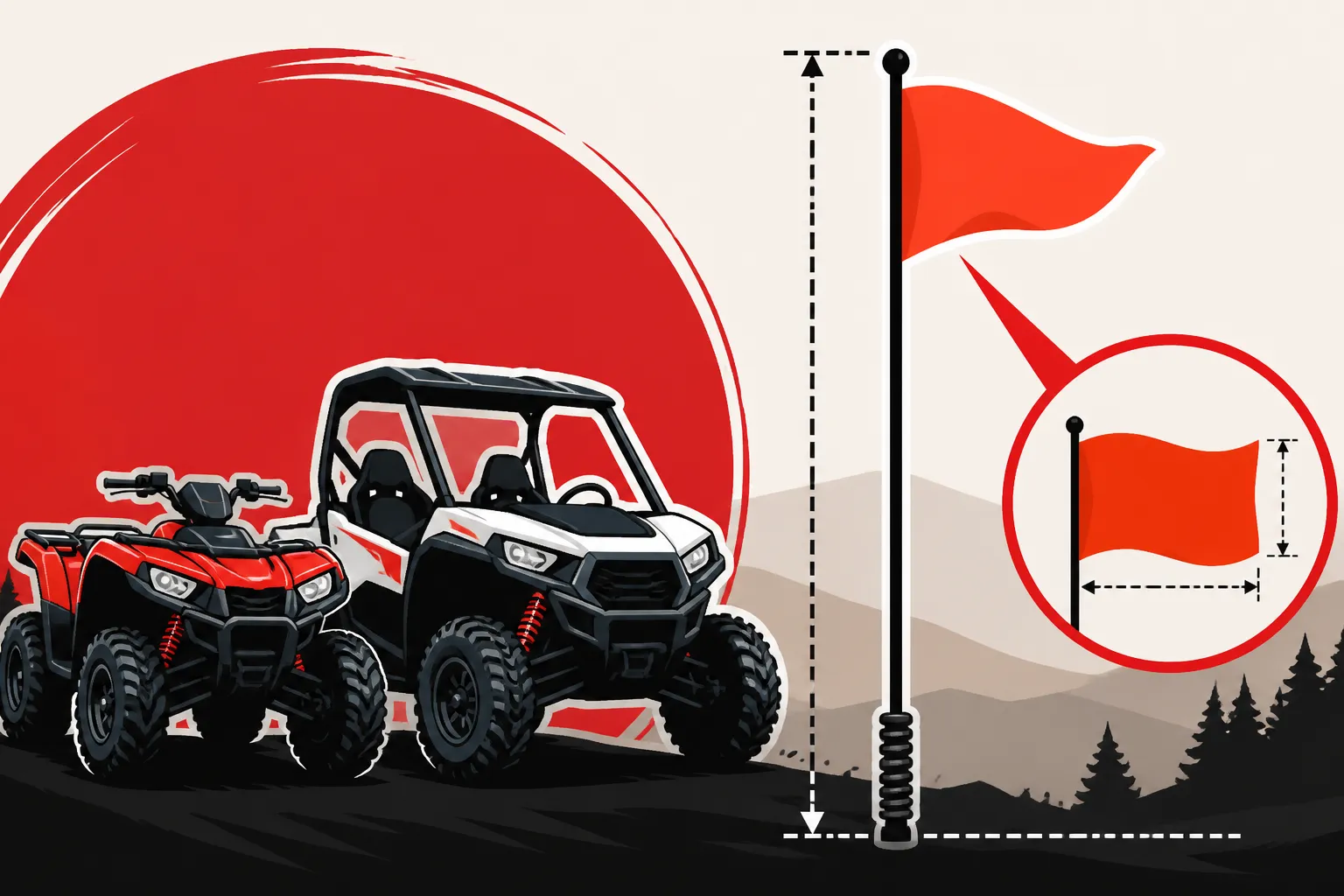
Nebraska Safety Flag Dimensions
Navigating the specific rules and regulations for riding your ATV or UTV on Nebraska's public roads can feel incredibly overwhelming, and one area that often trips up even seasoned riders is the seemingly simple requirement of a safety flag. It's not just about having a flag; it's about having the right flag that meets very particular dimensions and specifications. This guide will meticulously break down Nebraska's safety flag rules, ensuring you understand exactly what's required to keep your off-road machine compliant, safe, and free from unexpected tickets when you venture onto permitted roadways.
Why a Safety Flag is Even Necessary on Nebraska Roads
It might seem a bit odd to attach a flag to an ATV or UTV, especially when you're used to riding in open fields or designated trails where visibility isn't usually a problem. However, Nebraska's legal framework for ATVs and UTVs on public roads is built around safety, particularly when these smaller, often lower-profile machines share space with larger vehicles like cars, trucks, and even farm equipment. The safety flag acts as a crucial visual aid, dramatically increasing your machine's presence to other drivers.
Imagine cresting a hill on a rural gravel road. A car approaching from the opposite direction might not see your ATV or UTV until it's much closer, simply because of its size and the contours of the road. That's where the flag comes in. Popping up above the natural line of sight, the flag provides an early warning, signaling your presence long before the main body of your machine becomes visible. This extra bit of warning can be the difference between a smooth pass and a dangerous close call, especially in areas with limited visibility like blind curves or tall cornfields.
Furthermore, these flags aren't just for alerting oncoming traffic. They also play a vital role for vehicles approaching from behind. If you're traveling slowly on a county road, perhaps moving from one field to another, a following vehicle might struggle to gauge your speed and position, especially if their view is obstructed by dust, glare, or even the vehicle in front of them. The bright, high-flying flag ensures you stand out, helping other drivers maintain a safe following distance and react appropriately. It’s a simple piece of equipment that provides a monumental boost to your overall safety when you’re sharing the road.
The Challenge of Blending In
One of the biggest frustrations for ATV and UTV riders who want to legally use public roads in Nebraska is that these machines were never originally designed for it. They're typically lower to the ground than cars and trucks, and in many rural settings, they can blend into the background of ditches, fields, and tall vegetation. This low profile, combined with their often dark or camouflaged colors, makes them incredibly difficult to spot, particularly at speed.
Think about a hot summer day in Nebraska. The shimmering heat haze coming off a long stretch of asphalt or gravel can distort visibility, making it hard to discern small objects in the distance. A quad, especially one without a flag, can easily disappear into this visual noise. Drivers of larger vehicles are often looking for other cars and trucks, not necessarily a smaller, slower-moving off-road machine. This discrepancy in expectation and visibility is precisely why the state mandates safety flags. It's not about punishing riders; it's about acknowledging a real safety gap and providing a simple, effective solution.
Without this visual cue, the risk of an accident dramatically increases. The flag elevates your machine's silhouette, providing a clear, unmistakable indicator of your presence. It pushes your visible footprint higher into the air, making you visible over obstructions that would otherwise completely hide your ATV or UTV.
Nebraska's Specific Road Use Context
It's important to remember that not all states require safety flags for ATVs and UTVs on public roads. Nebraska's specific law reflects the unique blend of agricultural use, recreational riding, and rural roadways that characterize much of the state. Many riders use their machines for legitimate purposes like checking cattle, moving between pastures, or accessing hunting grounds. These aren't joyrides through town; they are often necessary movements on roads shared with much heavier, faster-moving traffic. [Nebraska's Agricultural Road Exception] is a key part of this.
The law understands that these machines will be on the roads, but it places the onus on the rider to ensure maximum visibility. This is particularly true given that ATVs and UTVs are not registered in the same way cars are, and they don't carry license plates that instantly identify them. The flag, therefore, becomes a universally understood signal of an off-road vehicle operating on a public thoroughfare, prompting other drivers to exercise caution and maintain awareness.
This commitment to visibility extends beyond just the flag. Nebraska law also includes provisions for [Nebraska Requires Head and Tail Lights] and [Nebraska Daylight Riding Rule], all working in concert to make ATVs and UTVs as conspicuous as possible. The safety flag is a critical component of this comprehensive approach to road safety for these specialized vehicles.
Understanding Nebraska's Specific Safety Flag Rules
When it comes to safety flags for ATVs and UTVs on Nebraska roads, the law isn't vague. It lays out very clear and specific requirements designed to maximize visibility and reduce the risk of accidents. Simply having "a flag" isn't enough; it must meet certain criteria regarding its height, color, and size. These details are often overlooked by riders, leading to confusion and potential citations, but understanding them is crucial for legal and safe operation.
The core of the requirement centers on three main points: the flag's overall height, its color, and its minimum surface area. Each of these elements contributes to making your machine as visible as possible to other motorists, especially on unpaved roads where dust and undulating terrain can easily obscure smaller vehicles. It's a pragmatic approach to rider safety, ensuring that even under less-than-ideal conditions, your presence on the road is clearly communicated.
Many riders will encounter these rules when first trying to figure out if [Can You Drive an ATV on the Road in Nebraska?]. The answer is yes, under specific conditions, and the flag is non-negotiable for most permitted road use. Without adhering to these specific dimensions, you're not just risking a ticket; you're compromising a fundamental safety measure intended to protect you and others.
The Five-Foot Height Requirement
One of the most defining aspects of Nebraska's safety flag law is the requirement that the flag be extended at least five feet above the ground when mounted on your ATV or UTV. This isn't an arbitrary number; it's specifically chosen to ensure the flag clears most common visual obstructions and rises into the line of sight of drivers in cars and trucks. [Nebraska's 5-Foot Safety Flag Rule] is designed to make you seen.
Consider a typical passenger car or pickup truck. Their drivers sit at a certain eye level, and a flag mounted too low on your ATV might be obscured by the vehicle itself, by roadside vegetation, or by the crest of a hill. By mandating a minimum height of five feet, the law ensures that the flag is positioned to be easily spotted, even when your ATV or UTV might otherwise be hidden. This is especially important when you're crossing intersections or moving between fields, where rapid visibility changes are common.
Achieving this five-foot height often means using a tall pole or whip-style antenna that extends well above the roll cage of a UTV or the handlebars of an ATV. For some machines, particularly those with a lower profile, riders might need to explore different mounting solutions to ensure they hit the mark. It's not uncommon to see flags extending six or even seven feet to guarantee compliance and maximize visibility, providing an extra layer of reassurance that you're well within the legal limit.
The Day-Glow Color and Size Specifics
Beyond height, the color and size of the flag itself are equally crucial. Nebraska law specifies that the flag must be a "day-glow" color, such as fluorescent orange, red, yellow, or lime green. The purpose of these intense, luminous colors is to ensure maximum contrast against natural backgrounds and to be highly visible in varying light conditions, from bright sunshine to overcast skies. These aren't just any bright colors; they are colors designed to pop and grab attention. [Nebraska Day-Glow Flag Colors] are selected for maximum visibility.
In addition to the specific color, the flag must have a minimum surface area of 30 square inches. This means a flag that is, for example, five inches wide and six inches tall (5×6=30) would meet the minimum. However, many riders opt for larger flags for even better visibility. A larger flag, perhaps 8×12 inches, offers more surface area to catch the eye, especially at a distance or in dusty conditions. The bigger the flag, the more prominent your machine becomes.
The combination of the vibrant, day-glow color and the specified minimum size creates a highly effective visual signal. It ensures that the flag isn't just a tiny, easily missed speck but a clear, attention-grabbing beacon that warns other road users of your presence. When shopping for flags, riders should specifically look for those labeled as "day-glow" or "fluorescent" to ensure they meet the intent of the law.
Choosing the Right Safety Flag for Your ATV/UTV
Once you understand Nebraska's specific requirements for safety flags, the next step is actually choosing and purchasing one that not only complies with the law but also stands up to the rigors of off-road riding. There's a surprising variety of flags and mounting solutions available, and making the right choice involves considering durability, ease of installation, and how well it integrates with your specific machine. It's not just about compliance; it's about investing in a piece of safety equipment that will last and perform effectively.
Many riders overlook the importance of quality when it comes to flags, only to find them fraying, fading, or even breaking off after a few tough rides. Given that the flag is a legal requirement for road use, selecting a durable and reliable option is paramount. You don't want to be halfway through a trip on a county road only to discover your flag has become non-compliant due to wear and tear. This is where researching reputable brands and understanding materials can really make a difference.
Thinking about the conditions you ride in—dust, wind, mud, branches—will help guide your decision. A flimsy flag might work for a single casual ride, but for regular use, especially on the farm or for hunting trips that involve road sections, you need something that's built to last.
Flag Materials and Durability
The material of your safety flag directly impacts its lifespan and visibility. Most flags are made from durable nylon or polyester, often reinforced to withstand strong winds and UV exposure. These materials are chosen because they are lightweight, allowing the flag to flutter easily and remain highly visible, yet strong enough to resist tearing. When you're cruising down a gravel road, the flag will be exposed to significant wind resistance, so a well-constructed fabric is key.
Some flags also feature reinforced stitching around the edges and at the grommets where they attach to the pole. This extra reinforcement prevents fraying and ensures the flag stays securely attached. Fading due to sun exposure is another common issue; look for flags that are UV-resistant, as this will help them maintain their vibrant "day-glow" color over time, ensuring they continue to meet the visibility requirements. A faded flag, even if it's the right size, might not be as effective at drawing attention.
When considering options, don't just grab the cheapest flag you see. Invest a little more in a flag made from high-quality, weather-resistant materials. You'll thank yourself later when it stands up to countless rides without needing replacement. Companies like SuperATV offer a range of off-road specific flags and mounting solutions that are designed with durability in mind, understanding the harsh environments these accessories operate in.
Poles and Mounting Systems
The flag itself is only half the equation; the pole and its mounting system are equally important for meeting the five-foot height requirement and ensuring the flag stays put. Poles are typically made from fiberglass, aluminum, or flexible plastic, each with its own advantages. Fiberglass poles are very common due to their flexibility and strength, allowing them to bend without breaking when encountering low branches or overhead obstacles. Aluminum poles are rigid and strong, suitable for more permanent installations.
Mounting systems vary widely depending on your ATV or UTV. Common methods include:
- Whip mounts: These are often spring-loaded bases that allow the pole to flex significantly. They attach to bumpers, cargo racks, or roll bars.
- Clamp mounts: These directly clamp onto roll cages or other tubular structures, offering a secure and adjustable attachment point, particularly popular for UTVs.
- Bolt-on mounts: These require drilling into a solid surface but provide the most secure and permanent attachment.
When selecting a pole and mount, ensure it's robust enough to handle the speeds and vibrations of your machine, both on and off-road. The mount should keep the flag stable, preventing excessive flopping that could reduce visibility or cause damage to the flag or pole. Also, consider ease of removal if you only need the flag for specific road sections and prefer to take it off for trail riding. To ensure your flag meets the height requirement, especially on taller UTVs, you might consider adjustable mounting brackets, many of which are available from trusted retailers like SuperATV. They often have solutions that allow you to easily attach and detach your flag as needed.
Installation and Maintenance of Your Safety Flag
Once you've acquired a compliant safety flag and a sturdy mounting system, the next crucial step is proper installation and ongoing maintenance. A flag that isn't correctly installed can become a hazard, fall off, or simply fail to meet the legal requirements, potentially leading to a ticket or, worse, a preventable accident. Thoughtful installation ensures the flag performs its intended safety function, while regular maintenance extends its life and keeps it compliant. This isn't a "set it and forget it" item; it requires a little attention to detail to remain effective.
Getting the flag securely attached and positioned at the correct height is paramount. You want it to be firm enough to withstand wind and bumps, but also flexible enough not to snap in extreme conditions. Improper installation can be just as problematic as not having a flag at all, as a fallen or tangled flag doesn't do much to improve visibility. Taking the time to do it right the first time will save you headaches down the road.
Regular checks are also essential, especially if you ride frequently or in harsh environments. The wear and tear on off-road vehicles can be significant, and accessories like flags are often exposed to the elements and vibrations, making them susceptible to damage over time.
Ensuring Proper Height and Visibility
The primary goal during installation is to ensure the flag's top edge is at least five feet above the ground. To verify this, park your ATV or UTV on a flat, level surface and use a measuring tape. Measure from the ground up to the highest point of the flag when it's fully extended. If your machine is lifted or has larger tires, factor that into your measurements. You might need a longer pole or a different mounting location to achieve the required height.
When choosing a mounting spot, consider visibility from all angles. The flag should be as unobstructed as possible, ideally positioned at the rear or high point of your machine where it won't be blocked by passengers, cargo, or the machine's structure itself. For UTVs, mounting it on the highest point of the roll cage is often ideal. For ATVs, a sturdy rear rack or bumper mount is usually best. Make sure the flag can wave freely without getting tangled in wires, ropes, or other accessories.
Double-check that all mounting hardware is tightened securely. Vibrations from riding can loosen bolts and clamps over time, so give them a firm twist to ensure everything is snug. It's a good practice to use thread-locking compound on bolts to prevent them from vibrating loose, especially on high-stress mounts. A loose flag mount is a recipe for disaster on a bumpy gravel road.
Routine Checks and Replacements
Even the most durable flags and poles will experience wear and tear. Make it a habit to perform a quick inspection of your safety flag before each ride that involves road use. Look for signs of fraying on the flag fabric, especially along the edges and near the grommets. Check for any fading in the day-glow color, as a dull flag loses its effectiveness. If the flag is significantly faded or torn, it's time for a replacement.
Inspect the pole for cracks, bends, or signs of stress. Fiberglass poles, while flexible, can sometimes splinter, while aluminum poles can bend permanently. Ensure the mounting bracket is still securely attached to your machine and that there's no excessive play or wobbling. Check all bolts and clamps for tightness. If you notice any rust or corrosion on metal components, address it promptly to prevent structural weakening.
It's also a good idea to keep a spare flag in your toolbox or with your riding gear, especially if you plan extended trips. Flags are relatively inexpensive, and having a backup ensures you're never caught off guard with a non-compliant flag when you need to use a public road. A proactive approach to maintenance ensures your safety flag remains an effective and legal safety device throughout its lifespan.
What Happens if You Don't Comply
Ignoring Nebraska's safety flag requirements for ATV and UTV road use is not just a minor oversight; it carries real consequences that can range from inconvenient to financially significant. Law enforcement officers, particularly county deputies, are well aware of the state's specific rules regarding off-road vehicles on public roads. A missing or non-compliant flag is an easy thing for them to spot, and it can quickly lead to a citation that puts a damper on your riding day.
The frustration for many riders stems from the fact that they often think they're compliant, only to discover their flag is too short, the wrong color, or simply not there when it should be. This isn't a situation where ignorance is bliss; it's a situation where ignorance can cost you. Understanding the potential penalties is a strong motivator to ensure your flag is always up to snuff before you ever turn a wheel onto a county road.
Beyond the legal ramifications, there's also the very real and more serious consequence of compromised safety. The flag exists for a reason: to make you visible. Without it, you are significantly increasing your risk of an accident.
Penalties and Fines
If you're stopped by law enforcement for not having a compliant safety flag on your ATV or UTV while operating on a public road in Nebraska, you'll likely face a traffic citation. The exact fine amount can vary depending on the county and the specific circumstances, but typically, these are considered moving violations. These fines can add up quickly, especially when you factor in court costs and administrative fees that often accompany such citations. [Nebraska Ticket Costs for Road Riding] can be substantial.
Beyond the initial fine, a citation for a missing or improper safety flag could potentially impact your driving record, though the specifics can depend on how the violation is classified. While it might not carry the same weight as a speeding ticket, it's still an official mark against your compliance with traffic laws. This can be particularly frustrating if you're otherwise a responsible rider who simply overlooked a specific detail about the flag.
In some cases, depending on the officer's discretion and the severity of the non-compliance, you might be given a warning and an opportunity to correct the issue. However, relying on a warning is never a good strategy. The safest and most responsible approach is to ensure your flag is compliant every single time you plan to use a public road, leaving no room for doubt or leniency.
Safety Implications and Liability
Far more critical than any fine is the heightened safety risk you take by not having a proper safety flag. The flag is a proactive safety device designed to prevent accidents by increasing your visibility. Without it, you are essentially making your ATV or UTV a less conspicuous target for other drivers, especially those in larger vehicles or those who aren't actively looking for an off-road machine on the road.
If an accident were to occur while you were operating on a public road without a compliant safety flag, you could face significant liability issues. Even if you believe the other driver was at fault, the absence of the legally required safety equipment could be used against you in a civil lawsuit or insurance claim. It might be argued that your non-compliance contributed to the accident by making your vehicle harder to see. This could lead to reduced compensation for your damages, or even placing a higher percentage of fault on you.
Your insurance company might also take issue if you were not compliant with state laws at the time of an accident. While [Nebraska Requires Liability Insurance on Roads], failing to meet other legal requirements could complicate your claim or even lead to denial of coverage for certain damages. The bottom line is that a small investment in a proper safety flag and a few minutes for installation and checks can save you immense headaches, significant financial costs, and potentially severe injuries in the long run.
Beyond the Flag: Other Essential Road-Use Rules for ATVs in Nebraska
While understanding and complying with Nebraska's safety flag dimensions is absolutely critical for anyone wanting to legally operate an ATV or UTV on public roads, it's just one piece of a larger regulatory puzzle. The state has a comprehensive set of rules governing off-road vehicle use on roads, covering everything from operator licensing to specific speed limits and equipment requirements. Focusing solely on the flag, while important, means you could still be overlooking other vital aspects of the law that could lead to citations or, more importantly, dangerous situations.
The goal isn't just to avoid a ticket; it's to ensure that every time your wheels touch pavement or gravel, you are operating as safely and legally as possible. These machines, as versatile and fun as they are, were not primarily designed for road use, and the laws reflect that inherent difference. Riders must be acutely aware of their responsibilities to both themselves and other road users.
Understanding these broader regulations is crucial for a complete picture of road legality. It’s about more than just visibility; it’s about control, awareness, and adhering to the framework that allows limited road access in the first place.
Operator Licensing and Age Requirements
One of the fundamental requirements for operating an ATV or UTV on a public road in Nebraska is possessing the appropriate license. You can't just jump on and go; the state requires that the operator hold a valid Class O operator's license, which is the standard Nebraska driver's license. There's an exception for farm use, where a Farm Permit might suffice, but for general road use, a regular driver's license is mandatory. [Nebraska Requires a Class O License or Farm Permit] is a key statute.
This means that if you have a child who regularly rides an ATV on private property, they are generally not permitted to operate that machine on a public road, even with a safety flag, unless they meet the state's minimum age and licensing requirements for a standard driver's license. The age for a Class O license in Nebraska is typically 16, with provisional licenses available at younger ages under specific conditions. Riders should be very clear on [Nebraska ATV Age Requirements] before venturing out.
It's a common misconception that because ATVs aren't "cars," they don't fall under standard licensing rules for road use. However, when an ATV or UTV enters the public road system, it becomes subject to many of the same operator requirements as any other motor vehicle. Always ensure you, or anyone operating your machine on a public road, has the correct and current license.
Speed Limits and Crossing Rules
Nebraska law also imposes specific operational restrictions when ATVs and UTVs are on public roads. One of the most important is the speed limit: generally, these machines are limited to a maximum speed of 30 mph when on public roads. This lower speed limit acknowledges the design differences of ATVs and UTVs compared to cars, recognizing that their handling characteristics and braking distances are often not suited for higher road speeds. [Nebraska's 30 mph Road Limit] is enforced strictly.
Furthermore, there are very precise rules for crossing controlled-access highways (like interstates or major divided highways). ATVs and UTVs are generally prohibited from longitudinal travel on state highways and must cross controlled-access highways at a ninety-degree angle, only at an intersection. This specific crossing rule is designed to minimize the time the machine is in the path of high-speed traffic. [Nebraska Crossing Rules at Ninety Degrees] are crucial to understand for safety.
These rules are not arbitrary; they are put in place to mitigate the significant risks associated with operating off-road vehicles in environments for which they were not primarily designed. Adhering to these speed and crossing rules, combined with a compliant safety flag, is essential for reducing the potential for serious accidents and ensuring you can complete your journey legally and safely.
Nebraska Safety Flag Requirements At A Glance
To help you quickly reference the key rules for safety flags in Nebraska, here's a summary of the most important dimensions and specifications. This table is a handy tool to double-check your flag setup before hitting any public roads.
| Requirement | Specification | Importance | Common Issues |
|---|---|---|---|
| Minimum Height | 5 feet (60 inches) above ground level | Ensures flag clears most obstructions for better visibility. | Pole too short, flag mounted too low. |
| Flag Color | Day-glow (e.g., fluorescent orange, red, yellow, lime green) | Provides maximum contrast and visibility in varying light conditions. | Faded flag, non-fluorescent color. |
| Minimum Size | 30 square inches (e.g., 5"x6", 4"x7.5") | Ensures the flag is large enough to be easily seen. | Flag too small, torn or frayed. |
| Mounting | Securely attached, unobstructed | Prevents flag from falling off, getting tangled, or being hidden. | Loose mount, flag obscured by cargo/passengers. |
| Material | Durable, weather-resistant (e.g., nylon, polyester) | Withstands wind, sun, and elements; prevents fraying/fading. | Cheap, flimsy fabric; no UV protection. |
This table provides a snapshot of what you need to remember. Always make sure your flag meets all these criteria.
Where the Notation Is Printed on Your Title
It's common for owners of ATVs and UTVs in Nebraska to find a specific notation on their vehicle's title: "Not To Be Registered." This can be a source of confusion, especially when trying to understand all the rules for road use. The presence of this phrase is directly linked to Nebraska's distinct approach to titling and registration for off-road machines, and it has significant implications for how you can legally use your ATV or UTV on public roads.
This notation is a clear indicator that while your machine has a legal title of ownership, it is specifically excluded from the standard motor vehicle registration process that would allow it to receive license plates and operate freely on all public roads. It's a critical distinction that clarifies the state's intent regarding the limited road access for ATVs and UTVs. Understanding what this notation means and where to find it on your title can help prevent misunderstandings with law enforcement and ensure you're compliant with all aspects of Nebraska law. [Why an ATV Title Says Not To Be Registered] is a common question.
This is a unique aspect of Nebraska's vehicle laws, differentiating it from many other states that may or may not title these machines, or which might offer different registration options.
What "Not To Be Registered" Means for Road Use
When your ATV or UTV title states "Not To Be Registered," it explicitly means that the machine cannot be issued standard license plates and therefore cannot be driven on public roads in the same manner as a car or truck. This notation is the state's way of saying, "This vehicle is titled for ownership purposes, but it's not a road-legal vehicle that can be registered for general highway use." [Nebraska's Not To Be Registered Notation] defines this.
Despite this notation, Nebraska law does provide specific, limited circumstances under which an ATV or UTV can legally operate on certain public roads. These exceptions are typically tied to agricultural purposes, specific city ordinances, or county board resolutions that open unincorporated village streets. In all of these permitted road use scenarios, the vehicle still falls under the "Not To Be Registered" umbrella, meaning it never gets a license plate.
The safety flag requirement, along with speed limits, lighting, and operator licensing, are precisely the measures put in place to allow these machines limited road access despite not being registered like other vehicles. It's a balance between facilitating practical use (like farm work) and ensuring public safety without fully integrating ATVs and UTVs into the general road network. So, while your title says "Not To Be Registered," you can still use roads under specific conditions, provided you meet all other requirements, including the safety flag.
Locating the Notation on Your Title Document
The phrase "Not To Be Registered" is typically printed prominently on the Nebraska Certificate of Title itself. You'll usually find it near the top of the document, often in a distinct box or section, or sometimes directly below the vehicle description. It's usually hard to miss because it's a critical piece of information regarding the vehicle's legal status. [Where the Notation Is Printed on Your Title] should be obvious once you know to look for it.
When you purchase an ATV or UTV, especially through a private sale, always take the time to carefully review the title document. Not only is it essential to verify the Vehicle Identification Number (VIN) and ensure it matches the machine, but also to confirm the presence of this "Not To Be Registered" notation. This will immediately inform you of the machine's status and the associated limitations for road use.
Understanding this notation from the outset prevents future confusion and ensures you don't inadvertently violate state law by assuming your titled ATV or UTV can be driven anywhere a registered vehicle can. The title is your official proof of ownership, and it also serves as a clear guide to the legal boundaries of your machine's operation on public roads within Nebraska.
Disclaimer
This article is for general informational purposes only and does not constitute professional advice. Laws, prices and regulations vary by location and change over time. Consult a qualified professional for guidance on your specific situation.