Can You Drive an ATV on the Road in Nebraska?
It's a common dilemma for anyone with an ATV or UTV in Nebraska: you need to get from point A to point B, and sometimes that involves a stretch of road. The question of whether you can legally drive your ATV on public roads here in the Cornhusker State is often met with confusion and a lot of conflicting advice. This guide is here to cut through the noise, explaining exactly when and where you can legally hit the pavement, what you need to do to prepare, and how to avoid costly mistakes.
The Nuance of Nebraska's ATV Road Rules
Let's face it, when you buy an ATV or UTV, the image in your head probably involves dirt trails, pastures, and sand dunes, not cruising down a paved county road. And for the most part, that image is accurate for Nebraska. However, like many things in life, the rules aren't always black and white, and there are specific situations where taking your machine onto a public road is not only permissible but entirely legal. Understanding these nuances is key to enjoying your machine without running afoul of the law.
The General Prohibition and the "Not To Be Registered" Title
The fundamental rule in Nebraska is that ATVs and UTVs are not generally considered street-legal vehicles. They are off-highway vehicles, designed and intended for off-road use. This is clearly reflected in the way these machines are titled. When you get a title for your ATV or UTV in Nebraska, you'll notice a distinct phrase printed right on it: "Not To Be Registered." This isn't just a suggestion; it's a legal classification. It means that, unlike cars, trucks, or motorcycles, your ATV cannot be registered for general highway use with a license plate. This distinction is crucial because it immediately sets ATVs apart from vehicles that are designed for and allowed on public roads without special conditions. It’s the state's way of saying, "Hey, this machine is for the dirt, not the asphalt." For more on this, you can read about [Why an ATV Title Says Not To Be Registered].
This "Not To Be Registered" notation can be a real head-scratcher for new owners or those coming from states with different rules. It often leads to the mistaken belief that an ATV can never touch a public road under any circumstances. But that's where the nuance comes in. While you won't ever get a traditional license plate for your ATV in Nebraska, the law does carve out very specific exceptions for road use, acknowledging the practical needs of residents, particularly in rural areas. It’s less about a blanket ban and more about carefully defined conditions under which road use is permitted, always with an emphasis on safety and the machine's intended purpose.
Understanding the Two Key Exceptions
So, if the title says "Not To Be Registered," how on earth can you ever legally drive an ATV on a public road? The answer lies in two distinct exceptions written into Nebraska law. These aren't loopholes; they're intentional provisions designed to address specific needs within the state. Ignoring the general prohibition and not understanding these exceptions is where many riders get into trouble. You can't just decide your ATV is "close enough" to a car to drive it to the store. The state has very clearly laid out the situations where road use is allowed, and stepping outside those boundaries means you're breaking the law.
The first major exception revolves around agricultural purposes. Nebraska is an agricultural state, and the law recognizes that ATVs and UTVs are indispensable tools for farmers and ranchers. Moving between fields, checking livestock, or tending to irrigation systems often requires crossing or briefly using public roads. The law accounts for this practical necessity, allowing limited road use when directly related to farming or ranching operations. The second exception comes from local control through city and village ordinances. This means that while the state generally prohibits ATVs on roads, individual cities and unincorporated villages have the power to pass their own ordinances allowing ATVs on certain public streets within their jurisdiction. This local option provides flexibility for communities to decide what makes sense for their residents. These two exceptions, while allowing road use, come with their own sets of rules, equipment requirements, and limitations that every rider must understand and follow to avoid fines or other penalties.
Diving Deep into Legal Road Use Scenarios
Knowing that exceptions exist is one thing; understanding the specifics of when and how to apply them is another. These aren't "get out of jail free" cards, but rather carefully constructed allowances that demand diligence and responsibility from riders. Let's break down these scenarios so you can navigate Nebraska's roads with confidence, knowing you're operating within the legal framework.
Agricultural Operations: When Your ATV is a Farm Tool
For many Nebraskans, especially those in rural areas, an ATV or UTV isn't just a recreational toy; it's a vital piece of farm equipment. The law clearly reflects this reality through what is often called the [Nebraska's Agricultural Road Exception]. This exception allows you to operate your ATV or UTV on public roads for "agricultural purposes." But what exactly does that mean? It's not a license to joyride around the county on your machine just because you happen to live on a farm. Instead, it’s specifically tied to the practical needs of agricultural production. Think about moving from one pasture to another to check cattle, transporting tools to a remote field for fence repair, or quickly crossing a county road to get to a different section of your property to inspect crops. These are the kinds of activities the law envisions.
The key here is the direct connection to farming or ranching. If you're using your ATV to drive into the nearest town for groceries, that's generally not considered an agricultural purpose, even if you are a farmer. The machine's use on the road must be an integral and necessary part of your daily agricultural operations. It’s about utility, not recreation. This includes everything from hauling small amounts of feed or equipment, to checking pivots, or even using your machine to assist with calving in a distant field. This exception primarily applies to county roads and section lines outside of incorporated city limits, which are often the very paths that connect different parts of a farm or ranch. For a more detailed look, check out [When Farm Use Makes an ATV Road Trip Legal].
Navigating City and Village Ordinances
While state law provides for agricultural use, it also gives local communities the power to decide if ATVs can use their streets. This is where [Nebraska Cities That Adopt ATV Ordinances] come into play. Many smaller towns and villages across Nebraska have recognized that ATVs and UTVs are convenient for their residents, especially for short trips to neighbors, the post office, or the local gas station. As a result, they've passed their own ordinances allowing the use of these machines on certain public streets within their municipal boundaries. This is not a statewide permission; it's a local decision, and what's allowed in one town might be strictly prohibited in the next.
For example, a village board might pass a resolution to open its streets to ATVs, outlining specific hours, speed limits, or even requiring a special city-issued permit or registration. These local registrations often come with a fee, and it’s important to understand that this is separate from any state titling. You can learn more about [Nebraska City ATV Registration Fees] to get an idea of potential costs. If you live in or plan to ride in a specific city or village, you absolutely must check their local ordinances first. A quick call to City Hall or the Village Clerk's office is always a good idea. Don't assume that because your neighbor rides his UTV on the street that it's legal for everyone, or in every community. These ordinances often have strict rules about which streets are open, what hours you can ride, and what equipment is mandatory.
The Art of Crossing Highways Legally
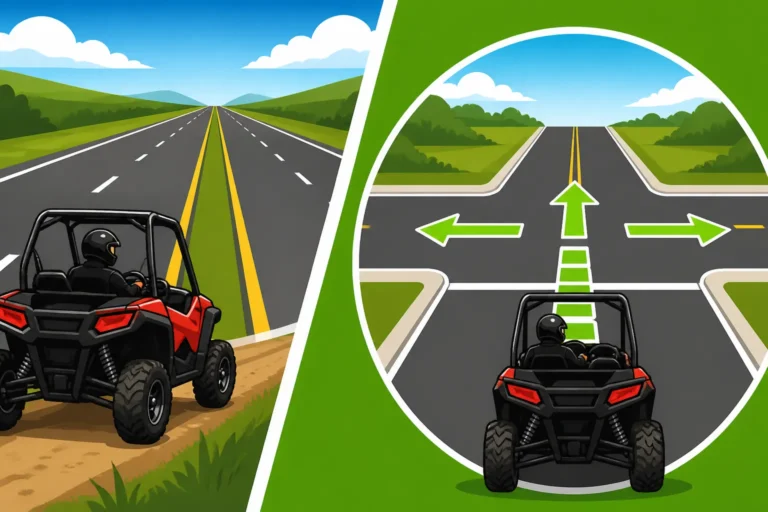
Even if you're riding for an agricultural purpose or within a city that has an ordinance, there will inevitably be times when you need to cross a state highway or a major divided road. This isn't something to take lightly. Nebraska law has very specific requirements for [Nebraska Crossing Rules at Ninety Degrees] when an ATV or UTV must traverse a highway. You can't simply pull out and drive across at an angle or merge with traffic. The rule is clear: you must cross the highway at approximately a ninety-degree angle, making the crossing as direct and perpendicular as possible.
This rule is designed for maximum safety, minimizing the time your machine is in the flow of higher-speed traffic. Before you even think about starting your crossing, you must come to a complete stop, yield to all oncoming traffic, and ensure the way is absolutely clear in both directions. You need to be acutely aware of your surroundings, checking for cars, trucks, and any other vehicles that might be approaching. This isn't a suggestion; it's a legal requirement, and failure to execute a safe and proper crossing can lead to severe accidents or citations. Always remember that even if you have the right-of-way in another situation, when crossing a highway on an ATV, you are generally expected to yield to all through traffic.
Equipping Your Machine and Yourself for Road Safety
Being legally allowed to ride on a road is just the first step. The next crucial part is ensuring your machine is properly equipped and you, as the rider, meet all the necessary requirements. Road safety isn't just about following the law; it's about making yourself and your machine as visible and predictable as possible to other motorists who aren't expecting an ATV on the road. Neglecting these details is a recipe for disaster, putting both you and others at risk.
Mandatory Equipment for Street-Legal ATVs
If your ATV or UTV is going to touch public roads in Nebraska, even under the exceptions, it needs to be properly outfitted. This isn't optional; these are statutory requirements designed to make your machine visible and operational in a road environment. First and foremost, you absolutely must have working [Nebraska Requires Head and Tail Lights]. These lights aren't just for nighttime riding; the law often requires your headlight to be on even during daylight hours when operating on a public road, ensuring you're seen by others. Brake lights are equally vital, signaling your intentions to traffic behind you. For many off-road machines, these lights might be basic, so consider upgrading to brighter LED options or adding supplementary lights, perhaps even a full road-legal kit from a company like SuperATV, to truly stand out.
Beyond lighting, Nebraska mandates a specific safety flag. This is a tall, brightly colored flag designed to increase your visibility, especially over hills or around curves where your ATV might be otherwise obscured by its low profile. The rules for this flag are quite specific: it must be a five-foot tall, day-glow triangular flag, mounted to the rear of your machine and extending at least five feet above the ground. This ensures that even if your machine isn't visible, the flag is. It's a critical safety feature, and without it, you're not legal for road use. Check out [Nebraska Safety Flag Dimensions] to make sure you have the right kind. Some local ordinances might also require mirrors, so always double-check those local rules. Equipping your machine correctly isn't just about ticking boxes; it's about being seen and staying safe.
Driver Requirements: Licensing, Age, and Insurance
It's easy to assume that because an ATV isn't a car, the same driver's license rules don't apply. But when you venture onto a public road in Nebraska, the rules change significantly. For most road-legal ATV operations, you must possess a valid Class O driver's license, which is the standard operator's license for cars and light trucks. If you're riding for agricultural purposes, a farm permit can sometimes suffice, but it's important to understand the limitations of such a permit. The expectation is that you are a competent, licensed driver, just as you would be if you were operating any other vehicle on that road. You can find more details on [Nebraska Requires a Class O License or Farm Permit].
Age also plays a role. Generally, a rider must be at least 16 years old to obtain a Class O driver's license, meaning younger riders, even if experienced off-road, cannot legally operate an ATV on public roads. This protects both the rider and other motorists. Furthermore, and this is critical, liability insurance is mandatory for any ATV or UTV operating on a public road in Nebraska. Just like your car, your ATV must be insured to cover potential damages or injuries in case of an accident. This isn't an optional extra; it's a legal requirement. The minimum coverage amounts are set by the state, and it's worth noting that these minimums can change over time. Always verify the current [Nebraska Insurance Minimums Today] with your insurance provider to ensure you're adequately covered and compliant. Riding without insurance, even for a short hop, can lead to severe financial penalties and legal trouble if an accident occurs.
Adhering to Speed and Time Restrictions
When you bring an off-road machine onto a public road, its capabilities often need to be reined in. Nebraska law imposes a statewide speed limit of 30 mph for ATVs and UTVs on any public road where their use is permitted. This isn't just a suggestion; it's a hard limit designed to ensure safety and prevent these machines from being operated at speeds for which they were not designed on public thoroughfares. Even if the posted speed limit for cars is 55 mph, your ATV is still restricted to 30 mph. You can find this rule outlined in [Nebraska's 30 mph Road Limit]. Ignoring this limit is not only dangerous but also a surefire way to attract the attention of law enforcement.
Beyond speed, there are also limitations on when you can operate your ATV on roads. Generally, road use is restricted to sunrise to sunset, meaning no nighttime riding. This is another measure to enhance safety, as ATVs, even with proper lighting, can be harder to see at night compared to traditional vehicles. However, there is a specific exception to this rule for snow removal. If you're using your ATV or UTV to plow snow, you may be permitted to operate after dark. This is a practical allowance for those who use their machines for essential winter maintenance. For any other purpose, plan your road trips during daylight hours. This [Nebraska Daylight Riding Rule] is an important one to remember, as violating it can lead to citations. Always be aware of both the speed and time restrictions that apply to your specific situation.
Avoiding Roadside Worries: Staying Compliant and Safe
No one wants to deal with a roadside stop or, worse, an accident. Being informed and proactive is your best defense against both. The rules for ATVs on Nebraska roads are precise, and misunderstanding or ignoring them can lead to significant headaches, both financially and legally. Let’s talk about how to stay out of trouble and ensure your riding experiences remain positive.
The Consequences of Ignoring Nebraska's ATV Road Laws
It might seem like a small thing to just zip down the road for a quick errand on your ATV, especially if you live in a rural area where traffic is sparse. However, ignoring Nebraska's ATV road laws can lead to serious consequences. Law enforcement officers, whether county sheriffs or local police, are generally very aware of the rules governing ATVs. If you're caught operating your machine illegally on a public road, you could face citations, significant fines, and potentially even the impoundment of your ATV. These penalties can quickly turn a casual ride into a very expensive lesson. For instance, [Nebraska Penalties for Illegal Road Riding] can vary, but they are never trivial.
Beyond the legal ramifications, there's the very real danger of an accident. ATVs are not designed for road speeds, they handle differently on pavement than on dirt, and other motorists are often not expecting to encounter them. An ATV collision with a car or truck can result in severe injuries or fatalities. If you're involved in an accident while illegally operating your ATV on a road, your insurance might not cover the damages or medical costs, leaving you personally liable for potentially enormous sums. It's simply not worth the risk. Understanding and adhering to the law isn't just about avoiding tickets; it's about protecting yourself, your machine, and others on the road.
How to Verify Local Regulations and Stay Informed
Because the legality of ATV road use can vary significantly from one city or village to another, it's absolutely crucial for riders to verify the specific regulations for their intended riding area. You cannot rely on hearsay or what a neighbor tells you. What's legal in Friend might be illegal in Funk. The most reliable way to get this information is to contact the local municipal offices directly. A call to the City Clerk's office, the Village Board, or even the local police department can provide clear, accurate information about any ordinances that might be in place. Ask specific questions: Are ATVs allowed on all streets, or just certain ones? Are there speed limits or time restrictions? Is a local permit required?
Many municipalities also publish their ordinances online. Learning [How to Find Your Town's ATV Ordinance Online] can be a valuable skill. Simply search for the city's name followed by "ATV ordinance" or "off-highway vehicle regulations." These laws are dynamic and can change, so even if you've checked once, it's a good idea to periodically re-verify, especially if you haven't ridden in a particular area for a while or if you hear about new discussions at town meetings. Staying informed is an ongoing responsibility that will help you avoid any unexpected surprises from law enforcement.
Beyond the Minimum: Enhancing Safety for Road-Shared Riding
While meeting the minimum legal requirements for road use is essential, smart riders often go a step further to enhance their safety. Your off-road machine, even when legally on the road, is still an off-road machine, and it behaves differently than a car. Making yourself as visible and as safe as possible should be a top priority. Consider upgrading your lighting beyond the basic requirements. Brighter LED headlights, additional taillights, and even side marker lights can significantly increase your visibility to other drivers, particularly in less-than-ideal conditions. Aftermarket companies like SuperATV offer a wide range of lighting solutions and other accessories designed to improve safety and functionality for machines venturing onto pavement.
Furthermore, think about your tires. Off-road tires are great for mud and dirt, but they can be squirrely and wear quickly on asphalt. If you frequently use your ATV on roads, you might consider tires that offer a better compromise for mixed terrain. Good quality mirrors are also vital, allowing you to monitor traffic behind and beside you. Wearing high-visibility gear, even during the day, adds another layer of protection. A brightly colored helmet, jacket, or vest can make a huge difference in how quickly other drivers spot you. Remember, road riding, even when legal, demands a heightened sense of awareness and responsibility. By going beyond the minimum requirements, you're not just complying with the law; you're actively working to protect yourself and ensure a safer, more enjoyable ride for everyone.
Disclaimer
This article is for general informational purposes only and does not constitute professional advice. Laws, prices and regulations vary by location and change over time. Consult a qualified professional for guidance on your specific situation.