Nebraska Rules for a Visiting Kansas Rider
So, you're a Kansas rider, maybe you've heard whispers about Nebraska's unique ATV and UTV laws, and now you're wondering if you can just load up your machine and hit the scenic gravel roads for a weekend adventure. It's a fair question, and one many out-of-state riders grapple with. The truth is, Nebraska has some distinct rules that can throw a wrench in your plans if you're not prepared, especially when it comes to road use. This guide is here to help you navigate those nuances, ensuring your visit is filled with good times, not unexpected citations.
Understanding Nebraska's ATV Road Rules as a Kansas Visitor
Coming from Kansas, where you might have specific license plates or registration requirements for your ATV or UTV to be street legal, Nebraska's approach can feel like a curveball. It's crucial to understand these fundamental differences right off the bat, as they dictate almost everything about where and how you can ride on public land here.
The Fundamental Difference: No Statewide Registration
First and foremost, let's clear up the biggest point of confusion: Nebraska titles ATVs and UTVs, but it does not register them for road use on a statewide level. This means you won't find a state-issued license plate or decal for your off-road machine in Nebraska. This is often a huge head-scratcher for riders from neighboring states like Kansas, where street-legal requirements often revolve around a state-issued plate. We've got a detailed post on this if you're curious about [Nebraska Titles ATVs but Does Not Register Them].
What this means for you as a visiting Kansas rider is that your Kansas registration or "tag" for road use, if you have one, isn't going to grant you automatic road-legal status in Nebraska. Our state law is quite specific about how and where ATVs and UTVs can operate on public roads, and it doesn't offer reciprocity for out-of-state registrations in the way it might for a passenger vehicle. You'll need to adhere to Nebraska's rules, regardless of what your home state allows.
The Specifics of Permitted Road Use
So, if there's no statewide registration, how can an ATV or UTV be used on Nebraska roads? Our laws are pretty restrictive, primarily allowing road use under a few specific conditions, with a strong lean towards agricultural purposes.
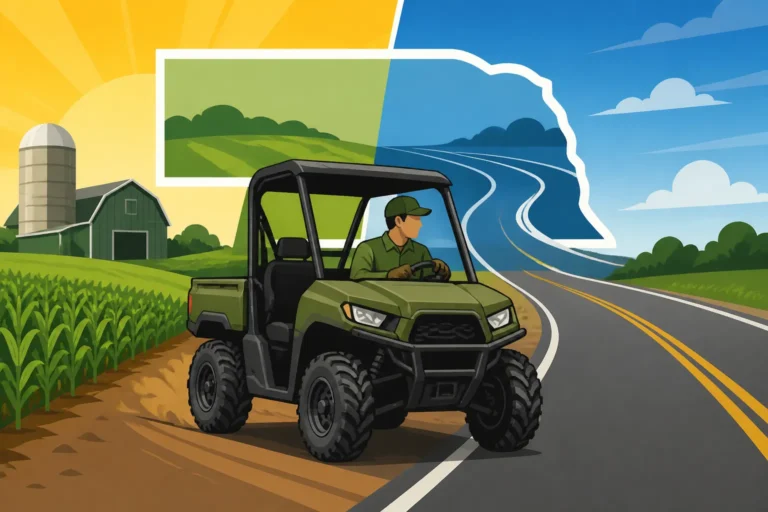
- Agricultural Exemption: This is the big one. Nebraska law allows ATVs and UTVs to be operated on public roads for agricultural purposes between sunrise and sunset. Think farmers moving between fields, ranchers checking cattle, or hauling equipment for farm tasks. This isn't a free pass for recreational joyrides, though. It must be directly related to agricultural work. The statute that defines this is 60-6,356, and it's quite clear about the intent. [When Farm Use Makes an ATV Road Trip Legal] is a great resource if you're planning any agricultural activity.
- City Ordinances: This is where things get interesting for recreational riders. Some Nebraska cities and even unincorporated villages, through a county board resolution, have adopted their own ordinances that allow ATVs and UTVs on their specific city streets or village roads. These are highly localized and vary wildly. A town might permit it, while the very next town over might strictly prohibit it. If you're planning to ride through a town, you absolutely need to check with that specific city or county government before you roll in. Don't assume anything based on what a different town allows.
- County Roads: While agricultural use is permitted, general recreational riding on county roads is generally not allowed unless a specific county board resolution opens up an unincorporated village. So, while you might see a farmer on a quad, that doesn't mean you can cruise for fun on the same road.
Key Equipment Requirements: Safety Flags and Lights
Even if you meet one of the exemptions for road use, Nebraska has specific equipment requirements that your ATV or UTV must adhere to. This isn't just a suggestion; it's the law, and deputies will enforce it.
- Safety Flag: This is non-negotiable for road use. Your ATV or UTV must be equipped with a safety flag that is at least five feet above the ground on a sturdy staff. The flag itself needs to be day-glow orange and at least 30 square inches in size. This makes your smaller machine much more visible to other traffic, especially on dusty gravel roads or over hills. [Nebraska's 5-Foot Safety Flag Rule] provides more details on this. It's an easy add-on, and companies like SuperATV offer a range of robust flags and mounting solutions that can help you meet this requirement.
- Lights: For any road operation, your machine must have at least one headlight (which must be on even during daylight hours) and one taillight. If you're riding after sunset (only allowed for snow removal or specific city ordinances), these lights become even more critical. Make sure your lighting system is in good working order before you venture out. SuperATV also carries various lighting accessories, from LED light bars to replacement headlights, that can improve visibility.
- Mirrors and Brakes: While not always explicitly spelled out in the ATV road-use statute, general vehicle safety dictates that functional mirrors and fully operational brakes are essential for safe road operation.
Essential Documents and Operator Requirements for Kansas Riders in Nebraska
Beyond the equipment, there are also personal requirements for you, the operator, and for your machine itself, even if it's not "registered" in the traditional sense. These are vital for a smooth trip and to avoid any legal hassles with local law enforcement.
Proof of Ownership and Identification
When you're stopped on a road, law enforcement will want to verify who owns the machine you're operating. While your Kansas registration might not be valid for road use in Nebraska, it can serve as proof of ownership, alongside your actual title or a bill of sale.
- Carry Your Title or Bill of Sale: Always have a copy of your ATV or UTV title, or a bill of sale if you've recently purchased it, with you. This proves that the machine belongs to you and isn't stolen. If you're borrowing a machine, having a signed letter of permission from the owner is a very smart move.
- Personal Identification: Of course, you'll need a valid driver's license from your home state (Kansas, in this case). This serves as your primary form of identification.
Licensing and Age Restrictions
Nebraska has specific rules about who can operate an ATV or UTV, especially on public roads. These might differ from what you're used to in Kansas.
- Driver's License or Farm Permit: To operate an ATV or UTV on a public road in Nebraska, you must possess a valid Class O operator's license (a standard driver's license) or a farm permit. A farm permit is specific to agricultural operations for those under 16 who are working. So, your Kansas driver's license should cover you here, provided you meet the other requirements. [Nebraska Requires a Class O License or Farm Permit] has more on this.
- Age Requirements: While Nebraska doesn't have a statewide minimum age for off-road riding on private land, if you're operating on a public road under the agricultural exemption or a local ordinance, you're generally subject to the same licensing and age rules as any other motor vehicle operator. This means usually 16 or older with a full license, or younger with a farm permit under specific conditions.
- Passengers: Be aware that carrying passengers on an ATV (designed for a single operator) on public roads is generally prohibited in Nebraska. UTVs are typically designed for multiple passengers, so they have more leeway, but always stick to the manufacturer's recommendations for seating capacity.
The Critical Role of Insurance
This is a big one. While many states may not require insurance for off-road use, Nebraska does mandate liability insurance if you're operating an ATV or UTV on a public road.
- Required Liability Coverage: If you're using your ATV or UTV on a road, even for a quick agricultural crossing, you must carry proof of liability insurance. The minimum coverage limits are typically comparable to those for passenger vehicles. Make sure your insurance policy extends to operation on public roads and that you have proof of insurance readily available. [Nebraska Requires Liability Insurance on Roads] highlights this crucial requirement.
- Why It Matters: Accidents happen, even on short road stretches. Having proper insurance protects you financially in case of an incident involving another vehicle or property. Don't risk a ticket or, worse, a massive out-of-pocket expense because you overlooked this detail. It’s always wise to contact your insurance provider before traveling to ensure you have adequate coverage for out-of-state operation.
Where Can a Kansas Rider Actually Ride an ATV in Nebraska?
So, if road use is so restricted, where can you ride recreationally? Nebraska might not be known for expansive public trail systems like some western states, but there are options, both public and private, if you know where to look.
Public Trails and Managed Riding Areas
Nebraska does have a few designated areas where ATVs and UTVs are welcomed on trails. These are your best bet for a dedicated recreational riding experience.
- Bessey OHV Trails at Halsey: Located within the Nebraska National Forest near Halsey, this area offers miles of sandy trails. It's a unique riding experience, being one of the largest hand-planted forests in the world. You'll find everything from open sand dunes to tighter wooded trails. [Bessey OHV Trails at Halsey in Nebraska] covers this extensively.
- Cedar Run ATV Trail: Situated near Republican City at Harlan County Lake, this trail system offers a different terrain, often with more wooded areas and varied elevation. It's a popular spot for riders looking for a less sandy challenge.
- Flat Rock Riders OHV Park: This is a privately run park near Sutherland that offers a motocross track and some trails. Being a private park, they will have their own specific rules, age limits, and possibly helmet requirements, which you'll need to check before you visit.
- Wildlife Management Areas (WMAs): Generally, ATVs are restricted to designated roadways on WMAs. However, there's a notable exception: some WMAs allow ATVs on frozen lakes for ice fishing access during specific winter conditions. Always check with the Nebraska Game and Parks Commission for specific WMA rules and closures. [Nebraska WMA Riding Rules] has important details.
When planning a trip to any of these areas, always check their current operating status, fees, and specific rules. What you bring from SuperATV, like durable tires or a sturdy winch, might be incredibly useful for these varied terrains.
Private Land Access and Permission
This is by far the most common way Nebraskans enjoy their ATVs and UTVs: on private land. If you have friends or family with private property, that's often the easiest route.
- Written Permission is Key: Never, ever ride on private land without explicit, preferably written, permission from the landowner. Trespassing laws are strict in Nebraska, and you could face fines, impoundment of your machine, or other legal consequences. Even if a gate is open, or it "looks like nobody's around," assume you need permission. [Nebraska Landowner Permission Rules] outlines the importance of this. A simple note with the landowner's contact information and the dates you're allowed to ride can save you a lot of grief.
- Respect the Land: When granted permission, treat the land with respect. Close gates, stay on designated paths, avoid disturbing livestock or crops, and pack out everything you pack in. Leaving a good impression helps ensure future access for yourself and other riders.
City Ordinances and County Board Resolutions
As mentioned earlier, some cities and villages have unique rules. This isn't common, but it's worth knowing.
- Check Local Authorities: If your travel plans include passing through or stopping in a specific small town, it's worth a quick phone call to their city hall or checking their official website for any ATV ordinances. What's allowed in one village is often forbidden just a few miles down the road. This typically applies to local streets within their corporate limits.
Avoiding Pitfalls: Common Mistakes and How to Stay Compliant
As a visitor, it's easy to make assumptions based on your home state's laws. Understanding these common pitfalls can save you from a ruined trip and unexpected expenses.
Don't Assume Kansas Rules Apply
This is the biggest mistake any out-of-state rider can make. Nebraska's legislative history regarding ATVs and UTVs, particularly concerning road use, is very different from many other states. While Kansas may have specific provisions for making an ATV street-legal, Nebraska doesn't have a direct parallel. Your Kansas plate or sticker won't magically make you compliant here. Treat Nebraska as a completely different legal landscape for off-road vehicles.
Verifying Local Regulations Before You Ride
The onus is entirely on you, the rider, to know and comply with the laws. "I didn't know" isn't a valid defense.
- Make the Calls: If you plan to ride through any specific towns or want to utilize a certain county road for a legitimate agricultural purpose, make the phone calls to the city clerk or county sheriff's office before you load up your machine. It's much better to clarify ahead of time than to face a deputy on the side of the road.
- Check Online Resources: Many city and county websites post their ordinances. A quick search can often yield the information you need.
- Use Maps and GPS: Stick to known trails and areas. Don't venture off onto roads or land you're unsure about. Your GPS can be a lifesaver, but make sure you have offline maps if you're in an area with spotty cell service, which is common in rural Nebraska.
Penalties for Violating Nebraska's ATV Laws
Breaking the rules, even inadvertently, can lead to various penalties that can quickly sour your trip.
- Fines: The most common consequence is a fine for operating an ATV or UTV illegally on a public road, or for lacking the required equipment (like the safety flag or insurance). [Nebraska Ticket Costs for Road Riding] can give you an idea of potential expenses.
- Impoundment: In some cases, especially for repeat offenses or egregious violations, your ATV or UTV could be impounded, leading to additional towing and storage fees on top of any fines.
- Other Legal Actions: Depending on the severity of the offense, other legal actions could be taken, especially if property damage or injury occurs while riding illegally. If you're involved in an accident without the required insurance on a public road, the financial implications can be devastating.
By understanding these nuances, a Kansas rider can still have a fantastic time exploring Nebraska. Just remember to ride smart, do your homework, and respect the local laws and customs, especially when it comes to road use. It's a beautiful state with plenty to offer for those who come prepared!
Here's a quick reference table summarizing key Nebraska ATV Road Rules for a visiting Kansas rider:
| Requirement | Nebraska Rule for Road Use | Notes for Kansas Riders |
|---|---|---|
| Statewide Registration | None for road use. ATVs are titled, but no state-issued license plate or decal. | Your Kansas road registration/plate is not reciprocal. Do not assume it grants you road-legal status in Nebraska. |
| Permitted Roads | Primarily for agricultural purposes on county roads. Some cities/villages allow limited road use via local ordinance. | Recreational road riding is highly restricted. Always verify local city/county rules. Agricultural use must be legitimate, not a loophole for recreation. |
| Speed Limit | 30 mph max on public roads. | Strictly enforced. Even if the posted speed limit for cars is higher, your ATV/UTV limit is 30 mph. |
| Safety Flag | Required. At least 5 feet high, day-glow orange, 30 sq. inches. | Essential for visibility. Invest in a quality flag and mount, SuperATV offers great options. |
| Lighting | Headlight (on at all times) and taillight required for road use. | Crucial for visibility to other vehicles. |
| Operator License | Valid Class O (standard driver's) license or farm permit required. | Your valid Kansas driver's license generally covers this. |
| Insurance | Liability insurance required for any road operation. | Crucial. Ensure your policy covers out-of-state road use for an ATV/UTV. Carry proof. |
| Proof of Ownership | Carry title copy or bill of sale. | Helps verify ownership if stopped. |
| Helmets | Not mandated by state law for ATV/UTV riders (unlike motorcycles), but highly recommended and may be required by private parks or local ordinances. | Safety first! Always wear a helmet, regardless of the law. |
| Crossing Highways | Allowed at 90-degree angles only after a complete stop and yielding to traffic. Not allowed on controlled-access highways. | Be extremely cautious. Traffic moves fast on highways. |
| Passengers | Generally prohibited on ATVs (single operator design). UTVs can carry passengers up to manufacturer's seating capacity. | Adhere to manufacturer recommendations. |
| Trail Riding | Available at designated public OHV parks (Bessey, Cedar Run) and private riding areas. Private land requires written permission. | Your best bet for recreational riding. Always check specific park rules/fees. |
Disclaimer
This article is for general informational purposes only and does not constitute professional advice. Laws, prices and regulations vary by location and change over time. Consult a qualified professional for guidance on your specific situation.