When Farm Work Lets You Cross a Four-Lane
It can feel like navigating a minefield when you're trying to figure out where and how you can legally operate your ATV or UTV in Nebraska, especially when your livelihood depends on using these machines for farm work. The rules can be confusing, making you worry about potential tickets just for trying to get from one field to another. This guide aims to clear up the confusion surrounding Nebraska's specific agricultural road exception, detailing when and how farm work allows you to cross a four-lane highway legally and safely.
The Nuance of Nebraska's Agricultural Road Exception
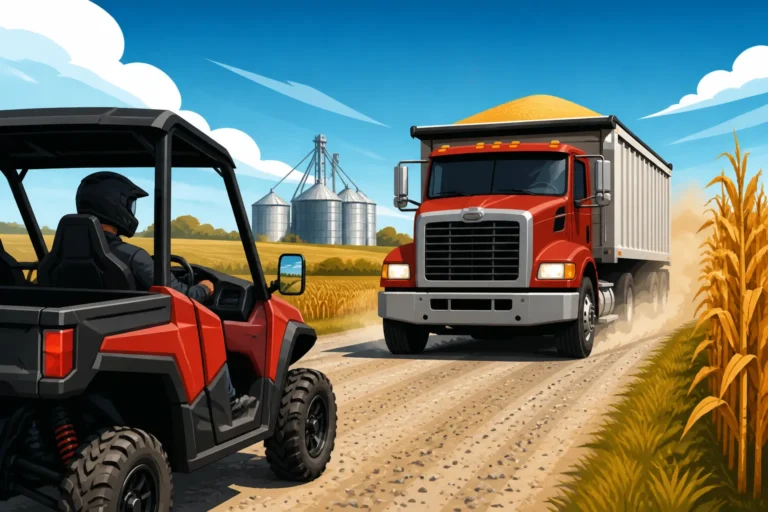
Nebraska law understands that ATVs and UTVs are indispensable tools for many farmers and ranchers. That's why there's a specific "agricultural road exception" in the state statutes, designed to allow these machines to traverse public roads under very specific circumstances related to farming or ranching. However, this exception isn't a free pass to drive anywhere, anytime, and it comes with its own set of strict rules, particularly when you're looking at crossing something as significant as a four-lane highway. The goal is always safety and ensuring minimal disruption to other traffic, especially on busier roads.
Understanding the "Farm Use" Definition
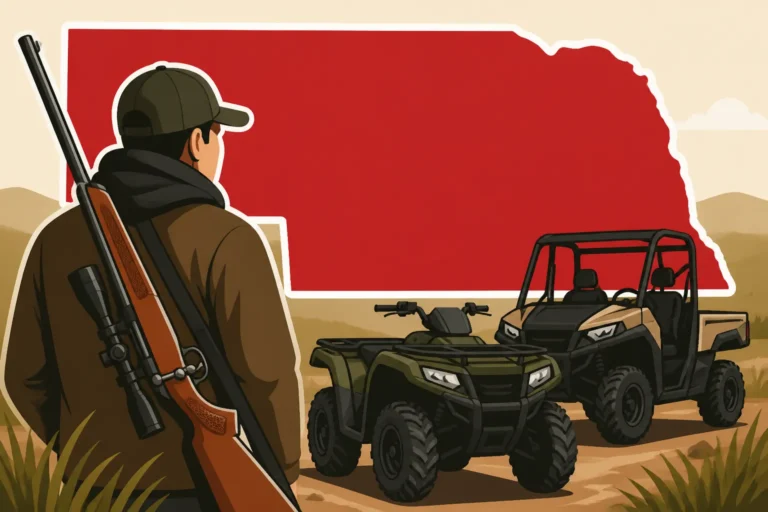
For your ATV or UTV to qualify under Nebraska's agricultural road exception, its use must be directly and solely tied to farming, ranching, or agricultural operations. This isn't a broad term that covers any trip you might make on an ATV if you happen to live on a farm. We're talking about specific tasks like moving between fields, checking livestock, transporting feed or equipment short distances, or traveling to repair equipment. It's about legitimate, on-the-job use that necessitates the ATV or UTV's presence on a public roadway.
For example, taking your quad into town to pick up groceries, even if you’re a farmer, would generally not fall under this exception. Similarly, joyriding or using the machine for recreational purposes, even on a day when you’re doing farm chores, typically wouldn't qualify for the agricultural exemption on public roads. The law is quite specific about the intent and nature of the trip. If you're wondering, [Is Checking Cattle an Agricultural Trip Under the Law?], the answer is usually yes, as it's directly tied to livestock management. The intent has to be purely agricultural for the exception to apply.
The Specifics of Crossing Rules
When it comes to using the agricultural exception to traverse a public road, Nebraska law is very clear on how you must execute the crossing. It's not just about what you're doing, but how you're doing it. The most fundamental rule for crossing any highway is that you must do so at a ninety-degree angle to the roadway. This means going straight across, not diagonally or attempting to merge with traffic for a short distance before turning off. This rule is designed to minimize your time in the lanes of travel and make your intentions as clear as possible to other drivers.
Furthermore, before you even begin to cross, you are required to come to a complete stop and yield to all other traffic on the highway. This isn't just a suggestion; it's a legal mandate to ensure safety. You cannot proceed until it is absolutely safe to do so, with no approaching traffic that could be affected by your crossing. These rules are integral to [Nebraska Crossing Rules at Ninety Degrees] and are strictly enforced to prevent accidents involving slower-moving ATVs or UTVs and faster highway traffic. This cautious approach is critical because ATVs and UTVs are not designed for road speeds and can be hard for motorists to see.
Why a Four-Lane Crossing is Different
Crossing a four-lane highway, especially one that carries significant traffic, introduces additional complexities and distinctions. While the general rules of agricultural use and 90-degree, yield-before-crossing still apply, it's crucial to understand the difference between a standard four-lane highway and a "controlled-access highway."
Nebraska specifically bans ATVs and UTVs from crossing a controlled-access highway. This term typically refers to interstates, expressways, or other major divided highways where access is limited to specific entry and exit ramps, and often has no at-grade intersections. If the four-lane road you're looking to cross is a controlled-access highway, even for farm work, you are generally prohibited from crossing it. This is a critical distinction, and misunderstanding it could lead to severe penalties.
However, if the four-lane road is a non-controlled-access state highway or a county road with four lanes, and your crossing meets all the agricultural exception criteria, including the 90-degree angle and yielding to all traffic, then you may proceed. The key here is the "controlled-access" designation, which usually means no direct crossings are permitted. Always check local signs and ordinances or consult with your county treasurer's office if you're unsure about a specific roadway. This careful planning is essential, as [Nebraska Bans Crossing a Controlled-Access Highway].
Navigating the Legalities: What You Need to Know
Beyond the "when" and "how" of crossing, there are fundamental legal requirements for operating an ATV or UTV on any public road in Nebraska, even under the agricultural exception. These requirements are in place to ensure the safety of the rider and other motorists, and they cover everything from the machine's equipment to the rider's qualifications. Failing to meet these basic standards can quickly negate any agricultural exception and lead to fines or other legal consequences.
Essential Equipment for Road Use
When you're operating your ATV or UTV on any public road, even briefly for a crossing, it needs to be properly equipped for visibility and safety. The state law is quite specific here:
- Head and Tail Lights: Your machine must have working head and tail lights. This isn't just for night-time operation; [Nebraska Requires Head and Tail Lights] for any road use, and it's always a good idea to have them on for increased visibility, even in broad daylight.
- Safety Flag: This is a non-negotiable item for road use. You must have a triangular safety flag, at least 30 square inches in size, made of day-glow orange or red material, and mounted at least five feet above the ground. This flag serves as an essential warning to other drivers, particularly on hills or around curves, that a slower-moving vehicle is ahead. Many riders find durable options from brands like SuperATV that stand up to tough farm conditions. Understanding [Nebraska Safety Flag Dimensions] is key to compliance.
- Mirrors: While not explicitly required for all agricultural road use, having at least one rear-view mirror is highly recommended for situational awareness, especially when approaching a crossing point.
- Brakes and Tires: Your machine must have functioning brakes and tires in good condition suitable for the terrain.
- Spark Arrester: If your ATV or UTV uses an internal combustion engine, it must be equipped with a spark arrester approved by the U.S. Forest Service. This is important for preventing wildfires, especially in dry agricultural areas.
Always make sure your machine is in good working order before you venture onto any public roadway. A quick pre-ride check can prevent issues and ensure compliance.
Licensing and Insurance Requirements
Operating an ATV or UTV on public roads, even under the agricultural exception, means adhering to specific licensing and insurance mandates. These are critical for legal compliance and financial protection.
- Driver's License or Farm Permit: The operator of the ATV or UTV must possess a valid Class O operator's license (the standard Nebraska driver's license) or a valid farm permit. A farm permit is a special license available to certain individuals involved in agricultural operations. It's not enough to simply be an experienced rider; you need the proper legal authorization. For a deeper dive, read [Nebraska Requires a Class O License or Farm Permit]. This ensures that the operator has at least a basic understanding of road rules and responsibilities.
- Liability Insurance: If you are operating your ATV or UTV on a public road, even for a brief crossing, you are required to carry liability insurance. This insurance provides financial protection in case you are involved in an accident and are found to be at fault, covering damages or injuries to other parties. The minimum coverage amounts are set by the state. Without this insurance, you're not only breaking the law but also exposing yourself to significant financial risk. [Nebraska Requires Liability Insurance on Roads] highlights this crucial requirement. Make sure your policy specifically covers ATV/UTV use on public roads, even if it's limited to agricultural exemptions.
The "Not To Be Registered" Notation and Its Impact
Many Nebraska ATV titles include a notation stating "NOT TO BE REGISTERED." This might seem confusing if you're talking about using the machine on a public road, as other vehicles typically require registration to do so. However, for ATVs and UTVs in Nebraska, this notation simply means they are not eligible for traditional motor vehicle registration and therefore will not receive a license plate.
This notation does not prevent the machine from being legally titled, nor does it prohibit its use under specific exceptions like the agricultural exemption. It merely signifies that the ATV or UTV is not designed or intended for general highway use like a car or truck. So, when you see this on your title, it doesn't mean you can't cross a four-lane highway for farm work; it just means you won't be getting a license plate for it. The critical thing is to always carry proof of ownership, such as your title or a copy, when operating on public lands or roads. [The Title Notation That Bars Road Registration in Nebraska] explains this in more detail.
Practical Steps for Safe and Legal Crossings
Successfully navigating a four-lane highway crossing with your ATV or UTV for farm work in Nebraska requires more than just understanding the law; it demands practical preparation and a commitment to safety. Even with the legal right to cross, the inherent differences in speed, size, and visibility between your machine and highway traffic mean you must exercise extreme caution. Planning ahead, ensuring your machine is ready, and knowing what to do at the moment of crossing are all vital steps to protect yourself and others.
Planning Your Crossing Safely
Before you even think about putting a wheel on a four-lane highway, meticulous planning is essential. This is particularly true for busy roads where traffic moves quickly.
- Route Assessment: Take time to assess your route. Are there specific times of day when traffic is lighter? Early mornings or late evenings might offer clearer windows. Avoid peak rush hours if at all possible. Look for the safest possible crossing point – ideally, one with good visibility in both directions and minimal obstructions. You want a clear line of sight for yourself and for approaching drivers.
- Weather Conditions: Never attempt a highway crossing in adverse weather conditions like heavy fog, rain, or snow. Reduced visibility significantly increases the risk for everyone on the road. The agricultural exception often has specific daylight-only provisions for road use, except for snow removal operations.
- Machine Readiness: Before each trip that involves a road crossing, do a quick check of your ATV or UTV. Are your head and tail lights working? Is your safety flag properly mounted and highly visible? Are your tires adequately inflated and in good condition? Do your brakes work effectively? Many SuperATV components are designed to be robust, making pre-ride checks simpler, but they're still necessary.
- Inform Others: If you're working with a team, let them know your intentions. If you have a two-way radio, communicate your movements, especially if multiple machines are crossing.
- Know Your Local Ordinances: While this guide focuses on state law, some local cities or counties might have additional ordinances regarding ATV/UTV use, even for agricultural purposes. It's always a good idea to check with your local county treasurer's office or sheriff's department.
What to Carry With You
When you're operating your ATV or UTV on a public road, even under the agricultural exception, you should always carry certain documentation and safety gear. This ensures that if you are stopped by law enforcement or involved in an incident, you can quickly provide proof of compliance.
- Proof of Ownership: Always carry a copy of your ATV or UTV's title. This demonstrates that you are the legal owner of the machine. While the original title should be kept in a safe place, a clear copy is sufficient for roadside checks. [Carrying Your Title Copy on a Ranch Road] is a good practice.
- Proof of Insurance: Have your insurance card or declaration page readily available. This will verify that you have the required liability coverage for road use.
- Driver's License/Farm Permit: You must have your valid Class O driver's license or farm permit on your person.
- Basic Tool Kit: A small kit with essential tools for minor repairs (like fixing a flat tire or tightening a loose bolt) can be invaluable, especially if you break down mid-crossing or just off the road.
- First Aid Kit: For any extended farm work or road travel, a basic first aid kit is always a smart thing to have on hand.
- Communication Device: A fully charged cell phone is crucial for emergencies. Be aware that some rural areas may have limited cell service.
Potential Pitfalls and How to Avoid Them
Even with the best intentions, it's easy to fall into common traps that can lead to legal issues or dangerous situations when crossing a four-lane highway.
- Mistaking a Controlled-Access Highway: This is perhaps the biggest pitfall. As mentioned, Nebraska generally prohibits ATVs and UTVs from crossing controlled-access highways (like interstates). Many four-lane roads are controlled-access. If you're not absolutely certain, do not attempt to cross. A brief moment of uncertainty is not worth the legal and safety risks. [Nebraska Bans Crossing a Controlled-Access Highway] for good reason.
- Improper Crossing Angle: Deviating from the 90-degree crossing rule can be dangerous and illegal. Don't try to "angle in" or "angle out" from the shoulder. Go straight across, quickly and directly.
- Failing to Yield: Assuming that because you're "just crossing," traffic will slow down for you is a dangerous assumption. You must stop completely and yield to all traffic. Err on the side of waiting for a significantly larger gap than you think you need, especially on a four-lane road where speeds are higher.
- Inadequate Visibility: Thinking your lights are "good enough" or skipping the safety flag is a huge mistake. ATVs and UTVs are small and low to the ground, making them hard to see for drivers in larger vehicles. The safety flag, especially, makes a substantial difference in how far in advance other drivers can spot you. Consider additional reflective tape or bright clothing for yourself.
- Recreational Use Disguised as Farm Work: Don't try to stretch the definition of "agricultural purposes." Law enforcement officers are well-versed in what constitutes legitimate farm use. Using the exception for personal errands or recreational trips will likely result in a citation. The whole point of [Why the ATV Road Law Was Written Around Farming] is to support agricultural operations, not general road use.
- Ignoring Local Ordinances: While state law provides the overarching framework, local jurisdictions (cities or counties) can enact their own specific rules for ATVs and UTVs within their boundaries. Always check for local ordinances in the area you're operating.
By understanding these nuances, equipping your machine properly (perhaps with reliable accessories from SuperATV), and exercising extreme caution, you can safely and legally use your ATV or UTV for those essential farm work crossings in Nebraska. Stay safe out there!
Disclaimer
This article is for general informational purposes only and does not constitute professional advice. Laws, prices and regulations vary by location and change over time. Consult a qualified professional for guidance on your specific situation.