Taking an ATV Request to a Village Board Meeting
It can be incredibly frustrating to live in a small Nebraska village, owning an ATV or UTV you rely on for yard work, quick errands, or just plain fun, only to feel restricted by outdated rules or a complete lack of them regarding street access. You see neighbors doing similar things, or hear about nearby towns with open streets, and wonder why your community can't catch up. This guide is all about empowering you to be that change, helping you understand how to approach your local village board with a well-reasoned request to open streets to ATVs and UTVs.
Understanding the Lay of the Land (and Laws)
Before you even think about approaching your village board, it’s crucial to understand the foundation of Nebraska’s ATV and UTV laws. It’s easy to feel like the state has a blanket ban on these machines on public roads, and in many ways, that's true at a high level. But there are important nuances, especially concerning local control, that can work in your favor.
The State's Stance on ATVs on Roads
Nebraska's state statutes generally put significant restrictions on where ATVs and UTVs can operate. For many years, the default has been that these machines are primarily for off-road use. This can lead to a lot of headaches for owners who live in rural areas or small villages, where a quick trip to the post office or a neighbor's house would be so much easier on their side-by-side than firing up the pickup. It’s a common frustration to have to trailer your machine just to get to a field that's literally across the street. While the law does carve out specific exceptions for agricultural use, allowing machines on roads for farm-related tasks, this doesn’t cover recreational riding or general transportation within a village. For a deeper dive into the specific state statutes, you might find [Nebraska ATV Road Rules Under 60-6,356] helpful, as it lays out the legislative framework that often feels so restrictive.
The intent behind these state-level restrictions often revolves around safety concerns, given that ATVs and UTVs aren't designed with the same safety features as street-legal vehicles. This perception of ATVs as inherently unsafe on roads is one of the biggest hurdles you’ll need to overcome when talking to your village board. Many board members, especially if they aren't ATV owners themselves, might only envision high-speed joyrides or noisy machines tearing through town, which is far from the reality for most responsible riders.
How Local Ordinances Can Open Doors
Here’s the good news: while the state sets the baseline, it also grants significant authority to local municipalities – including villages – to pass their own ordinances regarding ATV and UTV use on public roads within their jurisdiction. This means your village board has the power to create rules that specifically allow ATVs and UTVs on certain streets, during certain hours, and under certain conditions. This is how you see places like Yutan or other towns in Nebraska successfully implement their own local registration and street-use rules.
Many residents don't realize this local power exists, or they feel intimidated by the idea of challenging what seems like a state-mandated reality. But the truth is, your village board is there to represent the interests of its residents. If enough people in the community want to explore opening up streets for ATV and UTV use, the board has an obligation to consider it. Understanding this distinction – state law as a general framework, local ordinance as specific tailoring – is your first powerful step. For examples of how other municipalities have approached this, looking into [Nebraska City Ordinances That Open Streets] or [Nebraska County Board Resolutions for Villages] can provide valuable insights into the types of provisions and considerations that typically go into such local decisions. It proves that what you're asking for isn't unprecedented; it's a known, viable path.
Preparing Your Request for the Village Board
Walking into a village board meeting with just a general plea is unlikely to be effective. These are busy individuals, often volunteers, who need clear, concise, and well-researched proposals to make informed decisions. Your preparation is key to demonstrating not just your passion, but also your commitment to a safe and beneficial outcome for the entire village.
Researching Your Village's Current Stance
The very first thing you should do is find out what, if anything, your village already has on its books regarding ATVs and UTVs. It’s possible there’s an old ordinance that implicitly bans them, or perhaps one that’s so vague it’s open to interpretation. Don't assume; investigate. This involves contacting the village clerk or visiting the village office to request copies of existing ordinances related to vehicles, traffic, or nuisance. Sometimes, smaller villages might not have an easily accessible online portal for their ordinances, making an in-person visit or phone call necessary. You might find that a nearby community has a similar structure, and seeing their rules could offer a good starting point. Knowing exactly what you're working with will help you propose specific amendments or an entirely new ordinance rather than just asking for a vague change. The internal link [How to Find Your Town's ATV Ordinance Online] could offer some starting points, even if your specific village isn't listed, it explains the process of looking.
If your village has nothing explicit, that's both a blessing and a curse. A blessing because you're starting with a clean slate; a curse because you'll need to develop the entire framework from scratch. In either case, knowing the current regulatory landscape is paramount to crafting a request that addresses existing concerns and fills legal gaps, rather than just repeating information the board already knows or has explicitly rejected.
Building a Strong Case: Safety and Community Benefits
This is where you shift from "I want to ride" to "this will benefit our community safely." Board members are focused on the collective good, not just individual desires. You need to frame your request in a way that highlights advantages for the village, while proactively addressing safety concerns.
Consider these angles:
- Convenience for Residents: For many, especially in smaller villages where distances are short and parking can be challenging for larger vehicles, an ATV or UTV is a practical mode of transport. It could be for quick trips to the local store, visiting neighbors, or commuting to a nearby farm or field. This can enhance quality of life for many, particularly those with mobility issues or specific work requirements.
- Economic Benefits: If your village has local businesses, allowing ATVs on streets could encourage more foot traffic (or tire traffic, rather!) to those establishments. Residents might be more inclined to grab a quick coffee or pick up supplies on their machine if they don't have to get the truck out. It could even attract visitors from neighboring areas if your village becomes known as ATV-friendly.
- Property Maintenance & Accessibility: Many residents use ATVs for lawn care, snow removal, or accessing larger properties. Being able to legally drive their machine from their garage to their property across town without trailering it is a huge convenience and time-saver. Consider how SuperATV products, like plows or cargo beds, enhance the utility of these machines for these very purposes, making them indispensable tools for property owners.
- Safety Measures: This is paramount. You need to show that you and other riders are committed to safety. Propose specific requirements that would be part of any new ordinance, such as:
- Mandatory use of a 5-foot safety flag, clearly visible. [Why Road-Legal ATVs Need a 5-Foot Safety Flag] and [Nebraska Safety Flag Dimensions] offer specifics on this.
- Requiring proper lighting: headlights, taillights, and brake lights, even during daylight hours.
- Speed limits, perhaps even stricter than the posted limits for cars, like Nebraska's typical 30 mph on village roads. [Nebraska's 30 mph Road Limit]
- Mandatory liability insurance. [Nebraska Requires Liability Insurance on Roads]
- Age restrictions for operators, potentially aligning with state guidelines for youth riders or requiring a valid driver's license. [Nebraska City Age Requirements]
- Clear signage within the village indicating ATV-friendly routes or areas.
Gathering support from neighbors and local businesses is crucial here. A petition with signatures, letters of support, or even short testimonials from residents explaining why they want this change can powerfully demonstrate widespread community interest. If you can show that local business owners believe this would be good for their sales or community engagement, that's an even stronger point. This isn't just about one person's request; it's about a community expressing a need.
Presenting Your Case at the Village Board Meeting
The meeting itself can feel daunting, but being prepared for the process and anticipating questions will make you much more confident and effective. Remember, you’re there to educate and persuade, not just to vent.
Navigating the Meeting Protocol
Every village board has specific protocols for public participation. Before the meeting, contact the village clerk to ask how to get your item on the agenda. It’s far more effective to be a scheduled agenda item than to rely on the "public comment" section, which is often at the end of a long meeting and limited in time.
- Request to be on the agenda: Clearly state your topic (e.g., "Request to Discuss ATV/UTV Use on Village Streets").
- Know your time limit: Be aware of any presentation time limits. Practice your presentation to ensure you hit all your key points within that window.
- Prepare handouts: Bring copies of your proposed ordinance language, petition signatures, safety proposals, and any supporting documentation for each board member. This ensures they have something tangible to review later.
- Dress appropriately: While it's a village meeting, presenting yourself professionally shows respect for the board and the process.
During the meeting, stay calm and respectful, even if questions become challenging. You’re advocating for a privilege, not demanding a right.
Addressing Common Concerns and Misconceptions
Board members will likely have concerns, many of which stem from general public perceptions or past negative experiences. Be ready to address these head-on:
- Noise: Many people associate ATVs with loud engines. You can emphasize that modern UTVs are often much quieter, and riders would be expected to respect noise ordinances. Some machines can be fitted with quieter exhaust systems, for which accessories might be available through companies like SuperATV, though specific product mentions should be kept general. You can also suggest specific hours of operation (e.g., no riding after dark, except for snow removal). For a broader understanding, [Nebraska Noise Complaints About Quads] might be relevant.
- Speed: Concerns about ATVs speeding through residential areas are valid. Reiterate proposed speed limits, perhaps even suggesting a lower-than-posted limit for ATVs, and stress that enforcement would be key.
- Safety: Beyond the flags and lights, discuss rider education. While Nebraska doesn't mandate a safety course, you can encourage it or highlight the importance of responsible operation. Emphasize that most ATV/UTV owners are adults using their machines for practical purposes, not reckless behavior.
- Property Damage: Address fears of machines driving on private lawns or causing damage to roads. Stress that riders would be expected to follow all traffic laws and respect private property, just like any other vehicle operator.
- Enforcement: Board members will want to know how any new rules would be enforced. You can suggest collaboration with the local sheriff’s office or village law enforcement.
Proposing Specific Ordinance Language
Don’t just ask for permission; provide a framework. Offering specific, well-thought-out language for a proposed ordinance makes the board's job much easier and shows your seriousness.
- Designated Streets: Would it be all village streets, or specific routes? Perhaps a trial period on certain streets first?
- Hours of Operation: Daylight hours only, or specific windows? [Sunrise to Sunset Only]
- Equipment Requirements: Reiterate all safety equipment: flags, lights, mirrors, turn signals (if applicable), and potentially even specific tire types for road use.
- Rider Requirements: Age, valid driver’s license, insurance.
- Speed Limits: Clearly defined and possibly distinct from regular vehicle limits.
- Permit/Registration: Would the village require a local registration sticker or permit, perhaps with a small fee to cover administrative costs or enforcement? [Nebraska City ATV Registration Fees] provides an example of how this might work in a city context.
- Penalties for Non-Compliance: What are the consequences for violating the ordinance?
A structured proposal demonstrates that you've thought through the practicalities and are offering solutions, not just problems.
What Happens After the Meeting (and Next Steps)
A village board meeting is often just the beginning of the process. Local government moves deliberately, and follow-up is crucial. Don't get discouraged if things don't happen overnight; persistence is key.
Following Up and Staying Engaged
After your presentation, thank the board members for their time and consideration. Send a follow-up email or letter reiterating your main points and offering to provide any further information they might need. Stay in touch with the village clerk to track the progress of your request. It might be assigned to a committee for further review, put on hold for more public input, or scheduled for a vote at a future meeting.
This is where your initial community support becomes even more vital. If board members hear from other residents backing your proposal, it reinforces the idea that this isn't just one person's niche interest. Be prepared to attend subsequent meetings, even if your item isn't specifically on the agenda, just to show continued interest and availability for questions. The pace of local governance can sometimes feel glacial, but consistent, polite engagement will keep your request on their radar.
Potential Outcomes and Adaptations
There are several paths your request could take:
- Approval: The best-case scenario! The board might approve your proposed ordinance, possibly with some amendments. If this happens, ensure you understand the final rules and help spread the word to other riders in the community about the new responsibilities and opportunities.
- Further Study/Committee Review: The board might decide the issue needs more research, public hearings, or review by a specific committee (e.g., public safety, zoning). This is a positive step, indicating they're taking it seriously. Participate in these next stages fully.
- Denial: The board might vote against the proposal. This isn't necessarily the end. Ask for specific reasons for the denial. Was it safety? Noise? Enforcement? Budget? Use this feedback to refine your proposal, address those concerns, and potentially resubmit it at a later date. Perhaps a modified proposal, like allowing UTVs but not ATVs, or opening only a few key streets, could be a next step. If a village won't budge, you could explore whether your county board could pass a resolution to open roads in unincorporated villages, as discussed in [Asking the Sheriff Whether a County Road Is Open].
No matter the outcome, engaging with your local government is a valuable civic exercise. It allows your voice to be heard and contributes to the evolution of your community.
Comparing Current vs. Proposed ATV/UTV Road Rules
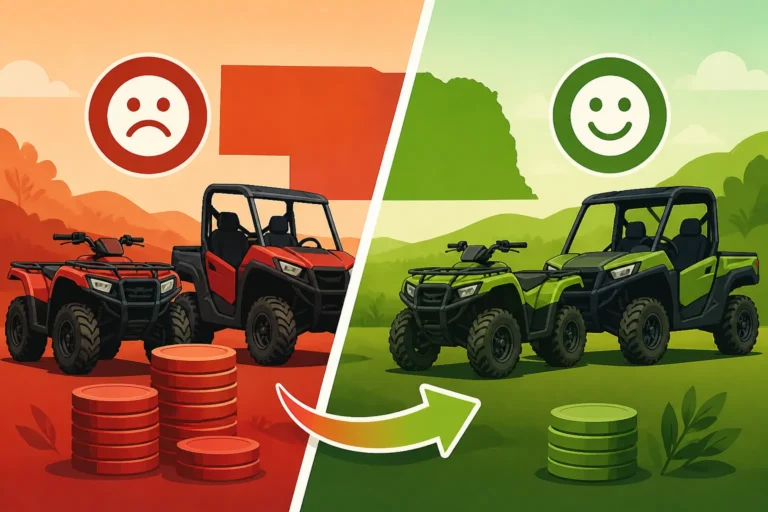
Here’s a table illustrating how a village’s stance on ATVs and UTVs on public roads might change with a successful ordinance. This kind of clear comparison can be a helpful tool in your presentation to the board.
| Feature | Current Situation (No Ordinance) | Proposed Ordinance (Example) |
|---|---|---|
| Road Access | Generally prohibited (except agricultural use) | Permitted on all village streets (or designated routes) |
| Operator Age | State rules apply (often restrictive on roads) | 16+ with valid driver's license (or 18+ for UTVs) |
| Safety Flag | Not specified for road use | Mandatory 5-foot day-glow flag |
| Lighting | Not specified for road use | Headlight, taillight, brake light (on at all times) |
| Insurance | Not required for general off-road use | Mandatory liability insurance (state minimums) |
| Speed Limit | Not applicable (as prohibited) | 30 mph or less, as posted |
| Hours of Use | Not applicable (as prohibited) | Sunrise to sunset, exception for snow removal |
| Registration | None | Village-issued annual permit/sticker |
| Purpose of Use | Agricultural or off-road recreation | General transportation, errands, property maintenance |
Disclaimer
This article is for general informational purposes only and does not constitute professional advice. Laws, prices and regulations vary by location and change over time. Consult a qualified professional for guidance on your specific situation.