Nebraska Trails With Sand
Looking for sandy ATV or UTV riding in Nebraska can be confusing: the Sandhills look wide open, but much of that land is private, fragile, or closed to motorized travel. This guide explains where to start looking for authorized sand riding, how to check access before towing, and what to prepare for once you reach the trail.
Where to Find Sand Riding in Nebraska
Start with Bessey OHV Trails near Halsey
For riders specifically seeking sandy terrain, Bessey Recreation Complex near Halsey is a natural place to investigate. The area sits in Nebraska’s Sandhills, and its designated off-highway vehicle trails offer a chance to ride in a landscape shaped by sand. It is not a license to roam across the surrounding dunes, however: stay on routes open to motorized use and follow posted signs.
Bessey is part of the Nebraska National Forest, so conditions and access can depend on trail designations, closures, and local rules. Before you leave home, confirm which routes are open and whether your machine is allowed on them. A route that looks like a convenient shortcut on a map may not be an authorized trail. For background on the riding area, see Bessey OHV Trails at Halsey in Nebraska and Nebraska National Forest Riding.
The trail network is often discussed in terms of its mileage and separate riding areas, including the hill climb and Dismal area. Those names are useful when you are planning a route, but terrain, difficulty, and conditions can vary across the complex. Read Bessey's 36 Miles in Nebraska, Bessey's Hill Climb Area in Nebraska, and Bessey's Dismal Area in Nebraska before deciding which part fits your group. The hill climb area, in particular, may not suit every rider or machine.
Treat the Sandhills as a Landscape, Not an Open Riding Area
The Sandhills cover a broad stretch of Nebraska, but the region is not one giant public OHV park. Much of it is working ranchland, and access may be controlled by private landowners or limited to specific public routes. Driving onto an unmarked track or crossing open grassland because it appears passable can damage vegetation, disturb livestock, and create conflict with landowners.
The safest approach is to separate “there is sand here” from “I am allowed to ride here.” Look for a named, designated riding area and verify that motorized use is permitted on the exact trail. If a route crosses private land, do not assume that a public road, trail app, or old online post grants permission. Where You Can Legally Ride Nebraska Sand is a useful companion when you are sorting out that distinction.
| Riding option | What to expect | What to confirm before leaving |
|---|---|---|
| Bessey OHV trails near Halsey | Designated trails in a Sandhills setting; route conditions can vary | Open routes, machine eligibility, access details, and current closures |
| A named local or private riding area | Rules and terrain depend on the operator or land manager | Permission, operating rules, reservations, and any required equipment |
| Unmarked Sandhills ground | May be private, restricted, or environmentally sensitive | Do not ride unless you have clear authorization and know the route is open |
Other Nebraska riding areas may be worthwhile for a day out without being the best match for someone whose main goal is loose sand. Compare destinations in Nebraska ATV Trails: Where to Ride, but check each area’s own rules and terrain rather than assuming every OHV trail feels like Bessey.
How to Check Access and Plan Your Route
Verify the Trail Before You Hook Up the Trailer
A frustrating trip often starts with a map that seems clear at home but turns out to show a closed route, a private track, or a road that does not permit ATVs. Check the official land-manager information and posted notices for the specific riding area before you travel. If the rules are unclear, contact the relevant office rather than relying on a social media comment or an old trail description.
Mapping tools, including onX Offroad, can help you orient yourself, compare routes, and keep track of where you are. Use onX Offroad as a planning aid—not as permission to ride. Map layers and route information can be useful, but the land manager’s current designations and signs control access. Confirm that the path you intend to use is open to motorized vehicles and appropriate for your machine.
It also helps to plan a conservative first loop. A route that looks short on a screen can take longer when sand is soft, visibility is limited, or your group needs frequent stops. Mark a turnaround point, identify the trailhead you will return to, and make sure everyone knows what to do if the group gets separated.
Check Conditions, Closures, and Trailhead Logistics
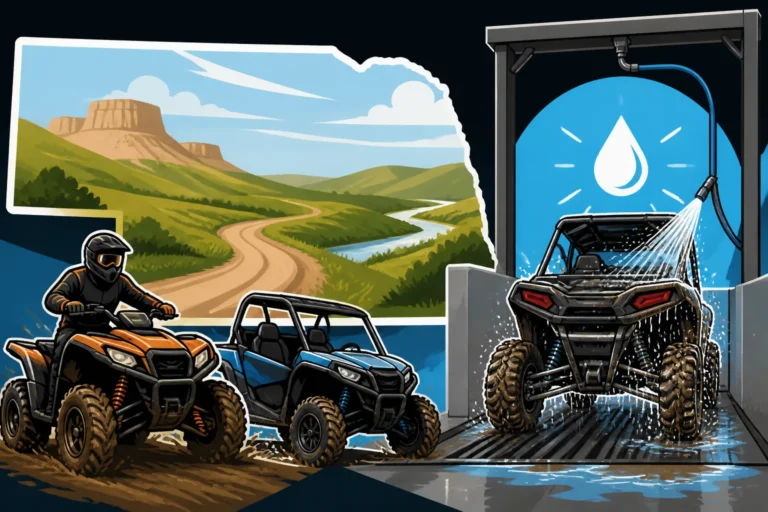
Sand changes with weather and use. Wind can move loose material across a track, rain can make some sections difficult, and heavy traffic can leave ruts or churned-up surfaces. Conditions may also differ between shaded areas, open dunes, and compacted sections. Check Nebraska Trail Conditions Before You Tow close to your departure, and be ready to change plans if the route is unsuitable.
Plan the practical details, too: where you will unload, how much room the trailer needs, where your group can park, and whether there are facilities or services nearby. Do not block a gate, road, or access point while unloading. If cell service is uncertain, save your route information offline and carry a backup navigation option. onX Offroad can help you keep a route available for reference, but do not make a phone your only navigation plan.
A useful pre-trip check includes:
- Confirm that the riding area is open and that your machine type is permitted.
- Check the route’s surface, difficulty, and any posted restrictions.
- Review weather and recent trail-condition notices.
- Save maps and important contact details before losing service.
- Tell someone where you are going and when you expect to return.
- Bring enough fuel, water, and basic recovery supplies for the outing.
For broader trip preparation, Nebraska ATV Trail Map Downloads can help you think through mapping options. Compare any downloaded or app-based route with current official information before riding.
Preparing an ATV or UTV for Loose Sand
Tires, Air Pressure, and Smooth Inputs
Loose sand can make a machine work harder than a firm gravel road. Tires may dig in instead of rolling forward, and abrupt acceleration can leave you spinning in place. The right setup depends on the machine, tire design, rider load, and conditions, so follow the manufacturer’s guidance and avoid treating a pressure recommendation from another rider as universal.
Before adjusting tire pressure, understand the limits of your tires and wheels. Lower pressure may increase the contact patch in some conditions, but going too low can raise the risk of a tire coming off the bead or a wheel being damaged. Make changes carefully, use a gauge, and carry a way to reinflate tires before returning to pavement. For a deeper discussion, see What Tires Work Best in Deep Loose Sand.
Riding technique matters as much as setup. Use steady throttle and avoid sharp, unnecessary turns in soft sections. Leave extra distance between machines so a rider ahead does not throw sand into the next rider’s face or force a sudden stop. If your machine begins to bog down, avoid repeatedly flooring the throttle; spinning tires can dig a deeper hole. Stop, assess the situation, and use a safe recovery method rather than allowing a small slowdown to become a buried machine.
Water, Heat, Visibility, and Recovery
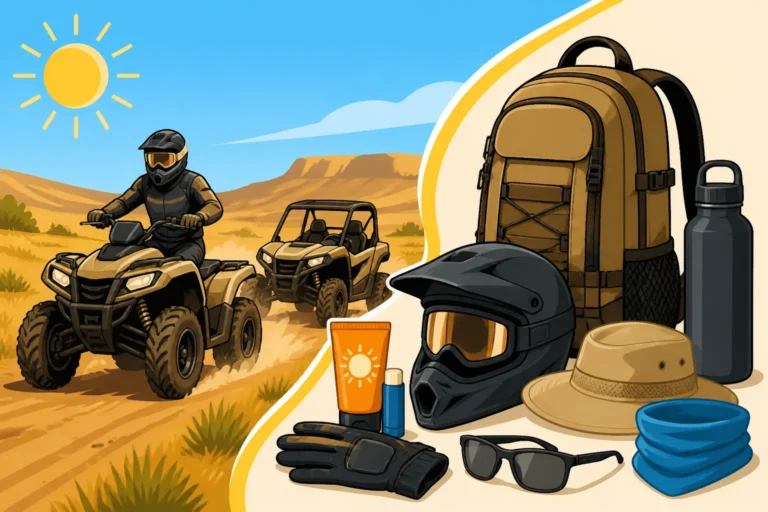
Sand riding can be physically tiring, particularly when the day is hot and the route has little shade. Bring water for every rider, not just the person carrying the cooler, and take breaks before people are exhausted. Dust and blowing sand can reduce visibility, so use eye protection that fits securely and give other machines room. A neck gaiter or similar face covering may help keep grit out, but it should not interfere with safe breathing or communication.
Recovery gear should match the terrain and your experience. A shovel, gloves, a suitable tow strap, and a winch where appropriate can help with common problems, but recovery can be hazardous if equipment is attached incorrectly or people stand in the line of tension. Agree on a simple stop-and-help procedure before the ride. Keep bystanders well clear when a machine is being pulled, and never use a strap or attachment point that is not designed for recovery.
Pack for the ride you planned, plus a reasonable delay. A basic first-aid kit, charged phone or communication device, food, water, and a way to navigate back can make an unexpected stop less stressful. The goal is not to carry every tool in the garage; it is to avoid being stranded without essentials because the group assumed a short loop could not go wrong.
Riding Responsibly and Choosing the Right Sand Route
Respect Trail Boundaries and Other Users
Staying on designated routes protects both the landscape and future access. Sandhills vegetation can be delicate, and an unauthorized track may cross private property, livestock areas, or habitat where motorized travel is restricted. Follow signs even when a bypass looks easier. If a trail is muddy, closed, or damaged, do not create a new route around it.
Share the trail with other riders, hikers, vehicles, and workers. Slow down where visibility is limited, especially around bends, trailheads, and areas where people may be walking. Keep noise reasonable near campsites and nearby homes. If you meet someone on a narrow trail, communicate clearly and pass only when it is safe. Nebraska Trail Etiquette Locals Expect offers more guidance on courteous riding.
Do not assume that an empty-looking landscape means no one else is using it. A rancher may be checking livestock, a maintenance crew may be working ahead, or another group may be approaching around a blind rise. Ride at a speed that leaves time to react, and avoid kicking up unnecessary dust around other people or vehicles.
Match the Area to Your Group
The best sand trail is not automatically the most challenging one. A first-time rider, a young passenger, or a machine carrying gear may be happier on a moderate route than on steep or deeply rutted terrain. Before choosing a loop, consider the least experienced rider and the least capable machine in the group. Keep the outing enjoyable rather than turning it into a test of who can push through the roughest section.
If you are riding with children or a mixed-experience group, set simple expectations: stay within sight, stop at agreed trail junctions, and do not pass the lead rider without permission. Make sure each person knows the meeting point if someone takes a wrong turn. A short, familiar loop is often a better first outing than a longer route chosen only because it appears to cover more ground.
For a Bessey trip, learn the layout before arriving and choose an area that suits your group’s experience. One rider may want to explore a more technical section while another prefers a steady ride, but splitting up without a clear plan can create unnecessary risk. Check in at planned stops, keep the group together when possible, and turn back if conditions or fatigue make the route less comfortable.
The most dependable way to enjoy Nebraska’s sandy riding is to plan around authorized trails, verify conditions, and ride within your group’s ability. Bessey near Halsey is a practical starting point for researching designated Sandhills riding, while careful route checks help prevent a scenic map from becoming a trespass or a difficult recovery. Use onX Offroad or another mapping tool to support your planning, then follow official access information and the signs on the ground.
Disclaimer
This article is for general informational purposes only and does not constitute professional advice. Laws, prices and regulations vary by location and change over time. Consult a qualified professional for guidance on your specific situation.