Group Size Limits on a Busy Riding Weekend
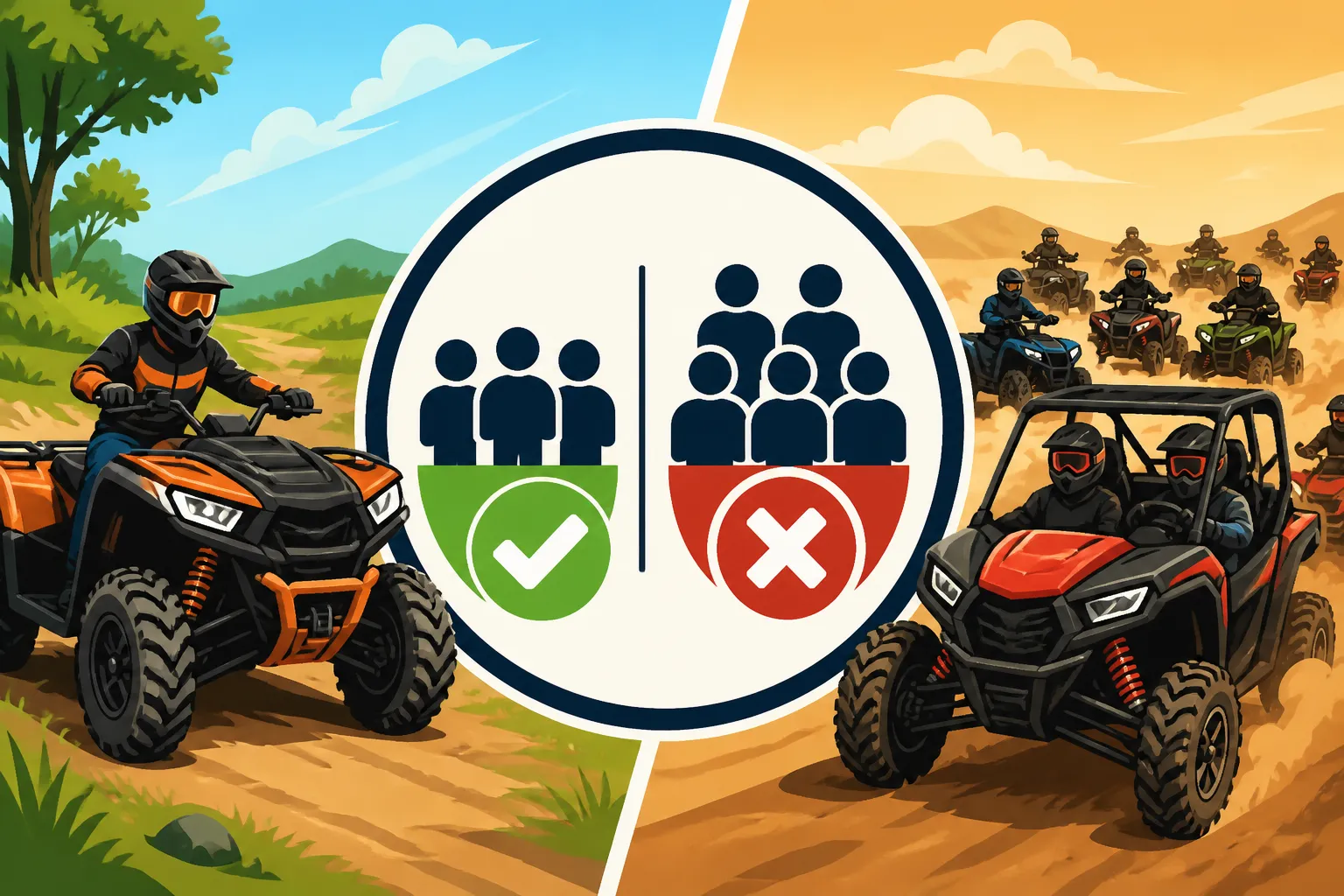
A large ATV or UTV group can turn a fun Nebraska riding weekend into a logistical headache if the trailhead is crowded or the riding area limits group size. There is no single number that applies everywhere. The practical answer depends on who manages the land, whether your ride is private or organized, and what local rules say.
Why there is no one group-size limit for Nebraska
Nebraska does not have one statewide maximum that automatically applies to every group of ATV and UTV riders. A riding area may set its own limit, require advance arrangements for organized rides, or have no posted numerical cap while still expecting groups to share trails and staging areas safely.
That distinction matters because a rule for one property does not necessarily carry over to another. A private park can set conditions for admission and riding. A public land manager may have separate rules for trail use, parking, events, or group activities. A town or county ordinance governing road use is a different question again.
A permit also does not automatically mean a group has permission to bring any number of riders. A permit may apply to a specific activity, location, date, or use. Confirm what it covers rather than assuming it guarantees space for every person and vehicle in your party. For broader background on permits and access, see Nebraska Permit Questions Riders Ask and Nebraska Has No OHV Permit or Sticker.
| Situation | What may set the limit | What to confirm before the trip |
|---|---|---|
| Public riding area | Land manager rules, trailhead capacity, event approval, or temporary closures | Whether group size is limited, and whether advance approval is needed |
| Private riding park | Park admission terms, waivers, safety rules, and operating capacity | Whether the park accepts large groups and whether reservations are required |
| Organized ride or gathering | Event requirements, land-use permission, and staging capacity | Whether the ride needs approval and what information the organizer must provide |
| Road riding | Applicable state law and local ordinances, plus ordinary safe-driving practices | Whether the road is open to ATVs or UTVs and what equipment or insurance rules apply |
| Informal ride on private land | The landowner’s permission and any conditions they set | How many machines are allowed, where they can ride, and where they can park |
The important first step is to identify the exact place where the group intends to ride. “We’re riding near Halsey” is not enough to establish which trail system, parking area, or land manager’s rules apply. A large group can use several nearby areas in one weekend, and each may have different requirements.
Do not treat a title, registration from another state, or a park entry permit as permission to ride a particular trail. Ownership documents and access rules answer different questions. Nebraska’s rules for visitors and out-of-state machines are separate from a riding area’s group policies; Nebraska Rules for a Visiting Iowa Rider is one example of the kind of issue to check if someone is traveling in from across the border.
Check the rules for the specific riding area
Before setting a head count, work out who controls the land and what kind of ride you are planning. This avoids a common mix-up: a ride that feels informal to participants can still count as an organized gathering to a land manager, campground, or private park.
Public land and managed trail areas
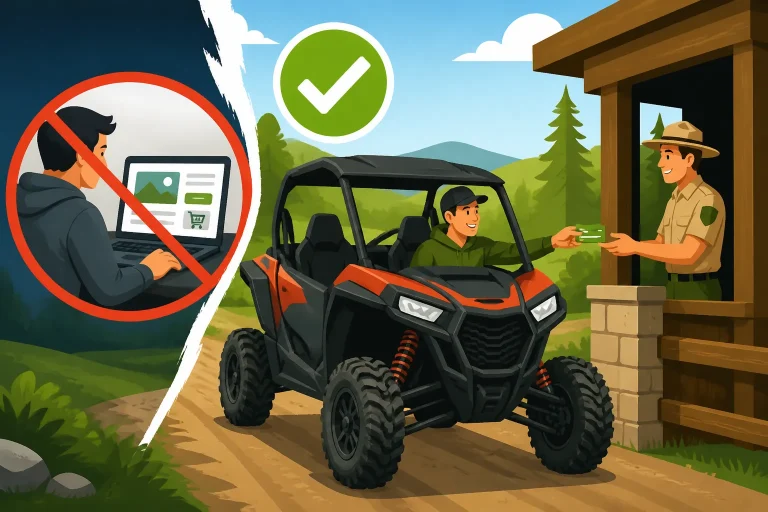
For public riding areas, check the current information from the agency or organization that manages the location. Ask whether there is a maximum number of machines or participants, whether separate limits apply to a trailhead or campsite, and whether a group needs to notify anyone ahead of time.
A trail may be open while its parking area is full, or a route may be temporarily closed even when the rest of the area remains available. Those are capacity and access problems rather than a universal statewide group limit, but they can disrupt a trip just as quickly. See Nebraska National Forest Riding for background on riding in the national forest, and verify current conditions and access details for the specific trailhead before towing there.
If your group expects to ride as part of a scheduled gathering, fundraiser, club outing, or public event, ask whether that activity needs separate authorization. Nebraska Event Permits for a Ride can help distinguish an ordinary group outing from an event that may require additional planning.
Private parks and commercial riding areas
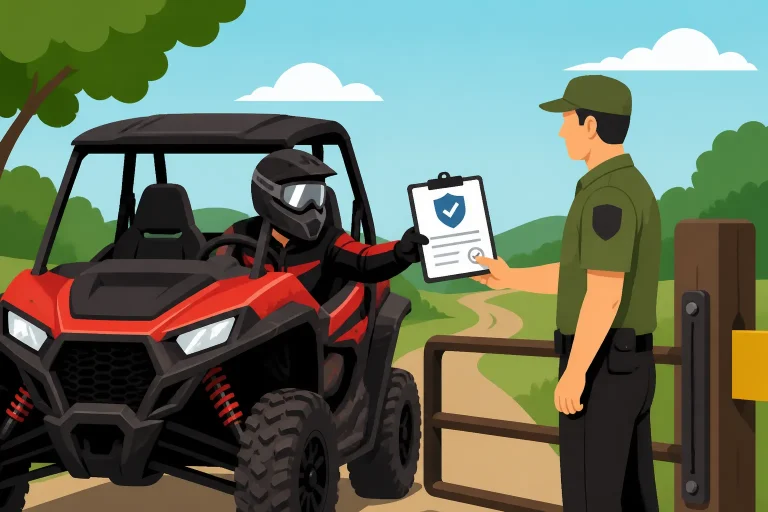
Private riding parks can set their own admission policies. They may ask groups to reserve, limit the number of machines they accept in a time slot, require each rider to complete a waiver, or impose age and passenger rules. Policies can differ between parks, so a group’s experience at one location is not a reliable guide to another.
Call or message the park with a realistic count. Include riders, machines, passengers, children, support vehicles, and anyone who plans to camp. Ask if the park counts people, machines, or both when it sets capacity. If the park uses waivers, clarify whether everyone must complete one before arrival and what a parent or guardian needs to do for a minor. Nebraska Private Park Waivers and Rules covers the types of requirements worth checking.
County roads, towns, and private land
A group-size limit for a trail does not tell you whether a road is open to ATV or UTV use. Road access can depend on state rules and local ordinances. Even if a route is legal for an individual rider, the group should confirm that each segment is open and that the machines meet applicable requirements. For road-use planning, see Nebraska Cities With ATV Ordinances and Nebraska Rules for Riding a County Road.
On private land, get permission from the landowner and ask directly about group size, parking, gates, routes, and any areas that are off limits. Do not assume that permission given to one rider extends to a whole club or a larger party. A clear answer in advance protects the landowner’s expectations and helps avoid a last-minute refusal.
Plan a busy weekend around capacity, not just head count
A group can be below a posted maximum and still overwhelm a small staging area. Count the machines and tow vehicles, not only the people. A party of riders may arrive in several trucks and trailers, need room to unload, and occupy more parking than the trailhead can comfortably handle.
Use a simple planning process:
- Choose the exact riding area. Confirm the trail system, access point, and managing agency or private operator.
- Ask about group limits and reservations. Get a clear answer about the number of people, machines, and support vehicles allowed.
- Confirm the ride’s status. Explain whether it is a private outing or an organized event, and ask whether additional approval is needed.
- Check current access and conditions. Verify closures, parking availability, and any changes that affect the planned route.
- Set a firm count and arrival plan. Tell participants where to meet, when to arrive, and what to do if the group is delayed or split.
- Have a backup location. Choose another legal riding option before the weekend rather than improvising at a full trailhead.
For a crowded weekend, contact the location early. A quick call can establish whether reservations are available, whether the group must arrive together, and whether late arrivals can still enter. Ask whether the rules apply to the whole weekend or only to specific trailheads, campgrounds, or event areas.
It is also useful to appoint one person to communicate with the land manager or park staff. If several participants call with different estimates, it can be harder to get a consistent answer. The organizer should give an honest maximum head count and update it if the plan changes.
When staging, keep the group compact and leave room for other visitors. Do not block a gate, access road, unloading lane, or marked parking space while waiting for riders. If the group cannot fit without spilling into an unsafe or prohibited area, split into smaller departure groups only if the site allows it. Smaller waves do not override a posted cap or event requirement.
Nebraska Trailheads With Trailer Parking can help with the practical question of where machines and tow vehicles can fit. For conduct once the ride starts, review Nebraska Trail Etiquette Locals Expect. Courtesy matters more when trails are busy: maintain space between machines, let faster traffic pass where safe, and avoid stopping in narrow sections.
What to do when the group is too large
If the riding area sets a limit below your expected head count, do not try to work around it by arriving in separate vehicles or describing the outing as unrelated rides. Ask the manager what arrangements are permitted. The answer might be to reserve a different time, use another staging area, reduce the group, or choose a venue built to accommodate larger gatherings.
Splitting a group can be a reasonable safety and logistics choice, but it needs to be done carefully. Confirm that each smaller group is allowed to ride independently, that the route and parking area can handle the combined traffic, and that the split does not violate event or reservation conditions. Agree on meeting points and check-in times before anyone leaves. Riders should know what to do if a machine breaks down or someone needs help.
Do not assume a larger group can simply disperse onto nearby roads or land. A road route may be closed to off-highway machines, and an open trail does not grant permission to cross private property. If the plan depends on connecting several areas, check each segment separately. Nebraska Trail Conditions Before You Tow is useful when weather or trail status could affect the backup plan.
For a club outing or a ride advertised to the public, build the capacity check into the organizing work. Give participants clear information about the allowed machine types, where to park, whether camping is part of the plan, and who has confirmed access. If the location requires event approval, do not promote the gathering as confirmed until that approval is settled.
Keep a record of the information you receive: the date you checked, the person or office contacted, the location discussed, and any conditions they gave you. This is especially helpful if rules differ between a trailhead, campground, and riding area, or if staff gives separate instructions for an event.
The safest rule is straightforward: there is no universal Nebraska group-size number to rely on. Confirm the limit, capacity, and permission requirements with the manager of the exact place you intend to ride. A little planning can prevent a full parking area, a denied entry, or an outing that puts pressure on the land and other riders.
Disclaimer
This article is for general informational purposes only and does not constitute professional advice. Laws, prices and regulations vary by location and change over time. Consult a qualified professional for guidance on your specific situation.