Nebraska Complete Stops Before Crossing
Navigating the rules for riding ATVs and UTVs on Nebraska roads can feel like trying to untangle a ball of yarn after a kitten got to it – confusing, frustrating, and seemingly designed to trip you up. One of the most critical, yet often misunderstood, regulations centers around the simple act of stopping before you cross. Many riders, eager to get from one field to another or through a small town, might treat these crossings casually, but a "complete stop" isn't just a polite suggestion; it's a non-negotiable legal requirement. This guide is here to unravel that knot, clearly explaining Nebraska's complete stop rules for ATVs and UTVs, why they exist, and how to stay safe and legal on the road.
Understanding Nebraska's Road Use Laws for ATVs
Before we dive into the specifics of stopping, it's really important to understand the broader context of why ATVs and UTVs can even be on public roads in Nebraska in the first place. This isn't like registering a car; the rules are far more restrictive and rooted in a specific philosophy. Misunderstanding this foundational principle can lead to costly mistakes.
The Core Principle: Farm and Agricultural Use
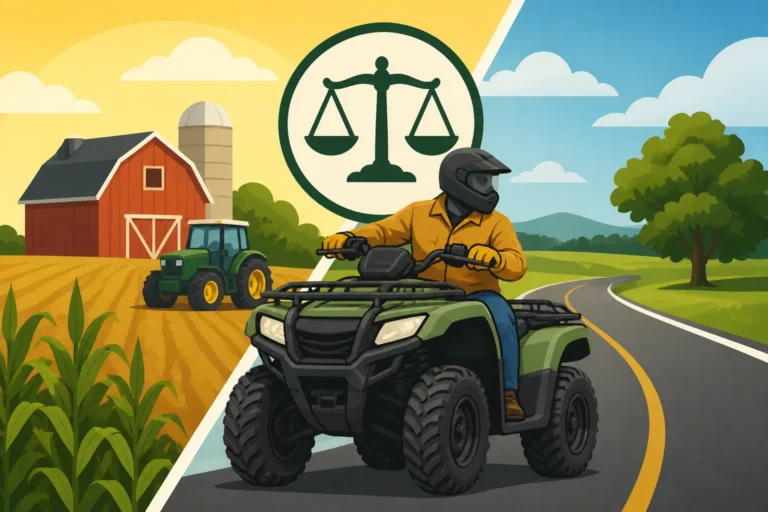
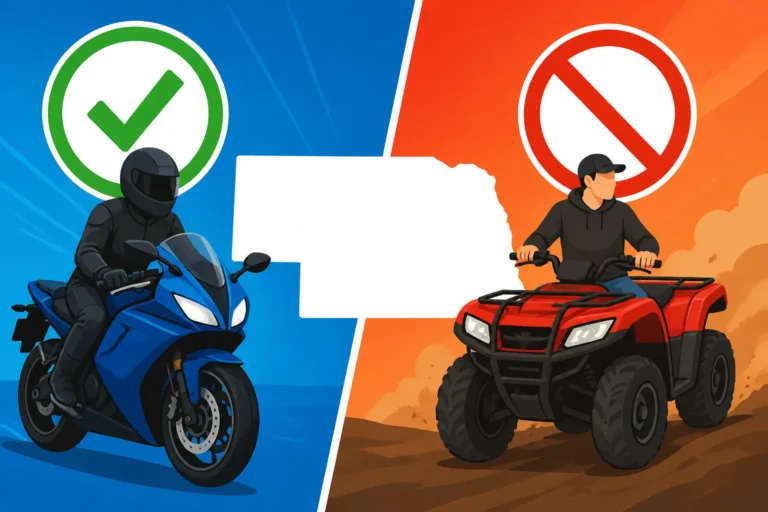
At its heart, Nebraska's approach to allowing ATVs and UTVs on public roads is deeply tied to agriculture. For generations, farmers and ranchers have needed to move their equipment, including these machines, from one parcel of land to another. The laws were crafted with this practical necessity in mind, rather than recreational riding on state highways. You won't find a blanket "street legal" designation for ATVs across Nebraska like you might for some other vehicles.
What exactly constitutes "farm use" under the law? It's generally interpreted as directly related to agricultural operations, such as tending to crops, checking irrigation systems, moving livestock, or performing other tasks essential to the farm or ranch. This means traveling from a farm headquarters to a distant field, moving between pastures, or even accessing a repair shop if the machine is primarily used for agricultural purposes. It's important to differentiate this from merely using your ATV to get to a fishing spot down a county road, even if that road passes through farmland. The intent and primary use of the machine for that specific trip matter. If you're using your quad to move hay bales from one barn to another, or [Is Checking Cattle an Agricultural Trip Under the Law?], you're likely within the spirit of the law. If you're just joyriding, even on a gravel road, you probably aren't.
Limited Exceptions: City Ordinances and County Resolutions
While agricultural use forms the primary basis for ATVs on Nebraska roads, there are other, more localized exceptions that have emerged over time. These are not statewide rules but specific decisions made by local governing bodies. This is where things can get particularly confusing, as what's legal in one town might be strictly forbidden in the next.
Many cities and a few unincorporated villages within counties have taken the initiative to pass their own ordinances or resolutions allowing ATVs and UTVs on their specific streets. These local laws come with their own set of conditions, which often include city-specific registration, insurance requirements, age restrictions, and designated routes. For example, a town like Yutan might have specific hours or streets where ATVs are permitted, requiring a special permit from City Hall. [Nebraska City Ordinances That Open Streets] offers some great context here. It's crucial for riders to understand that simply because a neighboring town has an ordinance doesn't mean your town does, or that the rules will be the same. Before you even think about putting tires on city streets, you absolutely must check with that specific municipality's city clerk or website. Relying on hearsay from a buddy could lead to a quick conversation with law enforcement.
The "Complete Stop" Rule at Intersections and Crossings
Now that we understand when ATVs and UTVs might legally be on Nebraska roads, let's get into the specifics of how they must behave, particularly at intersections and crossings. This isn't just about following the rules; it's about genuine safety, not just for you, but for everyone else on the road.
Why Complete Stops Are Mandatory
The requirement for ATVs and UTVs to make a complete stop at intersections and before crossing any public road isn't arbitrary. It's rooted firmly in safety. Unlike cars or trucks, ATVs are generally smaller, lower to the ground, and can be harder for other drivers to spot, especially in rural areas where speeds are higher and visibility might be limited by crops or terrain. Their maneuverability, while great off-road, can sometimes be unpredictable on pavement, and their braking distances might differ significantly from a standard vehicle.
Imagine pulling your quad out from a field access road onto a busy county highway. If you don't come to a full, unequivocal stop, you're relying purely on reaction time and luck to avoid a collision. Other drivers might not expect a smaller, often camouflaged vehicle to suddenly appear. A complete stop gives you, the rider, the critical time to assess traffic in both directions, gauge speeds, and ensure a clear path before proceeding. It minimizes the risk of pulling out in front of a fast-approaching vehicle that simply didn't see you. This isn't just about avoiding a ticket; it's about preventing serious injury or worse.
What Constitutes a "Complete Stop" for an ATV
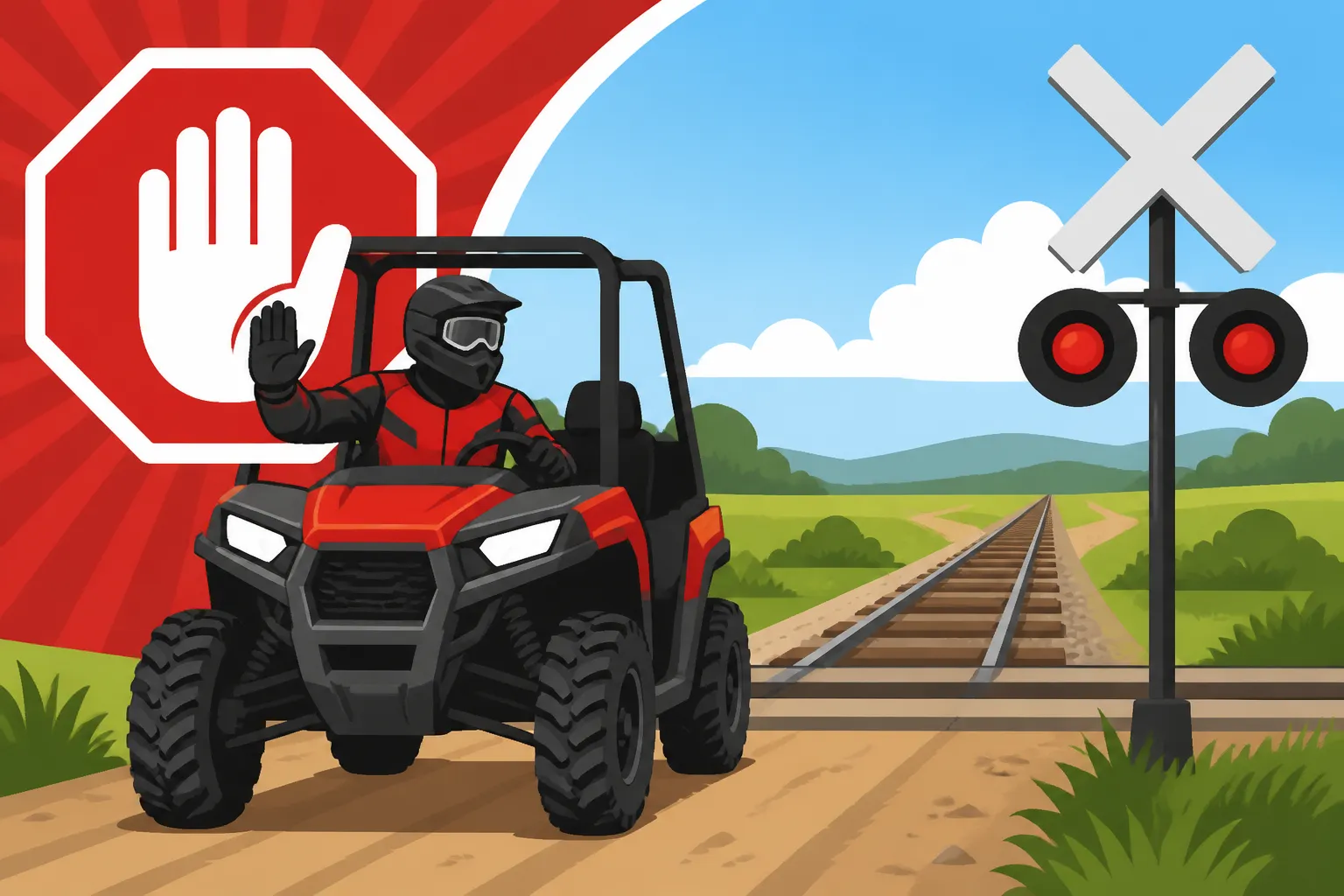
So, what exactly does "complete stop" mean when you're on a four-wheeler? It's more than just slowing down significantly or rolling through a stop sign. A complete stop means that your ATV's wheels must cease rotating entirely, even if only for a fraction of a second, before you proceed. Think of it as a momentary pause, a brief but absolute cessation of forward movement.
A common mistake riders make is performing a "rolling stop," where they slow down considerably but never quite bring the machine to a full halt. On a gravel road, where traction can be iffy, it might feel safer to keep a little momentum, but legally, that's not a complete stop. When a deputy observes you at a crossing, they're looking for that definite pause. You should be able to feel the machine come to rest, even if it's only for a second or two, before you re-engage the throttle. This pause allows you to deliberately scan for traffic, listen for approaching vehicles that might be obscured by a hill or trees, and then make an informed decision about when it's safe to proceed. Treat every stop sign, every field approach, and every road crossing as if there's a patrol car observing you – because safety demands it, and you never know when there might actually be one.
Navigating Different Types of Crossings
The "complete stop" rule is universal for ATVs and UTVs on Nebraska roads, but how you then proceed after that stop can vary slightly depending on the type of crossing. These nuances are important for both legality and, more importantly, your personal safety.
Crossing at a Ninety-Degree Angle
One of the most specific and often overlooked requirements for ATVs and UTVs when crossing a highway in Nebraska is the ninety-degree angle rule. This isn't just about stopping; it's about the geometry of your crossing. You're not allowed to ride parallel to the highway for any distance, even after stopping, before turning across.
Instead, once you've come to that complete stop and verified that the path is clear, you must proceed directly across the highway, forming as close to a ninety-degree angle with the road as possible. This means a swift, perpendicular movement from one side to the other. Why this specific angle? It minimizes the time your machine is vulnerable in the flow of traffic and makes your intentions clear to other drivers. If you're trying to angle your way across, or ride down the shoulder a bit before making a wider turn, you're increasing your exposure and creating a more ambiguous situation for oncoming vehicles. [Crossing a Highway at a Ninety-Degree Angle] is a critical concept here. It's a quick, decisive maneuver, not a leisurely traverse. This rule reinforces that ATVs are allowed to cross certain roads, not to travel on them extensively, especially major arteries.
Yielding at Every Crossing
Beyond the complete stop and the ninety-degree angle, there's another fundamental rule that governs ATV behavior at any road crossing: you must yield to all other traffic. This means that even if you've stopped, looked both ways, and assessed the situation, if another vehicle is approaching, you absolutely do not have the right of way. Their safety, and your own, depends on you letting them pass.
This yielding requirement is paramount because ATVs are considered secondary vehicles on public roads, allowed there only under specific circumstances. You are essentially a guest on the pavement. This applies whether you're at a stop sign, a less-controlled intersection, or simply emerging from a field access. Always assume other vehicles have the right of way. This often means waiting longer than you might if you were in a car, especially on busy county roads where vehicles might be traveling at high speeds. It's better to wait for a truly clear opening than to force your way into traffic. The rule [Nebraska Yielding at Every Crossing] exists to prevent collisions by placing the burden of caution squarely on the ATV operator, recognizing the inherent differences in size, speed, and visibility between ATVs and other vehicles.
Safety Equipment and Road-Use Requirements Beyond the Stop
Making a complete stop is fundamental, but it's only one piece of the puzzle for safe and legal ATV road use in Nebraska. Several other equipment and operational requirements work hand-in-hand with the stop rule to ensure riders are as visible and predictable as possible when sharing the road.
Visibility Requirements
When you're riding an ATV or UTV on a public road, being seen is just as important as stopping. These machines are often smaller and blend into rural landscapes more easily than a car. That's why Nebraska law mandates specific visibility equipment. First and foremost, you need proper lighting: a headlight that emits a white light visible from at least 500 feet to the front, and a taillight that emits a red light visible from at least 500 feet to the rear. This isn't just for night riding; [Nebraska Requires Head and Tail Lights] applies whenever you're on a public road, even during daylight hours. Always assume your lights should be on.
Beyond lights, the law often specifies a safety flag. This flag must be orange, triangular, and at least 30 square inches in size, mounted on a pole that extends at least 5 feet above the ground. [Nebraska's 5-Foot Safety Flag Rule] might seem like a small detail, but it makes a huge difference. That flag elevates your presence, making your machine much more noticeable over hills, around bends, or above tall crops. Imagine a semi-truck driver cresting a hill; a 5-foot flag waving above your ATV could be the first, crucial warning sign that you're there, giving them precious extra seconds to react. Many riders find useful accessories from companies like SuperATV to ensure their machines are properly equipped and highly visible, from aftermarket lights to durable flag mounts.
Speed Limits and Daylight Restrictions
Even when all other conditions are met – proper use, local ordinance, full stop, yielding, and visibility gear – there are still critical operational limitations on ATVs and UTVs on Nebraska roads. The most important of these is speed. ATVs and UTVs are strictly limited to a maximum speed of 30 mph when operating on public roads. [Nebraska's 30 mph Road Limit] is not a suggestion; it's a hard limit. Exceeding this speed not only increases your risk of an accident but also subjects you to citations. This speed restriction is in place because these machines are not designed for sustained high-speed road travel and their handling characteristics differ significantly from street vehicles.
Furthermore, most ATV road use is restricted to daylight hours, specifically from sunrise to sunset. This reinforces the visibility requirements and acknowledges that ATVs are generally less visible and less predictable in the dark. There is, however, a very specific and narrow exception for snow removal operations, where you might see an ATV or UTV with proper lighting out after dark. But for general use, plan your trips to conclude before dusk. [Sunrise to Sunset Only] should be your guiding principle for recreational or farm-related road travel.
Penalties and Best Practices for Safe Road Use
Understanding the rules is the first step, but adhering to them is paramount. Ignoring the "complete stop" rule or any other regulation can lead to consequences that range from inconvenient to devastating. Beyond the legal ramifications, there are proactive steps every rider can take to ensure maximum safety.
Consequences of Non-Compliance
Let's be blunt: failing to make a complete stop, not yielding, or otherwise violating Nebraska's ATV road use laws can quickly turn a fun outing or necessary farm chore into a headache. The most immediate consequence is often a traffic citation, which comes with fines and potential court costs. These aren't just minor parking tickets; depending on the severity of the infraction, they can be substantial. [Nebraska Penalties for Illegal Road Riding] are in place for a reason.
Beyond fines, repeated violations or more serious offenses could lead to your machine being impounded, or in extreme cases, even legal action against your driving privileges, even if the ATV doesn't require a driver's license for off-road use. And of course, the most severe consequence is always an accident. Failing to stop or yield dramatically increases the likelihood of a collision, which can result in serious injuries, property damage, and extensive liability claims. It's a risk simply not worth taking. Deputies in rural Nebraska are well aware of the ATV road rules, and they are prepared to enforce them to protect public safety.
Riding Smart and Being Prepared
Being a responsible ATV or UTV operator on Nebraska roads goes beyond merely avoiding a ticket. It's about cultivating a mindset of safety and preparedness. Before every trip that involves road use, even short crossings, make a plan. Know your route, understand the local ordinances if you're in a city or village, and communicate your intentions with any riding partners. Equip your machine with quality, reliable components, perhaps even exploring options from SuperATV for enhanced lighting or more robust safety flags.
Always assume that you are less visible to other drivers, and ride defensively. Wear appropriate safety gear, including a helmet, eye protection, gloves, and sturdy footwear. Carry a copy of your ATV's title, proof of insurance (if applicable for road use), and any local permits. [Nebraska Insurance Proof for Road Use] is not just a suggestion for road travel, it's a requirement under specific circumstances. Even if not legally mandated for your specific journey, having adequate insurance coverage can be a lifesaver in the event of an unforeseen incident. By planning ahead, maintaining your machine, and always prioritizing safety over convenience, you can significantly reduce risks and ensure your adventures stay enjoyable and incident-free.
Summary of Nebraska ATV/UTV Road Crossing Requirements
Understanding these specific requirements for ATVs and UTVs on Nebraska roads is crucial for both safety and legal compliance. Here's a quick overview of the key actions required when approaching a public road or intersection:
| Requirement | Description | Legal Justification | Best Practice |
|---|---|---|---|
| Complete Stop | Vehicle's wheels must cease rotation entirely before proceeding into or across traffic. | Mandated for all vehicles at stop signs/intersections; critical for ATV safety. | Pause for at least 2-3 seconds, feeling the machine come to a full rest. |
| Yield to All Traffic | After stopping, ATVs must wait for a clear opening, allowing all other vehicles to pass. | ATVs are secondary vehicles on public roads; safety priority. | Always assume other vehicles have the right of way, even if you stopped first. |
| Ninety-Degree Crossing | When crossing a highway, proceed directly across at a perpendicular angle, not at an angle or along it. | Minimizes exposure in traffic flow; clearly communicates intent. | Make a swift, direct path across the road once it's clear. |
| Visibility Equipment | Headlight (white, 500 ft front), taillight (red, 500 ft rear), and 5-foot orange triangular safety flag. | Ensures ATV is seen by other drivers; reduces collision risk. | Keep lights on at all times on public roads; ensure flag is properly mounted and visible. |
| Speed Limit | Maximum 30 mph on all public roads where ATV use is permitted. | ATVs not designed for high-speed road travel; enhances control. | Adhere strictly to 30 mph, even if conditions seem clear. |
| Daylight Use Only | Most road use restricted to sunrise to sunset, with a specific exception for snow removal. | Enhances visibility during natural light hours; improves safety. | Plan trips to conclude before dusk to avoid violations. |
Disclaimer
This article is for general informational purposes only and does not constitute professional advice. Laws, prices and regulations vary by location and change over time. Consult a qualified professional for guidance on your specific situation.