How Big the Triangular Safety Flag Has to Be
Riding your ATV or UTV on public roads in Nebraska can feel like navigating a maze, full of specific rules and frustrating ambiguities. Many riders, especially those new to the state or just getting into the sport, scratch their heads wondering what’s truly required to stay on the right side of the law, particularly when it comes to visibility equipment like the safety flag. This guide is here to clear up the confusion, explaining precisely what Nebraska law demands for that crucial triangular safety flag and other street-legal essentials for your off-highway vehicle.
The Basics of ATV/UTV Road Use in Nebraska
Nebraska's approach to ATVs and UTVs on public roads is definitely unique, often causing a bit of a headache for riders trying to understand the rules. It’s not as straightforward as just getting a license plate and hitting the pavement.
Why Nebraska's Rules Exist and Why They're Tricky
At its heart, Nebraska law prioritizes safety and the flow of traditional vehicle traffic. While many states have moved towards more liberal street-legal provisions for ATVs and UTVs, Nebraska largely restricts them from public roads, except under very specific circumstances. The primary exception has always been for agricultural purposes, recognizing that these machines are vital tools for farmers and ranchers to move between fields, check livestock, and manage their land. This focus on agriculture means the state hasn't embraced widespread recreational road use.
The trickiness comes in because there isn't a blanket "yes" or "no" for the entire state. While state law sets the general framework, it also grants local municipalities – cities and villages – the power to create their own ordinances to open specific streets to ATVs and UTVs. This patchwork approach means what's legal in one town might get you a ticket in the next, making it essential to do your homework for every community you plan to ride in. It's easy to get frustrated when the rules seem to shift from one county line to the next, but understanding the underlying reasons can help you navigate them more effectively.
When You Can Legally Ride on Public Roads
Despite the general restrictions, there are distinct situations where you can legally operate your ATV or UTV on Nebraska's public roads. These exceptions are critical for riders to understand to avoid citations.
First and foremost is agricultural use. If you're using your machine for bona fide farm or ranch operations—think driving from one field to another, taking supplies to a pasture, or [Is Checking Cattle an Agricultural Trip Under the Law?]—then the state allows for road travel. This isn't a free pass for a joyride; it's strictly for work-related tasks.
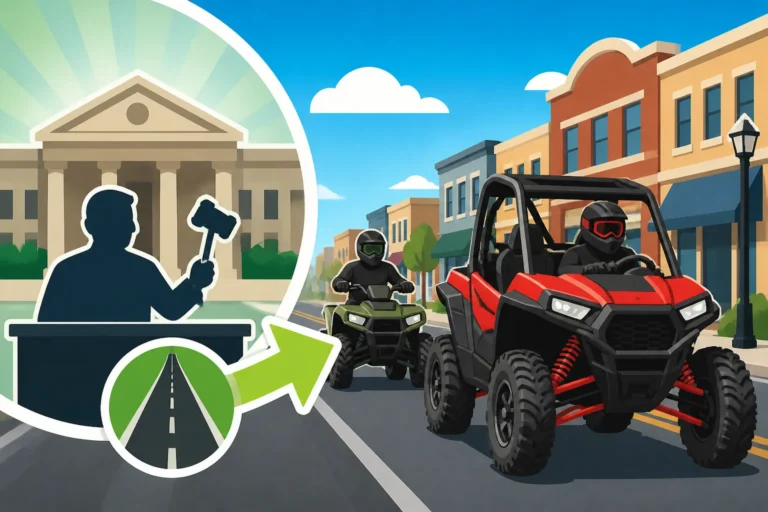
Secondly, some cities and villages have passed local ordinances to allow ATVs and UTVs on their streets. These ordinances often come with their own set of rules, such as specific hours of operation, age limits, and local registration fees. Before you even think about riding in a town, it's absolutely crucial to check their specific laws. You might find that a short drive through an unincorporated village is fine, while the main street of a larger city is completely off-limits. You can learn more about how this works by reading [How a Town Ordinance Opens Its Streets to ATVs].
Lastly, state law allows for crossing public roads and highways, but only under very specific conditions. You can't just drive down the middle of a state highway, but you can typically cross it at a 90-degree angle from one property to another, provided you come to a complete stop and yield to all traffic first. These crossings are meant to facilitate access, not extended travel.
The "Not To Be Registered" Notation and What It Means for Road Use
One of the most common points of confusion for new ATV and UTV owners in Nebraska comes from the title itself. Unlike cars, trucks, or motorcycles, Nebraska titles ATVs and UTVs but does not require them to be registered for general road use. This is a critical distinction and often leads to the phrase "Not To Be Registered" prominently displayed on your title document.
What does this mean in practical terms? It means your off-highway vehicle won't have a traditional license plate issued by the state. This is a big reason why other safety measures, like the triangular safety flag, become so important when you're operating one of these machines on a public road, even under an allowed exception. Without a visible license plate, the state relies on other forms of identification and high-visibility equipment to ensure safety and enforce laws. This also explains [Why a Titled ATV Still Has No Plate] and why you won't be paying annual registration fees for most recreational riding scenarios. It's a system designed to categorize these vehicles primarily for off-road or agricultural utility, rather than street legal transportation.
Understanding the Nebraska Safety Flag Requirement
When you're cleared to operate your ATV or UTV on a Nebraska public road—whether for farm work or within an approved local ordinance—one piece of equipment is non-negotiable for visibility: the safety flag. It’s not just a suggestion; it’s a specific legal requirement designed to enhance your safety and the safety of others sharing the road.
The Core Purpose of the Safety Flag
The primary reason for the safety flag requirement is simple: visibility, especially on roads shared with much larger and faster-moving vehicles. ATVs and UTVs, by their nature, sit low to the ground. This can make them incredibly hard to spot for drivers of cars, trucks, and even semi-trucks, particularly over hills, around bends, or in dusty conditions. A driver coming over a rise might not see your low-profile machine until it's too late.
The safety flag serves as a bright, elevated indicator of your presence. By extending significantly above the machine, it signals to other motorists that there's a smaller vehicle ahead, even if they can't see the machine itself yet. This early warning gives other drivers more time to react, slow down, and adjust their position, drastically reducing the risk of a collision. It's all about making your off-highway vehicle as conspicuous as possible when it briefly enters the traditional traffic flow, directly addressing the safety concerns that come with mixing different types of vehicles on public thoroughfares.
Specific Dimensions and Material for the Flag
Nebraska law is quite precise about the specifications of this safety flag, leaving little room for guesswork. According to statute 60-6,356, the flag must meet several key criteria to be compliant.
First, it must be "day-glow orange." This isn't just any orange; it's a specific, highly fluorescent shade designed to stand out vividly against most backgrounds, even in low light conditions or against natural landscapes like fields and trees. This color is internationally recognized for high visibility and emergency signaling.
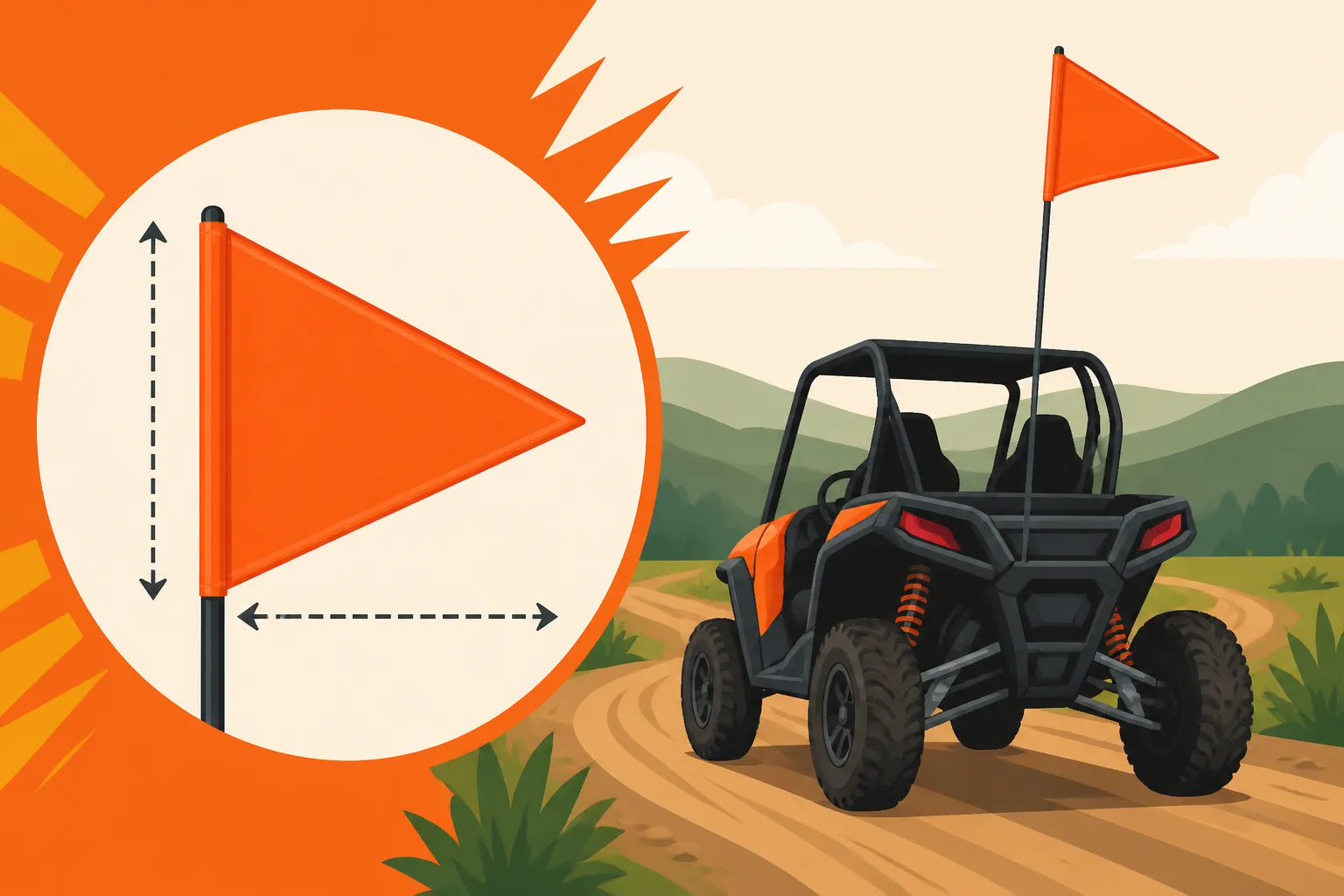
Second, the flag itself must have a minimum surface area of 30 square inches. This means a flag that is, for example, 5 inches by 6 inches, or 4 inches by 7.5 inches, would meet the minimum. However, many riders opt for larger flags for even better visibility. The shape is specified as triangular, which also helps it cut through the wind and remain distinct. The rule about [Day-Glow Orange and the 30-Square-Inch Flag Rule] emphasizes these exact requirements.
Perhaps most critically, the flag must be mounted on a staff that is at least five feet above the ground when measured from the bottom of the ATV or UTV's tires to the top of the flag. This "5 feet Above the Ground" requirement is what ensures the flag can be seen over obstructions and by drivers in taller vehicles. You'll want to carefully measure your machine and chosen flag pole to ensure it reaches this minimum height when mounted. Many aftermarket companies, like SuperATV, offer complete flag kits that are designed specifically to meet these types of state requirements, often with telescoping poles or robust mounting brackets to ensure stability and compliance.
Attaching the Flag: Practical Considerations
Meeting the legal requirements for the safety flag isn't just about having the right flag; it's also about how you attach it to your ATV or UTV. Proper mounting is crucial for both compliance and safety.
The flag should always be mounted at the highest point of your machine, typically at the rear. This position ensures maximum visibility to vehicles approaching from behind, which is often the direction of greatest risk when riding on a road. Many riders choose a sturdy mount that attaches directly to the rear rack or roll cage of a UTV. You want something that can withstand wind resistance at speeds up to the 30 mph limit and vibrations from road travel without snapping or coming loose.
When selecting a flag pole, consider materials like fiberglass or flexible plastics, as these can flex without breaking. While a rigid metal pole might seem more durable, it could become a hazard in an accident or if it snags on something. Brands like SuperATV provide robust flag mounting options that are designed for the rigors of off-road and limited on-road use, ensuring your flag stays put and visible. It's a good idea to periodically check the flag and its mounting hardware for wear and tear, especially if you ride frequently or in harsh conditions. A broken or missing flag is just as non-compliant as not having one at all.
Other Essential Equipment for Road-Legal Riding
The safety flag is just one piece of the puzzle for legal ATV/UTV road use in Nebraska. There are several other critical requirements concerning lighting, insurance, licensing, and operational rules that riders must adhere to. Ignoring these can lead to fines, inconvenience, and even serious safety risks.
Lighting Requirements
Visibility isn't just about daylight; it's about being seen at all times when operating on a public road. Nebraska law mandates specific lighting for ATVs and UTVs when they are authorized for road use.
Your machine must have at least one headlight that emits a white light visible from a distance of 500 feet to the front. This is crucial for both seeing where you're going and being seen by oncoming traffic. Additionally, you need at least one taillight that emits a red light visible from 500 feet to the rear. This ensures that vehicles approaching from behind can spot you. If your machine has brake lights, they should also be functional and clearly indicate when you're slowing down or stopping.
It’s important to remember the rule about [Sunrise to Sunset and a Snow Exception]. Generally, ATV/UTV road use is restricted to daylight hours, but there's a specific exception for clearing snow after dark. Even during daylight hours, having your headlights on can significantly improve your visibility to other drivers, making you stand out more effectively. Regularly check all your lights to ensure they are working properly before any road excursion.
Insurance and Licensing
Just like with cars, operating an ATV or UTV on a public road in Nebraska requires you to be properly licensed and insured. These aren't optional; they're fundamental legal requirements.
You must possess a valid Class O operator's license (the standard driver's license) or a farm permit if you are operating the machine solely for agricultural purposes. Simply having an ATV safety course certificate or being of a certain age isn't enough; you need a state-issued driving credential. The law specifically states [Nebraska Requires a Class O License or Farm Permit], making this a critical point for all riders.
Furthermore, [Nebraska Requires Liability Insurance on Roads]. This means you must carry an insurance policy that provides liability coverage for your ATV or UTV, protecting you financially in case you cause an accident resulting in injury or property damage to others. The minimum coverage amounts are set by state law and are comparable to what's required for other motor vehicles. It's also worth noting that [Nebraska Insurance Minimums From 2027] are set to increase, so it's wise to stay informed about these changes and ensure your policy remains compliant. Always carry proof of insurance with you when riding on public roads.
Speed Limits and Crossing Rules
Beyond equipment and credentials, there are strict operational rules for ATVs and UTVs on Nebraska roads, primarily focused on speed and how you interact with other traffic.
The most critical rule is the speed limit: you cannot exceed 30 mph when operating an ATV or UTV on a public road, even if the posted speed limit for cars is higher. This specific limit is detailed in [30 mph at Most]. This restriction reflects the inherent design and handling characteristics of these machines, which are not built for sustained high-speed road travel.
When it comes to crossing highways, the law is equally clear: you must cross at a ninety-degree angle to the roadway, meaning you go straight across, not diagonally or at a shallow angle. This minimizes the time you spend in traffic lanes and maximizes visibility. [Crossing a Highway at a Ninety-Degree Angle] is a critical maneuver to master. Before crossing, you are also required to come to a complete stop and yield to all vehicular traffic on the highway. Your machine must yield the right-of-way to everything else on the road, emphasizing the auxiliary nature of ATV/UTV road use. As stated in [Nebraska Yielding at Every Crossing], safety is paramount, and you are expected to defer to all other traffic.
Navigating Local Ordinances and Agricultural Exemptions
The landscape of ATV and UTV use on Nebraska roads isn't uniform. While state law provides general guidelines and agricultural exemptions, the real variability comes into play at the local level. Understanding how local ordinances work and what truly constitutes agricultural use is essential for legal riding.
How Cities and Villages Open Roads
State law provides a framework where cities and villages have the authority to create their own ordinances or resolutions to permit ATVs and UTVs on certain public roads within their municipal boundaries. This is a crucial distinction, as it means local governments can carve out specific areas for legal operation that might otherwise be off-limits under general state statutes.
For example, a small village might pass a resolution to allow residents to use their UTVs on all streets and alleys within the village limits, perhaps for accessing local businesses or neighboring farms. These local rules often come with their own set of specific conditions, such as:
- Designated Streets: Not all streets might be open; some ordinances specify only certain routes or exclude state highways that pass through town.
- Operating Hours: Restrictions on night riding might be included, even with proper lighting.
- Local Permits/Fees: Some towns require an annual registration permit and a fee, distinct from any state titling. [Nebraska City Registration Fees for a UTV] could be one such cost.
- Age and Licensing: While state law requires a Class O license, a city might have specific rules for youth riders even if accompanied by an adult.
It is absolutely paramount that before you ride your ATV or UTV on any city or village street, you take the time to inquire directly with that municipality's city hall or county clerk's office. You can't assume that because a neighboring town allows it, your intended riding spot will too. A great starting point is to conduct [Nebraska Ordinance Lookups Before You Ride] online or by phone. This proactive step can save you from a costly ticket or an unfortunate encounter with local law enforcement.
Agricultural Use: What Truly Qualifies?
The agricultural exemption is a cornerstone of ATV and UTV road use in Nebraska, recognizing these machines as indispensable tools for the state's farming and ranching communities. However, this exemption isn't a blanket permission slip for recreational riding. It has specific boundaries.
To qualify for the agricultural exemption, your use of the ATV or UTV on a public road must be "directly related to agricultural operations." This is a key phrase. It covers activities such as:
- Transporting tools or supplies: Moving from the farmstead to a field or a remote pasture with equipment.
- Checking livestock or crops: Driving along county roads to monitor herds or inspect fields. This directly ties into the guidance on [Is Checking Cattle an Agricultural Trip Under the Law?].
- Moving between adjacent parcels of land: If your property is bisected by a public road, crossing it or traveling short distances to access another part of your farm.
What it generally doesn't cover is riding for purely recreational purposes, such as taking a Sunday drive for fun, commuting to a non-farm job, or visiting friends who are not part of the agricultural operation. Even if you live on a farm, an afternoon joyride on county roads is likely not covered by the agricultural exemption. Law enforcement officers are generally well-versed in what constitutes legitimate agricultural use versus recreational riding, so it's best to err on the side of caution and ensure your road travel truly aligns with farm or ranch work.
Penalties for Non-Compliance
Riding an ATV or UTV on a public road without adhering to Nebraska's state laws and any applicable local ordinances can lead to a range of penalties, some of which can be quite severe. Ignorance of the law is generally not a valid defense, making proactive understanding essential.
Common penalties for illegal road riding can include:
- Fines: These can range from minor infractions to significant sums, depending on the nature and severity of the violation. Each specific violation (e.g., no flag, no insurance, speeding) can carry its own fine.
- Points on Your Driving Record: Depending on the violation, it might result in points being assessed against your driver's license, which can impact your insurance rates.
- Impoundment of Your Machine: In more serious or repeat offenses, law enforcement has the authority to impound your ATV or UTV. This means additional fees for towing and storage, on top of any fines, to get your machine back. This is detailed in [Nebraska Penalties for Illegal Road Riding].
- Court Appearances: You may be required to appear in court to address the citation, incurring further time and potential legal costs.
To minimize these risks, always ensure your machine is equipped correctly, you have the necessary documentation (license, insurance proof, title copy), and you are following all applicable state and local rules. When stopped, be polite and cooperative, and present the [What Paperwork a Deputy Can Ask to See] without delay. Being prepared and compliant is your best defense against potential penalties.
Practical Tips for Safe and Legal Road Riding
Once you understand the regulations, the next step is to integrate them into your riding habits to ensure every road trip, no matter how short, is both safe and legal. It's about more than just avoiding a ticket; it's about protecting yourself and others.
Pre-Ride Checks and Maintenance
Before you even think about putting a tire on a public road, a thorough pre-ride check of your ATV or UTV is paramount. This isn't just good practice; it's a critical safety measure, especially for machines that might see varying use off-road and on.
Here’s a quick checklist:
- Lights: Confirm all headlights, taillights, and brake lights are fully functional and clean. A burned-out bulb means you're non-compliant and less visible.
- Tires: Check tire pressure. While you might air down for off-road traction, you'll want appropriate pressure for road surfaces to ensure stable handling and control.
- Safety Flag: Ensure your day-glow orange flag is securely mounted and extends the full 5 feet above the ground. Check for tears or fraying in the flag material and make sure the pole is intact. If it's a two-piece pole, make sure it's fully extended and locked into place.
- Brakes: Test both front and rear brakes to confirm they are responsive and effective.
- Steering: Ensure the steering feels tight and responsive, with no excessive play.
- Fluids: Quick check of oil and coolant levels can prevent unexpected breakdowns.
Beyond the machine, consider your own gear. Brightly colored clothing can significantly enhance your personal visibility, even with the safety flag. Think high-visibility vests or jackets, especially if you're riding near dawn or dusk.
Staying Visible and Aware on Roads
Even with a proper safety flag and working lights, riding an ATV or UTV on a public road inherently requires a higher level of caution and defensive driving than operating a larger vehicle.
Here are some strategies to maximize your safety and awareness:
- Assume You Are Unseen: The golden rule for any smaller vehicle on the road. Always assume other drivers haven't seen you, even if you make eye contact. This proactive mindset keeps you alert and prepared to react.
- Maintain Distance: Keep a generous following distance from vehicles ahead of you. ATVs and UTVs often have different braking characteristics than cars, and loose gravel on county roads can extend stopping distances.
- Scan Continuously: Your eyes should be constantly moving, scanning ahead, to the sides, and frequently checking your mirrors for traffic approaching from behind.
- Mind the Edges: When riding on gravel county roads, you'll be sharing the space with larger, faster vehicles like grain trucks during harvest. Be particularly aware of dust plumes and the need to pull over if a larger vehicle approaches quickly. [Sharing a Gravel Road With Grain Trucks at Harvest] highlights this exact scenario.
- Reflective Tape: Consider adding reflective tape to the sides and rear of your ATV or UTV, especially if you anticipate riding near dawn, dusk, or in areas with limited street lighting. This simple addition, as discussed in [Adding Reflective Tape to an ATV for Road Use], can dramatically increase your visibility to headlights.
Where to Get Compliant Gear
Finding the right equipment to ensure your ATV or UTV is road-legal in Nebraska doesn't have to be a scavenger hunt. Many retailers, both online and brick-and-mortar, offer products designed to meet state requirements.
When it comes to the safety flag, look for kits that explicitly state they meet the day-glow orange, 30-square-inch, and 5-foot height requirements. Manufacturers like SuperATV are well-known in the aftermarket world for producing a wide range of ATV and UTV accessories, including safety flags and lighting kits that are designed with compliance in mind. They often provide details on dimensions and mounting options, making it easier to select the right product.
For lighting, ensure any aftermarket headlights or taillights are DOT (Department of Transportation) compliant if you're installing new ones. This ensures they meet minimum brightness and beam pattern standards. When purchasing any road-related safety gear, it’s always a good idea to double-check the product specifications against Nebraska's specific statutes (like 60-6,356) to ensure full compliance. Don't hesitate to ask questions at your local powersports dealer; they often have staff who are familiar with local and state requirements.
Nebraska ATV/UTV Road Use Rules Summary
To help keep all these rules straight, here's a quick reference guide to the key requirements for operating your ATV or UTV on Nebraska public roads, based on current state statutes and common local ordinances.
| Requirement | Specifics for Nebraska Road Use |
|---|---|
| Safety Flag | Day-glow orange, triangular, minimum 30 square inches surface area. Mounted on a staff at least 5 feet from the ground (bottom of tires to top of flag). |
| Headlights | At least one white headlight, visible from 500 feet. Recommended to be on during daylight for added visibility. |
| Taillights | At least one red taillight, visible from 500 feet. |
| Brake Lights | If equipped, must be functional. |
| Operational Hours | Generally sunrise to sunset. Exception for plowing snow after dark. |
| Driver's License | Valid Class O (standard) driver's license or a farm permit. |
| Insurance | Mandatory liability insurance (minimum limits apply). Carry proof of insurance. |
| Speed Limit | Maximum 30 mph on public roads, regardless of posted speed limit for other vehicles. |
| Highway Crossings | Must be at a 90-degree angle to the roadway. Complete stop and yield to all traffic required before crossing. |
| Roads Allowed | Primarily for agricultural use. Specific city/village ordinances may open certain local streets (check local laws). Generally prohibited on state highways and controlled-access highways (except 90-degree crossings). |
| Machine Status | Must be titled in Nebraska (even with the "Not To Be Registered" notation). No state registration or license plate is issued for ATVs/UTVs. |
| Other Visibility | Consider reflective tape on the machine and bright clothing for the rider to enhance safety, especially on gravel roads with dust or near dawn/dusk. |
This table provides a concise overview, but always remember to refer to the full statutes and any applicable local ordinances for the most comprehensive and up-to-date information. Staying informed and equipped means you can enjoy your machine safely and legally across the Cornhusker State.
Disclaimer
This article is for general informational purposes only and does not constitute professional advice. Laws, prices and regulations vary by location and change over time. Consult a qualified professional for guidance on your specific situation.