A Change Effective in January 2027
Navigating the ins and outs of ATV and UTV road laws in Nebraska can feel like trying to hit a moving target, especially with changes constantly on the horizon. Many riders feel frustrated by the lack of clear, consistent information about where they can legally ride and what equipment is required. This guide is here to shed light on a significant upcoming change affecting off-road vehicle use on public roads, specifically a change effective in January 2027, and help you understand how to prepare your machine and your riding habits.
Understanding the Impending Change in January 2027
For anyone who rides an ATV or UTV on public roads in Nebraska, even under the limited circumstances currently allowed, a pivotal change is looming on January 1, 2027. This isn't just a minor tweak; it's a shift in the minimum liability insurance requirements that will affect how you need to protect yourself and others if you find yourself involved in an incident on a public thoroughfare. It's totally understandable if this kind of legislative change feels confusing or even a bit overwhelming, especially when you're just trying to enjoy your machine.
Currently, Nebraska law requires specific liability insurance minimums for any motor vehicle operating on public roads. These figures represent the minimum amount your insurance policy must be able to pay out for bodily injury per person, bodily injury per accident, and property damage per accident. The change effective in January 2027 will significantly increase these required minimums. This means that if you currently carry the bare minimum liability coverage for your ATV or UTV and use it on a public road—be it for agricultural purposes, snow removal, or within an authorized city or village—that coverage will no longer be sufficient come the new year. It’s not about discouraging road use, but rather an adjustment in financial responsibility that reflects broader changes in insurance and accident costs. Riders will need to actively contact their insurance providers to ensure their policies are updated before the deadline. This is a critical step to avoid being non-compliant, which could lead to penalties if you’re ever stopped or, worse, involved in an accident. You can find more specific details about these shifts in [Nebraska Insurance Changes Coming in 2027] and [Nebraska Insurance Minimums From 2027].
Navigating Current Nebraska Road Rules for ATVs and UTVs
Before we dive deeper into preparing for the 2027 insurance changes, it’s essential to have a firm grasp of the current rules regarding ATV and UTV use on public roads in Nebraska. It's not a free-for-all, and understanding the existing limitations will help you appreciate the context of any future adjustments. Many riders assume "off-road" means only off-road, but there are distinct exceptions.
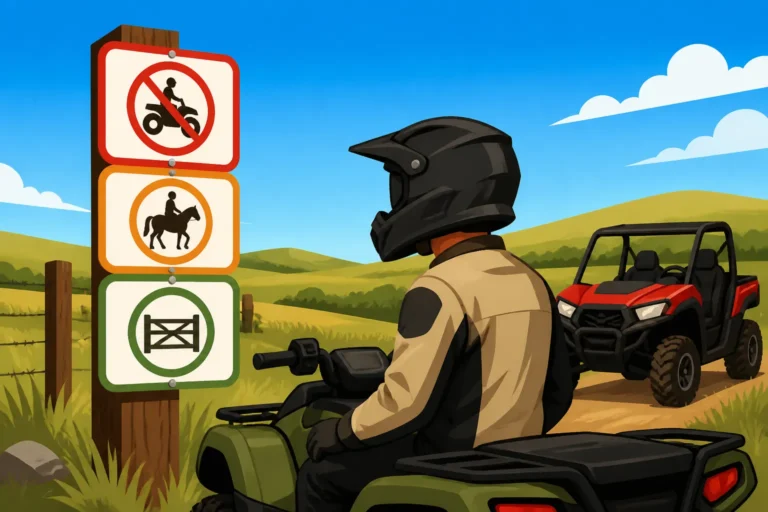
Nebraska generally prohibits ATVs and UTVs from operating on state highways, county roads, or city streets. However, there are some very specific and important exceptions that many riders rely on. The most common one involves agricultural purposes. Farmers and ranchers frequently use their machines on county roads for tasks like checking cattle, moving between fields, or transporting tools. This agricultural use is specifically recognized by law, often allowing machines to cross roads or travel short distances. Beyond agriculture, some cities and even unincorporated villages, through specific ordinances or county board resolutions, have opened certain streets or roads to ATV/UTV use. These areas usually come with their own set of rules, including speed limits, daylight-only operation, and specific equipment requirements like safety flags and lighting. For instance, a common restriction is a maximum speed limit of [30 mph at Most] when operating on these approved public ways. You'll also often find requirements for [Why Road-Legal ATVs Need a 5-Foot Safety Flag] and appropriate head and tail lights, especially if you're ever plowing snow after dark, which is one of the few exceptions for nighttime road use.
Furthermore, any ATV or UTV operated on a public road, even under these exceptions, typically requires the operator to hold a valid driver's license (Class O) or a farm permit, if they're engaging in farm-related activities. This applies even if you're just crossing a road at a [Crossing a Highway at a Ninety-Degree Angle]. The point here is that while ATVs and UTVs are primarily designed for off-road adventures, Nebraska law makes provisions for their practical use in certain on-road scenarios. Understanding these nuances is crucial for staying legal and safe. You can learn more about these exceptions by checking out articles like [Can You Drive an ATV on the Road in Nebraska?] and [Nebraska Rules for Riding a County Road].
Equipment Requirements for Road Use
Beyond the operational rules, there are specific equipment requirements for ATVs and UTVs when they are used on public roads in Nebraska. These aren't just suggestions; they're legal mandates designed to enhance safety for both the ATV/UTV operator and other motorists. Ignoring them can lead to citations and even serious accidents. Many of these requirements are fairly standard, but it’s worth a review to make sure your machine is up to snuff.
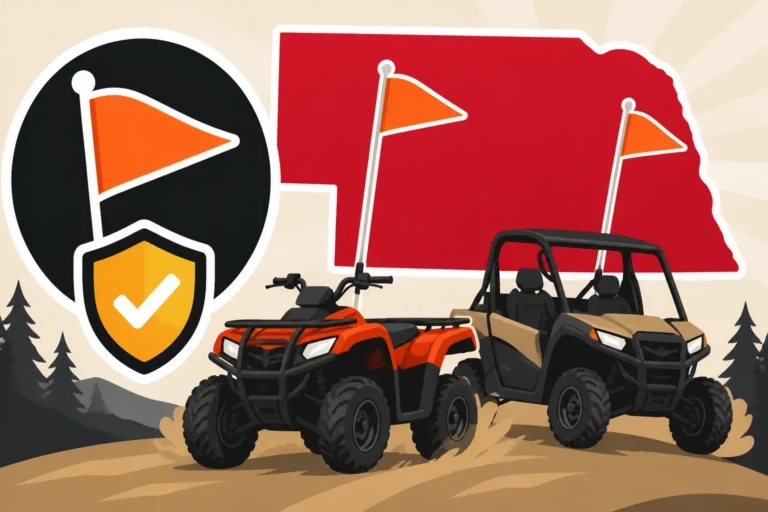
First and foremost, lighting is critical. Your machine must be equipped with working headlights and taillights. Even if you're only riding during the day, your headlight must be on. This isn't just about seeing where you're going; it's about being seen by others, especially on dusty gravel roads or when the sun is low. Many stock machines come with adequate lighting, but if you've got an older quad or a custom build, it's worth double-checking their functionality and brightness. Brands like SuperATV offer a range of high-quality LED light bars and auxiliary lights that can not only meet these requirements but also drastically improve visibility for both you and others on the road. Secondly, a safety flag is almost always required. This flag needs to be at least five feet above the ground and typically a day-glow orange, at least 30 square inches. This makes your machine, which can be small and hard to spot, much more visible to drivers of larger vehicles, especially over hills or around curves. Lastly, properly functioning brakes, mirrors, and a horn are standard safety expectations for any vehicle sharing the road. While not always explicitly listed for ATVs in every statute, common sense and general vehicle codes imply their necessity for safe road operation.
Licensing and Permitting for On-Road Operation
The question of who can operate an ATV or UTV on a public road is just as important as where and when. It’s not enough to simply own the machine; you also need to meet the operator requirements set by the state of Nebraska. These rules are in place to ensure that anyone operating a motor vehicle on public land has a baseline level of knowledge and skill.
For most circumstances where an ATV or UTV is legally allowed on a public road, the operator must possess a valid Class O (operator's) driver's license. This is the standard license most adults hold for driving cars and trucks. However, there's a specific exception for agricultural use. If you are operating an ATV or UTV for agricultural purposes, such as checking fields or livestock, and you don't have a Class O license, you might be covered by a farm permit. This permit allows individuals involved in farming or ranching operations to drive certain farm-related vehicles on public roads for agricultural purposes, even if they don't have a full driver's license. It’s a key distinction that acknowledges the vital role ATVs and UTVs play in Nebraska’s agricultural economy. What’s important to remember is that this farm permit is strictly for agricultural use and doesn't extend to recreational road riding. If you're riding for fun, even in a town that has opened its streets, you'll need that Class O license. These rules are laid out clearly in sections like [Nebraska Requires a Class O License or Farm Permit] and [Can a Farm Permit Replace a Driver's License?]. Always carry proof of your license or permit, as law enforcement can and will ask for it.
Preparing for the January 2027 Insurance Requirement
The looming change in Nebraska's ATV/UTV insurance requirements for road use in January 2027 means now is the time to get proactive. Waiting until the last minute could leave you scrambling or, worse, operating illegally. It's a prime example of how keeping up with the legal landscape is part of responsible riding.
The core of this change is an increase in the minimum liability coverage you're legally mandated to carry if you use your ATV or UTV on public roads. While I can't give specific numbers, understand that the new minimums will be higher across the board for bodily injury per person, bodily injury per accident, and property damage. This isn't just a recommendation; it's a legal requirement. My advice is to contact your insurance agent well before the end of 2026. Explain that you operate an ATV or UTV on Nebraska public roads, even if only occasionally, and that you need to ensure your policy will meet the new 2027 minimums. They can walk you through the specifics for your current policy and make any necessary adjustments. This conversation is also a great opportunity to review your overall coverage. Beyond the minimum liability, consider if additional coverage, like comprehensive or collision, makes sense for your machine. Comprehensive coverage can protect against theft, fire, or vandalism, which is invaluable, especially if you store your machine in a shed or garage. Collision coverage would help repair or replace your machine after an accident. If you're making upgrades to your machine, perhaps adding some robust SuperATV skid plates or a new winch, make sure those investments are adequately protected by your policy.
It's also worth noting that these liability requirements apply specifically when you're on public roads. If you only ride on private property and never touch a public road, these specific state-mandated minimums for road use might not apply to you. However, even for private land riding, having insurance is always a good idea to protect against unforeseen circumstances. An accident on private land, while not subject to state road-use minimums, can still result in significant costs if someone is injured or property is damaged. Always review your policy to understand what is covered and under what circumstances. This proactive approach will give you peace of mind and ensure you're fully compliant when the new year rolls around. More information on current requirements can be found in [Nebraska Insurance Minimums Today] and tips on protecting your machine in [Nebraska Comprehensive Coverage for a Quad].
Practical Steps for Nebraska Riders
With the January 2027 insurance changes on the horizon, and the existing complexities of Nebraska's ATV/UTV road laws, it’s a smart move to take some concrete steps now. Being prepared means you can focus more on enjoying your ride and less on worrying about legalities.
First, review your insurance policy immediately. Don't wait until late 2026. Give your agent a call, tell them you ride an ATV or UTV on Nebraska roads, and ask them to confirm that your liability coverage will meet the new, higher minimums coming in January 2027. If it doesn't, discuss your options for increasing it. This isn't just about legality; it's about protecting your assets in case of an accident. You'll want to clearly understand [Liability Coverage Required on a Road] and [Nebraska Insurance Proof for Road Use].
Second, assess your machine’s road-readiness. Even if you only occasionally use your ATV or UTV on a county road for farm tasks or within an approved village, ensure it meets all current equipment requirements. Check your headlights, taillights, brakes, and make sure your safety flag is present and correctly mounted [5 Feet Above the Ground]. If you need to upgrade components for durability or safety, consider reputable aftermarket options. For example, if you're regularly traversing rough terrain or sharing dusty roads with farm equipment, investing in heavier-duty suspension components or reinforced A-arms from a brand like SuperATV can enhance both safety and performance.
Third, stay informed about local ordinances. Nebraska's road laws for ATVs and UTVs often have a hyper-local component. What's allowed in one city or unincorporated village might be completely different just a few miles down the road. Before riding on any public street or road, always check with the local city hall or county clerk's office. Many municipalities post their ordinances online, making it easier to find [Nebraska Ordinance Lookups Before You Ride]. This small step can save you a lot of grief.
Fourth, carry your essential documents. Whenever you’re operating your ATV or UTV on a public road, always have your driver's license (or farm permit), proof of insurance, and possibly a copy of your machine's title (or at least knowledge of its VIN). Law enforcement officers have the right to ask for these documents, and having them readily available can make any interaction much smoother. Understanding [What Paperwork a Deputy Can Ask to See] is a key part of responsible riding. By taking these proactive steps, you'll be well-prepared for the changes ahead and can continue to enjoy your ATV or UTV safely and legally in Nebraska.
| Insurance Requirement Category | Current Nebraska Minimums (Before Jan 2027) | Future Nebraska Minimums (Effective Jan 2027) |
|---|---|---|
| Bodily Injury (per person) | Specific amount | Significantly higher amount |
| Bodily Injury (per accident) | Specific amount | Significantly higher amount |
| Property Damage (per accident) | Specific amount | Significantly higher amount |
| Applies to: | ATVs/UTVs used on public roads | ATVs/UTVs used on public roads |
| Action Needed: | Review current policy | Contact agent to update before Jan 2027 |
Disclaimer
This article is for general informational purposes only and does not constitute professional advice. Laws, prices and regulations vary by location and change over time. Consult a qualified professional for guidance on your specific situation.