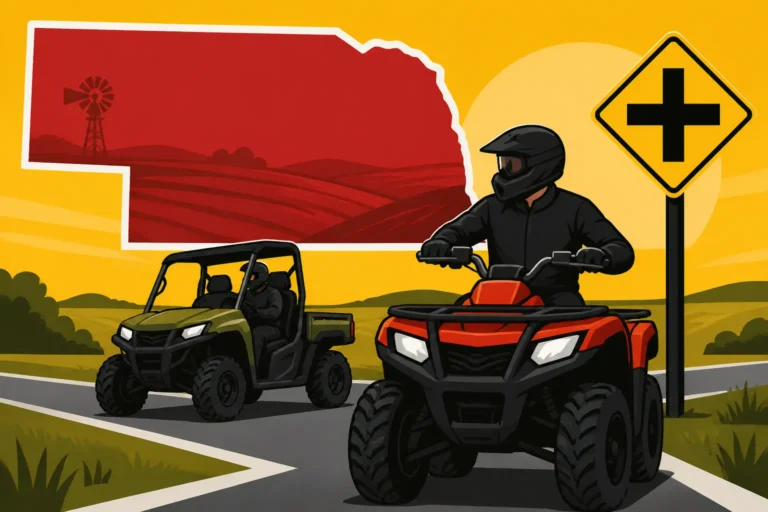
Taillight Rules for ATVs on Public Roads
It's incredibly frustrating to want to enjoy your ATV or UTV on a gravel road, perhaps for some quick chores or a short jaunt to a fishing spot, only to feel uncertain about whether your machine is truly "road legal" – especially when it comes to something as seemingly simple as taillights. Many riders assume a basic light in the back is enough, but Nebraska has specific rules, and ignoring them can lead to unexpected tickets and a real damper on your day. This guide is here to break down exactly what Nebraska's taillight rules for ATVs and UTVs on public roads entail, helping you understand the requirements, enhance your visibility, and ride with confidence.
The Critical Role of Taillights for ATV Road Safety in Nebraska
When you're out on your ATV or UTV, whether it's for work or play, safety is always paramount. On private land, you set the rules, but the moment your tires touch a public road, you enter a world of regulations designed to keep everyone safe. One of the most often overlooked, yet critically important, pieces of equipment for road-legal ATV use in Nebraska is your taillight setup. It's not just a suggestion; it's a legal necessity.
Why Taillights Aren't Just for Show: Visibility is Key
Think about it: ATVs and UTVs are much smaller than cars, trucks, or even motorcycles. They can be easily swallowed up in a driver's blind spot, especially on dusty gravel roads or during twilight hours. Your taillights aren't merely there to look good; they are your machine's primary way of telling other drivers, "Hey, I'm here!" This is a huge deal, particularly on those long, straight stretches of county road where vehicles often travel at higher speeds, or when you're making a turn onto a field access road.
Without adequate and functioning taillights, you're practically invisible from behind, especially as the sun begins to set or on an overcast day. This drastically increases the risk of a rear-end collision, which can have devastating consequences for an ATV rider. The frustration of being an ATV enthusiast is that sometimes other drivers don't expect to see us on the road, making our visibility even more crucial. Investing a little time in understanding and maintaining your taillights is an investment in your personal safety and peace of mind, not to mention avoiding an unwanted conversation with a deputy.
Understanding Nebraska's Specific Taillight Requirements (and Frustrations)
Nebraska's laws for ATV road use, while sometimes feeling complex, are put in place for a reason. When it comes to lighting, many riders mistakenly believe that if their ATV came with a taillight, it must be sufficient. This isn't always the case, and assuming so can lead to a roadside lecture, or worse, a citation. The state's lighting statutes don't just ask for a taillight; they specify what kind of taillight, where it should be, and how it should function.
It's common to hear riders grumble about these "extra" rules, especially when their machine has been perfectly fine for years of off-road use. But the transition from trail to tarmac brings new responsibilities. The good news is that these requirements are clearly laid out. Understanding [Nebraska Lighting Statute 60-6,357] is the first step toward ensuring your machine meets the legal standards and keeps you visible to others sharing the road. Don't let the technical jargon scare you off; we'll break it down so you can ride confidently knowing your machine is properly equipped.
Deciphering Nebraska's Lighting Statute for ATVs on Public Roads
Navigating the legal landscape for ATV use on Nebraska's public roads can feel a bit like wading through quicksand if you don't know where to look. When it comes to taillights, the law is quite specific, and it's essential to understand the nuances to ensure you're in compliance. This isn't about guesswork; it's about adhering to clear, defined safety standards.
The Letter of the Law: What Statute 60-6,357 Demands
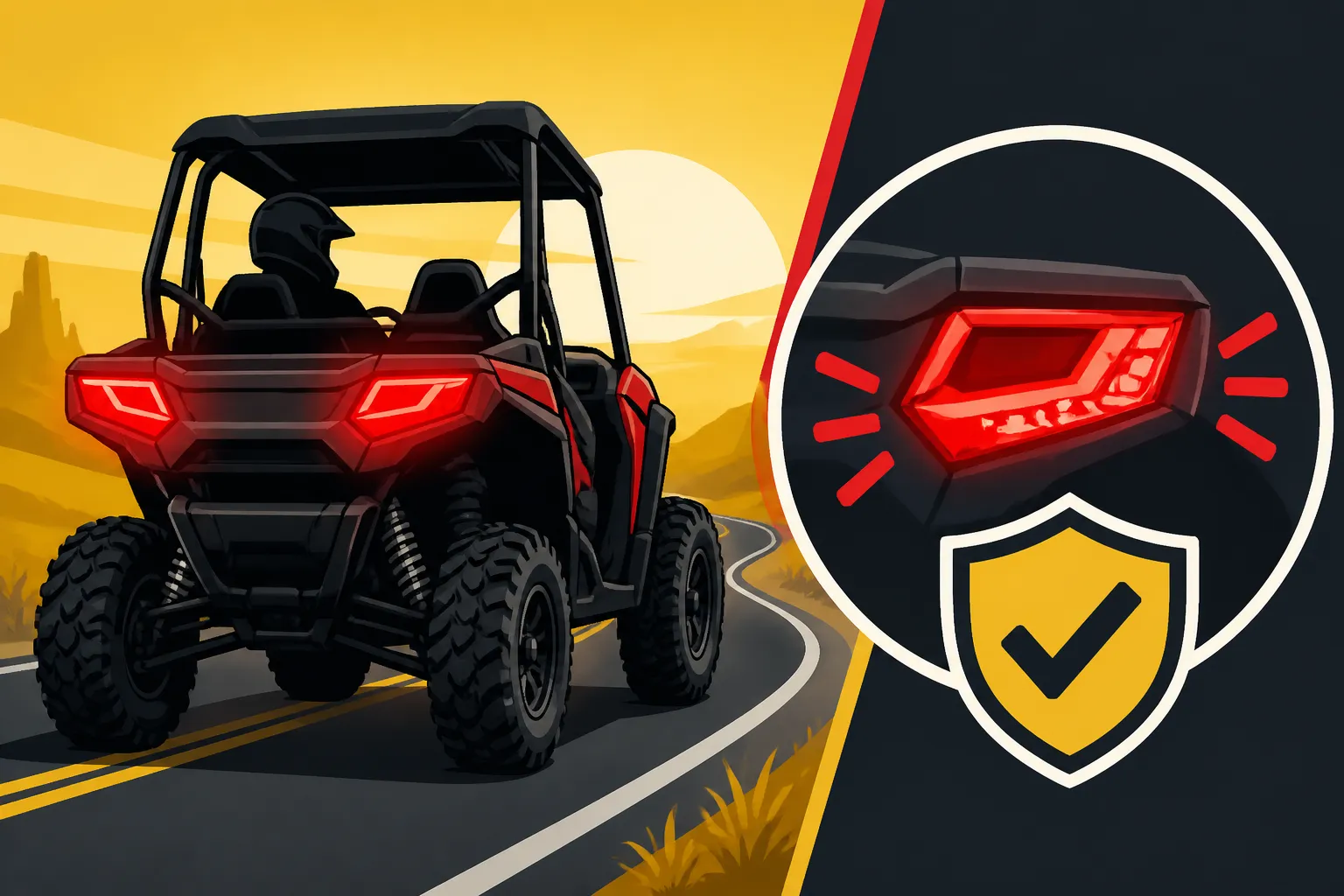
Nebraska Statute 60-6,357 outlines the specific requirements for lighting equipment on all vehicles, including ATVs, when operating on public roads. For taillights, the law generally requires that they emit a red light visible from a distance of at least five hundred feet to the rear. This isn't just a casual suggestion; it's a mandatory minimum. The light needs to be "steady burning," meaning it should be constantly on while the machine is in operation, not flashing like a strobe light (unless it's functioning as a brake light, which is a different, though related, requirement).
While the statute doesn't usually get into ultra-specific height measurements for ATVs, the common-sense application is that the taillight must be mounted securely on the rear of the machine, unobstructed, and positioned so that it's clearly visible to anyone approaching from behind. A taillight caked in mud or hidden under an aftermarket cargo box won't cut it. It needs to do its job, which is to be seen. This requirement applies even if you're riding in broad daylight; as we'll discuss, [Nebraska Daylight Riding Rule] doesn't negate the need for proper lighting.
Beyond the Bare Minimum: Enhancing Your ATV's Rear Visibility
While the law sets a baseline for taillight functionality, many riders, myself included, feel that "bare minimum" isn't always "safest." This is especially true for ATVs, which, as noted, tend to blend into the background more easily than larger vehicles. This is where aftermarket solutions can come into play, allowing you to not just meet the law, but exceed it, enhancing your visibility and safety.
Many companies offer fantastic upgrade options for ATV and UTV lighting. Brands like SuperATV, for instance, provide a wide range of LED taillight kits, brake light setups, and even integrated turn signal systems that can significantly boost your machine's presence on the road. These aren't just about brightness; they're often more durable, energy-efficient, and can offer additional features like sequential turn signals or brighter brake lights that grab attention quicker.
Consider the difference between a standard incandescent bulb and a modern LED setup. LEDs often illuminate faster and are much brighter, offering a clearer signal to drivers behind you. While [Nebraska Lighting Requirements on a Machine] focuses on basic functionality, opting for enhanced lighting can prevent accidents by giving other drivers more time to react to your presence and movements. Even if turn signals aren't explicitly mandated by state law for ATVs on public roads, many riders choose to add them, especially when navigating in more congested areas or making frequent turns, as they communicate your intentions far more effectively.
Here's a quick comparison of basic requirements versus enhanced features:
| Feature | Nebraska Minimum Requirement (Taillight) | Enhanced Safety Feature Options | Why it Matters |
|---|---|---|---|
| Color | Red | Red (often brighter LED) | Consistent with road vehicle standards, clear warning signal. |
| Visibility | Visible from 500 feet to the rear | Visible from much further, wider angle of illumination | Increases reaction time for following drivers. |
| Function | Steady burning (unless brake light) | Steady burning, brighter brake lights, integrated turn signals | More distinct signals for braking and directional changes. |
| Durability | Standard (OEM) | Heavy-duty, waterproof LED units (e.g., from SuperATV) | Resists vibration, impacts, and weather conditions common off-road. |
| Placement | Rear, unobstructed, clearly visible | Similar, but often more sleek and protected designs | Ensures consistent visibility in varied conditions. |
| Power Draw | Standard | Lower power consumption with LEDs | Less strain on your electrical system, brighter output. |
Practical Application and Enforcement: Avoiding Trouble on Nebraska Roads
It's one thing to know the law, but it's another to live by it, especially when you're itching to hit the trail or get some work done. Understanding the practical aspects of maintaining your taillights and the potential consequences of neglecting them is key to a hassle-free riding experience on Nebraska's public roads.
Pre-Ride Checks: Ensuring Your Taillights Are Ready for the Road
Before you even think about swinging a leg over your ATV and heading out onto a public road, a quick pre-ride check of your lighting system should become second nature. This isn't just good practice; it's a vital safety habit. Imagine pulling onto a county road, only to have a deputy pull you over a mile down the road because your taillight is out. The frustration is real, and it’s entirely preventable.
Here’s a simple checklist:
- Visual Inspection: Give your taillight a good look. Is it cracked? Covered in mud or dust from your last ride? A quick wipe down can make all the difference.
- Functionality Test: Turn your ATV on, engage the lights, and walk around to the back. Is the taillight burning steadily? If your machine has a brake light, activate the brakes to ensure that illuminates as well. If you have integrated turn signals, check those too.
- Wiring Check: While you don't need to be an electrician, a quick glance at visible wiring can sometimes reveal loose connections or frayed wires that could cause intermittent failure.
Common issues include burnt-out bulbs, especially in older incandescent systems, or corroded connections from exposure to mud, water, and varying temperatures. Sometimes, it's as simple as a fuse. Regular maintenance, like checking bulb filaments or spraying electrical contact cleaner on connections, can go a long way. This small effort before each ride can save you a lot of grief and ensure you're compliant with [Nebraska Equipment Checks by Deputies].
Consequences of Non-Compliance: Tickets, Fines, and More
Ignoring Nebraska's taillight rules isn't just about rolling the dice with your safety; it's also a gamble with your wallet and your riding privileges. Law enforcement takes lighting requirements seriously, and for good reason—they are fundamental to road safety. A deputy on patrol can, and often will, pull you over if your ATV's taillights are not functioning correctly or do not meet the legal requirements.
The immediate consequence is usually a citation. While the exact fine can vary by jurisdiction and the discretion of the officer, [Nebraska Ticket Costs for Road Riding] can quickly add up, turning a fun ride into an expensive lesson. Beyond the fine, repeated violations or more serious safety infractions can lead to other issues, such as impoundment of your machine or, in extreme cases, even legal action if your non-compliant lighting contributed to an accident. It's simply not worth the risk. Make sure your taillights are in working order and compliant with the law before you venture onto any public road.
Integrating Taillights with Other Road-Legal Requirements
Riding an ATV on public roads in Nebraska is a privilege that comes with a set of responsibilities. While taillights are crucial, they are just one piece of a larger puzzle. To truly be "street legal" and, more importantly, genuinely safe, you need to consider your machine's entire safety setup.
The Full Picture: Taillights as Part of a Comprehensive Safety Setup
Think of your ATV's road-legal equipment as a system, where each component works together to ensure your safety and the safety of others. Your taillights provide rearward visibility, but what about what's happening at the front? This is where your headlights come in. Nebraska law unequivocally states that [Nebraska Requires Head and Tail Lights] for road use. A functioning headlight ensures you can see where you're going, and that oncoming traffic can see you.
Beyond lighting, another vital, and often visually distinct, requirement is the safety flag. [Nebraska's 5-Foot Safety Flag Rule] mandates that your ATV must display a five-foot safety flag when operating on public roads. This flag, often brightly colored, extends above your machine, making it visible over hedges, parked cars, or other obstructions that might obscure your ATV's lower profile. It's an additional layer of visibility, especially important on rolling terrain or when cresting hills where your taillights might be temporarily out of view. All these elements combined, including compliant taillights, create a comprehensive visibility package that minimizes risk on the road and aligns with [Nebraska ATV Road Rules Under 60-6,356].
Riding After Dark: Specific Taillight Considerations for Night Use
While many ATV riders prefer daylight excursions, there are times when riding after dark is necessary, whether it's an extended trail ride, heading home after an evening chore, or even engaging in specific activities like snow removal. It's during these low-light conditions that your taillights become absolutely non-negotiable and their performance takes on even greater importance.
The five hundred-foot visibility requirement for your red taillight is a minimum, but at night, you want every advantage you can get. This is where those enhanced lighting solutions we discussed earlier, like those offered by SuperATV, really shine. Brighter, more reliable LED taillights can make a dramatic difference in how quickly and clearly you're perceived by other drivers in the dark. Moreover, ensuring your brake lights are working perfectly and are easily distinguishable from your running lights is critical; without them, drivers behind you have no warning of your deceleration.
It's also worth noting special circumstances, like the [Nebraska Snow Removal Night Exception]. While typically ATVs are limited to daylight use on public roads, this exception allows for night operation when actively engaged in snow removal. But this exception comes with the absolute, non-negotiable condition that all required lighting, including robust taillights, must be fully functional and highly visible. Riding after dark without proper taillights is not just a violation; it's a grave risk to yourself and others. Always ensure your lights are up to the task before heading out when the sun isn't shining.
Disclaimer
This article is for general informational purposes only and does not constitute professional advice. Laws, prices and regulations vary by location and change over time. Consult a qualified professional for guidance on your specific situation.