Nebraska Visitors From Kansas
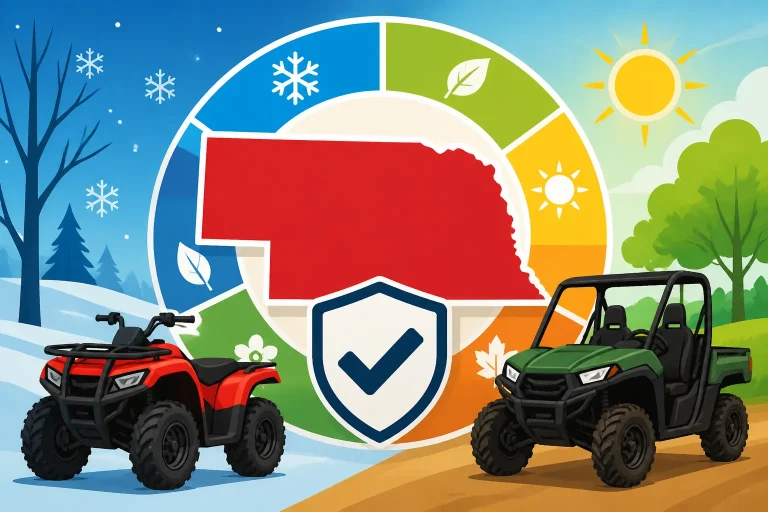
A Kansas registration, title, or permit does not automatically open every Nebraska trail to your ATV or UTV. The good news is that Nebraska has no statewide OHV sticker for visitors to buy. The important part is knowing which rules apply at your destination, since public land, private parks, and local roads can each have different access requirements.
What Kansas visitors need to know about Nebraska reciprocity
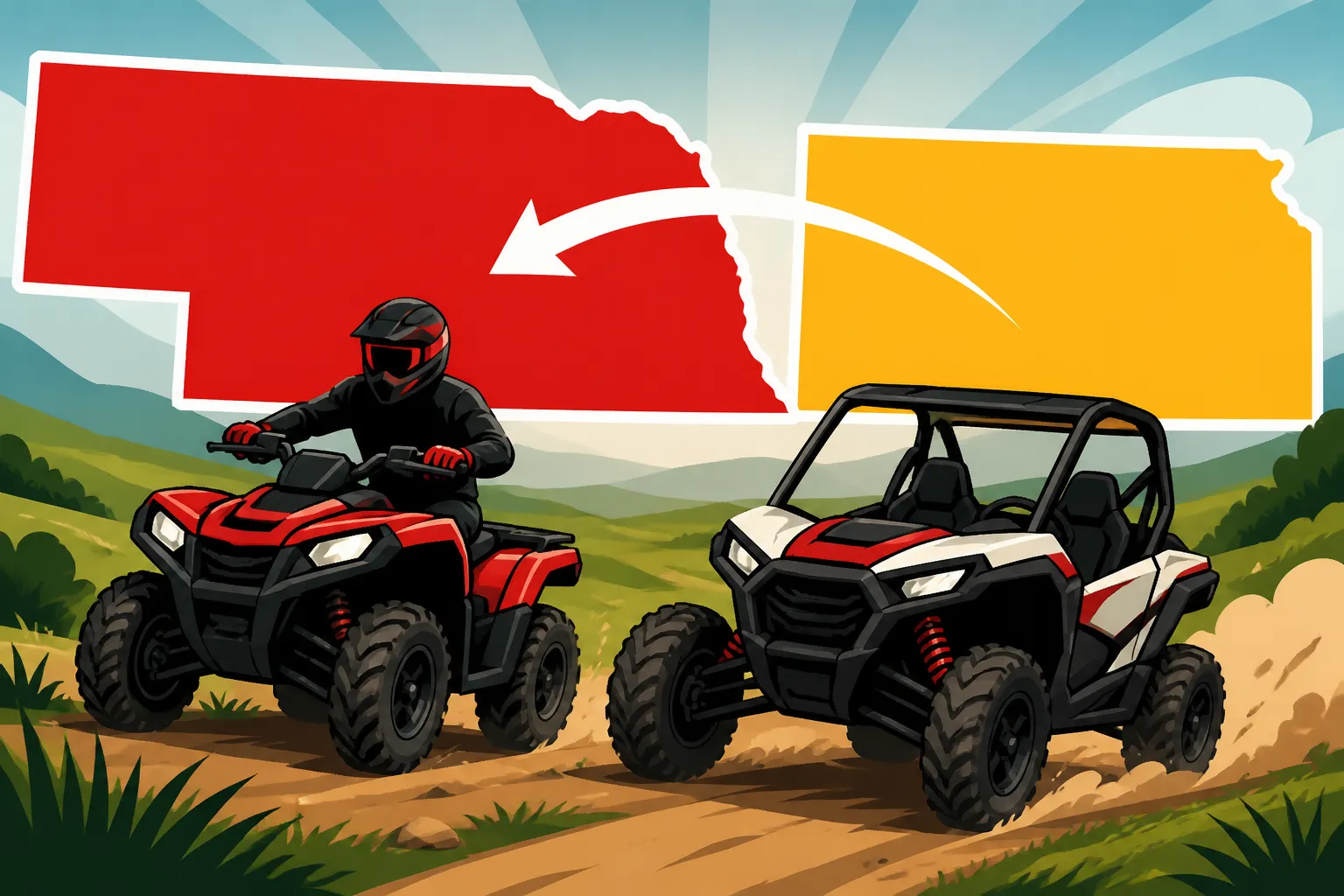
Nebraska does not have a statewide ATV or UTV registration sticker that Kansas visitors must obtain before riding. It also does not rely on another state’s ATV registration as a substitute for a Nebraska OHV permit. In practical terms, there is no Nebraska state trail permit to buy just because you crossed the border, and a Kansas registration does not grant access where Nebraska rules or the land manager prohibit riding.
That distinction matters: no statewide sticker requirement does not mean every Nebraska trail is open. Access depends on the particular trail or property. A public riding area may have its own fees, hours, vehicle limits, or closures. A private park can set its own entry, age, helmet, and waiver rules. A county road or city street has a different set of restrictions again.
| Where you plan to ride | What to check before unloading |
|---|---|
| National Forest riding area | Open routes, current closures, vehicle limits, and any parking or recreation fees |
| Wildlife Management Area | Whether motorized riding is allowed on designated routes, plus posted restrictions |
| Private riding park | Admission, waiver, age, helmet, passenger, and machine requirements |
| Nebraska state park or recreation area | Whether the machine is allowed at all; a park permit does not make a closed area open to ATVs |
| City street or county road | Whether riding is authorized there and what operating rules apply |
| Private property | The owner’s permission and any conditions they set |
For the broader distinction between state requirements and site rules, see Nebraska Has No OHV Permit or Sticker and Nebraska Has No Registration to Reciprocate. The practical takeaway is simple: check your destination, not just your Kansas paperwork.
Rules change with the land you ride on
National Forest trails and riding areas
Nebraska National Forest riding areas can be options for visitors, but access depends on the specific route and current conditions. Check which trails are open to your machine type before you haul it there. Do not assume that a route suitable for an ATV will also fit a wider UTV, or that every road or track in the forest is open to motorized use.
Some sites have parking or recreation charges even though Nebraska has no statewide OHV sticker. A parking fee is not an ATV registration fee, and paying to park does not authorize riding on a closed route. For planning a visit, see Nebraska National Forest Riding and Nebraska Trail Conditions Before You Tow. Confirm current access and payment details with the relevant land manager before leaving Kansas.
Wildlife Management Areas
Wildlife Management Areas are not general-purpose riding parks. Motorized use may be limited to designated roadways, and individual areas can have signs or restrictions that narrow access further. A road that appears rideable is not necessarily open to ATVs or UTVs.
Seasonal conditions can also affect what is allowed. A specific frozen-water exception may apply in some circumstances, but it is not permission to ride anywhere on a management area or on ice that has been closed. Read signs at the site and check the area’s current rules. Nebraska WMA Access for a Quad and Nebraska WMA Roadway Rules cover the key distinction between designated routes and unrestricted trail access.
State parks and recreation areas
Do not assume a Nebraska state park or recreation area is an ATV riding destination. These areas have restrictions on motorized machines, and state park entry paperwork does not turn a closed area into an OHV trail. Nebraska’s state park permit is separate from an ATV sticker or registration document; it is not proof that your machine can ride there.
If you are towing to a park, separate the vehicle and trailer questions from the riding question. A park permit may relate to the vehicle entering the park, while the ATV itself may still be prohibited from riding there. Check the destination’s current rules before planning to unload. See Nebraska State Parks Ban ATVs and Nebraska Recreation Area Rules for ATVs.
Private riding parks
A private park sets its own admission and operating requirements. Before you go, ask whether the park accepts your type of machine, whether passengers are allowed, and what riders must bring or wear. Parks may have their own age minimums, helmet rules, waivers, noise restrictions, and operating hours.
These requirements are separate from state reciprocity. A Kansas registration does not override the park’s rules, and the absence of a Nebraska statewide sticker does not mean the park cannot require documentation or charge its own fees. See Nebraska Private Park Waivers and Rules and confirm details directly with the park.
Road riding is a separate question
An ATV or UTV being allowed on a trail does not mean it can legally travel on Nebraska roads. Road use is governed by separate rules, and local authorization can matter. Nebraska allows certain limited forms of road use under specific conditions, but a visitor should not treat a Kansas plate, registration, or road-use permission as a blanket authorization to ride on Nebraska roads.
Before using a public road, identify who controls it and whether the route is open to your machine. A city ordinance may allow riding on certain streets within that city, while another nearby community may not. County roads and highways have their own restrictions. The rules for riding on a road also differ from rules for crossing one.
For a starting point, review Can You Drive an ATV on the Road in Nebraska? and Nebraska Rules for an Out-of-State Machine. If your trip involves a city street, check the specific city’s ordinance rather than assuming that one town’s rules apply statewide. For highway crossings, see Nebraska Rules for Crossing a Highway.
Even when a route is open, equipment and operating requirements may apply. Depending on the circumstances, Nebraska road rules address matters such as speed, lighting, safety flags, insurance, rider qualifications, and when road use is permitted. A machine that is lawful on private land or a designated trail may not meet the requirements for a particular public-road trip. Check the applicable rules before riding out of the staging area.
Plan the trip before you cross the border
A few checks before departure can prevent a long drive to a closed trailhead or a disagreement about where you may ride.
- Choose the exact riding area. Do not plan around a broad destination such as “the forest” or “a WMA.” Identify the trailhead, property, or park where you will unload.
- Confirm that your machine is allowed. Ask about ATV and UTV access separately, especially if your machine is wide, has passengers, or has unusual equipment.
- Check current openings and restrictions. Look for closures, seasonal limits, weather-related changes, and posted route rules. If the information is unclear, contact the land manager or park operator.
- Separate riding access from fees. Ask whether there is an entry, parking, camping, or other site charge. None of those payments should be mistaken for a statewide Nebraska ATV registration.
- Check local road rules if your route uses public streets or roads. Confirm whether each part of the route is authorized; do not rely on a rule from a neighboring town.
- Bring useful ownership information. Carry your Kansas registration or other ownership paperwork if you have it, along with any documents the destination requires. Paperwork can help explain who owns the machine, but it does not replace permission to ride.
- Read signs when you arrive. Posted restrictions may identify closed routes, parking limits, or site-specific conditions that were not obvious during trip planning.
If you are riding with a group, share the destination’s rules before the trip. That gives each driver time to check machine dimensions, age requirements, waiver forms, and required equipment. It also reduces the chance that one rider’s assumption about Kansas paperwork will be treated as the rule for everyone.
For visitors, the safest way to think about Nebraska is that statewide OHV reciprocity is not the key to access. Nebraska does not require a statewide ATV sticker, but the right to ride comes from the rules of the specific land, trail, park, or road. Confirm those rules before you tow, and treat each property’s instructions as separate from your Kansas documents.
Disclaimer
This article is for general informational purposes only and does not constitute professional advice. Laws, prices and regulations vary by location and change over time. Consult a qualified professional for guidance on your specific situation.