Does a Private Park Allow Passengers on a Quad?
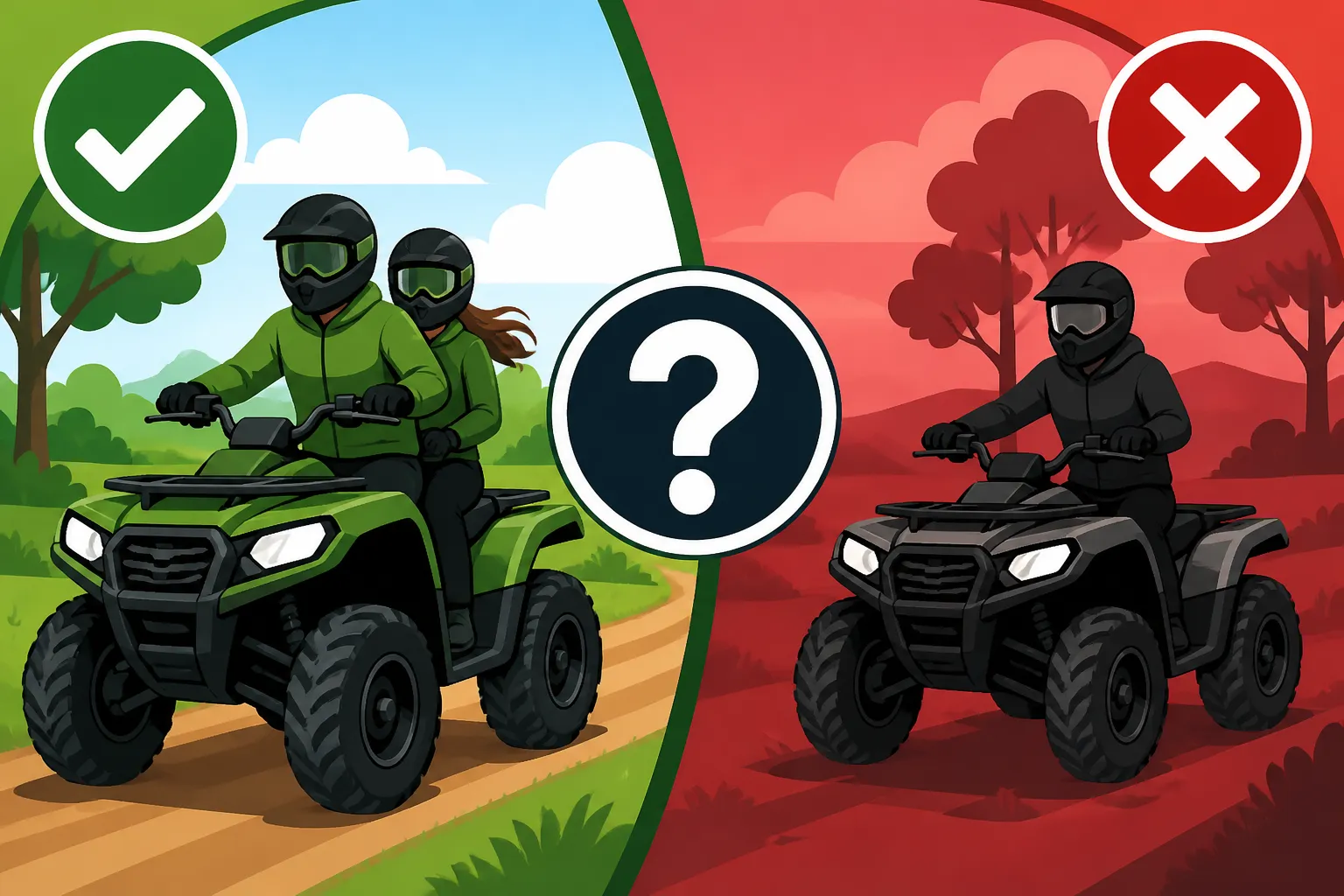
A passenger can ride on a quad at a private Nebraska park only if the machine is built to carry two people and the park allows it. A passenger seat alone may not settle the question: age limits, helmet rules, waivers, and equipment requirements can vary by park. Check both the machine’s limits and the park’s current rules before you load up.
The short answer: it depends on the park and the quad
Private parks set their own admission and riding rules. One may allow passengers on approved two-person ATVs, while another may prohibit passengers on quads altogether or set limits based on the passenger’s age. A rule that applies at one riding park does not automatically apply at another.
The machine matters just as much. A single-rider quad is not made safe for two people just because there is room to sit behind the driver. Passengers can shift the machine’s balance, interfere with the rider’s movement, or be thrown off if the quad turns or hits an obstacle. Carry someone only when the manufacturer designed the model for a passenger and the park allows it.
| Situation | What to check |
|---|---|
| Two people want to ride one quad | Confirm the model is designed for two riders and the park permits passengers |
| A child will ride as a passenger | Ask about minimum age, size, supervision, helmet, and waiver rules |
| The machine has an added seat or footrests | Check the owner’s manual and ask the park whether modifications are accepted |
| You are bringing a side-by-side | Confirm its permitted seating capacity and the park’s rules for passengers |
| You plan to ride public land instead | Check the separate land-access and equipment rules; a private park’s permission does not apply |
If the park’s website or posted rules do not answer the question, call before you travel. Be specific about the machine’s make and model, the passenger’s age, and whether the passenger would ride on a quad or in a side-by-side. A general “passengers are allowed” answer might not cover every vehicle or age group.
Nebraska does not have a statewide OHV permit or sticker requirement, but that does not mean every riding area has the same access rules. A private park can set its own conditions for entry and riding. The distinction between public requirements and private-site rules is explained in Nebraska Has No OHV Permit or Sticker and Nebraska Private Park Waivers and Rules.
Check the machine before carrying a passenger
Use the manufacturer’s seating capacity
Start with the owner’s manual, safety labels, or manufacturer information for the exact model. Look for the designed seating capacity and instructions for passenger use. If it is a one-person ATV, treat it as a one-person machine, even if someone offers to ride on the rear rack or an added seat.
A two-person ATV is generally designed with a passenger position and features that help the passenger stay seated and keep their feet supported. The exact setup differs by model, so do not assume that a backrest, grab bar, or footrests added later make a single-rider quad suitable for carrying someone. Ask the manufacturer or a qualified dealer if the machine’s configuration is unclear.
Do not use the quad’s maximum load rating as a substitute for passenger approval. A load limit may account for cargo and other weight, but it does not necessarily mean the machine is designed to carry a second person. Follow the owner’s manual for both passenger use and weight limits.
Make sure the passenger can sit and hold on correctly
A passenger should be able to sit in the intended position, reach the passenger handholds, and keep both feet on the designated footrests while the machine is moving. If they cannot do those things because of their size, the quad may not be suitable for them, even if the park allows passengers generally.
The driver and passenger also need to understand how to move together. A passenger who leans the wrong way, stands unexpectedly, or shifts position can make a turn or uneven section less predictable. Before riding, explain how to hold on, keep feet on the rests, and follow the driver’s movements. If the passenger cannot follow those instructions consistently, choose a different arrangement.
Never carry a passenger on a rack, fender, cargo box, or other area not intended as a passenger seat. Those positions do not provide the support and secure foot placement expected for riding, and they can put the passenger close to hot or moving parts.
Do not confuse a quad with a side-by-side
A side-by-side may have a passenger seat or multiple seating positions, but capacity still depends on the specific model and its instructions. Check the seating limit, seat belts, and any park rules for children or passengers. Do not add people beyond the intended capacity, even for a short trip around the park.
Parks may also handle quads and side-by-sides differently. A park that allows a passenger in a two-person side-by-side may still prohibit a passenger on an ATV. Confirm the rule for the vehicle you are actually bringing rather than relying on a general statement about passengers.
Ask the park about age, helmets, and waivers
Confirm age and supervision rules
Private parks can set age and supervision conditions for riders and passengers. A passenger who is allowed on a particular machine may still need to meet the park’s minimum age or other requirements. Do not assume that a parent’s permission overrides a park rule.
Ask the park whether it has a minimum age for passengers, whether it considers height or ability to reach the footrests, and whether an adult must accompany a minor. Rules may differ between a passenger riding with an adult and a young person operating their own machine. For more on the distinction, see Nebraska Private Park Age Minimums and Minimum Riding Ages a Private Park Sets Itself. Nebraska’s statewide age rules and a private park’s policies are separate questions; Does Nebraska Set a Minimum Age for Riders? covers the state-level issue.
If a minor will attend, ask who must sign the waiver and whether the parent or guardian has to be present at check-in. Do this before the ride day, especially if another adult is bringing the child. The park’s process may depend on its own waiver and supervision requirements. See Who Signs the Waiver for a Rider Under 18 for related paperwork questions.
Ask about helmets and required equipment
Do not assume that a passenger is covered by the driver’s equipment or that the park’s helmet policy is identical for every rider. Ask whether helmets are mandatory for passengers, what type is accepted, and whether the park requires any other protective gear. Confirm whether the park provides helmets or expects each rider to bring a properly fitting one.
A helmet should fit the passenger securely and be appropriate for the activity. A loose helmet can shift during a ride, and a helmet that does not fit a child may not provide dependable protection. If the park gives equipment instructions, follow them rather than relying on a general expectation about what other riders wear. The related topic Nebraska Private Park Helmet Rules explains why it is worth checking a site’s policy directly.
Also inspect the quad’s passenger equipment before the trip. Look for secure handholds and footrests, and make sure the seat and any restraints specified by the manufacturer are in good condition. If something is missing or damaged, do not carry a passenger until the machine is properly repaired.
Get a clear answer before signing a waiver
A waiver is not a substitute for following the park’s rules or the machine’s designed capacity. Read the documents and ask staff about any passenger restrictions you do not understand. In particular, check whether the waiver covers minors, passengers, and the specific vehicle you plan to ride.
A useful call to the park can be short and precise:
- Give the make and model of the quad or side-by-side.
- Explain how many people will ride and identify which person will be the passenger.
- State the passenger’s age and ask about any size or supervision limits.
- Ask what helmets or other protective equipment are required.
- Confirm whether a parent or guardian must attend or sign paperwork.
- Ask whether any seat, footrest, or other equipment requirement applies.
- Write down the answer and check it again when you arrive.
If the answer is unclear, ask for the current written rules or have staff confirm the policy before unloading. This can prevent a wasted trip and, more importantly, avoids putting a passenger on a machine or trail the park does not consider suitable.
Plan for the ride, not just the admission gate
A park’s permission to bring a passenger does not guarantee that every trail is appropriate for a two-person quad. Ask whether passenger-carrying machines are restricted from certain routes, terrain, or riding areas. A steep, narrow, rough, or crowded trail may call for more caution than an open practice area.
Keep the ride within the ability of both people. The driver should be comfortable controlling the machine with the added passenger weight, and the passenger should be able to follow instructions and remain seated. Start slowly on suitable terrain, leave more room for turns and stopping, and avoid riding in a way that surprises or unsettles the passenger.
Before setting off, agree on a simple way for the passenger to signal that they need to stop. The driver should stop in a safe place if the passenger is frightened, uncomfortable, or unable to maintain a secure position. Do not pressure a child or inexperienced passenger to continue.
If the park does not allow a passenger on your quad, do not try to work around the rule by adding a seat or carrying the person on a cargo area. Ask whether the park permits a properly rated two-person ATV or a side-by-side instead. If not, ride separately only if the park’s rules and the riders’ experience allow it.
Finally, keep private-park rules separate from travel and public-land requirements. Park admission does not authorize road use, and a private park’s passenger policy does not determine whether a machine can be ridden elsewhere. Before using roads, public land, or another riding area, check the rules that apply to that location. Nebraska’s general public-land and visitor requirements are covered in Nebraska Rules for an Out-of-State Machine and Nebraska Private Park Rules.
Disclaimer
This article is for general informational purposes only and does not constitute professional advice. Laws, prices and regulations vary by location and change over time. Consult a qualified professional for guidance on your specific situation.