Nebraska Private Park Quiet Hours
Private ATV and UTV parks can have their own quiet-hour schedules, and the details may differ from one property to the next. That can make it hard to plan a late arrival, an early ride, or a camping weekend without disturbing other visitors. Here’s what to check with a Nebraska park before you load up and go.
What quiet hours mean at a private riding park
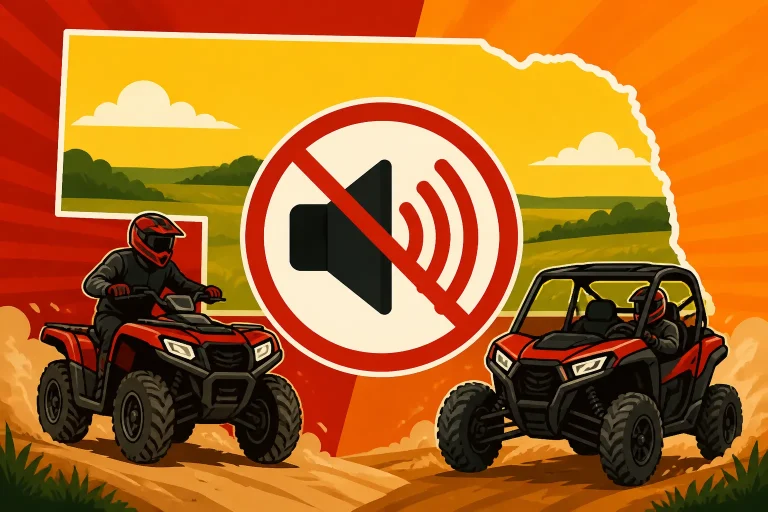
Quiet hours are a park’s designated times for reducing noise, especially around campsites and lodging. They are usually intended to let visitors sleep and to keep noise from carrying across a campground. The exact schedule and what counts as a violation are set by the individual property, not by a single schedule that applies to every Nebraska private park.
A rule may restrict more than riding. A park might ask visitors to shut down ATVs and UTVs, generators, radios, or other noisy equipment during quiet hours. It may also limit loud conversations, music, or vehicle movement through the camping area. One property may distinguish between engine use on trails and noise in camp; another may close riding areas or require all machines to be parked.
Do not assume that a park’s trail closing time is the same as its quiet-hour start. Trail access, gate hours, campsite expectations, and quiet hours can be separate policies. Check the park’s current rules before you plan around any of them. Nebraska Private Park Camping Rules covers related campground questions, but the park itself is the final source for its own requirements.
It also helps to ask whether quiet hours apply throughout the property or only in certain areas. A cabin, RV site, tent area, and riding zone may have different expectations. If the park has a separate event or group-camping area, ask whether its rules differ from standard sites.
What to confirm before booking
Ask about quiet hours before reserving a campsite, cabin, or group space, especially if your plans involve arriving late or riding early. A short call or message can prevent a tiring arrival from turning into a rule violation. When possible, keep the answer with your reservation details so everyone in your group knows what to expect.
| What to check | Why it matters | Useful question |
|---|---|---|
| Quiet-hour schedule | The start and end times vary by property | “What are your quiet hours, and do they apply to the whole park?” |
| Riding cutoff | Trail hours may not match quiet hours | “When must ATVs and UTVs stop running?” |
| Campground engine rules | Machines may be restricted near campsites | “Can we start or move a machine in the camping area during quiet hours?” |
| Generator policy | A generator may have its own limits | “Are generators allowed, and when must they be off?” |
| Late arrival procedure | A late check-in can mean unloading after quiet hours | “If we arrive late, where can we park, and what can we unload?” |
| Group rules | A large gathering can affect nearby campers | “Are there extra quiet-hour rules for groups or events?” |
| Enforcement | The response to a complaint can vary | “What happens if someone breaks the quiet-hour policy?” |
Ask for specifics rather than relying on a general answer such as “be respectful.” For instance, confirm whether the park permits a quiet arrival if your trailer reaches the property after the stated cutoff. You may be allowed to park the tow vehicle and unload in the morning, or the property may have a designated staging area. Do not assume that an open gate means you can unload, start a machine, or ride.
If the written rules and a staff member’s explanation seem inconsistent, ask which policy is current and whether there is a posted version on arrival. Park rules can change, and a listing or old message may not reflect the current instructions. Nebraska Private Park Waivers and Rules is also worth reviewing before a visit because operating rules may be presented with other required visitor paperwork.
Plan the arrival, not just the ride
A late arrival can create noise even when nobody is riding. Trailer ramps clank, tie-downs snap, doors slam, and machines may need to be moved to reach a site. If you expect to arrive close to quiet hours, ask whether it is better to arrive earlier, leave the machines secured on the trailer, or wait until morning to unload.
For a group, settle the plan before the tow vehicles leave home. Choose a meeting point outside the campground if arriving together would mean several engines and trailers maneuvering near sleeping visitors. Let each driver know where to park, how to check in, and which equipment should stay off.
If you need a campsite with enough room to unload early, confirm that directly with the park rather than assuming every site has the same layout. Nebraska Riding Areas With RV Sites and Nebraska Riding Areas That Take Reservations can help with related planning, but confirm site access, arrival instructions, and current rules with the property.
How to avoid noise problems at camp
The easiest way to respect quiet hours is to finish noisy tasks before they begin. Unload, organize riding gear, secure loose equipment, and make necessary trips to shared facilities earlier in the evening. Keep only essential items outside the trailer or vehicle overnight; searching through bins in the dark can be surprisingly loud.
When quiet hours start, treat them as a time to settle in rather than a period to see what the park will tolerate. Turn off music and generators if required, keep voices low, and avoid unnecessary vehicle movement. If the park’s rule is unclear, choose the quieter option and ask staff the next day.
Generators deserve a specific check. Parks may set limits on operating times, placement, or noise, and a rule that allows generator use during the day does not necessarily allow it overnight. A quieter model does not automatically exempt you from the policy. Ask before running it, and consider whether you can charge devices or use other equipment without it. Running a Generator at a Trailside Campground covers additional considerations for generator use around other campers.
Think about where sound travels. An engine may seem modest from your own campsite but carry farther in an open campground or late at night when other activity has stopped. Avoid revving, repeated starts, and unnecessary idling near tents, cabins, or RV sites. If a machine will not start, do not keep trying during quiet hours; move troubleshooting to an allowed time and place.
A group’s noise can build without anyone intending to be disruptive. Make one person responsible for telling the group when quiet hours begin, and remind everyone to keep conversations and phone audio down. Children and guests who did not drive may not have heard the rules, so include them in the briefing.
Consider these habits:
- Park machines in the designated area before the cutoff, if the park requires it.
- Keep keys and gear accessible so you are not searching through a packed trailer late at night.
- Close doors gently and avoid dropping ramps, helmets, or tools.
- Use headphones rather than playing audio through a speaker.
- Walk rather than drive between nearby sites when permitted and practical.
- Keep dogs from barking or roaming into neighboring campsites; check Nebraska Private Park Pet Rules for related questions.
- Respect alcohol and gathering rules, which may be separate from quiet hours. Nebraska Private Park Alcohol Rules may help you identify what to ask.
If another visitor is making noise, avoid turning a disagreement into a louder confrontation. Speak calmly if it feels appropriate, or contact park staff or the posted after-hours contact. Staff can explain the rule and handle enforcement. Do not assume that a neighboring camper knows the schedule or that escalating the argument will solve the problem.
Good group planning matters before and during the trip. Nebraska Group Ride Planning can help with coordination, while Nebraska Trail Etiquette Locals Expect offers broader guidance on sharing riding spaces. Keep campground behavior in mind even if your group has been riding together for years: other guests may be there to sleep, and the park may have different expectations from your usual riding spot.
What happens if quiet hours are broken
The consequences depend on the park’s posted rules and how it handles complaints. Staff may speak with the visitor, ask them to shut down equipment, require them to move, or take further action under the park’s policies. A repeated or serious problem could affect a reservation or a visitor’s ability to remain on the property. Do not count on a warning before enforcement.
Before booking, look for the park’s conduct, camping, and cancellation policies. Ask how staff handle a complaint after the office closes, and save the appropriate contact information. If quiet hours are part of a signed waiver or reservation agreement, read that section rather than relying only on an informal description.
If staff says you have violated the rules, stop the activity first and ask for clarification in a calm, practical way. If you believe the complaint is mistaken, explain what happened without continuing the noisy activity while arguing. A clear conversation is more likely to resolve confusion than an engine left running or a dispute carried across the campground.
If you need to make noise for a genuine safety reason, such as moving a vehicle out of an unsafe position, prioritize safety and notify staff as soon as practical. That is not permission to use quiet hours for routine unloading or repairs. Ask the park how it wants visitors to handle exceptional situations.
Some visitors expect a private park to operate like public land, but privately managed riding properties can set their own access conditions. A state permit or a machine’s ownership documents do not replace the park’s rules. Check the property’s requirements alongside any applicable public-land or road rules, and do not treat permission to ride as permission to make noise at any hour.
A simple checklist for a quieter visit
Before leaving home, confirm the quiet-hour schedule, last riding time, campground engine rules, generator limits, and late-arrival procedure. Check whether the park has separate rules for groups, pets, alcohol, or shared facilities. If you are bringing a large group, assign one person to pass along the rules and coordinate arrival.
At check-in, look for posted updates and ask staff about anything unclear. Identify the appropriate place to park, unload, and contact staff after hours. Keep your reservation information and the park’s instructions accessible, rather than assuming someone else in the group has them.
Before quiet hours, finish unloading and get machines where they need to be. Afterward, keep engines and avoidable noise down, and follow the property’s instructions even if you see another visitor ignoring them. A quieter campsite makes it easier for everyone to rest and helps keep the focus on the ride the next day.
A few details are especially easy to overlook:
- Quiet hours and trail closing times may be different.
- A late check-in may not include permission to unload.
- Generator rules may be stricter than general campground rules.
- Group reservations may have additional conditions.
- A park may update or enforce its policy differently from another property.
If a park’s rules do not fit your arrival time or riding plans, ask about alternatives before paying or towing. You may be able to adjust your schedule, book a different site, or choose a property with hours that better suit your group. Reserving a Campsite Before a Riding Weekend can help with broader booking preparation, but only the park can confirm its current quiet-hour policy.
Disclaimer
This article is for general informational purposes only and does not constitute professional advice. Laws, prices and regulations vary by location and change over time. Consult a qualified professional for guidance on your specific situation.