Showing Up Before a Riding Park Gate Opens
Arriving at a Nebraska riding park before its gate opens can leave you with a trailer, a group of riders and nowhere obvious to wait. Early arrival is useful only if the park allows it and there is a safe place to stage. Confirm the opening plan beforehand, keep public access clear and treat posted hours as the earliest permission to enter—not a suggestion.
Confirm the park’s opening and arrival rules before you tow
A park’s posted opening time may not answer every practical question. It might tell you when riding begins, but not when the gate opens, whether early parking is allowed or where a group should wait. Those details vary by operator and can change with events, weather, staffing or trail conditions.
Check the park’s official website and recent updates, then contact the operator if anything is unclear. Ask specifically:
- What time may vehicles enter the property?
- Is there a designated area where early arrivals can wait?
- Can you park a truck and trailer before check-in?
- When can riders unload, complete waivers and pay admission?
- Does a reservation or organized event have a separate check-in time?
- Are there rules about idling, noise, overnight parking or camping?
- What should you do if you arrive early and the entrance is closed?
Do not assume that an open-looking driveway, unlocked gate or empty parking lot means you have permission to enter. A private park controls access to its property, and its directions or posted signs may restrict entry until staff are ready. If the park has no published early-arrival policy, ask rather than treating the shoulder or entrance road as a waiting area.
This is especially important when traveling with several machines. A single truck may be able to turn around safely where a long trailer cannot. If the entrance is narrow, on a hill or near a public road, a line of arriving vehicles can create a hazard even when everyone is trying to stay out of the way.
Separate park access from state permits
For Nebraska riders, the paperwork question can be confusing because a park visit may involve more than one kind of permission. Nebraska has no statewide OHV permit or sticker, but that does not mean every riding area is open without conditions. Public-land entry and parking rules can differ from a private park’s admission and operating rules. A state park permit, for example, does not grant permission to ride an ATV where ATV use is not allowed. See Nebraska Has No OHV Permit or Sticker and Why a Park Permit Does Nothing for Your ATV for the distinction.
A private riding park may set its own requirements for admission, waivers, rider ages, helmets, machine types, passengers and payment. Out-of-state riders should not assume that a registration, permit or sticker from home automatically substitutes for a Nebraska park’s requirements. Check the park’s own rules before leaving. The broader question of public access for visitors is covered in Which Public Land a Visitor Can Ride in Nebraska.
If your visit is part of a scheduled group outing, confirm the event’s check-in instructions as well as the park’s general hours. An organizer may have a meeting time that differs from the time individual riders can enter. Booking an Organized Ride at a Riding Park can help with questions to settle before the trip.
| What you need to know | Why it matters | What to confirm |
|---|---|---|
| Gate and check-in times | The posted riding hours may not be the same as vehicle-entry hours | When you may enter and when staff will be available |
| Early staging | The entrance shoulder may be unsafe or off-limits | Whether there is an approved waiting area |
| Reservations or events | Group instructions may differ from general admission | Your check-in time and where to meet |
| Park requirements | Private operators set their own entry conditions | Waiver, age, helmet, machine and passenger rules |
| Land access permits | State or public-land requirements are separate | Whether your route or stop requires a separate permit |
| Weather and closures | An early start does not guarantee trails will be open | Current conditions and any last-minute changes |
Plan a safe place to wait and unload
The simplest plan is to arrive close to the confirmed entry time, not hours before it. If you expect to arrive early because of a long drive, plan the wait before you set out. Look for a legal, suitable place away from the entrance where your truck and trailer can remain without blocking traffic, private access or emergency routes. Do not count on a nearby business, fuel station or roadside turnout being available for a long stop unless its rules allow it.
If there is no suitable waiting place, adjust your departure time or contact the park about another option. Turning around with a trailer on a narrow road can be difficult, and a queue of vehicles may make it harder for local traffic, park staff or emergency responders to get through. Never assume that other early arrivals have permission to line up on the road.
Do not unload machines outside the park unless the landowner or operator has clearly authorized it. Unloading near an entrance can put riders in traffic, damage private land or create conflict with nearby residents. It can also leave you with machines and gear spread out before you have completed check-in or confirmed the trails are open.
When waiting is permitted, use the time to prepare without making the area harder for others to use:
- Park only where the operator directs you, leaving the entrance and access lanes open.
- Keep the trailer attached unless staff have approved a place to unload.
- Gather identification, reservation details and any paperwork the park requests.
- Check that every rider knows the meeting point and the park’s check-in process.
- Keep machines off until the park allows them to be unloaded or started.
- Take out trash and keep noise, headlights and vehicle movement considerate of neighbors.
A quiet, orderly arrival helps the operator open on time and makes it easier for other visitors to check in. Avoid revving engines, riding in circles or testing machines in a parking area unless the park explicitly allows it. The park may have rules about speed, unloading zones and where machines can be operated even after the gate opens. Review Nebraska Private Park Waivers and Rules before your visit, and check Nebraska Private Park Age Minimums and Nebraska Private Park Helmet Rules if children or new riders are coming along.
Make the wait workable for your group
A little planning prevents an early arrival from becoming a problem for the whole group. Share the confirmed entry time and directions with everyone before the trip. Agree on a place to meet that is actually permitted, and tell riders not to enter or unload separately if the operator expects the group to check in together.
Keep a phone charged and save the park’s contact details before driving into an area where reception may be unreliable. If a gate is closed and you cannot reach staff, do not try to follow another vehicle through or walk around a barrier to find someone. Wait at a legal location, follow posted directions and use the park’s published contact method.
For a weekend trip, check whether camping or overnight parking is allowed rather than assuming that an early arrival gives you access to a campground. Campsites, event areas and day-use parking can have separate rules and reservations. See Reserving a Campsite Before a Riding Weekend and Nebraska Private Park Camping Rules when an overnight stay is part of the plan.
What to do when the gate is still closed
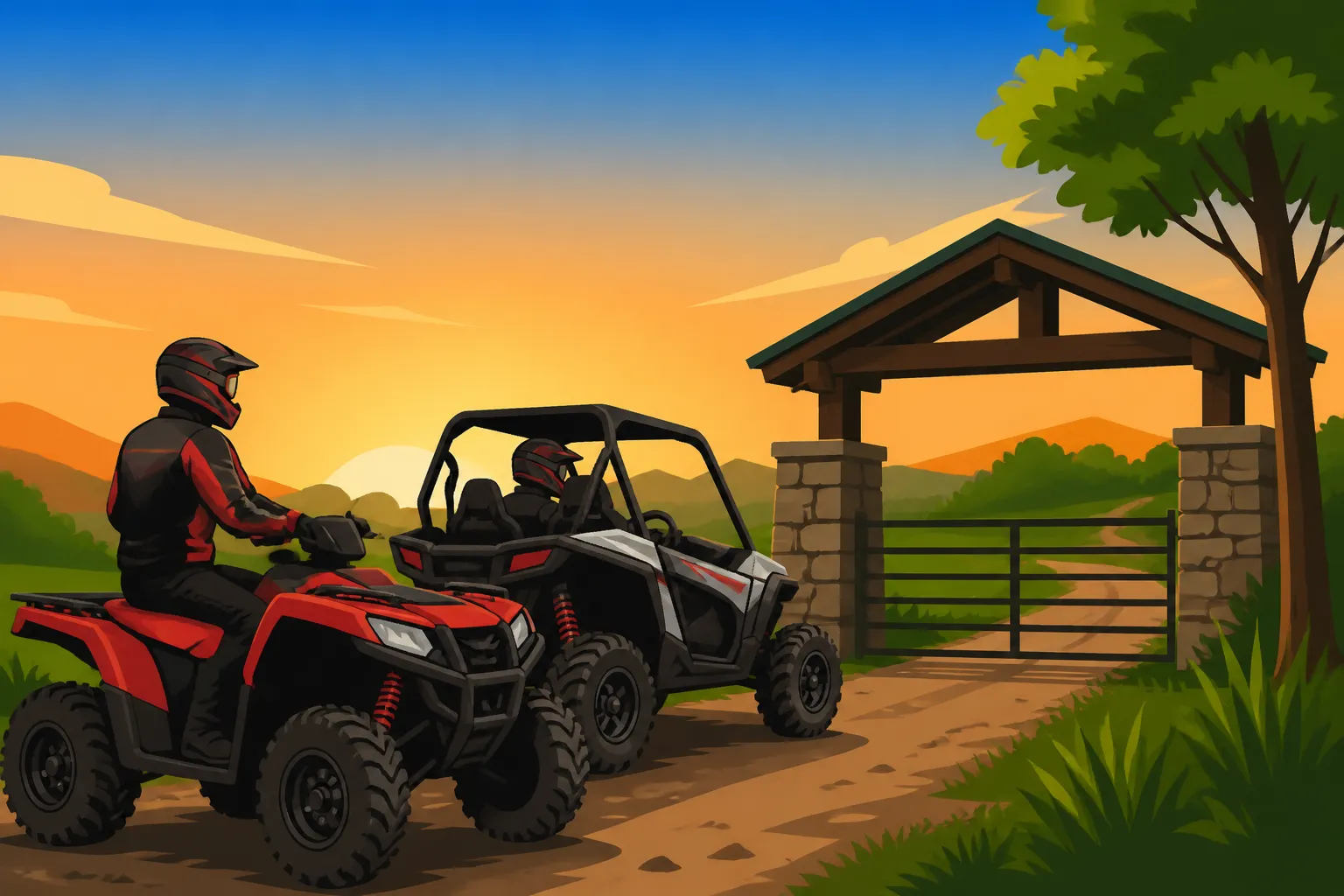
If you reach the park before opening, first look for signs and follow them. A closed gate means you should not enter unless the operator has specifically authorized early access. Do not drive around a barrier, tailgate another guest through the entrance or leave a vehicle where it blocks a gate. Even if the park appears quiet, staff may be preparing the site or responding to conditions you cannot see.
If an approved waiting area is available, use it and wait for instructions. If not, move to a safe, legal location that does not interfere with traffic or private property. Contact the park using its official phone number or published communication channel. If no one responds, avoid treating silence as permission; wait until the stated opening time or follow the park’s directions for that situation.
A gate may remain closed beyond the time you expected because of a change in operating hours, wet or unsafe conditions, maintenance, an event or a staffing delay. Do not assume the park is refusing entry, but do not ride on closed trails or use another part of the property while you wait. Ask whether the delay affects check-in, trail access or your reservation. For wet-weather plans, it helps to understand the park’s closure and refund policy before departure; Do You Get a Refund When Rain Closes Trails? covers questions to ask.
If the park is open but the line is moving slowly, keep the entrance clear and follow staff instructions. Have riders remain with the group unless the operator directs them elsewhere. Avoid unloading machines in a queue or moving vehicles into areas that have not been designated for parking. Once admitted, check the map, posted notices and any staff briefing before setting off. Trail access can be limited even when the entrance is open.
Use a simple arrival decision
A quick decision process can keep a delayed start from turning into an unsafe one:
- Check the gate and signs. Follow posted instructions and do not cross a closed barrier.
- Use only an approved waiting area. If one is not identified, do not create a staging area on the road or neighboring property.
- Contact the operator. Ask whether the opening time has changed and where to wait.
- Keep the trailer and machines secure. Do not unload or start riding without permission.
- Reassess if there is no safe place to wait. Leave the entrance clear and return at the time or location the operator authorizes.
For a first visit, read Nebraska Trail Etiquette Locals Expect and review the park’s current rules rather than relying on what was permitted at another riding area. Operators may use different check-in systems, restrict certain machines or set separate rules for passengers and youth riders. A short confirmation call can save a long wait—and help ensure your group arrives at a time and place where it is welcome.
Disclaimer
This article is for general informational purposes only and does not constitute professional advice. Laws, prices and regulations vary by location and change over time. Consult a qualified professional for guidance on your specific situation.